Swimming October 25, 2026
Does Swimming Help in Weight Loss? A Realistic Guide
Swimming Weight Loss Calculator
Estimate your true calorie burn from swimming, accounting for intensity levels and the common issue of increased appetite after water-based exercise.
Water cools the body, often triggering a strong urge to eat. Enter what you actually ate afterwards.
You’ve probably heard the claim that swimming is the ultimate full-body workout. You jump into a cold pool, churn through laps, and step out feeling like you just burned off an entire pizza. But does swimming help in weight loss? The short answer is yes, but with a massive caveat that most fitness blogs gloss over: water makes you hungry.
Here’s the reality. Swimming burns a significant amount of energy-often more than jogging at a moderate pace. However, the hydrostatic pressure of water suppresses appetite signals less effectively than land-based exercise, and the drop in body temperature triggers a primal drive to refuel. If you aren’t careful, you’ll eat back every calorie you just spent. This guide breaks down exactly how many calories you actually burn, why your body reacts the way it does, and how to structure your swims so they actually move the needle on the scale.
The Calorie Burn Reality Check
Let’s look at the numbers. According to data from Harvard Health Publishing, a 155-pound person burns roughly 372 calories in 30 minutes of leisurely swimming. That same person burns about 409 calories doing vigorous lap swimming. Compare that to walking at 3.5 mph, which burns around 149 calories in the same timeframe, or running at 5 mph, which burns about 298 calories.
So, mathematically, swimming wins. But there’s a catch. Most people don’t swim vigorously for 30 minutes straight. They stop at the wall to chat, they float on their backs, or they tread water casually. Leisurely swimming is closer to active recovery than high-intensity interval training (HIIT). To get real weight loss results, you need intensity. Treading water, for instance, can burn up to 420 calories per hour if done continuously without holding onto the side, but it’s exhausting and hard to sustain for long periods.
| Activity | Intensity Level | Approx. Calories/Hour |
|---|---|---|
| Leisurely Swimming | Low-Moderate | 372 |
| Vigorous Lap Swimming | High | 409 |
| Treading Water | Moderate-High | 420 |
| Running (5 mph) | Moderate | 596 |
| Cycling (Moderate) | Moderate | 298 |
Why Water Makes You Hungry
This is the part nobody tells you when they sell you a membership. Exercise generally suppresses hunger hormones like ghrelin, at least temporarily. Land-based cardio often leaves you too hot and sweaty to think about food immediately after. Swimming is different. The water cools your skin rapidly. Your body works harder to maintain its core temperature, which increases metabolic rate, but this cooling effect also triggers a strong biological urge to warm up via digestion.
A study published in the International Journal of Obesity found that swimmers consumed significantly more calories post-exercise compared to runners. Runners tended to subconsciously compensate by moving less later in the day, while swimmers ate more. If you finish a swim session and head straight to a bakery or grab a large smoothie loaded with sugar, you are likely undoing the deficit you just created. The key isn’t to avoid eating; it’s to plan what you eat before you feel that ravenous wave hit.

Technique Matters More Than Time
If you’re dragging yourself through the water with poor form, you’re burning fewer calories than you think. Inefficient swimming creates drag. Drag is resistance. When you fight resistance inefficiently, you tire out your muscles without keeping your heart rate in the optimal fat-burning zone for long enough.
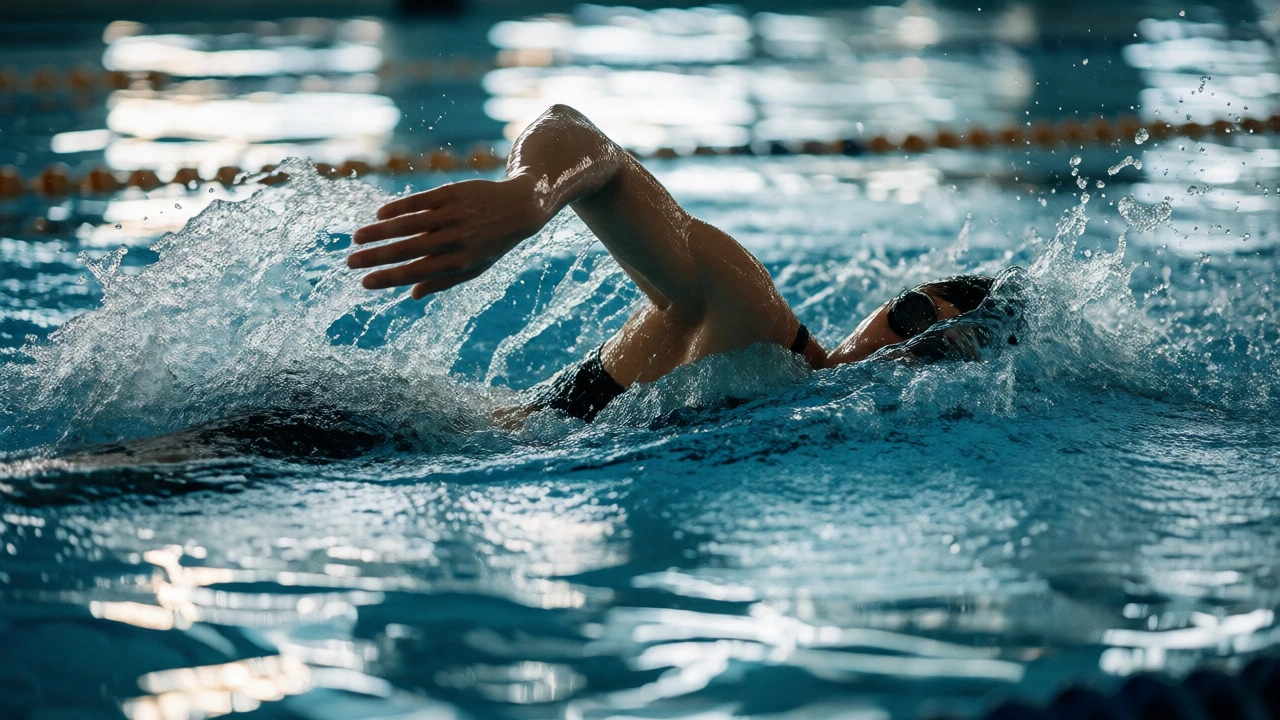
Consider the difference between breaststroke and freestyle. Breaststroke is easier on the joints and feels manageable, but it doesn’t elevate your heart rate as consistently as freestyle (front crawl) unless you are sprinting. Freestyle engages your lats, shoulders, core, and legs in a continuous motion. Butterfly is the calorie king, burning nearly double the calories of breaststroke, but very few beginners can sustain butterfly for more than two lengths.
For weight loss, consistency beats intensity in the long run, but efficiency beats duration in the short run. Instead of trying to swim a mile slowly, try swimming four 25-meter sprints followed by rest periods. This mimics HIIT principles. It keeps your heart rate spiking and dropping, which boosts your metabolism for hours after you leave the pool-a phenomenon known as EPOC (Excess Post-exercise Oxygen Consumption).
Building a Swim Routine That Works
You don’t need to be an Olympic athlete to lose weight in the pool. You just need a structure. Random laps are boring and ineffective. Here is a simple, scalable routine designed to maximize calorie burn without requiring elite technique.
- Warm-up (5-10 minutes): Slow freestyle or backstroke. Focus on breathing rhythm. Get your blood flowing.
- Main Set (20 minutes): Alternate between effort and rest. For example, swim one length fast, then one length slow. Repeat this cycle. If you’re tired, switch strokes to keep moving without stopping completely.
- Kick Set (5 minutes): Use a kickboard. Kick hard with your legs. This isolates the lower body and spikes your heart rate because leg muscles are large consumers of oxygen.
- Cool Down (5 minutes): Easy backstroke or floating. Let your heart rate come down gradually.
Do this three times a week. On non-swim days, do some strength training. Muscle tissue burns more calories at rest than fat tissue does. By combining swimming with basic resistance exercises like squats or push-ups, you increase your basal metabolic rate, making weight loss sustainable even on rest days.

Who Should Avoid Swimming for Weight Loss?
While swimming is low-impact and great for joints, it isn’t perfect for everyone. If you have asthma triggered by chlorine fumes, indoor pools might aggravate your condition despite the humidity benefits. Outdoor pools in colder climates require you to manage hypothermia risks carefully, which can sap your energy levels rather than boost them.
Also, consider your access. If your nearest pool is a 45-minute drive away, the friction of getting there will kill your consistency faster than any workout fatigue. Running outside requires only shoes. Swimming requires gear, travel time, showering, and drying hair. If those barriers cause you to skip sessions, pick a different sport. Adherence is the single biggest predictor of weight loss success.
Final Verdict: Does It Work?
Yes, swimming helps with weight loss, provided you treat it as a serious cardiovascular workout rather than a leisure activity. It offers unique advantages: it builds muscle endurance, improves lung capacity, and protects your knees and hips from impact stress. This makes it ideal for people who are overweight and find running painful.
But remember the golden rule: you cannot out-swim a bad diet. Because swimming makes you hungry, meal prep becomes critical. Bring a protein-rich snack to the poolside. Eat within 30 minutes of finishing your swim to stabilize blood sugar without overeating. Track your progress not just by the scale, but by how much longer you can swim without stopping. As your stamina improves, your calorie burn increases naturally.
Is swimming better than running for weight loss?
It depends on your body type and goals. Running typically burns slightly more calories per minute due to higher impact and gravity resistance. However, swimming is low-impact, allowing heavier individuals to exercise longer without joint pain. If running causes injury, swimming becomes the superior option for consistent weekly volume.
How many times a week should I swim to lose weight?
Aim for three to four sessions per week. Each session should last at least 30 minutes of actual active movement. Consistency is key. One intense hour once a week is less effective than three moderate 30-minute sessions spread throughout the week.
Why am I gaining weight despite swimming?
You may be experiencing increased muscle mass, which weighs more than fat, or you are consuming more calories post-swim due to increased appetite. Track your food intake honestly. Also, ensure you are swimming with enough intensity to elevate your heart rate, not just floating or resting frequently.
Does treading water burn more calories than swimming?
Treading water can burn comparable or slightly more calories than leisurely swimming because it requires constant muscular engagement to stay afloat. However, it is difficult to sustain for long periods. Vigorous lap swimming is generally more practical for sustained calorie burning over a 30-45 minute session.
Can I lose belly fat by swimming?
Swimming reduces overall body fat percentage, which includes belly fat. Spot reduction is a myth; you cannot target specific areas for fat loss through exercise alone. However, swimming engages the core heavily, strengthening abdominal muscles under the fat layer, leading to a tighter midsection as overall weight decreases.