Gym Workouts March 29, 2026
How to Strip Fat Quickly: A Practical Guide to Fat Loss Workouts
Fat Loss Blueprint Calculator
Enter Your Stats
*Based on Mifflin-St Jeor equation for metabolic accuracy.
The Science:
To strip fat effectively without losing muscle, we aim for a 20% reduction from your maintenance calories, prioritizing high protein intake to signal your body to retain lean tissue.
Target Daily Calories
0
(Est. Deficit)
Calculation pending
Daily Protein Target
0
Grams per day
Divide into 4+ meals
Everyone wants results fast, but the fitness industry is full of shortcuts that promise the world and deliver nothing. If you want to strip fat quickly, you need to stop chasing magic pills and start respecting the math behind energy balance. Your body doesn't care about your New Year's resolution; it cares about whether it has enough fuel to survive. When you run low on fuel, your metabolic system adapts. This adaptation is exactly where most people get stuck.
The truth is simple: you must create a consistent environment where your body pulls stored energy from fat reserves instead of food. This isn't just about starving yourself until the scale drops. Muscle mass dictates how fast you burn calories at rest. If you slash calories too hard, you lose muscle, which slows your metabolism down permanently. So, how do we fix this? We combine precise nutrition with intelligent training that tells your body, "Keep this muscle, but burn that fat." Here is the roadmap.
The Mathematics of Energy Balance
To lose weight, you have to be in an energy deficit. This concept is often overcomplicated, but the core mechanism remains unchanged. You simply need to consume fewer calories than you expend throughout the day. However, the size of that deficit determines your speed and safety.
Caloric Deficit is a state where energy expenditure exceeds energy intake, forcing the body to use stored fuel reserves. A deficit of 500 calories per day typically results in roughly half a kilogram of weight loss per week. Pushing too far beyond this-say, a deficit of 1000 daily-is dangerous for long-term adherence. Your hunger signals will spike, and your performance in the gym will tank. Most people fail because they set a deficit that feels impossible to maintain after two weeks.You can measure your Total Daily Energy Expenditure (TDEE) to find your starting point. If you weigh 80 kilograms, you might need around 2500 calories to maintain your weight. To strip fat, aim for 2000. Monitor this for seven days. If the scale hasn't moved, lower the intake slightly or increase your movement. Consistency beats intensity here. One perfect diet day means nothing if you rebound for five days straight.
Preserving Muscle Through Resistance Training
Diet dictates whether you lose weight, but training dictates what you lose. Without resistance work, a large portion of your weight loss will come from lean tissue, leaving you with a softer physique even if the number on the scale goes down. We want to force your body to spare muscle while accessing fat stores.
Resistance Training is exercise using external loads to stimulate muscle growth and retention. It provides the hormonal signal necessary to prevent muscle breakdown during a diet. Compound movements are king here. Exercises like squats, deadlifts, and overhead presses recruit more muscle fibers, burning more calories in the process.Focusing on compound lifts allows you to lift heavier weights relative to your body mass, signaling to your body that these tissues are vital for survival. Aim for three heavy sessions per week. Do not fear fatigue, but avoid going to absolute failure every single rep. Leave one or two reps in the tank so you recover faster for the next session. If you are dragging yourself home every night, you aren't recovering fast enough to sustain the high activity level required for fat loss.
Optimizing Cardiovascular Efforts
Cardio gets a bad reputation, yet it remains the fastest way to burn extra calories during a session. The trick is choosing the right type that adds minimal stress to your system. You don't want cardio that destroys your ability to lift weights the next morning.
| Type | Recovery Time | Calorie Burn | Burden on Joints |
|---|---|---|---|
| Low-Impact Steady State (LISS) | Very Fast | Moderate | Low |
| High-Intensity Interval Training (HIIT) | Slow | High | High |
| Zone 2 Walking | Negligible | Low-Moderate | Very Low |
High-Intensity Interval Training consists of short bursts of maximum effort followed by rest periods. While popular, it places significant demand on the Central Nervous System. Doing HIIT daily can lead to burnout. LISS or Zone 2 walking is often superior because you can do it almost every day without ruining your leg muscles. Walking 10,000 steps a day is easier to sustain than killing yourself on a treadmill twice a week. It keeps your insulin sensitivity high without spiking cortisol too much.

The Role of Protein in Metabolism
If you cut calories and train hard but ignore protein, you risk losing the very muscle that drives your metabolism. Protein has the highest thermic effect of any macronutrient. Your body burns more energy digesting protein compared to fats or carbs. Furthermore, it provides the building blocks for repair.
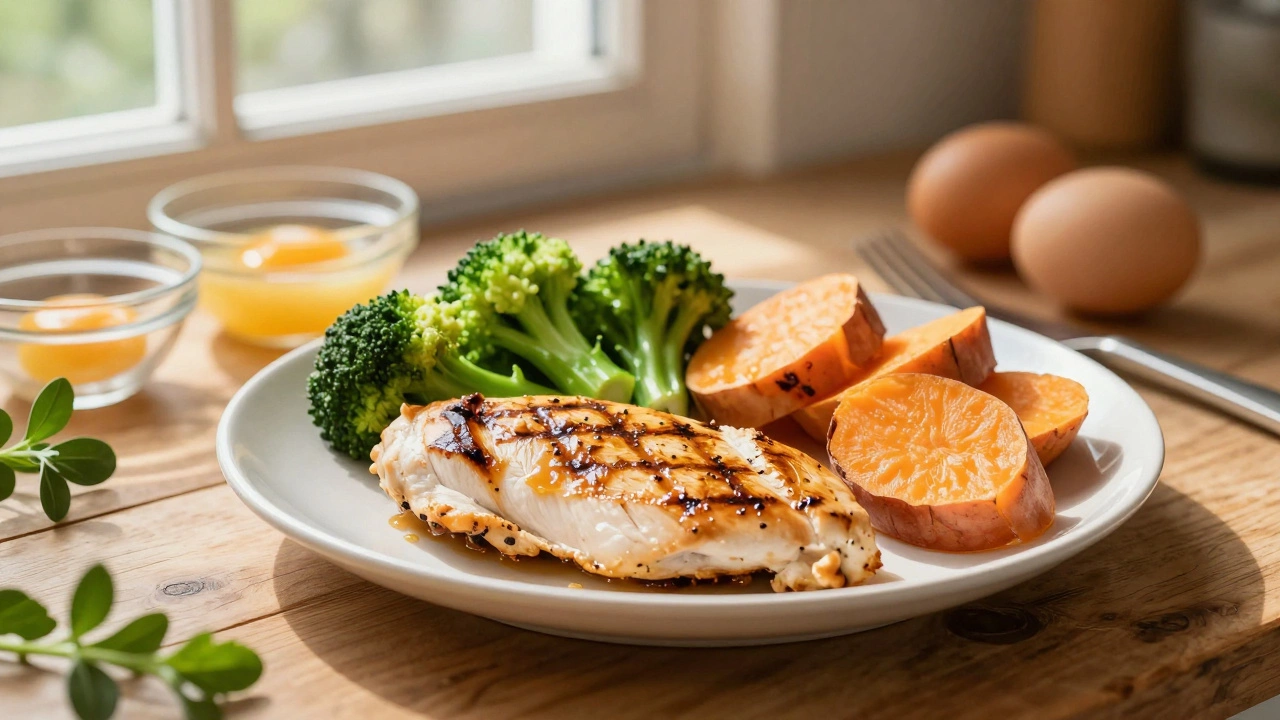
Aim for at least 2 grams of protein per kilogram of body weight. For a 70-kilogram individual, that is 140 grams per day. Spread this across four meals to maximize absorption rates. Foods like chicken breast, lean beef, eggs, whey protein, and Greek yogurt provide high biological value. If you struggle to hit this number with whole foods, supplement strategically. Don't treat protein shakes as candy bars. They are tools to meet targets when real food isn't convenient.
When you prioritize protein, satiety increases naturally. You feel fuller for longer, making the calorie deficit less agonizing. This psychological advantage is just as important as the physiological one. Hunger is the enemy of consistency.
Lifestyle Levers That Control Weight
Workout routines take up two hours a day at most. What happens in the other twenty-two hours matters significantly. Sleep quality regulates hormones like ghrelin and leptin. Ghrelin triggers hunger; leptin signals fullness. Lack of sleep spikes ghrelin and crashes leptin, meaning you wake up craving sugar and feeling starving.
Sleep Quality is the duration and efficiency of rest periods essential for hormonal regulation. Less than six hours of deep sleep disrupts insulin sensitivity, leading your body to store more glucose as fat. Stress plays a parallel role. Chronic stress keeps cortisol levels elevated, which can promote water retention and belly fat storage patterns.Managing these factors often yields better results than tweaking macros by a few grams. Try to sleep 7-8 hours nightly. Reduce screen time before bed to improve sleep cycles. Walk outside in natural light during the day to reset your circadian rhythm. These small adjustments remove the noise that clouds your progress.

Pitfalls That Slow Down Progress
We all make mistakes. Recognizing them early saves months of spinning wheels. First, tracking inaccuracies are rampant. Most people underestimate what they eat and overestimate what they burn. Measure portions if possible. Second, drinking calories is a silent killer. Sugary sodas and cocktails add hundreds of empty calories without making you full.
Another trap is relying solely on the bathroom scale. Scales don't distinguish between water, food, waste, muscle, or fat. Take weekly progress photos instead. Muscle weighs more than fat, so the scale might stagnate while your waistline shrinks. Focus on measurements around your waist and hips rather than just total weight. This gives a clearer picture of body composition changes.
Next Steps for Sustainable Loss
Once you understand the mechanics, implementation becomes straightforward. Calculate your TDEE and subtract 20%. Fill that budget with protein-heavy meals. Lift heavy weights three times a week. Walk daily. Sleep well. Repeat. This cycle creates a slow, steady erosion of body fat without damaging your engine. Patience is the most critical variable here.
Remember, quick fixes usually require a return phase. Slow fixes often last forever. By focusing on habits you can maintain indefinitely, you turn a temporary struggle into a permanent lifestyle shift.
Is it safe to lose 2 kg a week?
Losing 2 kg a week consistently is aggressive and generally unsafe for long-term adherence. A rate of 0.5 to 1% of body weight per week is standard. Rapid loss often includes significant muscle and water weight, which can crash your metabolism.
Should I skip carbs to lose fat faster?
Skipping carbs entirely isn't necessary. Carbohydrates fuel intense training. Reducing refined sugars and processed carbs is effective, but including whole-food carbs helps performance. Total elimination often leads to low energy levels.
Can I spot reduce belly fat?
Spot reduction is a myth. You cannot choose where to lose fat first. Fat loss occurs systematically based on genetics. Core exercises strengthen the underlying muscles but do not burn the fat sitting on top of them directly.
What is the best time to workout for fat loss?
Timing does not drastically affect results. Consistency is key. Morning workouts might help with discipline, but late workouts can offer better glycogen stores. Pick a time you will actually stick to.
Will lifting weights make me bulky?
Getting "bulky" requires massive calorie surpluses and specific hormone levels. In a caloric deficit designed to lose fat, you cannot build significant bulk. You will get toned and leaner as you reveal the muscle underneath.