Running Shoes January 19, 2026
Can I Wear Normal Shoes for Running? The Real Risks and Better Choices
Running Shoe Risk Calculator
How risky is running in normal shoes?
This tool estimates your potential injury risk based on the article's research about running in inappropriate footwear.
Your Risk Assessment
Based on the article's research, running in normal shoes exposes you to these common injuries:
Article Insight: Your body absorbs up to 3x your body weight with each foot strike. Normal shoes provide no shock absorption.
You’ve got a pair of everyday sneakers in your closet. They’re comfy. They’ve taken you to the shops, the bus stop, and even a few weekend walks. So why not just slip them on and hit the pavement for a run? It seems harmless. But here’s the truth: wearing normal shoes for running isn’t just a bad idea-it’s a one-way ticket to pain, injury, and wasted effort.
What counts as a "normal shoe"?
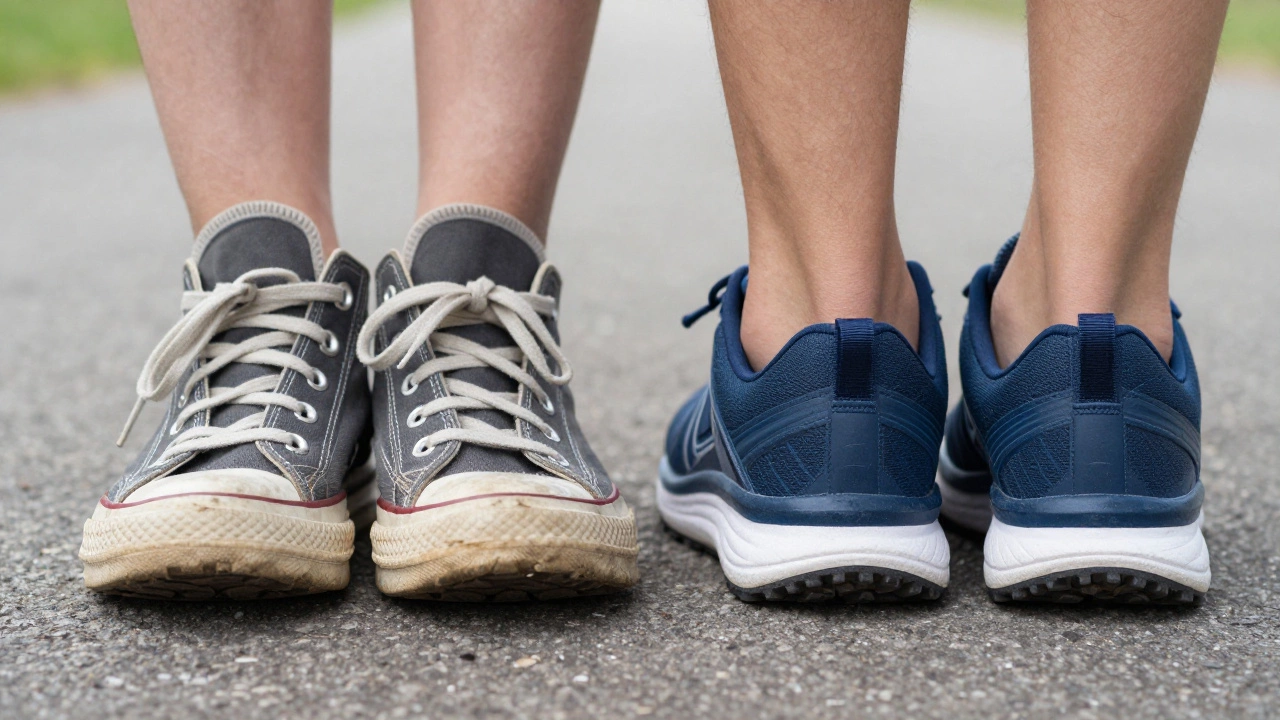
When people say "normal shoes," they usually mean casual sneakers-like slip-ons, canvas shoes, flat loafers, or even old fashion sneakers that haven’t been designed for motion. Think Converse Chuck Taylors, Vans, or those budget-friendly slip-on shoes from the mall. These aren’t made to handle the impact of running. They lack the key features your feet need when your heel strikes the ground 80 to 100 times per minute.
Running shoes are engineered with three things in mind: cushioning, stability, and motion control. Normal shoes? They’re built for standing, walking slowly, or looking presentable. Their soles are thin, flat, and stiff. The midsole foam? Often nonexistent or compressed into a hard plastic-like layer. The heel counter? Weak or absent. That means your foot gets zero support when it lands.
What happens when you run in normal shoes?
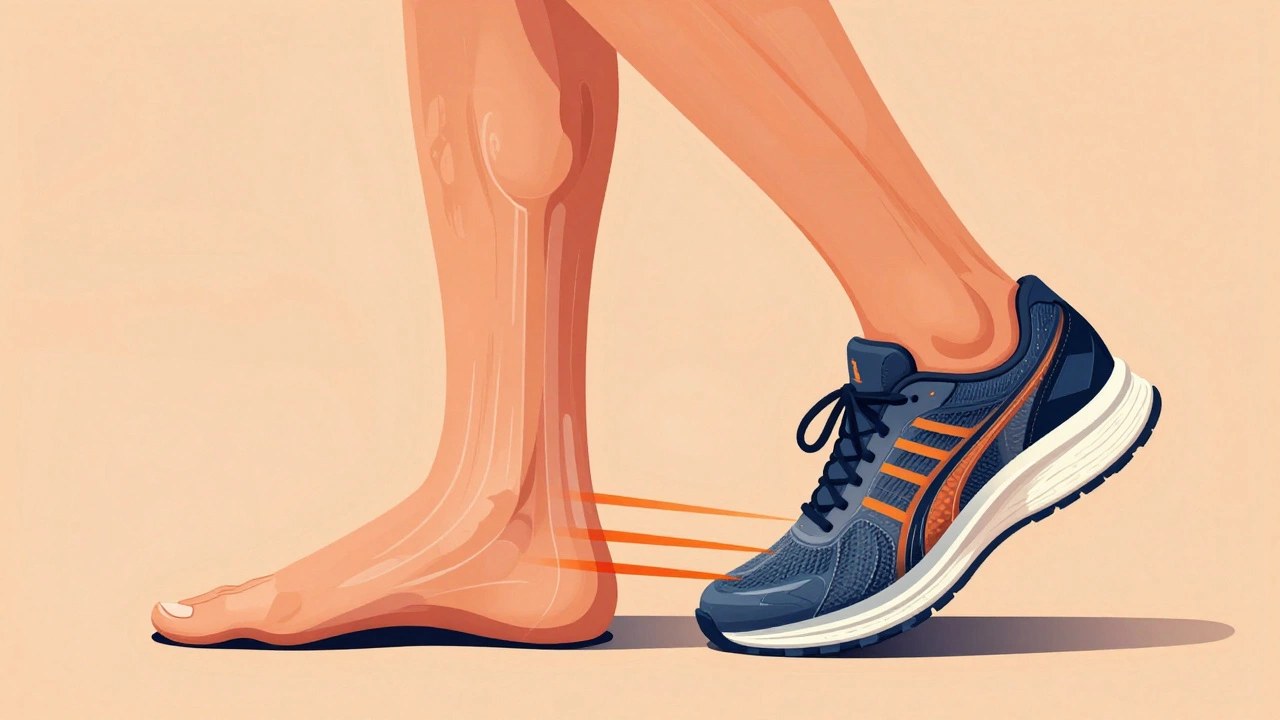
Let’s say you’re a 150-pound person running a 5K. That’s about 5,000 foot strikes. Each time your foot hits the ground, your body absorbs up to three times your body weight in force. In proper running shoes, that shock gets absorbed by layered foam, a curved heel, and a flexible forefoot. In normal shoes? That force travels straight up your leg.
Here’s what that does over time:
- Plantar fasciitis - The band of tissue under your foot gets inflamed from lack of arch support. It feels like a knife stab in your heel every morning.
- Shin splints - Pain along the front of your shins from overworked muscles trying to compensate for poor cushioning.
- Knee pain - Your knees take the brunt when your feet can’t absorb impact. Studies from the Journal of Orthopaedic & Sports Physical Therapy show runners in unsupportive footwear have a 30% higher risk of knee injuries.
- Ankle sprains - Normal shoes have no ankle stability. A misstep on uneven pavement can roll your ankle easily.
- Stress fractures - Repeated impact without cushioning can crack small bones in your feet or lower legs. This isn’t rare-it’s common among beginners who think "any shoe will do."
One runner from Bristol told me she ran three times a week in her old Nike Air Force 1s for six months. By January, she couldn’t walk without limping. An MRI showed a stress fracture in her metatarsal. She didn’t break anything dramatically-just wore down her foot until it gave out.
What’s the difference between running shoes and regular sneakers?
It’s not just about brand or price. It’s about design. Here’s what separates them:
| Feature | Running Shoes | Normal Sneakers |
|---|---|---|
| Midsole Cushioning | Thick, responsive foam (EVA, PU, or Pebax) | Thin or no cushioning; often hard plastic |
| Heel Drop | 8-12mm (heel higher than forefoot) | 0-4mm (flat or nearly flat) |
| Arch Support | Designed for foot type (neutral, overpronation, supination) | Generic or nonexistent |
| Flexibility | Bends at the ball of the foot | Stiff sole, resists natural motion |
| Weight | 200-300g per shoe | 300-500g+ per shoe |
| Outsole Traction | Rubber grips designed for pavement and trails | Smooth or minimal tread |
Running shoes are lighter, more flexible, and built to move with your foot-not against it. Normal shoes? They’re like wearing bricks with fabric on top.
Can you ever run in normal shoes?
Technically, yes. But only under very specific conditions-and even then, it’s not smart.
If you’re doing a 10-minute jog on a soft trail, maybe you’ll be fine. If you’re doing barefoot-style running on grass and you’ve trained your feet for years? Possibly. But if you’re a casual runner trying to lose weight, get fit, or just enjoy a morning run? No.
There’s a myth that running in minimal shoes "strengthens" your feet. That’s only true if you’ve spent months transitioning slowly from proper running shoes. Most people skip that step and end up injured. The body doesn’t adapt fast enough. It breaks before it builds.
What should you wear instead?
You don’t need the most expensive pair on the market. But you do need something designed for running. Look for these features:
- Cushioning that compresses - Press your thumb into the midsole. It should give slightly, not feel rock-hard.
- A curved heel - Your heel should sit higher than your toes. This helps with natural heel-to-toe motion.
- Good arch support - If your foot rolls inward when you walk, you need stability shoes. If you have high arches, go for cushioned ones.
- Room for your toes - Your big toe should have a thumb’s width of space. Crowded toes = black nails and bunions.
- Lightweight - Under 300g per shoe is ideal for beginners.
Brands like ASICS, Brooks, Saucony, and New Balance have entry-level models under £70 that are perfect for first-time runners. Avoid the flashy ones with neon colors and air bubbles-those are for looks, not performance.

How often should you replace running shoes?
Even the best running shoes wear out. Most last between 500 and 800 kilometers. That’s about 6-12 months for someone running 3 times a week.
Signs it’s time to replace them:
- The midsole feels flat when you press it
- The outsole is worn down on one side
- You start getting new aches you didn’t have before
- The shoe looks twisted or bent when you lay it flat
Don’t wait until they’re falling apart. Your body will thank you.
What about walking shoes or cross-trainers?
Walking shoes are designed for a different motion-heel strike with less push-off. Cross-trainers are built for side-to-side movement, like gym classes or basketball. Neither is ideal for running.
One runner I spoke to used her cross-trainers for weekly 10Ks. After six months, she developed Achilles tendonitis. Her shoes didn’t allow enough forward motion. She switched to a running shoe and was pain-free in three weeks.
Bottom line: Don’t risk it
Running is one of the most accessible forms of exercise. But it’s not low-impact just because it’s free. Your feet are your foundation. If they’re not supported, everything else suffers.
Normal shoes might save you £20 today. But they could cost you weeks of downtime, physio bills, or worse-giving up running entirely because it hurts too much.
Buy a decent pair of running shoes. Your knees, your back, and your future self will thank you.
Can I run in Converse or Vans?
You can, but you shouldn’t. Converse and Vans have flat, stiff soles with almost no cushioning or arch support. Running in them increases your risk of plantar fasciitis, shin splints, and stress fractures. They’re great for casual wear, not for pounding pavement.
Is it okay to run in old sneakers?
Only if they were originally designed as running shoes and still have good cushioning. If they’re worn out-flattened midsole, cracked outsole, or uneven wear-they’re no longer safe. Most running shoes lose effectiveness after 500-800km. Don’t guess-check the condition.
Do I need to buy expensive running shoes?
No. You don’t need £150 shoes. Entry-level models from ASICS, Brooks, or New Balance start around £60-£70 and offer full support. What matters is fit and function, not brand or color. Try them on in person if you can-your foot shape matters more than the logo.
Can I use running shoes for walking?
Yes, absolutely. Running shoes are excellent for walking. They offer more cushioning and support than most walking shoes. Many walkers prefer them because they reduce fatigue and joint stress over long distances.
What if I only run once a week?
Even once a week is enough to cause injury if your shoes don’t support your stride. Your body doesn’t care how often you run-it only cares how much force you put on it. One run a week in the wrong shoes still adds up over time. Get proper footwear, even for occasional runs.