Running Shoes May 3, 2026
Should You Size Up in Running Shoes? The Complete Guide to Fit
Running Shoe Sizing Calculator
Recommended Fit
PersonalizedBase Size
-
Add
+0
Target Running Size
-
The Thumb Rule Check:
Ensure there is a gap of 0.5 to 0.75 inches between your longest toe and the front of the shoe.
Ensure there is a gap of 0.5 to 0.75 inches between your longest toe and the front of the shoe.
Gap
Visual representation of toe room
Enter your details to see your recommended size and visual fit guide.
You’ve just bought a pair of fresh running shoes that look great and feel supportive. You lace them up for your first long run, but by mile three, your big toe is jammed against the front, and a hot spot is forming on your heel. Sound familiar? It’s a common mistake. Most people buy running shoes based on how they fit while standing still in a store, not how they feel when their feet are swelling under impact.
The short answer is yes: you almost always need to get running shoes a size bigger than your casual sneakers. But "bigger" doesn’t mean grabbing two sizes up blindly. It means finding the precise amount of space your foot needs to move without friction. Getting this right prevents black toenails, blisters, and chronic pain.
Why Your Feet Change Shape When You Run
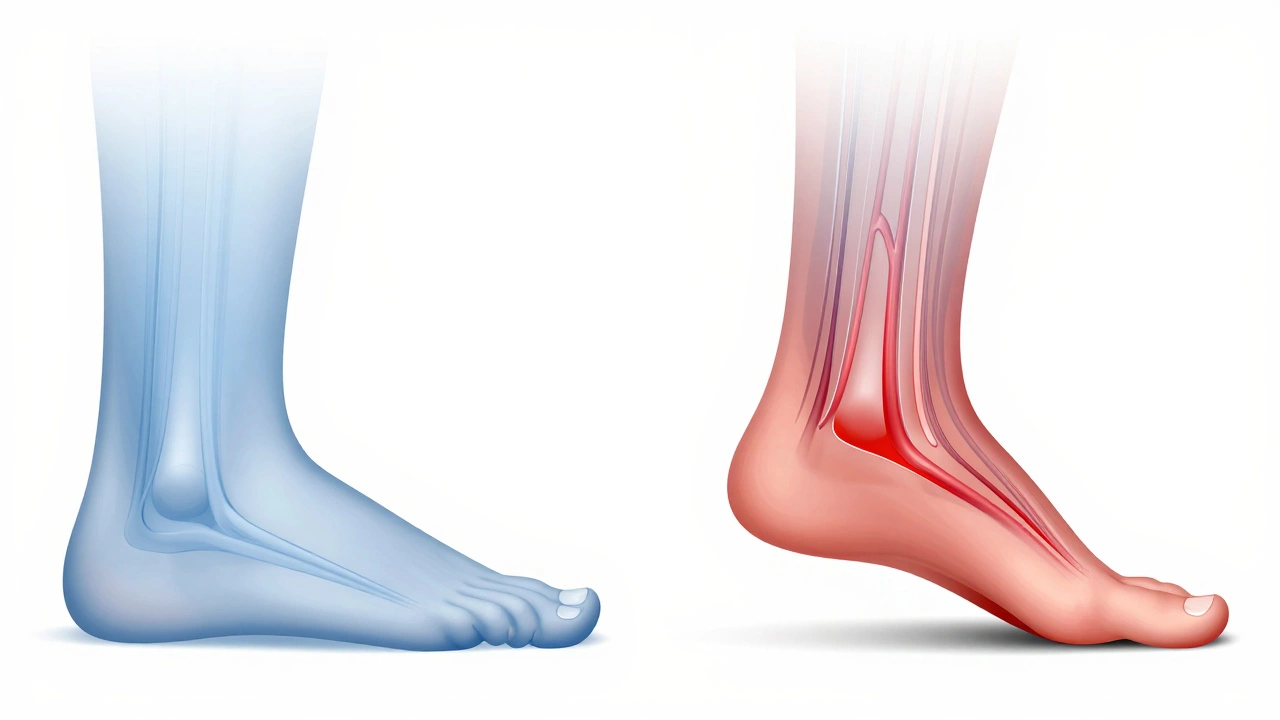
To understand why standard shoe sizing fails runners, you have to look at biomechanics. When you stand still, your foot takes up a specific amount of volume. But as soon as you start moving, especially over distances longer than five miles, two things happen.
First, gravity and impact cause your arches to flatten slightly. This lengthens your foot. Second, blood flow increases to the muscles working hard, causing natural swelling. In many cases, a runner’s foot can grow by half a size or even a full size during a marathon compared to their resting state. If you buy shoes that fit perfectly while sitting on the bench, they will become prisons by the time you hit the halfway mark.
This isn't just about comfort; it's about injury prevention. A shoe that is too tight restricts circulation, leading to numbness. It also forces your toes into an unnatural position, which can alter your gait and put stress on your knees and hips. Conversely, a shoe that is too loose causes your foot to slide around, creating friction that leads to painful blisters.
The "Thumb Width" Rule Explained
So, how much bigger should you go? The industry standard is the "thumb width" rule. Here is how to apply it correctly:
- Wear your running socks: Never try on shoes with bare feet or thin cotton dress socks. Wear the thick, moisture-wicking socks you actually plan to run in.
- Stand up: Sitting compresses your foot. Standing distributes your weight evenly, showing the true shape and spread of your foot.
- Press the toe box: Push the fabric at the very front of the shoe back toward your toes. There should be about a thumbnail’s width (roughly 0.5 to 0.75 inches) of space between your longest toe and the end of the shoe.
- Check the heel: Your heel should sit snugly without lifting. If your heel slips up when you walk, the shoe is too long or the wrong shape, regardless of the toe room.
If you find that your street shoe is a US Men’s 10, you might find that your ideal running shoe is a 10.5 or even an 11. Brands vary wildly in their sizing charts, so relying on the number on the box is dangerous. Relying on the physical space inside the shoe is reliable.
When You Might Need More Than Half a Size
While half a size is the baseline, several factors might push you toward a full size up. Understanding these variables helps you customize your fit strategy.
| Factor | Impact on Fit | Recommended Adjustment |
|---|---|---|
| Wide Foot Shape | Standard width feels tight across the midfoot | Try Wide (2E) version before sizing up |
| Long Distance (>10 miles) | Significant foot swelling occurs later in the run | Add extra 0.25-0.5 inch toe room |
| High Arches | Foot may slide forward if heel counter is loose | Prioritize secure heel lock; check toe gap |
| Custom Orthotics | Takes up volume inside the shoe | Size up one full size to accommodate thickness |
If you have wide feet, simply going up a size adds length but not necessarily width. This can leave your foot sliding side-to-side, which is worse for stability than being slightly tight. In this case, look for brands that offer specific "Wide" or "Extra Wide" fits rather than just increasing the numerical size. Brands like Altra or New Balance are known for accommodating wider foot shapes effectively.
If you use custom orthotics or thick insoles, these take up valuable internal volume. A shoe that fits well with the stock insole will likely feel cramped with your orthotic inserted. In this scenario, sizing up by a full size often solves the pressure point issues without compromising the length.
The Danger of Oversizing
It is possible to swing too far in the other direction. Some runners think, "If more space is better, I’ll go two sizes up." This is a critical error. A shoe that is too large creates a new set of problems.
When there is excessive space in the toe box, your foot has to work harder to grip the ground. Your toes may curl involuntarily to hold onto the shoe, leading to cramping and fatigue. More dangerously, your foot can slide forward excessively during braking phases of your stride. This slippage generates massive amounts of friction, which is the primary cause of runner’s blisters. You might end up with a blister on the top of your foot where the laces dig in, because you’re pulling them tighter to compensate for the loose fit.
Additionally, oversized shoes compromise proprioception-the body's ability to sense its position in space. A bulky, empty shoe feels disconnected from the ground, which can make you feel unstable, especially on uneven terrain like trails. For trail running, a snugger fit is generally preferred to prevent rocks and debris from entering the shoe, though you still need that crucial toe room.
Brand Variability and the "Break-In" Myth
One frustrating aspect of buying running gear is that sizing is not universal. A US 9 in a Nike Pegasus might fit differently than a US 9 in a Brooks Ghost. Nike tends to run narrower and shorter in the toe box, while Hoka models often have a roomier forefoot. Always try on multiple brands if you are unsure.
Also, forget the old idea that leather shoes "break in" and stretch out significantly. Modern running shoes are made of synthetic mesh and foam. They will soften and conform to your foot’s shape slightly, but they will not stretch in length. If it’s tight today, it will be tight tomorrow. Do not buy a shoe hoping it will loosen up.
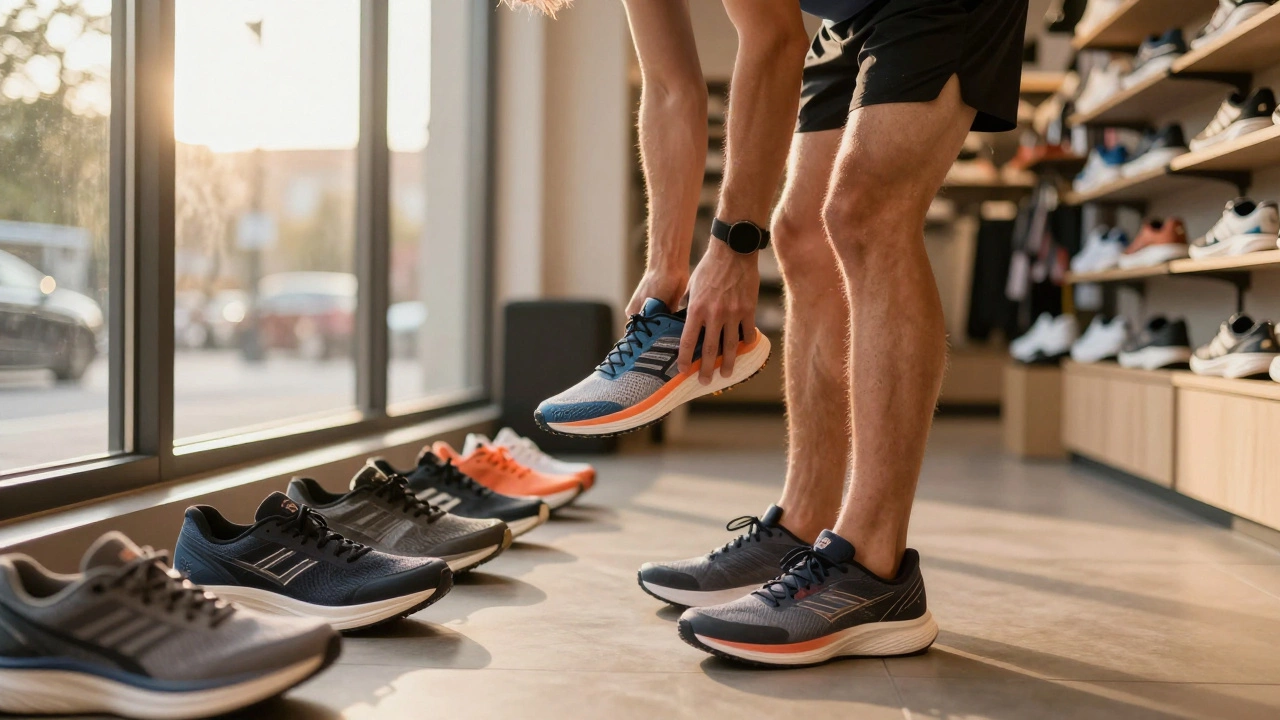
Timing Matters: Shop Late in the Day
When do you go shopping? If you visit the store in the morning, your feet are at their smallest. By late afternoon or evening, they have swollen naturally from daily activity. This mimics the swelling that happens during a run. For the most accurate fitting experience, always shop for running shoes in the late afternoon or after a workout. Your feet will be closer to their maximum volume, ensuring you don’t accidentally buy a pair that becomes too small once you hit the pavement.
Summary Checklist for Perfect Fit
- Always wear your actual running socks during fitting.
- Ensure a thumb-width gap between your longest toe and the shoe tip.
- Check that the heel is locked down with no vertical slip.
- Walk or jog on a treadmill in the store to test dynamic fit.
- Consider wide versions before sizing up if you have broad feet.
- Shop later in the day when feet are naturally swollen.
Getting the right size isn't just about comfort; it's about performance and longevity. A properly fitted shoe allows your foot to move naturally, reduces impact shock, and keeps you injury-free. Take the extra ten minutes to measure both feet-since most people have one foot slightly larger than the other-and fit the larger one. Your legs will thank you on those long Sunday runs.
How much bigger should running shoes be compared to regular shoes?
Generally, you should size up by half a size to a full size. The key metric is leaving about a thumb’s width (0.5 to 0.75 inches) of space between your longest toe and the front of the shoe to account for foot swelling during exercise.
Do running shoes stretch out over time?
Modern running shoes are made of synthetic materials that do not stretch significantly in length. They may soften and mold to the shape of your foot, but if they are tight initially, they will remain tight. Do not rely on a "break-in" period to fix a poor fit.
What if I have wide feet? Should I size up?
Sizing up adds length, not width. If you have wide feet, it is better to look for shoes labeled "Wide" (often marked as 2E or 4E). Sizing up without getting a wide model can lead to instability and blisters due to excess side-to-side movement.
Is it okay to run in shoes that are too big?
No. Shoes that are too big cause your foot to slide, leading to blisters and potential ankle injuries. They also force your toes to grip the shoe unnecessarily, causing cramps and fatigue. A snug heel with room in the toe box is the ideal fit.
Why do my feet hurt after running in new shoes?
Pain often indicates improper sizing or lack of support. If your toes are hitting the front, the shoes are too short. If you have heel pain, the fit may be too loose or the drop is unsuitable for your gait. Always ensure a thumb-width gap at the front and a secure heel lock.