Gym Workouts December 4, 2025
Which Workout Hits Which Muscle? A Clear Guide to Targeting Every Major Group
Muscle Targeting Checker
Find Your Muscle Targets
Select any exercise to see which muscles it activates and their activation percentage.
Muscle Activation Analysis
Ever done a workout and wondered if you’re actually working the muscles you’re supposed to? You’re not alone. Too many people go through the motions - curling weights, pushing machines, swinging dumbbells - without knowing which muscles are firing. The result? Wasted time, uneven development, and maybe even injury. This isn’t about fancy routines or Instagram abs. It’s about knowing exactly what each movement targets so you can build strength, balance, and function - not just noise.
Chest: Pushing Powerhouse
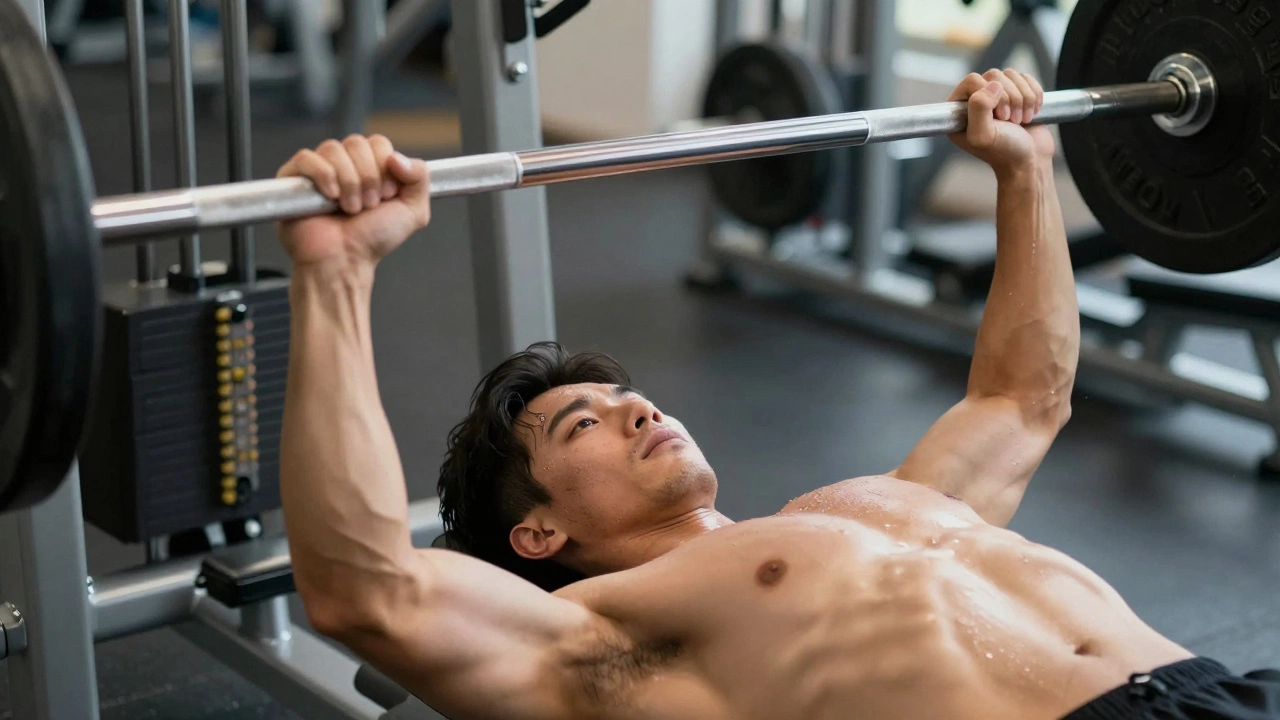
The chest isn’t just one muscle - it’s the pectoralis major, with two heads: clavicular (upper) and sternal (lower). If you want a strong, defined chest, you need to hit both. The barbell bench press is the gold standard. When you lower the bar to your mid-chest and press up, you’re activating the entire pectoralis major, especially the middle and lower fibers. Your triceps and front deltoids help out, but the chest does the heavy lifting.
Want to target the upper chest? Try incline dumbbell presses. The 30-45 degree angle shifts tension upward, engaging the clavicular head more than flat presses. Push-ups work too - but only if you do them right. Keep your body tight, lower until your chest nearly touches the floor, and push through your palms. No sagging hips. No bouncing. Just controlled movement.
Flat bench press: 80% chest, 15% triceps, 5% front delts.
Back: The Hidden Foundation
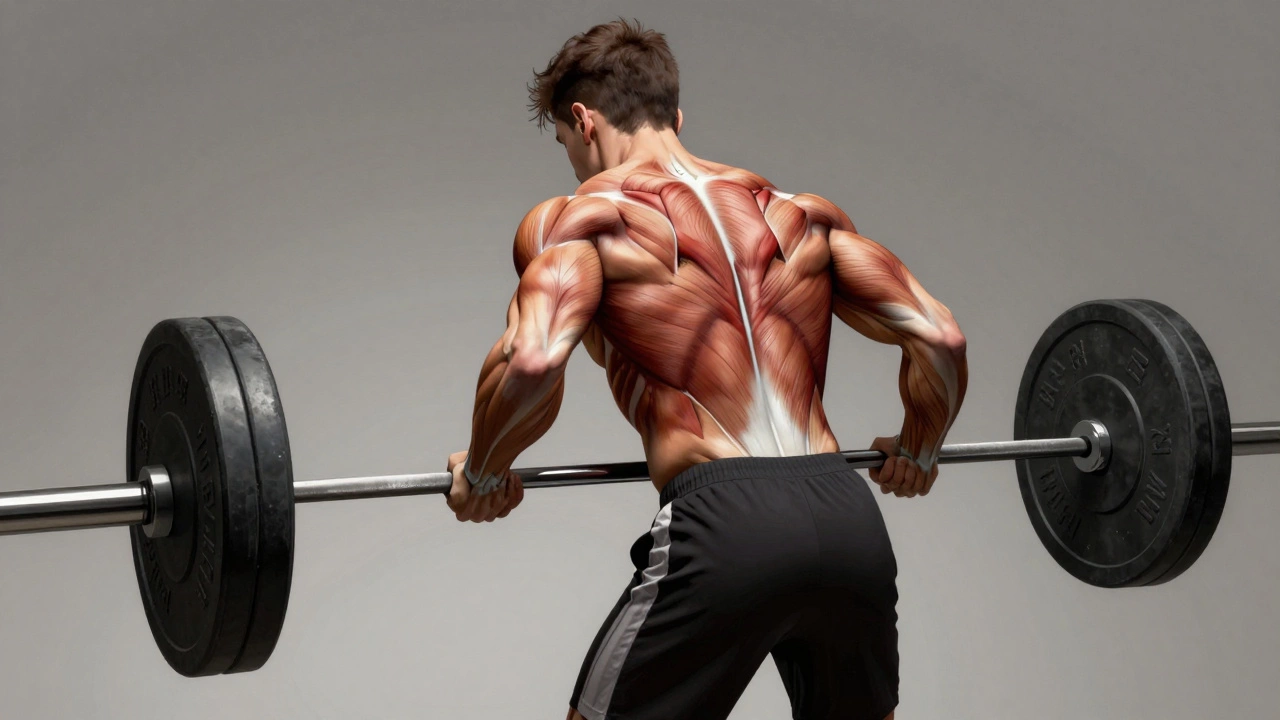
Your back isn’t just for looking good in a T-shirt. It’s your posture engine. The latissimus dorsi (lats) are the big V-shaped muscles running from your lower back up to your armpits. They pull your arms down and back. Pull-ups and chin-ups are the best way to activate them. If you can’t do a full pull-up yet, use an assisted machine or resistance bands. The key is pulling your shoulder blades down and back - not just yanking with your arms.
Barbell rows? That’s your middle back - rhomboids and trapezius. Keep your back flat, hinge at the hips, and pull the bar to your lower ribs. Squeeze at the top. Hold for a second. Lower slow. This is where most people cheat - they swing, they arch, they lift with their lower back. That’s not working the back. That’s risking a herniated disc.
Deadlifts? They hit your lats too. Not just your glutes and hamstrings. As you lock out the bar, your lats brace your spine. If you feel your back tightening more than your legs, you’re doing it right.
Legs: Don’t Skip the Big Guys
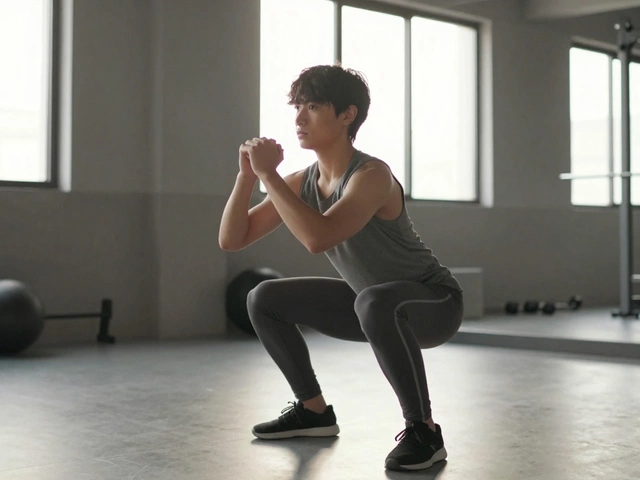
Leg day isn’t optional. Your quads, hamstrings, glutes, and calves make up over half your muscle mass. If you’re skipping squats because they’re hard, you’re missing the most effective lower-body exercise ever invented. Back squats - barbell on your traps, feet shoulder-width apart - engage your quads, glutes, and hamstrings equally. Depth matters. Go below parallel. If your hips drop below your knees, you’re activating more muscle fibers than a partial squat ever could.
Deadlifts again? Yes. They’re a full-body movement, but your hamstrings and glutes do the driving. The moment you lift the bar off the floor, your hamstrings contract hard. Your glutes fire as you stand up. If your lower back aches more than your legs, your form’s off. Hinge at the hips, keep the bar close, and drive through your heels.
Lunges? They’re unilateral - meaning each leg works alone. That fixes imbalances. Step forward, lower until your front thigh is parallel to the floor, and push back up. Your quads and glutes do the work. Your calves stabilize. No wobbling. No leaning forward. Keep your torso upright.
Shoulders: The Delts Are Three Muscles in One
Your shoulder isn’t one muscle. It’s three: anterior (front), lateral (side), and posterior (rear) deltoids. Most people only train the front. That’s why so many people have rounded shoulders and weak backs. You need to hit all three.
Overhead press - standing or seated - is your front and side delt builder. Keep your core tight. Don’t arch your back. Press the bar straight up, not forward. If you’re using too much weight and rocking back, you’re not building shoulders. You’re training your lower back.
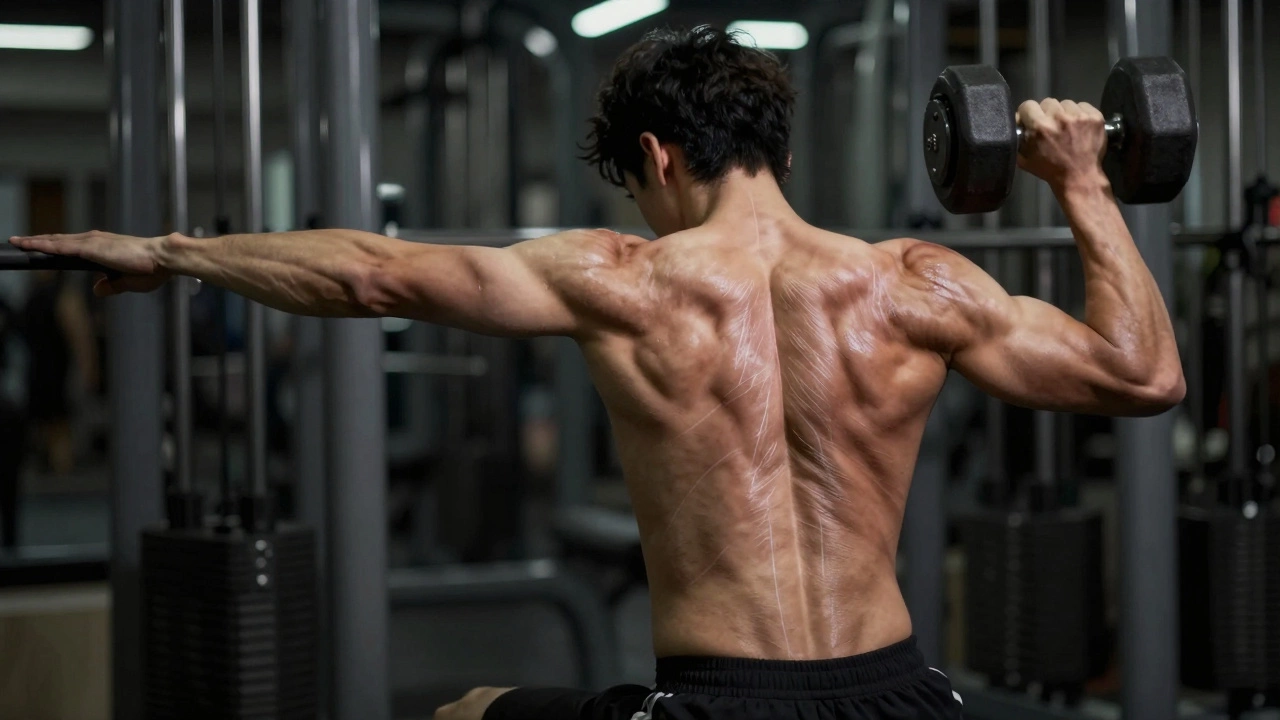
Side lateral raises? That’s your lateral deltoid. Use light dumbbells. Raise them to shoulder height, thumbs slightly down. Don’t swing. Don’t shrug. Just lift. Lower slow. Three sets of 12 reps with 8-10 lb dumbbells will burn more than 20 lbs of heavy presses.
Rear delt flyes? That’s your posterior deltoid. Bend at the hips, let your arms hang, and pull the weights out to the sides like you’re trying to touch your shoulder blades together. This fixes posture. It prevents shoulder impingement. And most people never do it.
Arms: Biceps and Triceps Aren’t Isolated
Yes, biceps curls work your biceps. But if you think that’s all you need for strong arms, you’re wrong. Your triceps make up two-thirds of your upper arm. They’re the muscle that straightens your elbow. Skull crushers, overhead extensions, and close-grip bench presses hit them hard.
Chin-ups? They’re not just a back exercise. They’re a biceps builder too. Underhand grip = more biceps. Overhand = more back. Do both. Your arms will thank you.
Hammer curls? They hit your brachialis - the muscle under your biceps that makes your arms look thicker. Use a neutral grip (palms facing each other). Curl slow. Lower slower. No momentum.
Core: More Than Just Abs
Your core isn’t just your six-pack. It’s your entire midsection - rectus abdominis, obliques, transverse abdominis, and even your lower back muscles. Planks are great, but they’re not enough. You need movement.
Dead bugs? Lie on your back, arms up, knees bent at 90 degrees. Slowly lower one arm and the opposite leg toward the floor. Keep your lower back pressed into the ground. That’s your transverse abdominis firing - the muscle that stabilizes your spine.
Pallof presses? Stand sideways to a cable machine, hold the handle at chest height, and push straight out. Resist the rotation. That’s your obliques working to stop you from twisting. No spinning. No leaning. Just holding strong.
Ab wheel rollouts? If you can do them, you’re already ahead. Roll out slowly. Engage your core like you’re bracing for a punch. Don’t let your hips sag. Pull back in with your abs - don’t just let gravity pull you.
Putting It All Together
There’s no magic split. But there is a smart one. Here’s a simple weekly plan that covers every muscle group without overtraining:
- Monday: Chest + Triceps
- Tuesday: Back + Biceps
- Wednesday: Rest or light cardio
- Thursday: Legs + Core
- Friday: Shoulders + Upper Back
- Saturday: Full body circuit (squats, push-ups, rows, planks)
- Sunday: Rest
Each workout should have one compound lift (bench, squat, deadlift, pull-up) and two isolation moves. That’s it. No 10-exercise monster sessions. Just focused, intentional movement.
Common Mistakes
You’re not doing it wrong because you’re weak. You’re doing it wrong because you’re not paying attention.
- Doing only machine exercises - machines don’t force you to stabilize. Free weights do.
- Skipping rear delts - that’s why your shoulders look rounded.
- Not going deep enough on squats - partial reps don’t build strength.
- Using momentum on curls - that’s not biceps work, that’s momentum work.
- Ignoring the mind-muscle connection - if you’re thinking about your playlist, you’re not training your muscles.
Feel the muscle working. Squeeze it. Control the weight. That’s how you build real strength - not just weight on the bar.
What If You’re Not Seeing Results?
If you’ve been training for months and your chest hasn’t grown, your back still feels weak, or your legs look the same - it’s not about volume. It’s about activation. Try this: Before your next workout, do 2 minutes of light activation for each muscle group. For shoulders: band pull-aparts. For glutes: banded hip thrusts. For back: scapular wall slides. Then move into your main lifts.
That small change - activating the muscle before you load it - makes your body respond faster. Your nervous system learns where to send the signal. And that’s how progress happens.
Can I build muscle with just bodyweight exercises?
Yes, but only if you make them hard enough. Push-ups, pull-ups, squats, and lunges can build serious muscle - if you increase difficulty over time. Add weight vests, slow down the tempo, or do single-leg variations. Bodyweight isn’t easy - it’s just misunderstood.
Do I need to train every muscle group every week?
No. Most muscles recover in 48-72 hours. Training each group 2-3 times a week is ideal for growth. Don’t train chest two days in a row. Spread it out. Consistency beats frequency.
Why do my shoulders hurt after overhead presses?
It’s usually because your rear delts and upper back are weak. Your front delts are overworking, pulling your shoulders forward. Add rear delt flyes and face pulls twice a week. Fix the imbalance, and the pain goes away.
How do I know if I’m using the right weight?
If you can do 8-12 reps with perfect form and the last two feel impossible, you’re using the right weight. If you can do 15+ reps easily, go heavier. If you can’t hit 8 without breaking form, go lighter.
Should I do cardio on leg day?
Not right after. Leg day drains your glycogen. If you run hard afterward, you’ll compromise recovery and muscle growth. Do cardio on separate days, or do light walking after your weights - just enough to move blood, not burn energy.
Final Thought
You don’t need 15 exercises to build a strong body. You need to know which ones work - and do them well. Stop guessing. Start feeling. If you can’t feel your chest squeeze on a bench press, you’re not training your chest. You’re just moving a bar. Muscle doesn’t grow from effort alone. It grows from precision. And precision starts with knowing which workout hits which muscle - and making sure it actually does.