Gym Workouts January 1, 2026
What Is a Good Gym Plan? A Simple, Realistic Guide for Beginners and Beyond
Rep Range Calculator
Your Fitness Goals
Your Recommended Range
Sets:
Reps:
Why this range works: According to the article, the 8-12 rep range is the sweet spot for building strength and muscle without overloading joints. Progressive overload is key - aim to add weight or reps each week.
Most people start a gym plan with big goals: get shredded, lift heavy, look like a magazine cover. Then, after two weeks, they’re back on the couch wondering why nothing changed. The problem isn’t motivation. It’s structure. A good gym plan isn’t about doing every exercise known to man. It’s about doing the right things, consistently, in a way that fits your life.
Start with why you’re going
Before you pick a workout, ask yourself: what do you actually want? Lose fat? Build muscle? Feel stronger lifting groceries? Run after your kids without getting winded? Each goal needs a different approach.If you want to lose fat, you need to create a calorie deficit. That means moving more and eating slightly less. But you still need to lift weights. Without strength training, you’ll lose muscle along with fat-and that slows your metabolism. If you want to build muscle, you need to lift heavy enough to challenge your body, and give it time to recover. If you just want to feel better, consistency matters more than intensity.
There’s no magic routine. But there are principles that work for everyone.
The core of a good gym plan: push, pull, legs
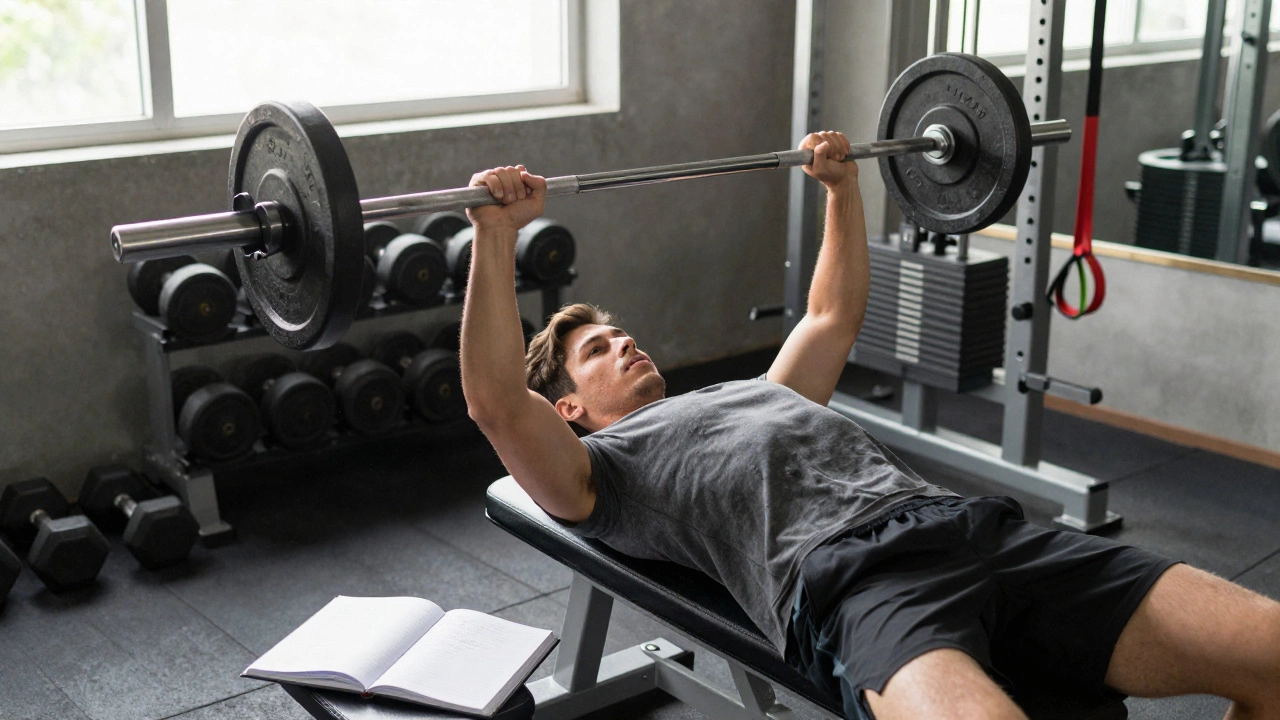
A simple, proven structure for any gym plan is the push-pull-legs split. It’s not fancy. It doesn’t require fancy equipment. And it works whether you’re 18 or 58.- Push days: Chest, shoulders, triceps. Exercises: bench press, overhead press, push-ups, lateral raises.
- Pull days: Back, biceps, rear delts. Exercises: rows, pull-ups, lat pulldowns, face pulls.
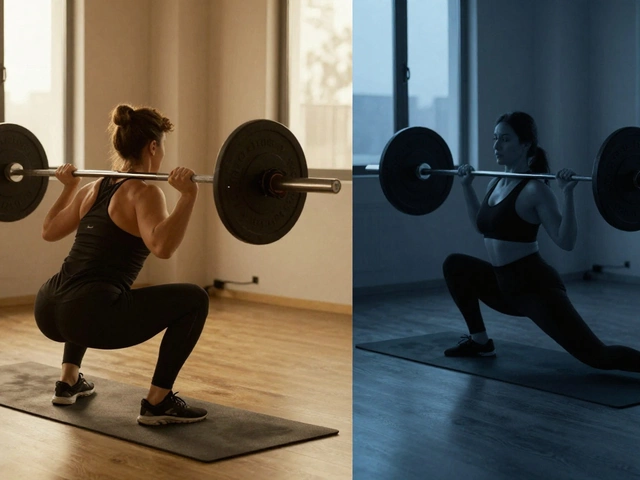
- Leg days: Quads, hamstrings, glutes, calves. Exercises: squats, deadlifts, lunges, leg curls.
Do each once a week. That’s three days in the gym. You can add a fourth day for cardio or core work if you want. But three solid days beats six half-hearted ones every time.
Start with bodyweight or light weights. Focus on form. A squat done right with 20kg is better than a sloppy squat with 60kg. Your joints will thank you. So will your progress.
How much should you lift? How many reps?
You don’t need to guess. Here’s what works:- For strength: 3-5 sets of 3-6 reps. Use heavy weights. Rest 2-3 minutes between sets.
- For muscle growth: 3-4 sets of 8-12 reps. Lift until the last rep is hard, but not impossible. Rest 60-90 seconds.
- For endurance or fat loss: 2-3 sets of 15-20 reps. Keep rest short-30-60 seconds.
Most people should start with the 8-12 rep range. It’s the sweet spot for building strength and muscle without overloading your joints or risking injury.
Progressive overload is the secret sauce. That means slowly adding weight, reps, or sets over time. If you did 3 sets of 10 squats with 40kg last week, try 40kg for 11 reps this week. Or 42.5kg for 10 reps. Small steps. Every week.
How often should you go to the gym?
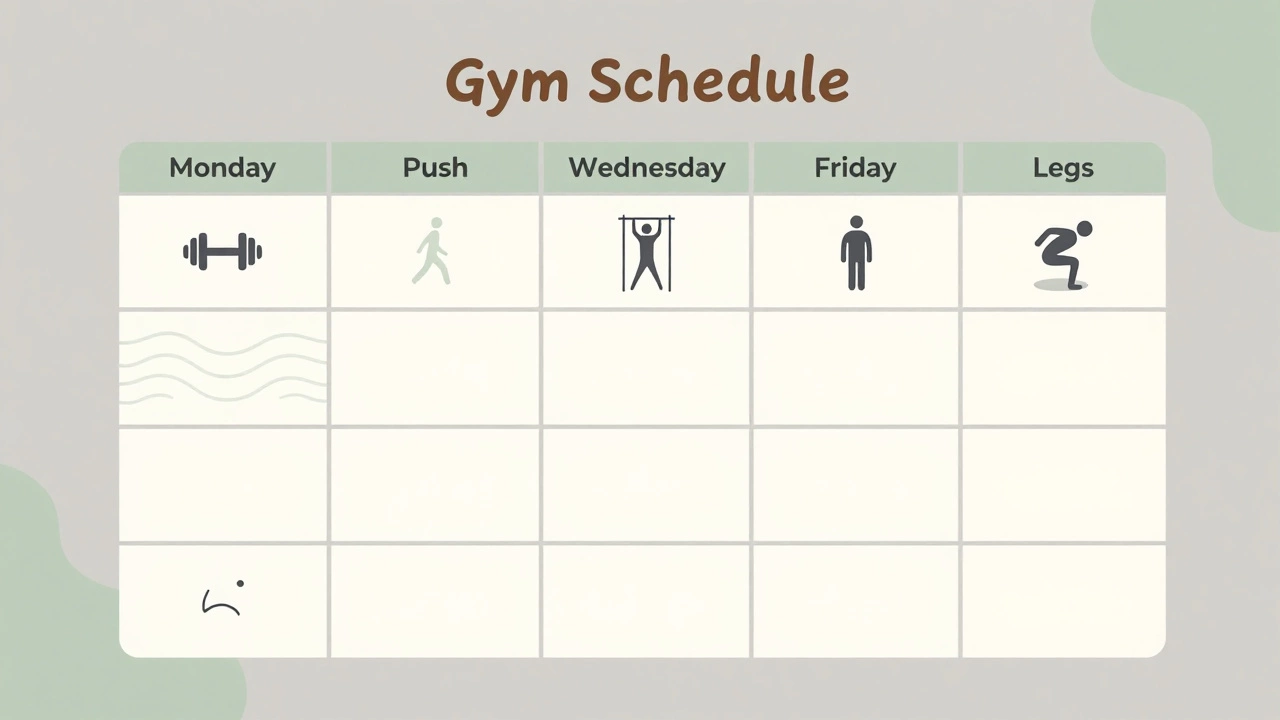
Three days a week is the minimum for real results. Four is better. Five is fine if you’re careful. Six or seven? You’re asking for burnout.Here’s a realistic weekly schedule:
- Monday: Push
- Tuesday: Rest or light cardio (walk, bike, swim)
- Wednesday: Pull
- Thursday: Rest
- Friday: Legs
- Saturday: Optional cardio or mobility work
- Sunday: Rest
You don’t need to train every day. Your muscles grow when you rest-not when you’re sweating. Sleep matters as much as the weights you lift.
Cardio isn’t optional. But it doesn’t have to be boring.
A good gym plan includes movement outside lifting. You don’t need to run for 45 minutes on a treadmill. Try this:- Walk 8,000-10,000 steps a day. Use a cheap fitness tracker if you need to.
- Do 15-20 minutes of brisk walking or cycling after your gym session.
- Try stair climbing, rowing, or swimming once a week. It’s easier on the joints than running.
Cardio helps you recover faster, improves heart health, and burns extra calories without killing your energy. Don’t overdo it. If you’re lifting hard, your body needs energy to rebuild.
What about abs and core?
You don’t need 10 different ab exercises. Your core is already working during squats, deadlifts, and push-ups. If you want to strengthen it more, add two things:- Planks: Hold for 30-60 seconds, 2-3 times. Keep your body straight. No sagging hips.
- Dead bugs: Lie on your back, arms up, knees bent at 90 degrees. Slowly lower one arm and opposite leg without arching your back. Do 10 reps per side.
That’s it. No crunches. No sit-ups. They’re hard on your spine and don’t do much for your core strength.
What to avoid
Here’s what kills gym plans before they start:- Doing too much too soon: If you’re new, don’t try to do 10 exercises in one session. Stick to 4-6. Master them.
- Copying Instagram workouts: Those 90-minute sessions with 20 exercises? They’re for people with coaches, supplements, and no job. You don’t need that.
- Ignoring recovery: Sore muscles are normal. Sharp pain isn’t. If your knee or shoulder hurts, stop. Rest. Get it checked.
- Skipping warm-ups: Five minutes of light cardio and dynamic stretches (arm circles, leg swings, bodyweight squats) prevent injuries.
- Not tracking progress: Write down what you lifted, how many reps, how you felt. You won’t remember it. And without data, you won’t know if you’re getting stronger.
Real progress takes time
You won’t look like a bodybuilder in six weeks. You won’t lose 10kg of fat in a month. That’s not how the body works. Real change happens slowly.After four weeks, you might notice:
- Standing taller
- Lifting heavier things without struggling
- Feeling less tired during the day
- Sleeping better
After 12 weeks, people will start asking if you’ve been working out. That’s when you know it’s working.
Stick with it
The best gym plan is the one you’ll do for years. Not the one you do for two weeks and quit.Find a routine that fits your schedule. If you hate the gym in the morning, go at night. If you can’t get there three times a week, start with two. Do what you can. Then do a little more next week.
Progress isn’t linear. Some weeks you’ll feel strong. Others, you’ll feel drained. That’s normal. Keep showing up. The results come from consistency-not perfection.
How long should a gym session last?
A good gym session should last 45 to 75 minutes. That’s enough time to warm up, do 4-6 compound lifts, finish with light cardio or core work, and cool down. Anything longer than 90 minutes often means you’re wasting time between sets or doing too many exercises. Focus on intensity, not duration.
Can I do a gym plan at home?
Yes, absolutely. You don’t need a full gym. Dumbbells, resistance bands, a pull-up bar, and a bench (or sturdy chair) are enough. Bodyweight squats, push-ups, inverted rows under a table, and lunges build real strength. Add a kettlebell or barbell later if you want. The principles stay the same: push, pull, legs, progress slowly.
Should I lift weights every day?
No. Muscles grow during rest, not during workouts. Lifting heavy every day leads to overtraining, joint pain, and burnout. Give each muscle group at least 48 hours to recover. If you want to train daily, alternate between upper and lower body, or do light cardio and mobility work on off days.
Do I need protein shakes?
No. Protein shakes are convenient, but not necessary. You can get enough protein from food: eggs, chicken, fish, beans, tofu, Greek yogurt, cottage cheese. Aim for 1.6-2.2 grams of protein per kilogram of body weight per day. If you struggle to hit that number, a shake helps. But it won’t replace real food or good training.
What if I’m over 40 or have joint issues?
You still need strength training-maybe more than younger people. Muscle loss accelerates after 40. Start with lighter weights, focus on control, and avoid high-impact moves like jump squats. Use machines or resistance bands if free weights hurt your joints. Walking, swimming, and cycling are great for cardio. Talk to a physiotherapist if you’re unsure. Movement is medicine, even if you move slowly.