Sports Equipment March 19, 2026
What Are Some Simple Machines Used in Sports?
Lever Advantage Calculator
How Sports Equipment Uses Levers
Enter values to calculate mechanical advantage for different lever types in sports equipment. Based on principles explained in the article about simple machines in sports.
1st Class
2nd Class
3rd Class
Results
Mechanical Advantage
0.00
Force multiplier: This is how much more force you generate compared to your input
Impact on Performance
Enter values to see how this lever affects sports equipment
Sports Example
Select a lever type to see how it applies to sports equipment
Think about the last time you watched a tennis match or a cycling race. You saw athletes pushing limits, but you probably didn’t notice the tiny machines working behind every move. Simple machines aren’t just in textbooks-they’re built into the gear we use every day in sports. These six basic tools-levers, pulleys, inclined planes, wedges, screws, and wheel and axle-make athletic performance possible, efficient, and safer.
Levers: The Power Behind Every Swing
Levers are everywhere in sports. A tennis racket? That’s a second-class lever. The handle is the fulcrum, your hand applies force, and the strings hit the ball. This setup multiplies the force from your wrist into a powerful strike. Same with a baseball bat. The bottom end is the fulcrum, your top hand pushes down, and the barrel delivers the impact. Without levers, you’d need twice the strength to swing the same speed.
Even rowing oars work as levers. The oarlock acts as the fulcrum. The rower pulls the handle, and the blade moves water with way more force than if they just pushed with their arms. That’s why elite rowers train their core-not just their arms. The lever system turns body movement into propulsion.
Pulleys: Making Weight Training Smarter
Ever used a cable machine at the gym? That’s a pulley system. Two or more wheels with a rope running through them change the direction of force. Want to do a lat pulldown? You pull down, but the weight stack moves up. That’s physics at work. Pulleys let you lift heavier loads with less effort and control the motion smoothly.
In rock climbing, pulleys are used in rescue systems and auto-belay devices. A climber falls, and a pulley-controlled brake slows them down without a human operator. In sailing sports like yachting, complex pulley systems-called blocks-adjust sail tension. One pull on a line can tighten a sail with hundreds of pounds of force.
Inclined Planes: Slopes That Save Energy
An inclined plane is just a ramp. It reduces the force needed to lift something by spreading it over a longer distance. In sports, you see this in ski jumps, BMX ramps, and even the start blocks in track and field.
Track sprinters use angled start blocks. The slope lets them push off with maximum force forward, not straight up. If they pushed off flat ground, they’d lose energy lifting their body instead of moving ahead. Ski jumps are designed with steep inclines so athletes can build speed before launch. The ramp doesn’t just help-it’s critical for safety and distance.
Even the incline on a treadmill isn’t just for cardio. It simulates real hills, forcing muscles to work differently. That’s why runners train on inclines-to build strength that translates to outdoor terrain.
Wedges: Cutting Through Resistance
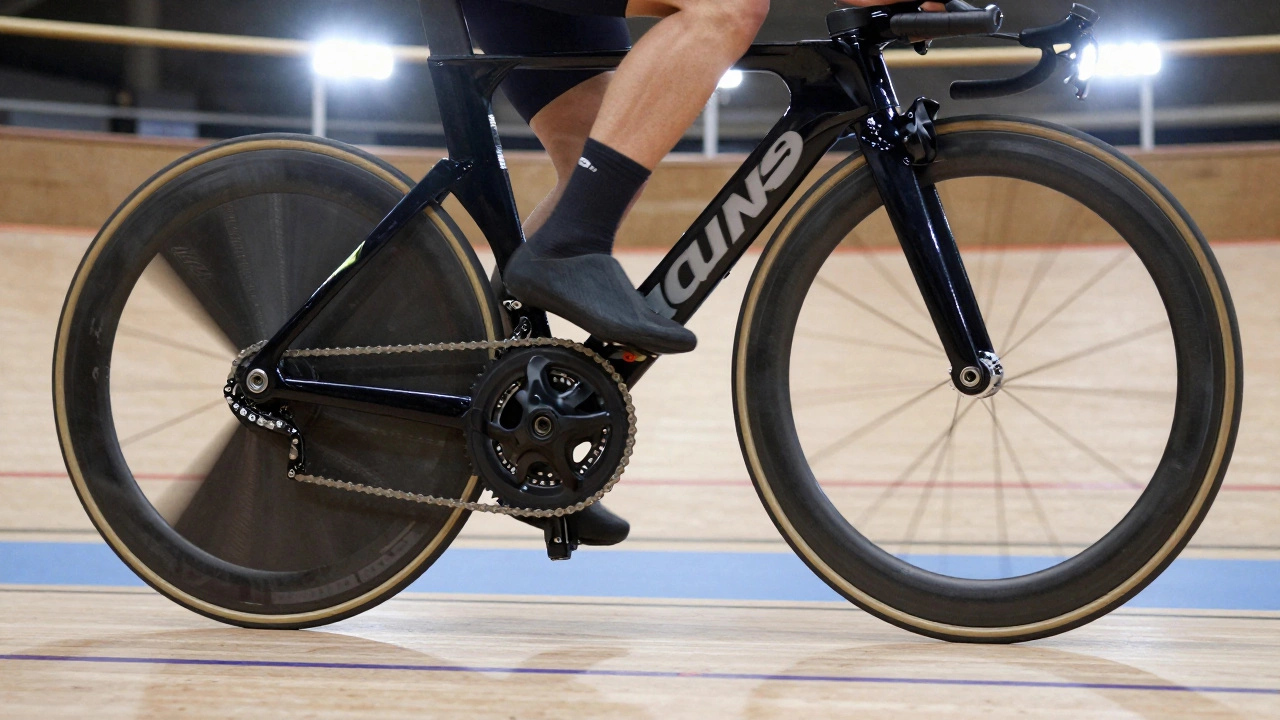
A wedge is two inclined planes back to back. It splits things apart or pushes through resistance. In sports, wedges are all about reducing friction or cutting through air and water.
Think of a hockey stick blade. The curved edge is a wedge that glides over ice. The sharper the edge, the less friction, the faster the puck moves. Same with a speed skating blade-its thin, sharpened edge slices through ice instead of pushing against it.
Swimsuits use wedge-shaped panels to reduce drag. The material is stitched in a way that channels water smoothly over the body. Olympic swimmers wear suits with wedge-designed seams that cut water resistance by up to 5%-a huge advantage when races are won by hundredths of a second.
Even cleats on soccer or football boots have wedge-shaped studs. They dig into turf to prevent slipping. The angle of each stud lets force transfer from foot to ground without sliding sideways.
Screws: Holding It All Together
Screws are inclined planes wrapped around a cylinder. They convert rotational motion into linear force. You don’t always think of them as machines, but they’re essential in sports gear.
Every bike has screws holding the crankset, chainrings, and pedals. A single loose screw can cause a crash. High-end racing bikes use titanium screws that are lighter but still strong enough to handle thousands of pedal strokes. In golf, the screws that attach clubheads to shafts are precision-engineered. A tiny change in torque can alter the ball’s flight.
Even your running shoes have screws. The midsole and outsole are bonded with screws in some models to allow for replacement. In tennis rackets, screws hold the grommets that guide the strings. If they wear out, the string tension changes-and so does your control.
Wheel and Axle: The Heart of Motion
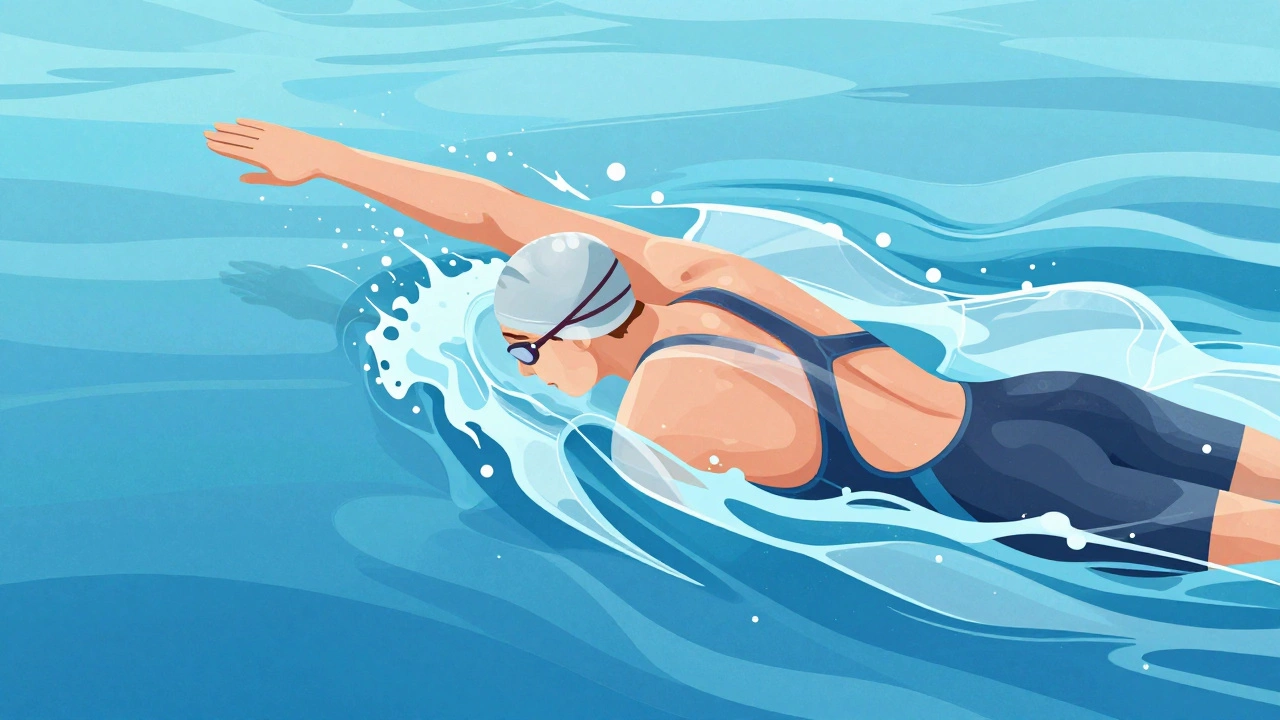
Nothing moves like a wheel and axle. It reduces friction and multiplies force. In sports, it’s the most visible simple machine.
Skateboards, roller skates, and inline skates all use ball bearings inside wheels. Those bearings are tiny wheels and axles working together to let the wheel spin with almost no resistance. A single bearing can handle over 10,000 rotations per minute.
Wheelchairs used in racing have ultra-light carbon fiber wheels with narrow tires. The axle is positioned to shift weight forward, improving acceleration. In cycling, the chainring and crank form a wheel and axle system. The larger the chainring, the more force you need-but the farther you go per pedal stroke.
Even the wheels on a golf cart or ball return machine use this principle. Without wheels, transporting equipment would take half a dozen people. With them, one person moves gear across a field.
Why This Matters for Athletes
Understanding these machines doesn’t make you a physicist-it makes you a smarter athlete. When you know how your gear works, you can adjust it better. A cyclist who understands pulley tension can fine-tune their derailleur. A tennis player who knows how the racket’s lever system works can choose a frame that matches their swing style.
Equipment manufacturers don’t guess. They use physics to design gear. A soccer ball’s seams? They’re shaped like wedges to reduce drag. A baseball glove’s pocket? It uses a curved wedge to trap the ball. Even the grip on a hockey stick is threaded like a screw to prevent slipping.
Every time you see a record broken, it’s not just muscle and training. It’s physics. The simple machines hidden in your gear are working silently to give you that edge.
Are simple machines only found in equipment, or do they exist in body movements too?
Simple machines are physical tools, so they’re built into gear-not your body. But your body acts like them. Your forearm is a lever, with the elbow as the fulcrum. Your calf muscles and Achilles tendon work like a pulley system to lift your heel. So while the machines are in the equipment, your body mimics their mechanics. That’s why strength training often focuses on lever-based movements like squats and rows.
Can I improve my performance just by understanding these machines?
Yes, but not alone. Knowing how your racket or bike works helps you make smarter choices-like choosing the right grip size, adjusting your cleat angle, or selecting the right wheel size. But performance still comes from training, technique, and recovery. Understanding machines just removes guesswork. It turns trial and error into precision tuning.
Do all sports use all six simple machines?
Not every sport uses all six, but most use at least three. Swimming relies heavily on wedges (body shape) and wheel-and-axle (hand and foot motion). Track and field uses levers (arms and legs) and inclined planes (start blocks). Cycling uses wheel and axle, levers (pedals), and screws (frame bolts). Even archery uses a pulley system in compound bows. So while no sport uses all six equally, the combination across sports covers them all.
Are modern sports gadgets like smartwatches considered simple machines?
No. Smartwatches and sensors are electronics-they measure data, they don’t apply mechanical force. Simple machines are purely mechanical. A smartwatch might tell you your stride length, but it doesn’t change how your shoe works. The actual shoe? Still uses a wheel-and-axle (the sole’s rotation) and a wedge (the outsole tread). The tech enhances, but doesn’t replace, the physics.
Why aren’t these machines taught in sports training?
Coaches focus on movement, repetition, and results. Physics is often left to engineers. But that’s changing. Top programs now hire biomechanists who explain how gear and body work together. Some high schools in the UK and US have started adding basic physics modules into PE classes. The goal? Help athletes understand why their gear behaves the way it does. Knowledge turns users into partners in performance.