EuroVelo: Cycling Routes Across Europe and What You Need to Know
When you think of cycling across countries, EuroVelo, a network of long-distance cycling routes spanning Europe, connecting over 40 countries. Also known as the European Cycle Routes Network, it’s not just a set of paths—it’s a way to explore Europe at your own pace, whether you’re biking from the Arctic Circle to the Mediterranean or crossing from Lisbon to Istanbul. These routes aren’t for elite athletes alone. They’re used by families, retirees, weekend adventurers, and even people switching from cars to bikes for health and sustainability.
EuroVelo routes require little more than a decent bike, some basic gear, and the willingness to roll forward. You don’t need to be a pro cyclist. Many riders take weeks—or months—to complete a single route, stopping in small towns, camping by rivers, or staying in guesthouses run by locals. The network includes routes like EuroVelo 6, a 4,500-kilometer route following the Loire, Rhine, and Danube rivers from the Atlantic to the Black Sea, and EuroVelo 1, the Atlantic Coast Route that runs from Norway to Portugal, passing through rugged cliffs, fishing villages, and quiet country lanes. These aren’t just bike paths—they’re cultural corridors, linking history, food, and community.
What makes EuroVelo stand out isn’t the distance—it’s the consistency. Unlike random trails or Google Maps bike routes, EuroVelo routes are signed, mapped, and maintained across borders. You’ll find clear signage, rest stops, and even bike repair stations in key towns. Many sections are traffic-free or use quiet backroads, making them safe for riders of all ages. This is why you’ll see people in their 60s biking from Belgium to Spain, or teens training for their first long ride on EuroVelo 15, the Rhine Route.
And while EuroVelo is about cycling, it’s also about connection. The same people who read about marathon training timelines or how to build stamina for long runs are often the ones planning their next EuroVelo trip. The mindset is similar: progress over speed, consistency over intensity, and enjoyment over competition. Whether you’re looking to lose belly fat through daily rides, recover from injury with low-impact movement, or just escape the daily grind, these routes offer a real alternative to the gym.
Below, you’ll find real stories from riders who’ve taken on long-distance cycling—some with no prior experience, others who turned a weekend ride into a life change. You’ll see how people balance training, gear, and recovery on the road, just like they do on the track or in the gym. Whether you’re thinking of biking through France or just curious how far you could go, these posts give you the practical truth—not the brochures.
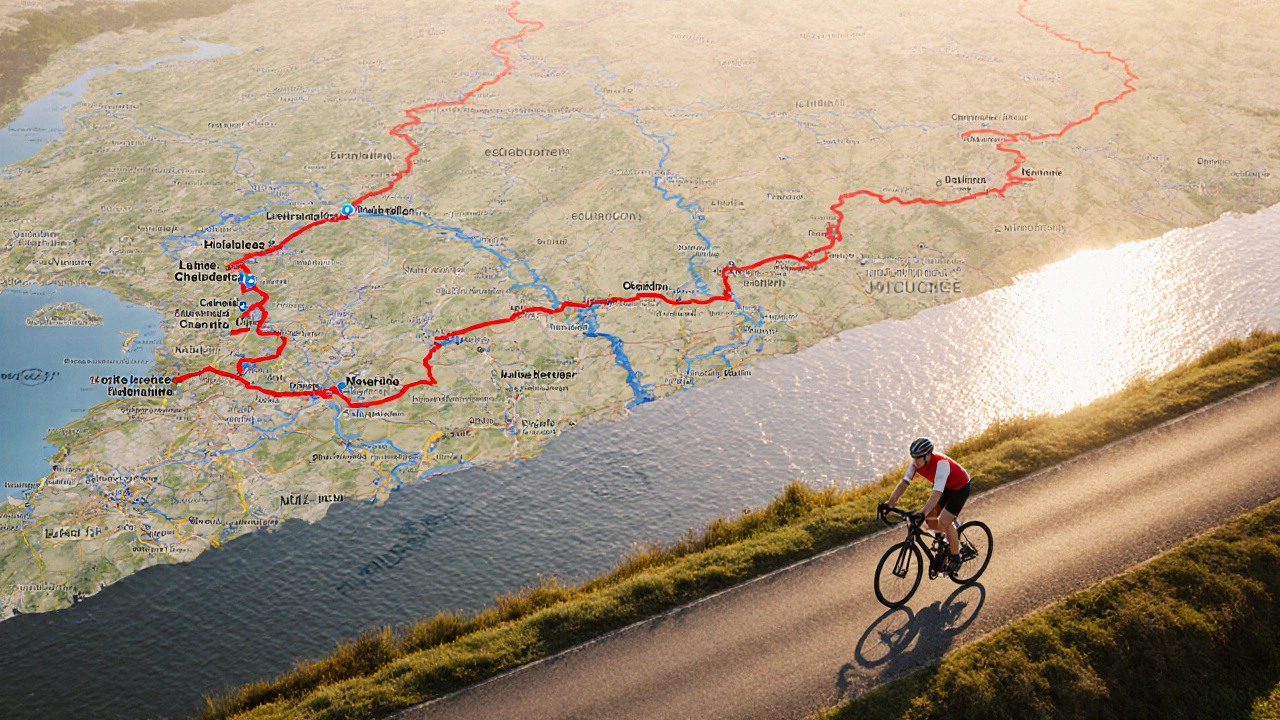
7 Major Cycling Routes Every Rider Should Know
Discover the 7 major cycling routes, from EuroVelo River Route to Hadrian's Wall, with distances, difficulty, highlights and planning tips for every rider.