Boxing Matches December 22, 2025
Is UFC Considered Boxing? The Key Differences Between UFC and Traditional Boxing
UFC vs Boxing Comparison Tool
Rules
ExpandOnly punches with gloves allowed
No grappling, no kicks, no takedowns
No ground fighting or submissions
Punches, kicks, knees, elbows allowed
All grappling techniques allowed
Ground fighting and submissions permitted
Equipment
Expand8-10 ounce gloves
Square ring
No protective gear
4 ounce gloves
Octagon cage
Mouthguard and headgear (in training)
Training
ExpandMultiple disciplines: wrestling, jiu-jitsu, Muay Thai, boxing
5-7 days per week of varied training
Full contact sparring across all techniques
Primarily focused on punching technique
3-5 days per week of specialized training
Limited sparring focused on punching
Scoring
Expand50/50 scorecard system
Based on total offense, damage, and control
Can win by KO, TKO, or decision
10-point must system
Based on clean punches landed and ring control
Can win by KO, TKO, or decision
Fighting Style
ExpandGeneralist approach
Adapt to all ranges and techniques
Strikes, takedowns, ground control
Specialist approach
Focus on standing striking
Pure punching technique
Pro Career Path
ExpandCan transition from other martial arts
Common to have background in wrestling, jiu-jitsu
Path often includes local MMA promotions
Typically starts in amateur boxing
Path usually involves regional boxing promotions
Path may include professional boxing league
People often ask if UFC is boxing. It’s a simple question, but the answer isn’t. If you’ve watched a UFC fight and seen punches, kicks, and grappling, it’s easy to think it’s just boxing with extra moves. But that’s not right. UFC and boxing are two completely different sports - even if they both involve hitting someone in the face.
What Is Boxing?
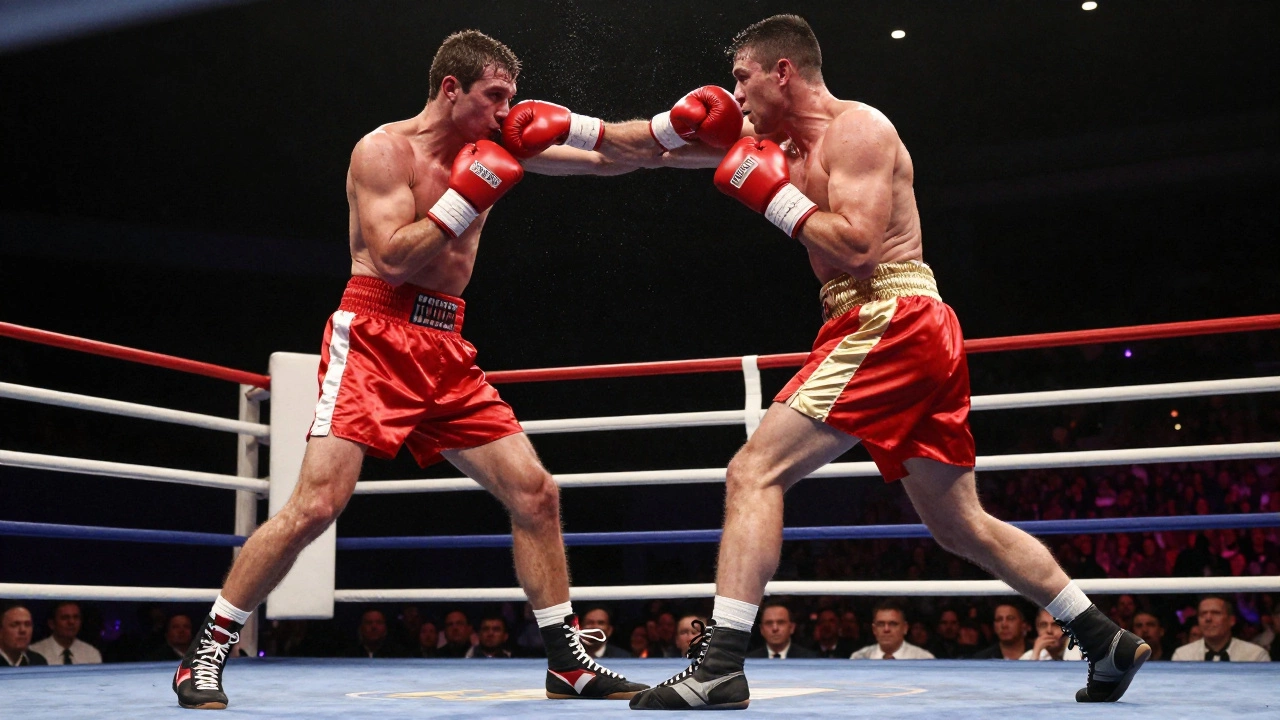
Boxing is one of the oldest organized combat sports. It’s been around for centuries, with rules that haven’t changed much since the Marquess of Queensberry Rules were set in 1867. In boxing, fighters wear gloves and can only use their fists. No kicks, no knees, no throws, no chokes. The ring is square, the rounds are three minutes long, and the goal is to knock your opponent out or win on points by landing cleaner, harder punches.
Boxers train for years to perfect their footwork, head movement, and timing. They spend hours on the heavy bag, shadowboxing, and sparring with focus mitts. Their conditioning is all about endurance, punch accuracy, and defense. A good boxer doesn’t just throw power shots - they make you miss, then counter with precision.
Professional boxing matches are usually 10 to 12 rounds. Fighters wear 8- to 10-ounce gloves, which are designed to protect the hands and reduce cuts. The scoring system is based on clean punches landed, ring control, and defense. Knockouts happen, but many fights go the distance.
What Is UFC?
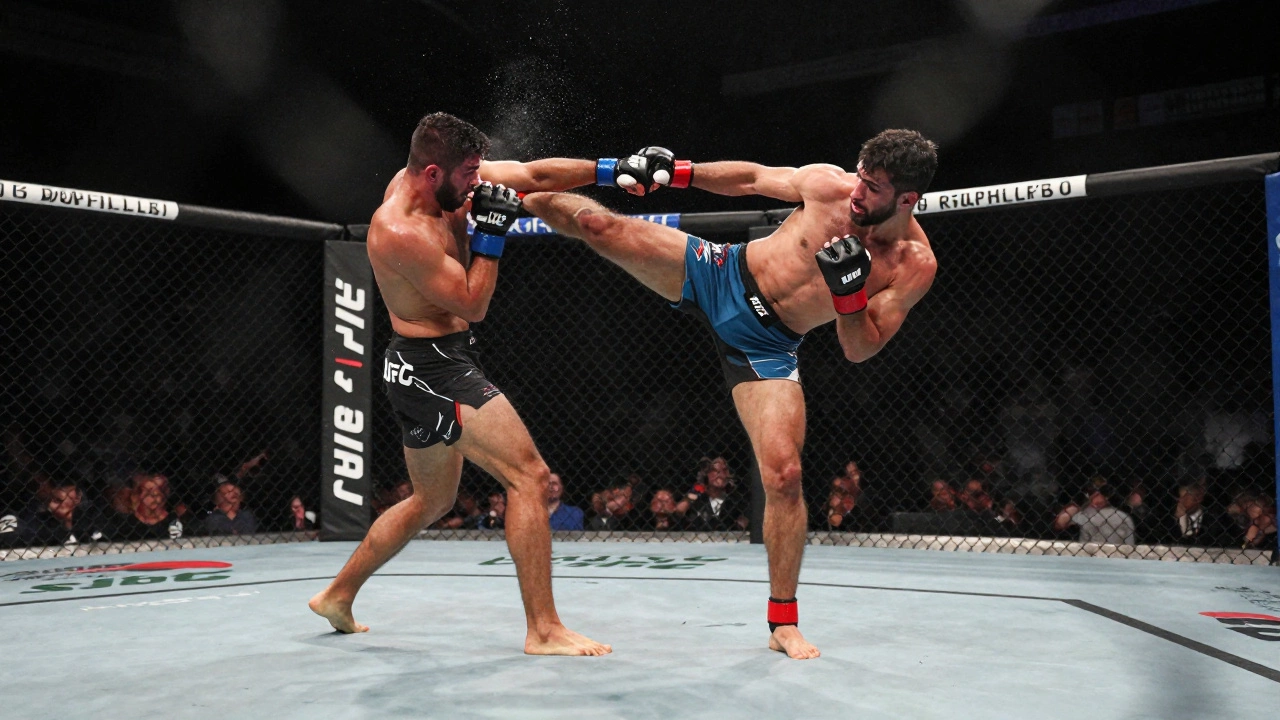
UFC stands for Ultimate Fighting Championship. It’s the biggest organization in mixed martial arts (MMA). Unlike boxing, UFC fights allow a full range of techniques: punches, kicks, elbows, knees, takedowns, submissions, and ground control. Fighters wear 4-ounce gloves - small enough to grip and grapple, but still protect the knuckles.
UFC fighters are trained in multiple disciplines. Most top fighters have backgrounds in wrestling, Brazilian jiu-jitsu, Muay Thai, and boxing. A UFC champion isn’t just a striker or a grappler - they have to be both. You can win by knockout, submission (like an armbar or choke), or judges’ decision. Fights are usually five rounds of five minutes each (three for non-title bouts).
The cage - not a ring - is the fighting area. It’s made of chain-link fencing, which changes how fighters move and position themselves. You can’t corner someone against ropes and bounce off them like in boxing. You have to control space differently. And if you get taken down, the fight doesn’t stop - it just moves to the ground.
Why People Confuse UFC With Boxing
It’s easy to mix them up because both sports have punches. And yes, many UFC fighters train in boxing. Conor McGregor, Kamaru Usman, and Amanda Nunes all have strong boxing foundations. But that doesn’t make UFC boxing.
Think of it this way: if you added a basketball hoop to a soccer field, would you call it soccer? No. It’s still soccer, but now you’ve added something completely different. UFC is boxing - plus everything else.
Also, media coverage doesn’t help. TV networks often show UFC highlights with slow-motion replays of punches, making it look like a boxing match. But those same fighters might have just finished a takedown, locked in a rear-naked choke, or landed a spinning back kick seconds before.
Rules Are the Biggest Difference
The rules define the sport. Here’s a quick breakdown:
- Boxing: Only punches with gloves. No grappling. No kicks. No ground fighting. No submissions.
- UFC: Punches, kicks, knees, elbows, takedowns, clinch work, ground-and-pound, submissions, and escapes. All legal within weight classes and safety rules.
UFC has a list of fouls - eye-gouging, groin strikes, headbutts - but it still allows far more techniques than boxing. In boxing, if you grab the ropes or hold your opponent’s head, you get a warning. In UFC, if you grab the fence to avoid a takedown, you get penalized. But you can still use the cage to stand up or control your opponent’s posture.
Referees in boxing stop the fight if a fighter is taking too much punishment. In UFC, referees will step in to stop a fight if someone is unconscious or can’t defend themselves - but they also let fights continue on the ground while submissions are being applied. That’s something you’ll never see in a boxing ring.
Training Is Completely Different
Boxers train to avoid being hit. They slip, roll, and block. Their footwork is light, quick, and precise. Conditioning is built around rounds - you train to last 12 rounds with minimal recovery time between.
UFC fighters train like athletes in multiple sports. A typical week might include:
- Monday: Wrestling drills and takedown defense
- Tuesday: Muay Thai striking and clinch work
- Wednesday: Brazilian jiu-jitsu submission chains
- Thursday: Boxing pad work and cardio
- Friday: Strength and conditioning
- Saturday: Sparring (striking and grappling)
- Sunday: Rest or light mobility work
That’s not just boxing. That’s a full-time athlete’s schedule across five disciplines. A boxer might spar 10 rounds a week. A UFC fighter might spar 5 rounds of boxing, 3 rounds of grappling, and 2 rounds of full-contact MMA sparring.
What Happens When a Boxer Steps Into the UFC?
It doesn’t go well - at first.
When former boxing champions like Floyd Mayweather or Roy Jones Jr. have trained with UFC fighters, they’ve admitted how hard it is to adapt. Mayweather once said, “If I fought a UFC guy with no wrestling background, I’d get taken down in 10 seconds.”
And that’s exactly what happened to many boxers who tried MMA. James Toney, a former world champion boxer, fought in Bellator MMA in 2011. He got taken down in the first round and submitted in under two minutes. He didn’t lose because he couldn’t punch - he lost because he didn’t know how to defend a takedown.
Even elite strikers like Rico Verhoeven, a kickboxing champion, struggled when they tried MMA. The ground game changes everything. You can’t just stand and trade punches if your opponent has a black belt in jiu-jitsu.
What Happens When a UFC Fighter Steps Into the Ring?
It’s the opposite. UFC fighters who move to boxing often dominate - at first.
Conor McGregor fought Floyd Mayweather in 2017. He lost on points, but he landed more clean, powerful shots than most boxers ever do against Mayweather. His timing, footwork, and hand speed came from his MMA background - especially his Muay Thai and boxing training.
Other UFC fighters like Nate Diaz and Tony Ferguson have trained in boxing and shown they can compete at a high level. Diaz even won a pro boxing match in 2024 against a former WBC title challenger.
Why? Because UFC fighters are used to fighting at different ranges. They’ve trained to punch from outside, inside, on the move, and on the ground. Boxers are specialists. UFC fighters are generalists.
So, Is UFC Boxing?
No. UFC is not boxing.
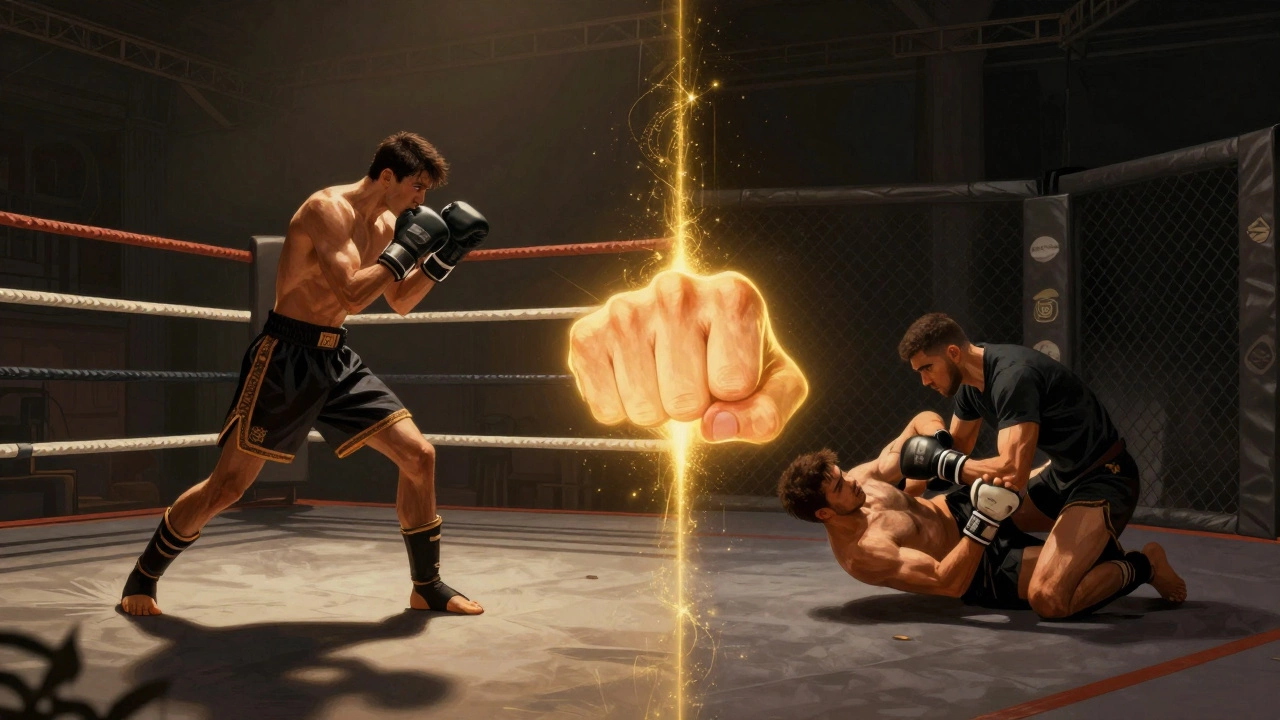
Boxing is a single-discipline sport with strict rules. UFC is a multi-discipline sport that combines boxing, wrestling, Muay Thai, jiu-jitsu, and more. They share punches - but that’s like saying a car and a motorcycle are the same because they both have wheels.
If you love boxing, you might enjoy UFC. But you’ll need to understand the full picture. The cage, the submissions, the takedowns - those aren’t upgrades to boxing. They’re a different sport entirely.
And if you think UFC is just boxing with kicks, you’re missing the point. UFC is about control, adaptation, and survival. It’s not about who lands the prettiest jab - it’s about who can end the fight, no matter how.
Can You Be a Boxer and a UFC Fighter?
Yes - but not at the same time, not at the top level.
Some fighters start in boxing, then switch to MMA. Others start in wrestling or jiu-jitsu, then add boxing. The best UFC fighters today all have boxing skills - but they don’t call themselves boxers. They call themselves MMA fighters.
Anderson Silva, for example, was a kickboxer before becoming UFC middleweight champion. He used boxing footwork and timing to land devastating strikes - but he also had a black belt in Brazilian jiu-jitsu. He didn’t just box. He fought.
There’s no official crossover title. You can’t be a UFC champion and a boxing champion at the same time. The organizations don’t recognize each other. The training is too different. The goals are too different.
Final Thoughts
UFC isn’t boxing. It doesn’t want to be. It doesn’t need to be. It’s its own thing - complex, brutal, and beautiful in its own way.
If you’re watching UFC and only seeing punches, you’re missing half the fight. The takedowns, the chokes, the transitions - those are what make it unique. And if you’re watching boxing and wondering why fighters don’t just take each other down, that’s the whole point. Boxing is about standing and trading. UFC is about ending it - any way you can.
So next time someone asks if UFC is boxing, just smile and say: ‘It’s like asking if a chef who uses salt is just a salt vendor.’
Is UFC the same as boxing?
No, UFC is not the same as boxing. Boxing only allows punches with gloves, while UFC includes kicks, takedowns, submissions, and ground fighting. They’re two completely different sports with different rules, training methods, and goals.
Can a boxer beat a UFC fighter?
In a boxing match, yes - a trained boxer would likely win. But in a UFC fight, a boxer without grappling experience would be at a huge disadvantage. Takedowns, submissions, and knee strikes aren’t part of boxing training, and most boxers aren’t prepared for them.
Do UFC fighters train in boxing?
Yes, almost all top UFC fighters train in boxing. It’s one of the most important striking disciplines in MMA. Fighters use boxing for timing, footwork, and power punches - but they combine it with wrestling, jiu-jitsu, and Muay Thai to be well-rounded.
Why do UFC gloves look smaller than boxing gloves?
UFC gloves are 4 ounces, while boxing gloves are 8 to 10 ounces. Smaller gloves allow fighters to grip, grapple, and submit opponents. Boxing gloves are larger to protect hands and reduce cuts during pure punching exchanges.
Is UFC more dangerous than boxing?
Studies show boxing has a higher rate of brain trauma over time because fighters take more head strikes over longer fights. UFC has more short-term injuries like broken bones and cuts, but fewer cumulative brain impacts. Both sports carry risks - but the types of injury differ.