Gym Workouts March 1, 2026
Is 7 Reps Okay for Building Strength and Muscle?
7 Reps Strength & Muscle Calculator
Find Your Ideal Rep Range
Answer a few questions to see if 7 reps is right for your goals.
reps
Why 7 Reps Works
7 reps is the sweet spot for balanced strength and muscle gains
Research shows 6-8 rep ranges maximize both strength and muscle size while being sustainable.
Key insight: It's not just the number of reps—it's progressive overload that matters most.
Your Ideal Rep Range
Pro tip: Focus on compound lifts like squats, bench press, and rows for 7 reps. Isolation exercises work better at 10-15 reps.
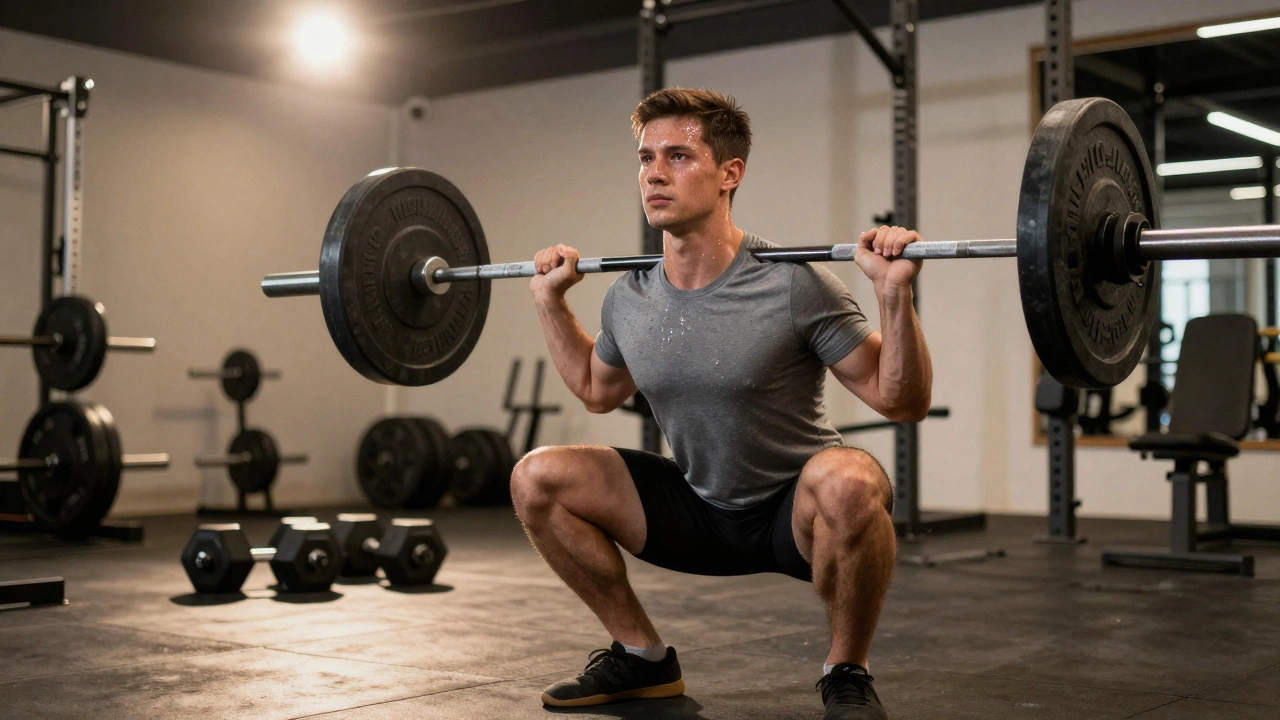
When you’re lifting weights and hit seven reps on your last set, do you feel like you did something wrong? Maybe you were aiming for eight or ten, and now you’re second-guessing your whole workout. The truth? 7 reps isn’t just okay-it’s often ideal. A lot of people get stuck on the idea that there’s one perfect number of reps for every goal. But real strength and muscle gains don’t work that way.
Why 7 Reps Works Better Than You Think
Most training programs push you toward either low reps (1-5) for pure strength or high reps (10-15) for muscle size. But 7 reps sits right in the sweet spot between them. It’s heavy enough to challenge your nervous system and build real strength, but not so heavy that you can’t maintain good form or get enough volume over time.
Think about compound lifts like the bench press, squat, or deadlift. If you’re doing sets of 7, you’re likely working at around 75-80% of your one-rep max. That’s the range where research shows the best balance of muscle fiber recruitment and metabolic stress. A 2020 study from the Journal of Strength and Conditioning Research found that trainees who stuck to 6-8 rep ranges gained nearly the same muscle size as those doing 10-12 reps-but got significantly stronger in the process.
Seven reps also lets you recover faster. Doing sets of 15 or more means your muscles are burning through glycogen, leaving you drained. Seven reps? You’re still pushing hard, but your body doesn’t have to rebuild as much fuel. That means you can train more often without burning out.
What Happens When You Stick to 7 Reps
Let’s say you’re doing barbell rows at 7 reps. You start with 80kg and manage 7 reps with perfect form. Next week, you add 2.5kg. You hit 7 reps again. Then another 2.5kg. That’s progressive overload-the core driver of muscle and strength gains. You’re not chasing failure every set. You’re not grinding out 15 reps until your form collapses. You’re just getting stronger, safely and steadily.
Compare that to someone doing 12 reps with lighter weight. They might feel like they’re working harder because their arms are shaking. But are they actually lifting more over time? Probably not. The 7-rep lifter is slowly but surely increasing load. That’s how real progress happens.
And here’s the kicker: 7 reps is forgiving. If you had a bad night’s sleep, or you’re stressed from work, you can still hit 7 reps with slightly less weight. It doesn’t force you into all-or-nothing territory like a 1-rep max attempt. That makes it sustainable. You don’t need to be “on” every single day.
Who Should Use 7 Reps?
7 reps isn’t just for powerlifters or bodybuilders. It works for:
- People who want to get stronger without gaining too much bulk
- Athletes who need functional strength (think rugby players, martial artists, cyclists)
- Beginners who’ve outgrown machine workouts but aren’t ready for heavy singles
- Anyone over 35 who needs joint-friendly loading
It’s especially useful for intermediate lifters. Beginners often benefit from higher reps (8-12) to learn movement patterns. Advanced lifters might drop to 3-5 reps for peak strength. But if you’ve been lifting for 6-18 months, 7 reps is where you unlock your next level.
How to Structure Your 7-Reps Workouts
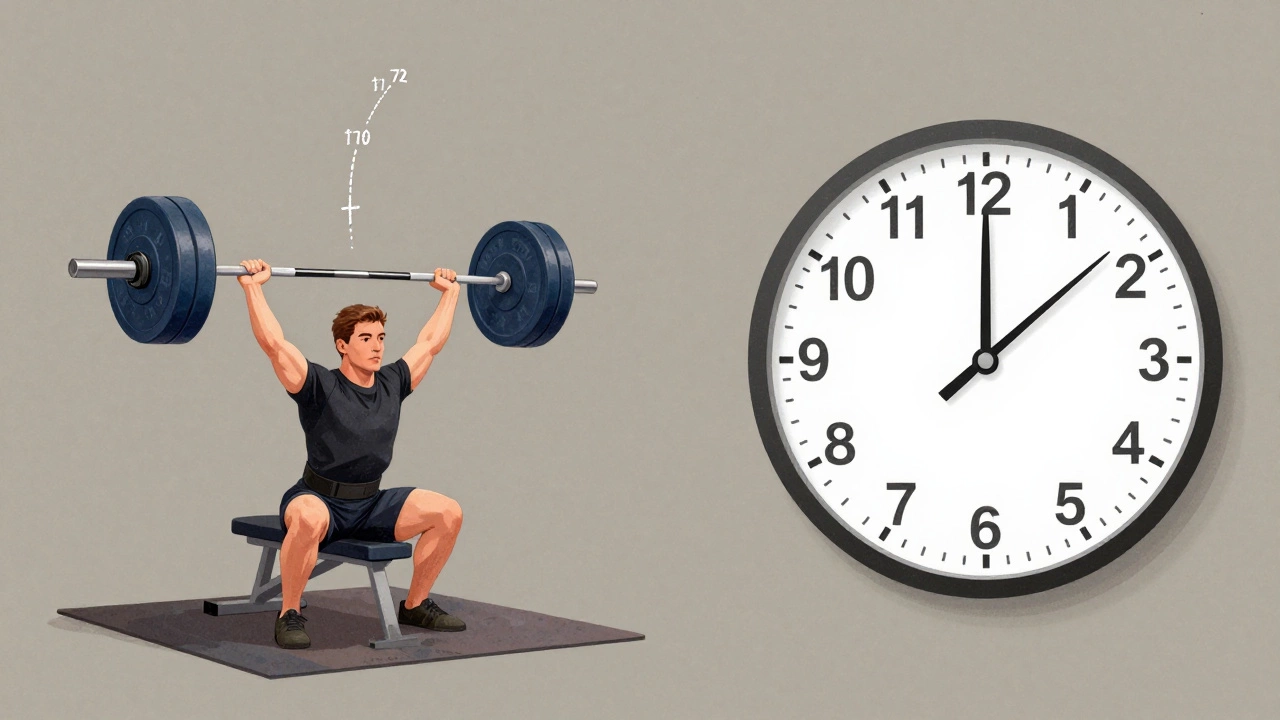
Don’t just throw 7 reps into random exercises. Structure it like this:
- Choose 2-3 compound lifts per session (e.g., squat, bench, row)
- Do 3-4 sets of 7 reps per lift
- Rest 2-3 minutes between sets
- Use a weight that feels challenging on rep 5, but you can still push through to 7 with good form
- Progress by adding 2.5-5kg per week on lifts, or 1-2kg on isolation moves
For example:
- Barbell Back Squat: 4 sets of 7 reps
- Overhead Press: 3 sets of 7 reps
- Barbell Row: 3 sets of 7 reps
- Dumbbell Lunges: 2 sets of 7 reps per leg
Do this twice a week, with at least 48 hours between sessions. Add one isolation exercise (like bicep curls or triceps extensions) for 10-12 reps if you want more size. But keep your core work centered on 7 reps.
What Not to Do With 7 Reps
Some people think 7 reps means “go heavy and fail on the last rep.” That’s a mistake. You should be able to do at least one more rep if you had to. That’s called leaving something in the tank. Training to failure every set increases injury risk and slows recovery. You’re not trying to smash your muscles-you’re trying to build them over months, not days.
Also, don’t use 7 reps for every single exercise. Isolation moves like bicep curls, lateral raises, or leg extensions work better at 10-15 reps. Save 7 reps for the big lifts where strength matters most.
Real-World Example: A 7-Reps Routine That Works
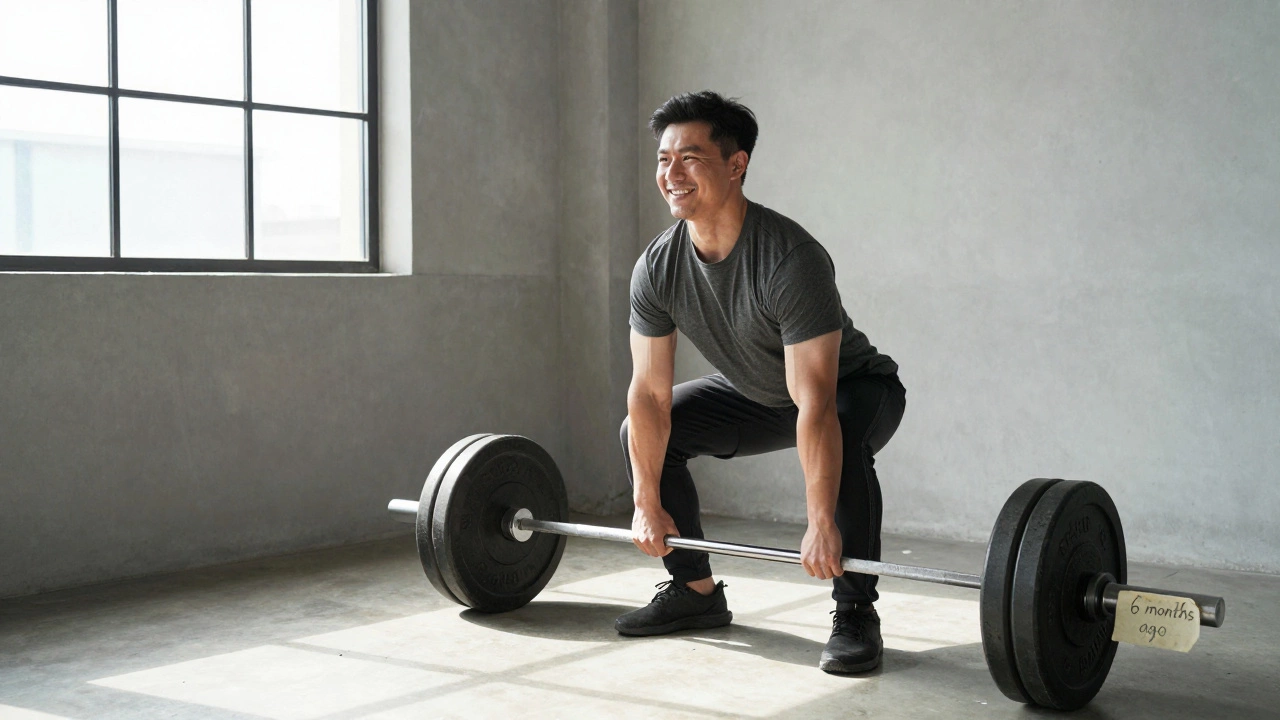
Take a 32-year-old office worker in Bristol who started lifting six months ago. He was doing 12 reps on everything. His arms got bigger, but his squat didn’t improve. He switched to 7 reps on squats, deadlifts, and presses. After eight weeks:
- Squat went from 70kg x 5 to 85kg x 7
- Bench press went from 55kg x 6 to 70kg x 7
- He stopped feeling wiped out after workouts
- His lower back pain disappeared
He didn’t change his diet. He didn’t start taking supplements. He just changed his rep range. And that’s all it took.
What About Muscle Growth?
You’ve probably heard that you need 8-12 reps to build muscle. That’s partly true-but incomplete. Studies show muscle growth happens across a wide range: 6-30 reps. The key isn’t the number of reps-it’s how close you get to failure and how much total volume you do over time.
Doing 4 sets of 7 reps = 28 reps per exercise. That’s more than enough volume. Do that three times a week, and you’re hitting 84 reps per muscle group. That’s competitive with bodybuilding-style training. You don’t need 15-rep sets to grow. You need consistent, progressive overload.
Bottom Line: Is 7 Reps Okay?
Yes. More than okay. It’s one of the most underrated rep ranges out there. It builds strength. It builds muscle. It’s joint-friendly. It’s sustainable. And it doesn’t require you to be a gym addict.
If you’ve been stuck in a rut-either grinding out high reps or avoiding heavy weights-try 7 reps for four weeks. Stick to compound lifts. Focus on adding weight slowly. Rest properly. And see what happens. You might be surprised how much stronger you feel without even trying.
Is 7 reps good for building muscle?
Yes. While many believe muscle growth only happens between 8-12 reps, studies show it occurs across a wide range-from 6 to 30 reps. Seven reps allows you to lift heavier weights while still accumulating enough total volume over time to stimulate muscle growth. The key is progressive overload and consistency, not the exact number of reps.
Can I do 7 reps every workout?
You can, but it’s not ideal. Use 7 reps primarily on compound lifts like squats, deadlifts, bench presses, and rows. For isolation exercises like bicep curls or lateral raises, stick to 10-15 reps. This balances strength gains with muscle endurance and joint health.
Should I go to failure on 7-rep sets?
No. Going to failure every set increases injury risk and slows recovery. Aim to stop when you have one solid rep left in the tank. This lets you train more frequently and make steady progress without burnout or joint strain.
Is 7 reps better than 5 or 10 reps?
It depends on your goal. Five reps are better for pure strength, while 10 reps are better for pure muscle size. Seven reps strikes a balance: it builds strength and muscle at the same time. For most people, especially those who’ve been training for over a year, 7 reps delivers the best return on effort.
How long should I rest between 7-rep sets?
Rest 2 to 3 minutes between sets. This gives your nervous system time to recover so you can lift heavy with good form on the next set. Shorter rests (under 90 seconds) reduce strength output and make it harder to progress.