Boxing Matches January 29, 2026
Why MMA Is a More Complete Fighting Sport Than Boxing
Self-Defense Scenario Simulator
Scenario: Being Grabbed from Behind
You're walking home when someone grabs you from behind and tries to choke you.
Boxing Approach
Boxing
Throw quick punches while spinning away from the grab
MMA Approach
MMA
Break the grip with a wrist lock, then use knee strikes to create space
Select your approach to see the result...
People still argue about whether boxing is the purest form of combat, but if you’re looking for real-world effectiveness, MMA doesn’t just beat boxing-it outclasses it in almost every way. Boxing teaches you how to throw punches. MMA teaches you how to survive a fight.
Boxing is limited by rules. MMA isn’t.
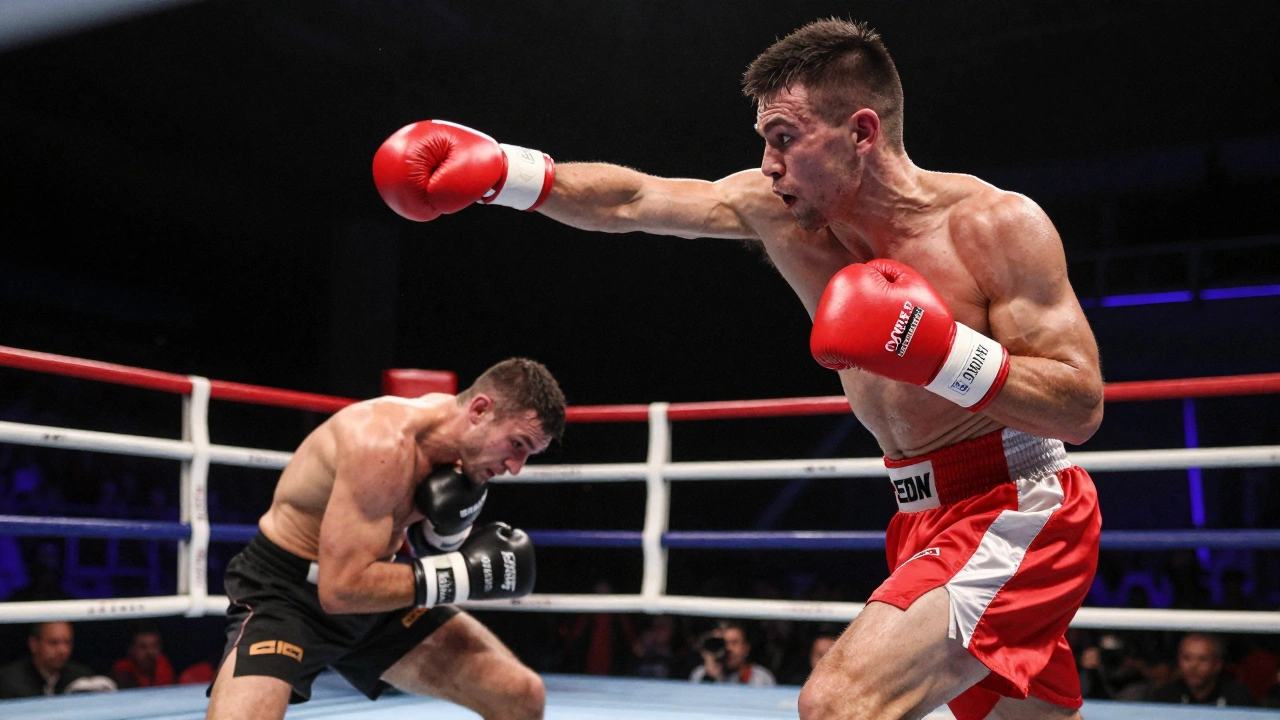
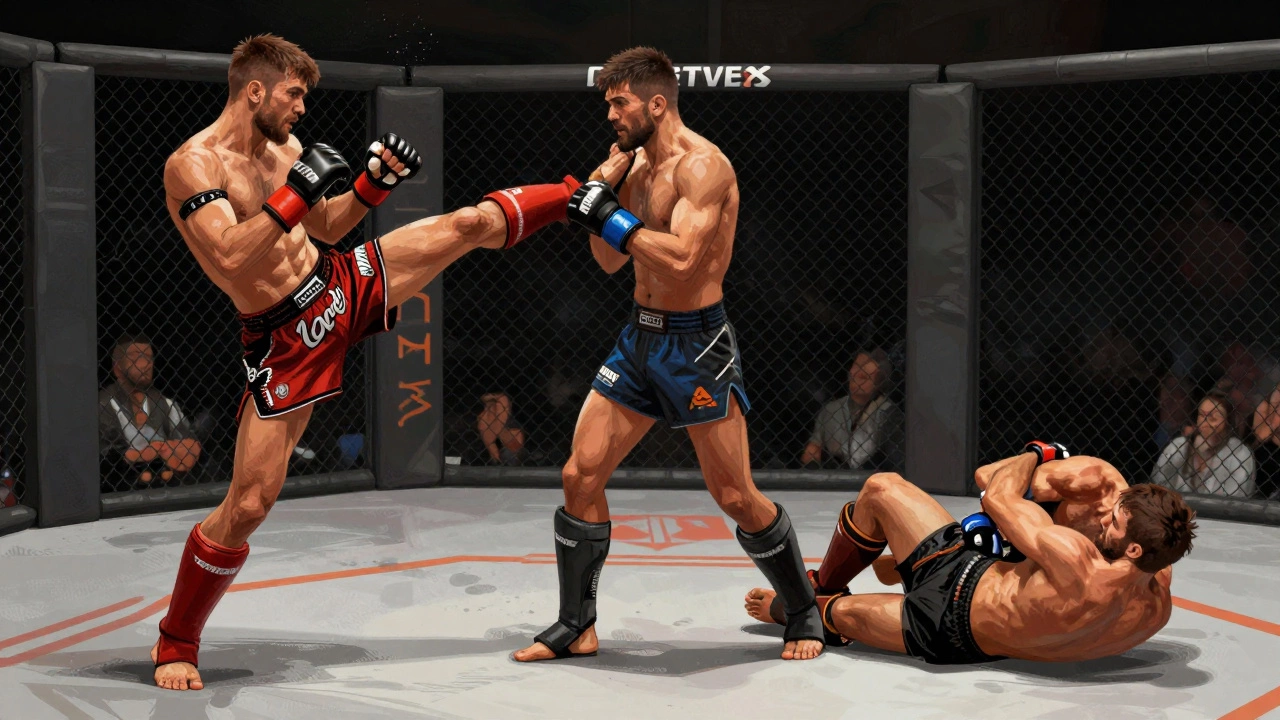
Boxing only lets you use your fists. That’s it. No kicks, no takedowns, no submissions. You can’t grab your opponent’s gi, you can’t knee them in the clinch, you can’t take them down and ground them. In a real fight, those are the first things people do. MMA includes all of it. That’s not a gimmick-it’s realism. A boxer might dominate in a ring with gloves and ropes, but step into a parking lot at night, and those rules vanish. Suddenly, your opponent grabs your shirt, pulls you down, and starts raining elbows. Boxing doesn’t prepare you for that. MMA does.
Boxers don’t train for multiple ranges. MMA fighters do.
Think about how many ways a fight can unfold. Standing up? Boxing covers that. On the ground? Boxing doesn’t. In the clinch? Boxing ignores it. MMA fighters train across all three ranges: striking, clinching, and grappling. A UFC fighter spends hours drilling takedowns, sprawls, guard passes, and chokes-not just jabs and hooks. They learn how to switch between ranges mid-fight. A boxer? They stay on their feet and throw punches. If someone takes them down, they’re lost. That’s not skill-it’s vulnerability.
MMA fighters are conditioned for longer, harder fights.
Professional boxing matches are usually 10 to 12 rounds of three minutes. MMA fights are five rounds of five minutes. That’s 25 minutes of non-stop action, not just punching. MMA athletes train for endurance, not just power. They run, swim, wrestle, roll, and spar for hours every day. They need to be ready to explode for a takedown, then defend a submission, then stand up and trade strikes-all while breathing hard. Boxers train hard, sure. But their training is narrow. MMA fighters train like soldiers. They don’t just build muscle. They build resilience.
Boxing’s head protection is an illusion.
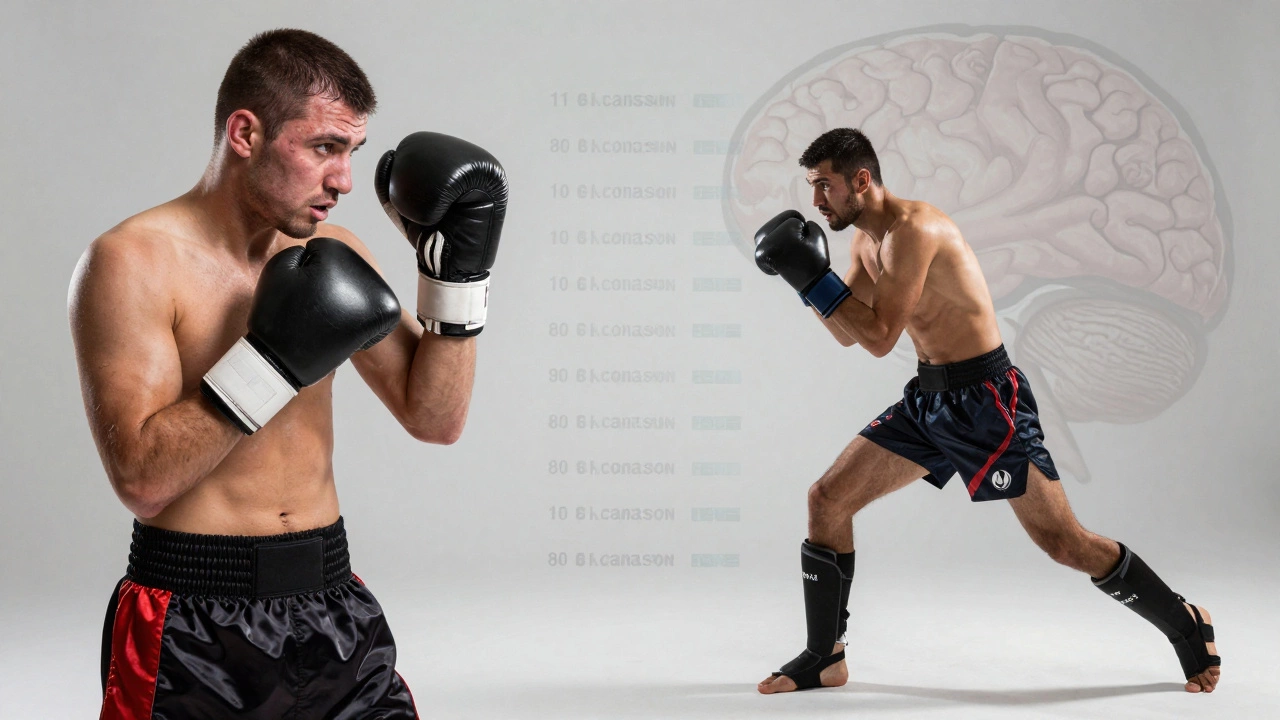
People think boxing gloves make the sport safer. They don’t. They just make the damage slower. In boxing, fighters take hundreds of clean punches to the head over 12 rounds. The brain doesn’t care if it’s hit by a 16-ounce glove or a bare fist-it still shakes. MMA fighters wear smaller gloves (4-6 ounces), which means less padding and more impact. But here’s the twist: because MMA allows grappling, fighters don’t stand still and trade shots for five minutes straight. They move. They clinch. They take the fight to the ground. That breaks the rhythm. Fewer clean head shots land over time. Studies from the British Journal of Sports Medicine show that MMA fighters have a lower rate of knockout-related brain trauma than boxers, simply because the fight doesn’t stay standing.
Boxing has outdated strategies. MMA evolves.
Boxing techniques haven’t changed much since the 1980s. The jab-cross-hook-uppercut combo is still the gold standard. MMA? It’s constantly changing. A fighter might use a Muay Thai clinch to control distance, then transition to a Brazilian jiu-jitsu armbar. Or they might use a soccer kick to keep an opponent at bay, then shoot for a double-leg. MMA draws from dozens of martial arts-Brazilian jiu-jitsu, wrestling, Muay Thai, judo, karate-and blends them into something new every week. That’s not tradition. That’s innovation. Boxing clings to the past. MMA builds the future.
Boxing is a spectator sport. MMA is a survival skill.
Boxing looks flashy. The lights, the hype, the knockouts. But flashy doesn’t mean effective. MMA is messy. It’s dirty. It’s real. It’s what happens when two people who want to win stop following rules and start using everything they’ve got. That’s why military units, police tactical teams, and security professionals train in MMA-not boxing. They don’t need to look good. They need to survive. If you’re learning self-defense, MMA gives you tools. Boxing gives you one tool-and only if your opponent doesn’t grab you, trip you, or knee you in the ribs.
It’s not about which is harder-it’s about which is more complete.
Boxing is hard. Really hard. You have to be precise, disciplined, and brave. But being good at one thing doesn’t make you better than someone who’s good at five things. MMA isn’t about being the best striker. It’s about being the best fighter. You don’t need to be a world-class wrestler or a black belt in jiu-jitsu. You just need to know enough to handle it when it happens. That’s the difference. Boxing prepares you for one scenario. MMA prepares you for every scenario.
Real fighters know the truth.
Look at former boxing champions who switched to MMA. Floyd Mayweather? He never did. But Roy Jones Jr., James Toney, and even Mike Tyson have all trained in MMA. Why? Because they know the game has changed. They’ve seen what happens when a boxer steps into a cage. They’ve watched guys with perfect form get taken down, choked out, or submitted in under a minute. That’s not failure. That’s education. The best fighters in the world don’t stick to one style anymore. They train in everything. And if you’re serious about fighting-whether for sport, self-defense, or just knowing you can handle yourself-you should too.
Is MMA more dangerous than boxing?
No, not when you look at the data. Boxing has higher rates of long-term brain injury because fighters absorb hundreds of clean headshots over 12 rounds. MMA fighters take fewer clean head strikes because fights often go to the ground, breaking the rhythm. The smaller gloves in MMA mean more hand injuries, but fewer concussions. The British Journal of Sports Medicine found MMA has a lower rate of knockout-related trauma than boxing.
Can a boxer beat an MMA fighter in a street fight?
Maybe-if the MMA fighter doesn’t know how to defend themselves. But if the MMA fighter has even basic grappling skills, they’ll take the boxer down, control them on the ground, and end the fight with strikes or a choke. Boxers aren’t trained to deal with grabs, takedowns, or ground strikes. In a real fight, those are the first things people do. Boxing gives you one tool. MMA gives you ten.
Why don’t more boxers switch to MMA?
Many don’t because they’re already famous and rich in boxing. Switching to MMA means starting over, learning entirely new skills, and risking injury without guaranteed pay. But those who do-like Conor McGregor, Ronda Rousey, or Kamaru Usman-prove it’s possible. The real barrier isn’t ability. It’s mindset. Boxing culture still sees MMA as chaotic. MMA culture sees boxing as incomplete.
Does MMA require more training time than boxing?
Yes. A boxer might train 4-5 hours a day focusing on pad work, sparring, and footwork. An MMA fighter trains 6-8 hours, splitting time between striking, wrestling, grappling, strength, and conditioning. You can’t just be good at one thing-you have to be decent at five. That’s why MMA gyms have multiple coaches: a Muay Thai instructor, a BJJ black belt, a wrestling coach, and a strength trainer. Boxing is a craft. MMA is a full-time job.
Is MMA better for self-defense?
Absolutely. Real fights don’t happen in a ring with rules. Someone might grab your arm, shove you into a wall, or tackle you to the ground. MMA teaches you how to respond to all of it. You learn to escape chokes, break grabs, stand up from the ground, and strike while on your back. Boxing only teaches you to punch. That’s not enough. If you want to walk away from a real confrontation, MMA gives you the tools. Boxing gives you hope.
What’s the bottom line?
Boxing is beautiful. It’s art. It’s history. But it’s not complete. MMA isn’t trying to replace boxing-it’s trying to replace the idea that one skill is enough. In a world where fights don’t follow rules, the most effective fighter isn’t the one who throws the prettiest punch. It’s the one who can adapt, survive, and finish.