Running August 24, 2026
Is It OK to Stop in a Marathon? A Runner's Guide
Marathon Run-Walk Strategy Calculator
Set Your Parameters
How long you plan to run continuously.
Duration of the strategic stop/walk.
Your target speed while running.
Your speed during the break (usually ~20 min/mi).
Race Analysis
Total Estimated Time
--:--:--
Total Distance Covered
26.2 Miles
Number of Cycles
--
Time Distribution
Run 0 mins
Walk 0 mins
Enter your details and click calculate to see how this strategy impacts your finish time and injury risk profile.
Tip: The Galloway Method suggests that even elite runners benefit from short walks to reset heart rate and prevent form breakdown after mile 20.
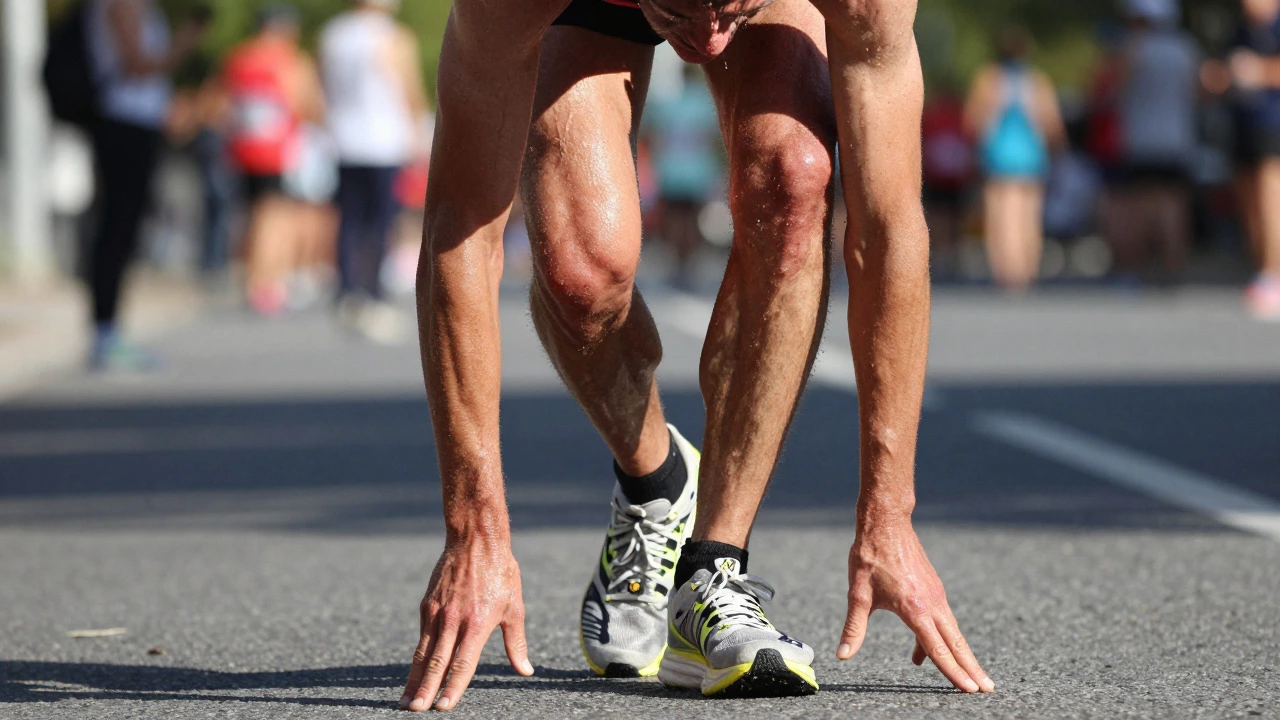
Imagine mile 20. Your legs feel like concrete, your lungs are burning, and the thought of quitting is louder than the crowd. You see a fellow runner walk for two minutes. Do you join them? Or do you power through with a grimace? The short answer is yes, it is absolutely okay to stop in a marathon. In fact, strategic stopping might be the difference between finishing strong and collapsing at mile 26.
Many runners treat the Marathon is a long-distance footrace covering 42.195 kilometers (26.2 miles) as an all-or-nothing event. If you aren't running every second, you're failing. This mindset causes more DNFs (Did Not Finish) than actual physical limits. Let's break down why stopping is not just acceptable but often necessary, how to do it without losing time, and when you should actually keep moving.
The Myth of Constant Motion
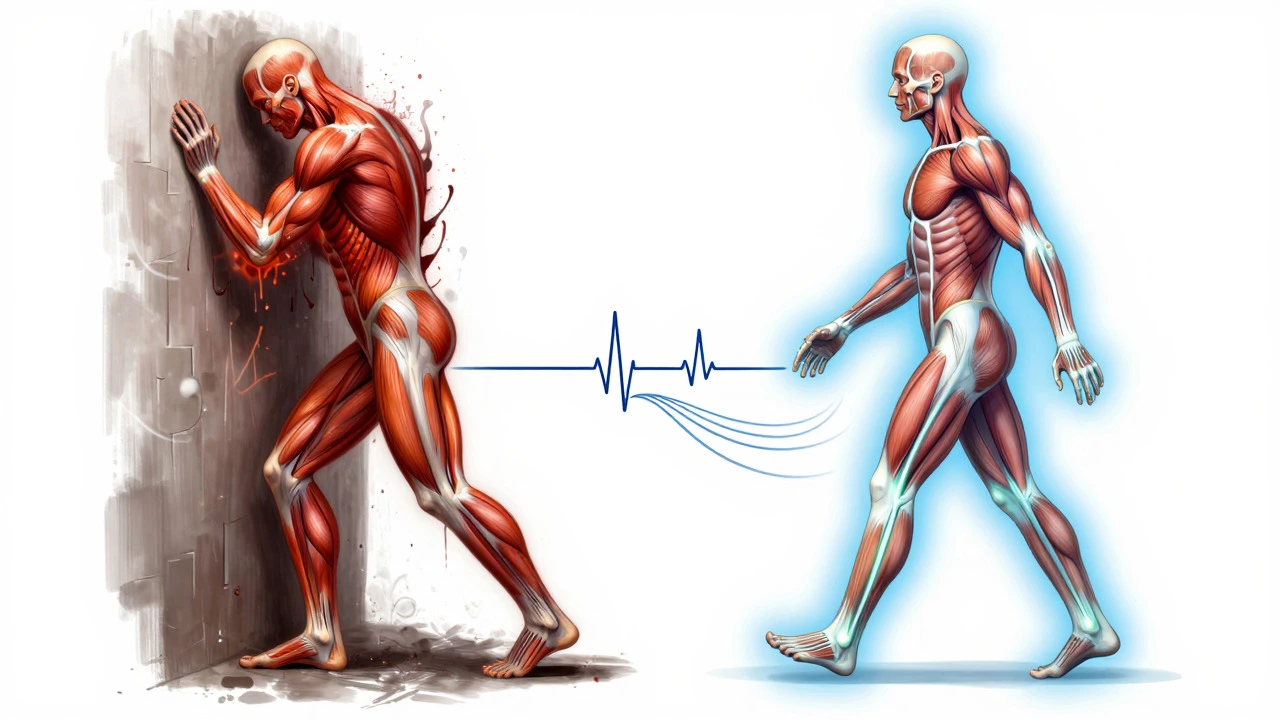
We often think that if we slow down, we lose our rhythm. But biology doesn't care about your ego. When your body hits a wall, usually around mile 18 or 19, your glycogen stores deplete. This is known as Glycogen Depletion is the exhaustion of stored carbohydrates in muscles and liver, leading to fatigue. At this point, forcing a run pace can lead to form breakdown, which increases injury risk significantly.
Walking allows your heart rate to drop slightly, giving your cardiovascular system a micro-recovery window. It also lets your hip flexors and quads reset their length-tension relationship. Think of it like stretching during a workout. You don't stretch to stop working; you stretch to work better next rep. Walking is the same principle applied to endurance.
Strategic Walking vs. Emergency Stopping
There are two types of stopping: planned and reactive. Planned stopping is part of your Race Strategy is a pre-determined plan for pacing, fueling, and recovery during a race. Reactive stopping happens when pain spikes or cramps hit. Both are valid, but they require different approaches.
- Planned Walks: Use these at aid stations or after hard climbs. Keep them short, 30 to 90 seconds. This keeps your body warm and maintains momentum.
- Reactive Stops: These happen when something feels wrong. Don't panic. Take a full minute to assess. Is it a cramp? Hydration? Pain? Fix the issue before restarting.
A common mistake is stopping completely and standing still for too long. If you stand for more than two minutes, your core cools down, and restarting becomes harder. Keep one foot moving or take small steps while you hydrate.
The Pacing Equation: Run-Walk Methods
You don't have to choose between running the whole way or walking the whole way. The Run-Walk Method is a pacing technique alternating intervals of running and walking to manage fatigue popularized by Jeff Galloway, works for almost everyone. It’s not just for beginners; elite coaches use modified versions for deep races.
| Strategy | Best For | Time Impact | Injury Risk |
|---|---|---|---|
| All-Out Run | Elite Athletes | Fastest Possible | High (Mile 20+) |
| Continuous Easy Run | Experienced Recreational Runners | Moderate | Medium |
| Run-Walk Intervals | Beginners & Masters | Slightly Slower | Low |
If you aim for a sub-4-hour finish, continuous running might work if your training was consistent. But if you’re targeting a personal best or simply want to enjoy the experience, mixing in 30-second walks every 10 minutes can save your legs for the final six miles. The key is consistency. Don’t walk randomly. Make it a pattern.
Fueling and Hydration Timing
Stopping gives you the perfect opportunity to refuel. Most runners struggle to swallow gels while running fast because their breathing is shallow. When you walk, your diaphragm expands fully, making digestion easier. Aim to consume 30 to 60 grams of carbohydrates per hour. That’s roughly one gel or four chews every 45 minutes.
Hydration is equally critical. Dehydration thickens your blood, increasing cardiac strain. Drink water or electrolyte drinks at every other aid station, not every single one. Over-hydrating with plain water can lead to hyponatremia, a dangerous drop in sodium levels. Balance is everything.
Psychological Benefits of Stopping
Your brain is your biggest opponent in a marathon. After mile 20, the mental battle outweighs the physical one. Stopping provides a psychological reset. It breaks the monotony of suffering. When you decide to walk, you shift from "survival mode" to "management mode." This reduces cortisol spikes and helps maintain focus.
Talking to yourself or visualizing the finish line while walking can prime your mind for the next running interval. It’s a mental trick that many top finishers use. They don’t push through pain; they manage it. And management requires pauses.

When NOT to Stop
While stopping is generally safe, there are exceptions. If you are feeling dizzy, nauseous, or have chest tightness, stop immediately and seek medical help. These are signs of heat exhaustion or cardiac stress, not just fatigue.
Also, avoid stopping on steep downhill sections. Gravity makes it harder to restart quickly, and the impact on your knees when you begin running again can be severe. Find flat ground for your breaks.
Practical Tips for Safe Stops
- Signal Early: If you plan to walk, signal to runners behind you so they don’t bump into you.
- Stay Visible: Move to the side of the road, not the center. Aid station volunteers need clear access.
- Keep Moving: Even if you’re drinking, shuffle your feet. Static standing leads to stiffness.
- Check Form: Use the pause to check your posture. Are you leaning forward? Is your arm swing relaxed?
- Restart Smoothly: Begin your next run at a slower pace than your previous interval. Ramp up gradually.
Remember, the goal is to cross the finish line healthy, not broken. A few minutes spent walking won’t ruin your time if it prevents a collapse later. Trust the process.