Running Shoes November 9, 2026
Why is Ultraboost So Good? The Tech Behind the Comfort
Ultraboost Match Finder
Not sure if the Ultraboost is worth the premium price? Answer these questions to see how well its technology matches your needs.
Your Compatibility Score
--%
Why this score?
Shoe Analysis Ready
Select your preferences on the left to analyze the fit against Ultraboost's TPU Boost foam and Primeknit upper technology.
You’ve probably seen them everywhere. On the subway, in the gym, at the coffee shop, and yes, on the pavement during a 5K run. Adidas Ultraboost has become less of a niche running shoe and more of a cultural phenomenon. But why does everyone seem obsessed with it? Is it just marketing hype, or is there actual engineering magic happening under that sleek knit upper?
If you’re standing in a store holding a pair, wondering if they’re worth the premium price tag, you’re asking the right question. Running shoes are personal gear. What works for a marathoner’s stride might feel like walking on bricks for someone who runs three miles a week. To understand why the Ultraboost resonates with so many people, we need to look past the logo and dig into the materials, the design philosophy, and the specific problems this shoe solves.
The Magic Inside: Understanding Boost Foam
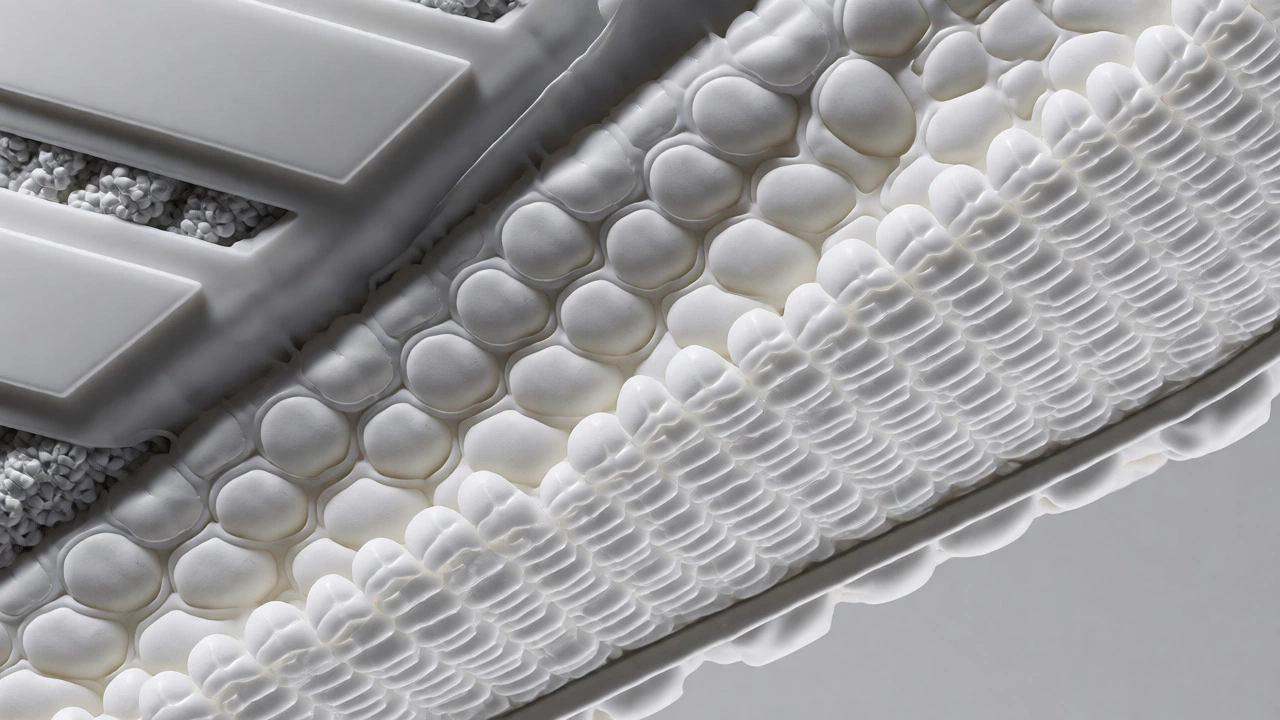
At the heart of every Ultraboost is one critical component: Boost. This isn’t your standard EVA foam found in most budget sneakers. Boost is a thermoplastic polyurethane (TPU) material expanded into thousands of tiny energy capsules. Think of it like millions of microscopic airbags packed together in the midsole.
When you land on your heel or forefoot, these capsules compress. Unlike traditional foams that can pack out over time or lose their bounce after a few hundred miles, Boost returns energy. It pushes back against your foot. Adidas claims this material retains up to 80% of its energy return properties even after extreme temperature changes and heavy use. In practice, this means the shoe feels "alive" underfoot. It doesn’t just cushion; it propels you slightly forward.
This energy return is crucial for runners who struggle with fatigue late in a run. If you’ve ever felt your legs turn to jelly around mile four, a highly responsive foam can make the difference between finishing strong and walking home. The density of the foam also provides stability. Because the capsules are fused together, the sole doesn’t collapse unevenly, which helps prevent ankle rolls on uneven terrain.
Primeknit: A Sock-Like Fit That Breathes
A great midsole means nothing if the upper part of the shoe fights against your foot. Enter Primeknit. This is a seamless knitting technique that creates a sock-like upper, adapting to the unique shape of your foot rather than forcing your foot into a rigid mold.
Traditional running shoes often use stiff synthetic overlays glued onto mesh. These can cause hot spots and blisters, especially if you have wide feet or bunions. Primeknit eliminates those pressure points. The yarn stretches where your toes spread and tightens where you need support. It feels less like wearing equipment and more like wearing a thick, protective sock.
Breathability is another massive win here. The open weave of the knit allows heat to escape rapidly. For runners in warmer climates, or for those who tend to sweat heavily, this prevents the "sauna effect" inside the shoe. Your feet stay cooler, reducing the risk of fungal issues and general discomfort. Plus, because there are fewer seams, there are fewer places for dirt and grit to get trapped and irritate your skin.
Torsion System and Continental Rubber: Stability Meets Grip
Comfort without control is just a pillow. You need the shoe to handle the mechanics of your stride. This is where the Torsion System comes in. This is a plastic shank embedded in the midsole that connects the heel to the forefoot. It allows the shoe to twist naturally as your foot rolls through the gait cycle but prevents excessive twisting that could lead to injury.
Without a torsion system, a soft foam shoe can feel unstable, like walking on marshmallow. The Torsion System adds rigidity exactly where you need it, guiding your foot from heel strike to toe-off smoothly. It’s subtle, but you notice it when you’re turning corners or navigating curbs.
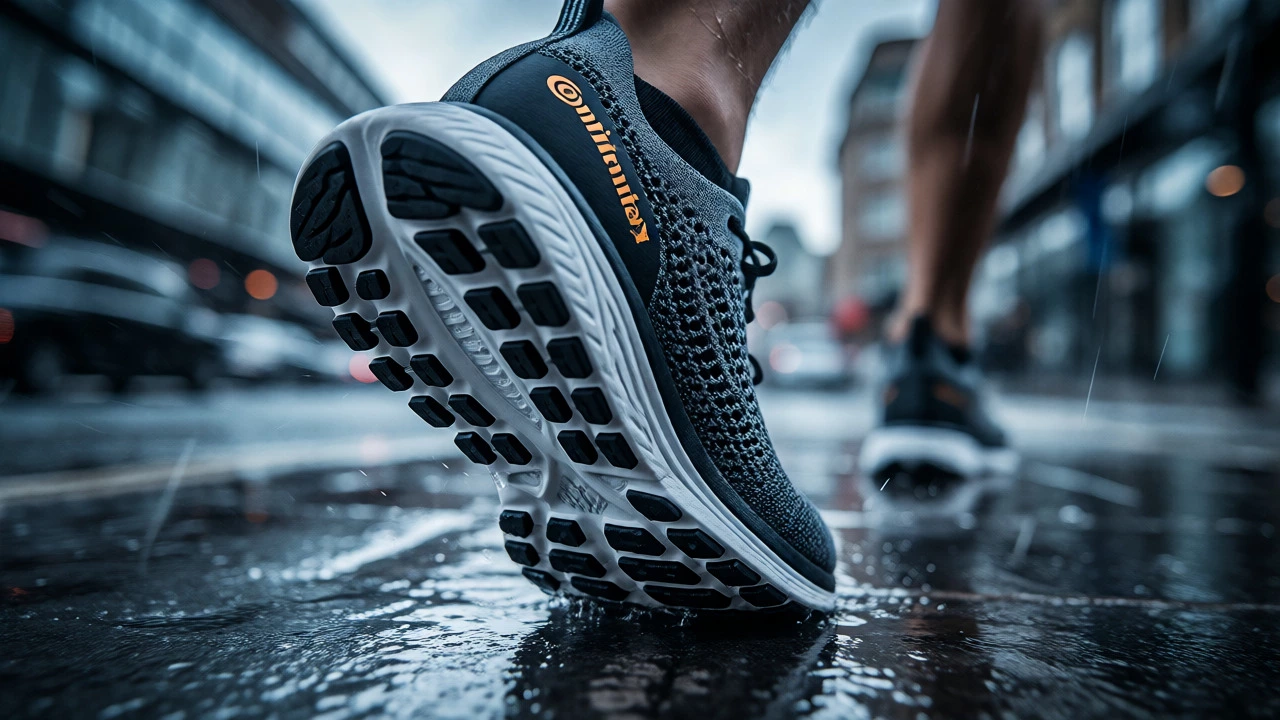
Then there’s the outsole. Adidas partnered with Continental, the same company that makes tires for BMWs and Audis, to create the rubber compound used on the bottom of the Ultraboost. Continental rubber offers superior traction on both wet and dry surfaces.
Standard rubber compounds can become slippery when wet. Continental’s formulation maintains grip even in rain. If you live in a place like Bristol, where drizzle is a constant companion, this feature alone justifies the upgrade. You won’t slip on painted road lines or wet tile floors in train stations. The tread pattern is designed to shed water quickly, channeling it away from the contact patch so your foot stays planted.
| Feature | Adidas Ultraboost | Generic Cushioned Shoe |
|---|---|---|
| Midsole Material | TPU Energy Capsules (Boost) | EVA Foam |
| Energy Return | High (~80%) | Moderate to Low |
| Upper Construction | Seamless Primeknit | Mesh with Synthetic Overlays |
| Outsole Grip | Continental Rubber (Wet/Dry) | Standard Carbon Rubber |
| Durability | High (Foam resists compression set) | Moderate (Foam packs out faster) |
Versatility: From Track to Town
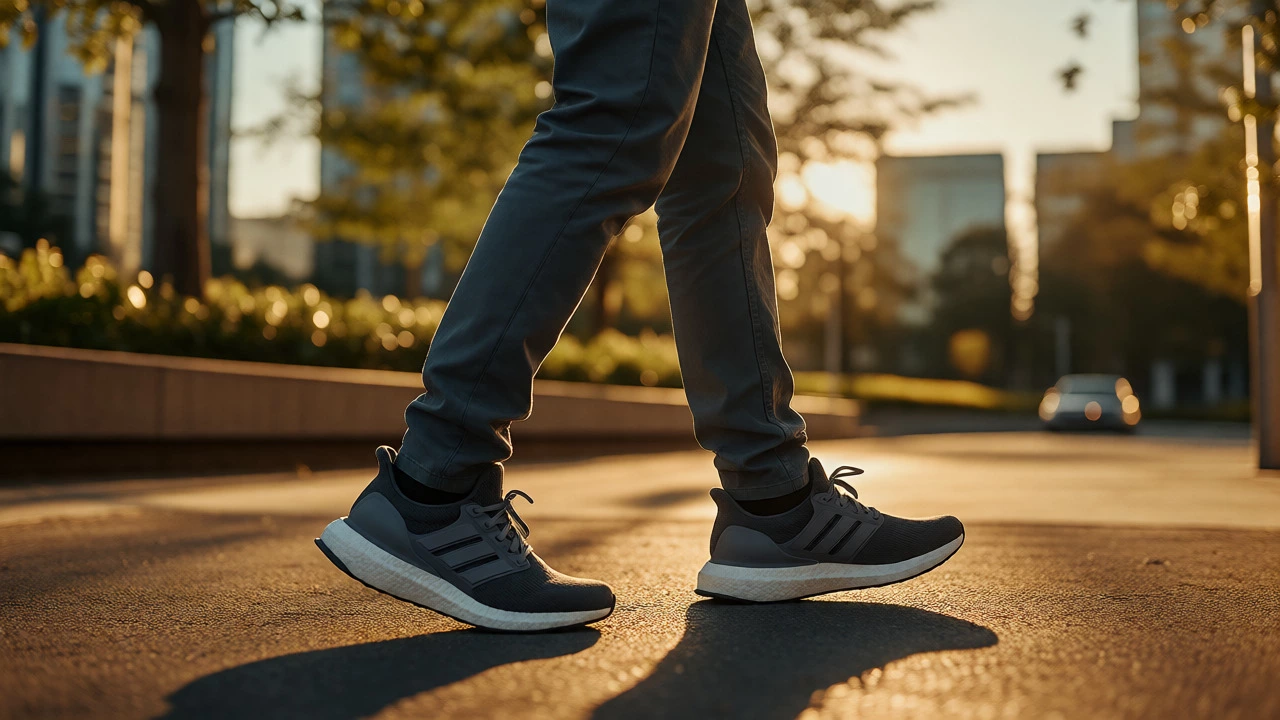
One reason the Ultraboost dominates sales charts is its dual identity. Most performance running shoes look technical and aggressive. They scream "I am going to run a sub-3-hour marathon." The Ultraboost looks clean enough to wear with jeans or chinos. This versatility appeals to the modern consumer who wants one pair of shoes for multiple contexts.
You can hit the treadmill in the morning, go to work in the afternoon, and grab dinner in the evening without changing footwear. The aesthetic is minimalist yet recognizable. The iconic three stripes are present but integrated into the design language rather than slapped on. For many buyers, this lifestyle factor is as important as the performance metrics. It reduces decision fatigue. You don’t need separate shoes for the gym and for casual wear.
However, this versatility comes with a caveat. The Ultraboost is heavier than dedicated racing flats or lightweight trainers. If you are training for speed intervals or a competitive race, the extra weight and the high stack height might slow you down. It’s a cruiser, not a sports car. But for daily miles, recovery runs, and long walks, that weight translates to durability and protection.
Who Should Buy It (And Who Should Skip It)
Not every runner needs an Ultraboost. Let’s break down the ideal candidate based on real-world usage scenarios.
- The Daily Jogger: If you run 10-20 miles a week at a conversational pace, this is arguably the best all-around shoe on the market. The cushioning protects joints, and the fit accommodates minor swelling during longer efforts.
- The Walker: Many nurses, teachers, and retail workers buy Ultraboosts for standing all day. The energy return reduces foot fatigue significantly compared to flat-soled shoes.
- The Wide-Footed Runner: The Primeknit upper expands. If you usually cut holes in your shoes to accommodate toe splay, the Ultraboost’s adaptive fit will feel liberating.
- The Wet-Weather Commuter: Thanks to the Continental rubber, you’ll feel safer on slick urban surfaces.
Conversely, skip this model if:
- You need maximum speed: For 5K races or track workouts, look for something lighter with a carbon plate.
- You prefer minimal ground feel: The thick Boost sole isolates you from the terrain. Barefoot-style runners or trail purists might find it too disconnected.
- You have severe overpronation: While stable, the Ultraboost is neutral. If you roll inward excessively, you might need a structured stability shoe like the Adidas Solarboost or a different brand entirely.
Care and Longevity Tips
To get the most out of your investment, treat the Primeknit and Boost correctly. Don’t throw them in the washing machine unless absolutely necessary. The agitation can distort the knit structure. Instead, spot-clean stains with a mild soap and a soft brush. Air dry them away from direct sunlight, which can yellow the white foam over time.
Rotate your shoes. Wearing the same pair every day doesn’t give the foam time to decompress fully between uses. Alternating with a second pair extends the life of the Boost cells by hours, potentially adding 50-100 miles to the shoe’s lifespan.
Are Ultraboosts good for plantar fasciitis?
Many users report relief due to the high level of cushioning and arch support provided by the Boost foam. However, individual experiences vary. The softness can sometimes lack the firm support some podiatrists recommend for severe cases. It is often recommended to try them with custom orthotics if you have existing foot conditions.
Do Ultraboosts run true to size?
Generally, yes. However, the Primeknit upper is stretchy. If you have narrow feet, they might feel slightly loose. If you have very wide feet, they might feel snug initially but will stretch. Most runners stick to their usual Adidas size. If you are between sizes, sizing up is usually safer for running to allow for foot swelling.
How long do Ultraboosts last?
With regular use, expect 300 to 500 miles of usable life. The Boost foam is durable and resists compression better than EVA, but the outsole rubber will eventually wear down, especially on the heel strike area. Once the tread is smooth, traction decreases, signaling it is time for replacement.
Can I use Ultraboosts for gym workouts?
For cardio machines like treadmills and ellipticals, they are excellent. For heavy lifting like squats or deadlifts, they are less ideal. The soft, compressible sole creates instability under heavy loads. Flat-soled shoes or weightlifting belts provide better power transfer and balance for strength training.
Is the Ultraboost waterproof?
The standard Ultraboost is not waterproof. The Primeknit upper is breathable, meaning water gets in easily. However, Adidas releases specific "GTX" versions featuring Gore-Tex membranes that are waterproof while maintaining breathability. If you run in winter frequently, look for the GTX variant.