Rugby Fixtures April 16, 2026
Who Invented Rugby? The True Story of William Webb Ellis
Rugby Origins Knowledge Challenge
Do you know the true story behind the sport of rugby? Test your knowledge of its rebellious beginnings!
Challenge Complete!
0/5
You're a rugby novice!
Key Takeaways
- The credit for inventing rugby goes to William Webb Ellis, a student at Rugby School.
- The game evolved from "folk football," which was chaotic and lacked a central rulebook.
- Rugby Union and Rugby League diverged later due to disputes over payment.
- The sport shifted from a schoolyard pastime to a global phenomenon with standardized laws.
The Legend of the Boy Who Broke the Rules
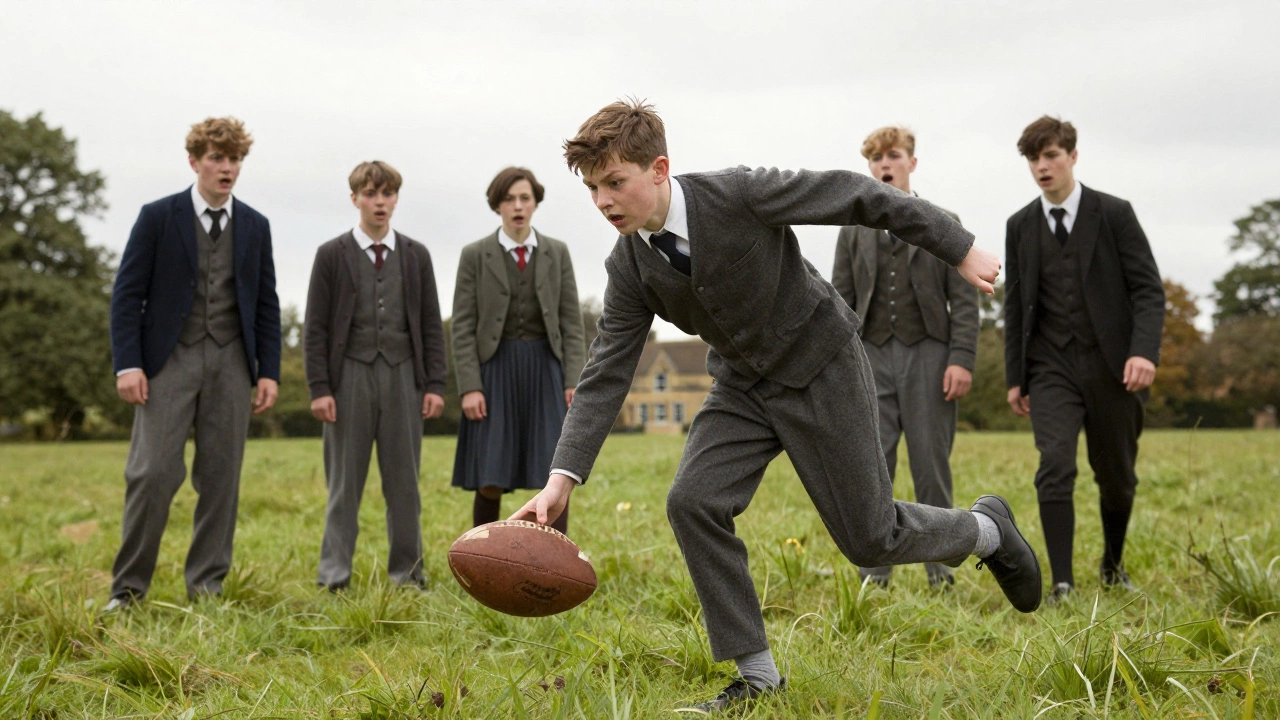
Most history books point to one specific person: William Webb Ellis is the student credited with inventing rugby by picking up the ball and running with it during a football match at Rugby School in 1823. This story is so central to the sport that the World Rugby trophy is actually named the Webb Ellis Cup. But if you're looking for a signed contract or a written manifesto from 1823, you won't find one. The account of Ellis's "invention" was actually written about 50 years after the event by the school's headmaster.
Was it really just one guy? Probably not. History is rarely that simple. In the early 19th century, schools in England played various versions of "football" that looked more like a riot than a sport. However, the environment at Rugby School is a prestigious English public school in Warwickshire where the specific rules of rugby were first codified provided the perfect breeding ground for a more physical, carrying-based game. The school's layout and the temperament of the students pushed the game toward the high-impact sport we recognize now.
From Chaos to Codification
Before there were referees and line-judges, there was Folk Football is an early, unregulated form of football played by entire villages with very few rules and often resulting in violence . These matches were basically neighborhood brawls where the goal was to move a ball from one end of a village to another. It was an absolute mess. When the students at Rugby School started playing, they began to realize that if they wanted the game to last, they needed a set of agreed-upon laws.
The first set of written rules appeared around 1845. These early laws didn't include things like the scrum or the line-out as we know them today. Instead, they focused on the basics: how to start the game, what constituted a "touchdown," and how to handle the ball. This transition from a chaotic schoolyard activity to a structured sport is what allowed William Webb Ellis's legend to stick. Without rules, it was just a fight; with rules, it became a sport.
| Feature | Early Rugby Style | Early Association Style |
|---|---|---|
| Ball Handling | Carrying and throwing allowed | Strictly feet (no hands) |
| Physicality | Tackling and grappling | Minimal contact |
| Objective | Touchdown/Goal | Kicking into a goal |
| Core Philosophy | Strength and territorial gain | Dribbling and agility |
The Great Divide: Union vs. League
As the sport grew, a massive rift developed. This wasn't about how to play the game, but about who got paid. In the late 19th century, the Rugby Football Union (RFU) is the governing body established in 1886 to standardize the rules of rugby union insisted that the game remain strictly amateur. They believed that playing for money corrupted the spirit of the sport. This worked for the wealthy elite, but it wasn't fair to the working-class players in Northern England who had to miss work to play.
In 1895, this tension boiled over, leading to the creation of the Rugby League is a professional variant of rugby that split from the union in 1895 to allow players to be compensated for lost wages . This split changed the game's DNA. To make the professional game faster and more appealing to paying crowds, League removed the line-out and reduced the number of players from 15 to 13. While both share the same ancestor in Rugby School, they evolved into two very different beasts.
How the Modern Game Changed
If a student from 1823 walked onto a modern pitch, they'd be baffled. The game has gone through several massive shifts. For instance, the introduction of the Tackle is the act of bringing an opponent to the ground to stop their progress with the ball has become a science. In the early days, tackling was basically a wrestling match. Today, it's about leverage, shoulder placement, and safety protocols.
Another huge change is the professionalization of Rugby Union is the 15-a-side version of the sport that remained amateur until 1995 . For over a century, Union players were technically forbidden from taking a penny. When the game finally went professional in 1995, the athleticism skyrocketed. Players became full-time athletes with nutritionists and strength coaches, turning the game into a contest of elite power and speed rather than just a hobby for the upper class.
Common Misconceptions About Rugby's Origin
One big myth is that rugby was an intentional invention. People love to imagine Webb Ellis sitting down and sketching out a rulebook. In reality, sports evolve organically. Various forms of "carrying" games existed across Europe. The reason we credit Rugby School is that they were the ones who actually wrote the rules down, giving the sport a definitive home and a name.
Another point of confusion is the relationship between rugby and American football. While it's true that American Football is a sport derived from rugby and association football, characterized by the use of downs and forward passing shares the same roots, it diverged significantly in the late 1800s. The introduction of the "line of scrimmage" and the forward pass in the US turned it into a game of strategic territory and set plays, whereas rugby remained a more fluid, continuous contest.
Looking at the Game Today
When you look at today's World Rugby is the international federation that governs the sport of rugby union globally standards, you can still see the ghost of that schoolyard game. The focus on possession, the physical battle for every inch of grass, and the camaraderie of the team all stem from that original spirit of rebellion. It's a sport that celebrates both brutal strength and unexpected creativity.
Whether you prefer the tactical depth of the 15-man game or the high-speed collisions of the 13-man league, the core essence remains the same. It's about taking a ball and driving forward against a wall of opposition. Not a bad legacy for a kid who just decided to ignore the rules for a few seconds in 1823.
Did William Webb Ellis actually invent rugby?
While tradition credits him, there is no contemporary evidence from 1823. The story was popularized decades later. It is more likely that the game evolved over time among students at Rugby School, but Ellis serves as the symbolic founder of the sport.
What is the difference between Rugby Union and Rugby League?
The primary differences are the number of players (15 in Union, 13 in League) and the rules regarding tackles and restarts. League has no line-outs and a different tackle system (six tackles per set) to make the game faster, while Union retains more traditional elements like rucks and mauls.
Why is the World Cup called the Webb Ellis Cup?
The trophy is named after William Webb Ellis to honor the legendary origin of the game at Rugby School. It connects the modern professional sport to its humble, rebellious roots in the 19th century.
When did rugby become professional?
Rugby League became professional in 1895. Rugby Union, however, maintained a strict amateur code until 1995, when the International Rugby Board (now World Rugby) finally allowed players to be paid.
Is rugby related to American football?
Yes, American football is a direct descendant of both rugby and association football. Early US versions of the game were very similar to rugby, but they eventually added the line of scrimmage and the forward pass, creating a distinct sport.
Next Steps for Fans
If you're new to the game, the best way to appreciate this history is to watch a live match. Check out the local club fixtures in your area to see the grassroots spirit in action. If you want to dive deeper, look into the history of the "Home Nations" and how the first international match between England and Scotland in 1823 helped solidify the rules.
For those interested in the technical side, studying the evolution of the scrum will show you how the game shifted from a chaotic push to a highly regulated tactical battle. The sport is always changing, but it always keeps that original spark of defiance.