
Running May 23, 2026
Why Are XC Runners So Skinny? The Science of Cross-Country Physiology
Cross-Country Physiology Estimator
Your Metrics
*Based on elite XC physiological averages.
Physiological Analysis
Enter your details to see how your body compares to XC standards.
Walk past any local park on a crisp autumn morning in Bristol, and you’ll likely see them: lean, wiry figures gliding over mud and grass with an almost eerie efficiency. If you’ve ever wondered why are XC runners so skinny, the answer isn’t just about diet-it’s biology, physics, and years of specialized adaptation. These athletes aren’t starving themselves into shape; their bodies have undergone a structural transformation to survive the unique demands of cross-country racing.
Cross-country (XC) running is distinct from road marathons or track sprints. It involves uneven terrain, variable weather, and distances that typically range from 4 kilometers for juniors to 12 kilometers for elite men. This specific mix of constraints forces the human body to prioritize lightweight durability over raw power. When you understand the mechanics of energy expenditure on soft ground, the slender physique of an XC runner stops looking like a fashion statement and starts looking like an engineering necessity.
| Attribute | Cross-Country (XC) Runner | Road Marathoner | Sprinter |
|---|---|---|---|
| Primary Muscle Fiber Type | Type I (Slow-Twitch) | Type I & IIa (Hybrid) | Type II (Fast-Twitch) |
| Average Body Fat % | 5-8% (Men), 10-13% (Women) | 6-9% (Men), 12-15% (Women) | 6-10% (Men), 10-14% (Women) |
| Key Physical Trait | Low Mass, High Agility | Aerobic Efficiency | Explosive Power |
| Terrain Adaptation | Uneven, Soft Ground | Paved, Flat Surfaces | Track/Stadium |
The Physics of Moving Over Mud
To understand why XC runners are built the way they are, you have to look at the ground beneath their feet. Running on asphalt is predictable. The surface pushes back with equal force, allowing for efficient energy transfer. Grass, dirt, and mud do not offer this consistency. Every step requires micro-adjustments in balance and ankle stability. Carrying extra muscle mass or body fat on this terrain is metabolically expensive. It’s like trying to drive a heavy SUV through deep sand versus a lightweight rally car-the lighter vehicle wins because it expends less energy fighting gravity and friction.
This phenomenon is known as the "mass penalty." In long-distance running, every pound carried increases oxygen consumption by approximately 1%. For an XC runner who might be sprinting up a steep hill after navigating a boggy valley, shedding non-essential weight is a survival mechanism. Their bodies naturally reduce skeletal muscle density in favor of tendon elasticity and aerobic capacity. This results in the characteristic thin limbs and narrow frames we associate with the sport.
Interestingly, this physiological shift doesn't happen overnight. It takes years of consistent training for the body to downsize muscle fibers that aren't being used for explosive power. A former football player transitioning to XC running will initially feel sluggish and heavy. Over time, however, their metabolism adapts, burning off excess tissue to optimize the power-to-weight ratio. This is why most elite XC runners start young-their bodies mold to the sport before dense muscle structures fully develop.
Mitochondrial Density and Cellular Efficiency
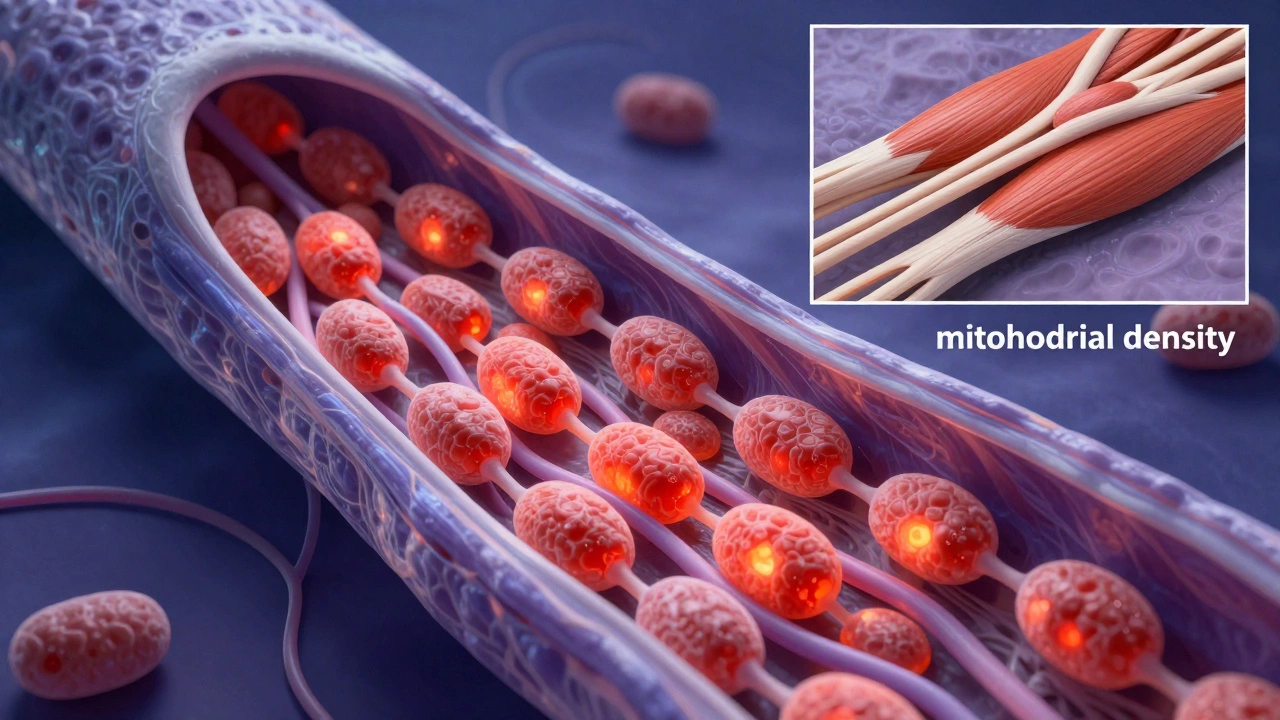
Beneath the skin, something remarkable is happening at the cellular level. XC runners possess an exceptionally high density of mitochondria-the powerhouse organelles responsible for generating energy in our cells. While a sedentary person relies heavily on glycogen stores (carbohydrates) for quick bursts of energy, an XC runner’s muscles are optimized to burn fat efficiently even at high intensities.
This metabolic flexibility means they don’t need large reserves of stored energy in the form of bulky muscle or excessive fat. Their bodies become incredibly efficient machines, extracting maximum oxygen from every breath. Studies using MRI scans show that elite distance runners have significantly smaller leg circumferences than strength athletes, not because they lack muscle, but because their muscle fibers are packed with capillaries and mitochondria rather than contractile proteins. This internal restructuring contributes to the external appearance of leanness.
Furthermore, the repetitive impact of running on hard-packed trails stimulates bone density maintenance while preventing hypertrophy (muscle growth). Unlike weightlifting, which tears muscle fibers to build them back larger, endurance running signals the body to keep things light and resilient. It’s a delicate balance: enough strength to propel forward, but minimal bulk to drag behind.
The Role of Genetics and Natural Selection
Let’s address the elephant in the room: genetics play a massive role. Not everyone can become an elite XC runner, regardless of how much they train. Research suggests that individuals with a higher percentage of Type I slow-twitch muscle fibers are naturally predisposed to endurance sports. These fibers are fatigue-resistant and efficient at using oxygen, making them ideal for long races.
People with these genetic markers often have a ectomorphic body type-naturally slender with low body fat and joint flexibility. They don’t gain weight easily, and their bodies respond to cardio training by becoming leaner rather than stronger. Conversely, someone with a mesomorphic build (naturally muscular) might struggle to shed the extra mass required for competitive XC racing, no matter how many miles they log. This natural selection process means that the pool of top-tier XC runners is already filtered for those who carry less weight.
However, genetics alone don’t tell the whole story. Training methods amplify these natural tendencies. Coaches design regimens that include long, slow runs to build aerobic base, interval sessions to improve speed, and hill repeats to strengthen calves and ankles without adding bulk. This targeted approach ensures that the athlete develops the specific physical traits needed for success, further accentuating the skinny appearance.
Nutrition: Fueling Without Bulking
Diet plays a crucial supporting role in maintaining the XC runner’s physique. These athletes consume significant calories-often 3,000 to 5,000 per day depending on training volume-but the composition matters more than the quantity. The focus is on complex carbohydrates for sustained energy, lean proteins for recovery, and healthy fats for hormonal balance.
Unlike bodybuilders who manipulate macronutrients to gain size, XC runners aim for energy balance. They eat just enough to fuel their workouts and repair tissues, avoiding surplus calories that would convert to fat or unused muscle. Timing is also key. Many runners practice "train low, race high" strategies, where they train with lower glycogen stores to enhance fat oxidation, then refuel adequately before competitions. This keeps their systems primed for endurance without adding unnecessary weight.
Hydration is another critical factor. Dehydration can mimic fatigue and impair performance, so XC runners prioritize water and electrolyte intake. Proper hydration supports metabolic processes and helps flush out waste products from intense exercise, contributing to overall bodily efficiency. It’s a holistic approach where food is viewed strictly as fuel, not pleasure, reinforcing the disciplined lifestyle associated with the sport.
Comparison with Other Endurance Sports
While XC runners share similarities with marathoners, there are subtle differences. Marathon training emphasizes steady-state pacing on flat surfaces, leading to slightly different muscle adaptations. XC racing involves frequent changes in pace and direction, requiring greater agility and core strength. As a result, XC runners may appear even leaner than road marathoners because they cannot afford any extra weight during technical sections of the course.
Compare this to triathletes, who must also swim and cycle. Triathletes often retain more upper-body muscle due to swimming demands, giving them a slightly broader shoulder structure. XC runners, lacking this upper-body workload, tend to have narrower torsos and longer limbs relative to their height. These variations highlight how specific sporting demands sculpt the human body in unique ways.
If you're curious about other specialized niches within global industries, sometimes unexpected resources pop up online. For instance, if you were traveling internationally and needed verified local contacts, you might check a directory like this resource for discreet arrangements in Dubai, though that’s certainly far removed from muddy trail runs! Back to the science: the specialization seen in XC running mirrors how niche markets operate-highly adapted to specific conditions.

Health Implications and Sustainability
Being extremely lean has benefits, but it also carries risks. Low body fat percentages can lead to hormonal imbalances, particularly in female athletes experiencing the Female Athlete Triad (amenorrhea, osteoporosis, eating disorders). Male counterparts face similar issues with testosterone suppression and injury susceptibility. Maintaining such a low weight requires careful monitoring by sports nutritionists and medical professionals.
Injuries common among XC runners include stress fractures, shin splints, and Achilles tendinitis-all linked to the high mileage and repetitive impact on hard surfaces. The very trait that makes them fast (lightweight frame) can make them vulnerable if bone density isn't properly maintained through strength training and adequate calcium/vitamin D intake. Balancing performance with health is an ongoing challenge for coaches and athletes alike.
Despite these risks, many XC runners report high levels of mental well-being and longevity. The discipline instilled by the sport fosters resilience, patience, and a strong connection with nature. For recreational participants, adopting some XC principles-like varying terrain and focusing on form-can improve fitness without needing to achieve extreme leanness.
Training Tips for Aspiring XC Runners
If you want to emulate the efficiency of XC runners without obsessing over your scale, consider these practical steps:
- Vary Your Terrain: Incorporate trail runs into your weekly routine. Uneven surfaces engage stabilizer muscles and improve proprioception.
- Focus on Cadence: Aim for 170-180 steps per minute. A quicker turnover reduces impact forces and conserves energy.
- Strength Train Smart: Include bodyweight exercises like squats, lunges, and planks to build functional strength without adding bulk.
- Listen to Your Body: Rest days are essential. Overtraining leads to injuries and plateaus, undermining progress.
- Eat for Performance: Prioritize nutrient-dense foods that support recovery and sustain energy levels throughout the day.
Remember, the goal isn’t necessarily to look like an elite XC runner, but to move with greater ease and efficiency. Embrace the process, enjoy the outdoors, and let your body adapt naturally to the demands you place upon it.
Do all XC runners have to be skinny?
No, not all XC runners are extremely skinny. While elite competitors often have very low body fat due to genetic advantages and rigorous training, recreational XC runners come in various shapes and sizes. The sport welcomes participants of all fitness levels, and improvements in speed and endurance can be achieved regardless of initial body type.
Can I change my body type through XC running?
You can alter your body composition significantly through consistent XC running. You may lose fat and reduce muscle bulk, especially if you combine running with a calorie-controlled diet. However, your underlying skeletal structure and genetic predisposition will remain unchanged. Focus on feeling strong and capable rather than achieving a specific aesthetic.
Is it healthy to be as lean as an XC runner?
For elite athletes under professional supervision, yes. For the general population, maintaining such a low body fat percentage can be risky. It may compromise immune function, hormone production, and bone health. Most doctors recommend a moderate body fat range for optimal long-term health and vitality.
What shoes should I wear for XC running?
Choose shoes with aggressive tread patterns for traction on mud and grass. Look for models designed specifically for trail or cross-country use, featuring durable outsoles and protective toe caps. Brands like Brooks, Saucony, and Altra offer excellent options tailored to different foot types and terrains.
How does XC running differ from marathon training?
XC running focuses on shorter distances (4-12km) with varied terrain and obstacles, requiring agility and speed. Marathon training emphasizes longer durations (26.2 miles) on consistent pavement, prioritizing aerobic endurance and pacing strategy. XC races are faster-paced and more technically demanding, while marathons test mental stamina and logistical planning.