Basketball August 3, 2026
Why Is It Called G League? The Origin and History of the Name
G League Evolution Timeline
Pre-NBA Era
1980s - 1990s
The Fragmented Era (CBA & ABA)
Before a unified system existed, leagues like the CBA dominated independently. There was no formal draft connection to the NBA.
2001
Birth of the D-League
The NBA launches its own Development League. It creates a standardized pipeline where every team is affiliated with an NBA franchise.
2001 - 2017
The D-League Growth
The league expands geographically and improves quality. However, the name lacks brand identity and monetization potential.
Nov 2017
Rebranding to G League
A naming rights deal with Gatorade transforms the league into the NBA G League, injecting capital and global brand recognition.
2017+
Two-Way Contracts
Structural changes allow players to split time between NBA and G League rosters, blurring the line between the two organizations.
Present Day
Global Talent Hub
The G League serves as a bridge for international prospects and a high-level showcase for future NBA stars.
Have you ever wondered why the official minor league for the National Basketball Association is called the G League? If you’ve been following professional basketball for a while, you might remember it going by different names. It wasn’t always the G League. In fact, if you look back at archives from the late 1990s or early 2000s, you’ll see references to the CBA, the ABA, or the D-League. The name change isn’t just a marketing tweak; it reflects a shift in how the NBA views player development.
The current name comes from a sponsorship deal with Gatorade. But to understand why it’s called that, we have to look at the chaotic history of basketball’s developmental leagues and how they eventually merged into one unified system under the NBA’s control.
The Messy Early Days: Before There Was One League
Before the G League existed as we know it today, the landscape of professional basketball below the NBA was fragmented. For decades, there wasn’t a single "minor league." Instead, there were several competing organizations trying to fill the void between college basketball and the pros.
In the 1980s and 1990s, the Continental Basketball Association (CBA) was the dominant force. It was known for producing NBA talent like Kevin McHale and Mark Price. However, the CBA operated independently. The NBA didn’t own it, and there was no formal draft system connecting the two. Players could jump from the CBA to the NBA, but it was largely an unstructured process.
At the same time, other leagues popped up and vanished. The American Basketball Association (ABA), which had famously merged with the NBA in 1976, saw a revival attempt in the 1990s. This new ABA tried to position itself as a competitor to the NBA, not a feeder system. It failed quickly due to financial instability and lack of star power.
This fragmentation meant that aspiring professionals had nowhere consistent to go if they weren’t drafted by an NBA team. They had to choose between overseas contracts, independent summer leagues, or the unstable minor leagues. The NBA recognized this gap. They needed a controlled environment to develop players, test strategies, and give undrafted athletes a chance to prove themselves.
The Birth of the Development League (D-League)
In 2001, the NBA took matters into its own hands. They launched the NBA Development League, commonly known as the D-League. This was a pivotal moment. Unlike the CBA or the revived ABA, this league was owned and operated by the NBA. Every team in the D-League was affiliated with an NBA franchise.
The goal was clear: create a pipeline. If an NBA team needed to work on a rookie’s defense or get playing time for an injured veteran, they could assign them to their affiliate in the D-League. It standardized player development across the entire association.
The name "Development League" was literal. It described exactly what the organization did. It developed players. During its first decade, the D-League grew steadily. Teams expanded across the United States, moving from small arenas in places like Erie, Pennsylvania, to larger markets like Texas and California. The quality of play improved significantly because the best coaches and trainers from the NBA started working in these affiliates.
However, despite its success, the name "D-League" had limitations. It sounded generic. It lacked brand identity. And crucially, it didn’t offer a way to monetize the league beyond ticket sales and local sponsorships. The NBA owns the league, but individual teams are often run by local owners who need revenue streams to keep the lights on.
The Naming Rights Deal with Gatorade
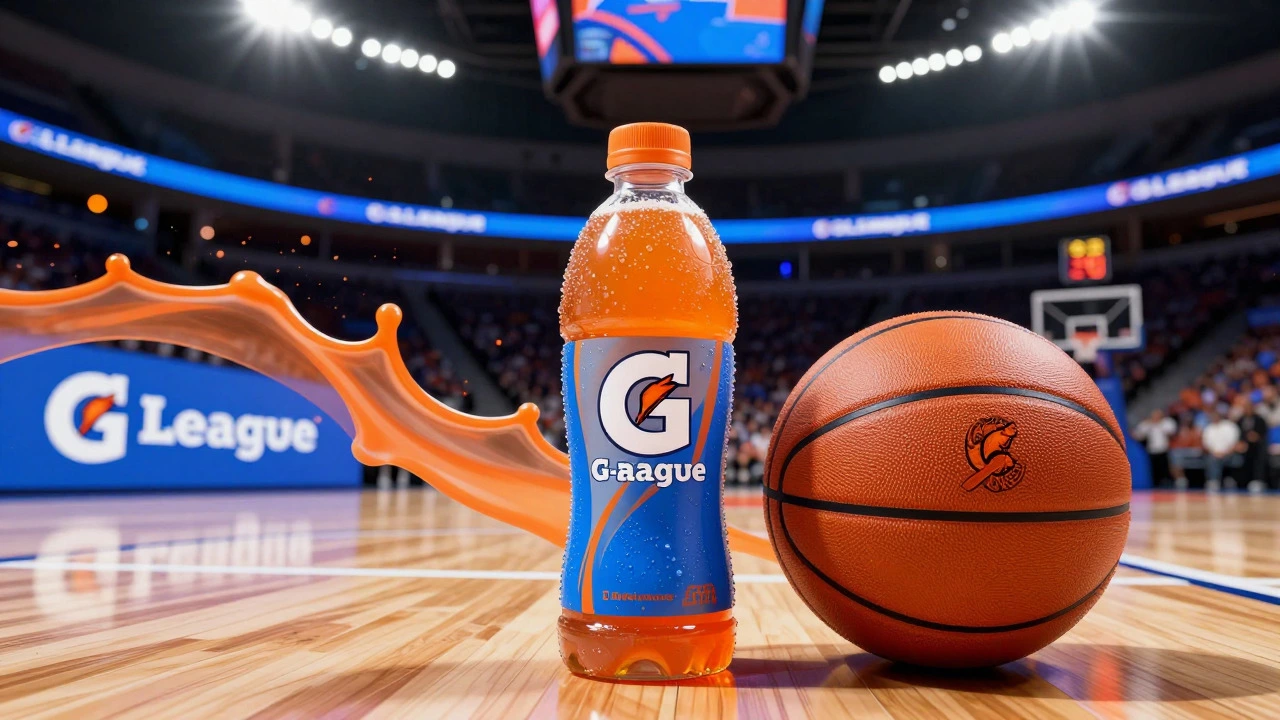
In November 2017, the NBA announced a major rebranding. The D-League was renamed the NBA G League. This wasn’t just a cosmetic change; it was a business decision driven by a multi-year naming rights agreement with Gatorade.
Gatorade, owned by PepsiCo, has long been associated with sports performance and hydration. By attaching their name to the league, they aligned their brand directly with the future stars of the NBA. Think about it: when you watch a young Ja Morant or Jaylen Brown shine in the G League, you’re seeing the next generation of athletes who likely drink Gatorade. It’s a perfect marketing fit.
The deal reportedly included significant financial compensation for the league and its teams. This money helped stabilize franchises, improve facilities, and increase player salaries. Higher salaries attracted better talent, which in turn increased viewership and engagement. It was a virtuous cycle fueled by the partnership.
But why "G" instead of just keeping "NBA" in front? The letter "G" stands for Gatorade, yes, but it also subtly hints at "Game," "Greatness," and "Generation." The branding campaign emphasized that this was where greatness is built. It moved the narrative away from "minor league" (which sounds inferior) to "development league" (which sounds purposeful).
More Than Just a Name Change
The transition to the G League brought structural changes that went deeper than the logo. One of the most significant was the introduction of the Two-Way Contract.
Before the G League era, players were either on an NBA roster or not. With the Two-Way Contract, introduced around the time of the rebrand, teams could carry three additional players who split their time between the NBA and the G League. These players count toward the NBA salary cap differently, allowing teams to stockpile more young talent without breaking the bank.
This change blurred the line between the two leagues. The G League became less of a separate entity and more of an extension of the NBA season. You’d see NBA All-Stars like Anthony Edwards or Tyrese Haliburton drop down to play a few games in the G League during the regular season. This level of integration was unheard of in the old D-League days.
The name change also coincided with efforts to make the league more accessible. Games began streaming on NBA TV and digital platforms. The production value of broadcasts improved. Social media presence grew. The G League positioned itself not just as a training ground, but as a destination for basketball fans who wanted to see raw, high-upside talent.
Why Not Keep the Old Names?
You might wonder why the NBA didn’t just stick with "Development League" or revive the "CBA" name. There are practical reasons for this.
First, "Development League" is descriptive but boring. It doesn’t evoke excitement. Sports leagues thrive on emotion and identity. The G League has a sleeker, modern sound. It fits alongside brands like the WNBA, the NBA 2K video game series, and other contemporary sports entities.
Second, the CBA name carried baggage. While historically significant, the CBA had dissolved in its original form. Reviving it would confuse casual fans. Plus, the CBA was never fully integrated with the NBA. The G League is explicitly part of the NBA ecosystem. Using a distinct name helps clarify that relationship.
Third, corporate partnerships are essential for sports sustainability. The NBA generates billions in revenue, much of it from sponsors. Extending that model to the G League ensures its long-term viability. Without naming rights deals, many G League teams would struggle to survive financially. The money from Gatorade allows teams to invest in coaching staff, analytics departments, and community outreach programs.
The Impact on Player Perception
How do players feel about the name? Generally, positively. For a long time, being sent to the "D-League" felt like a demotion. It was seen as a place where careers went to die. The rebranding helped shift that perception.
Today, going to the G League is viewed as an opportunity. It’s a chance to get minutes, refine skills, and stay close to home. Many players appreciate the stability that comes with being part of an NBA-affiliated organization. They know that if they perform well, the path back to the NBA is clear.
The name also carries weight internationally. As the NBA expands globally, the G League serves as a bridge for international players. Young prospects from Europe, Africa, and Asia can join the G League to adapt to the style of play before attempting to crack an NBA roster. The global recognition of the "G" brand helps attract this international talent.
Looking Ahead: What Comes Next?
Naming rights deals don’t last forever. Contracts expire. So, will the G League be renamed again in the future? Almost certainly. When the current deal with Gatorade ends, another company will likely step in. We might see it become the "NBA [Brand] League" or something entirely different.
However, the core identity of the league is now established. Whether it’s called the G League, the D-League, or the X League, its function remains the same: to develop the next generation of NBA stars. The name is just a label. The value lies in the basketball.
For fans, understanding the history behind the name adds depth to the viewing experience. When you watch a G League game, you’re not just watching a minor league match. You’re watching a critical piece of the NBA infrastructure. You’re seeing the workshop where future legends are forged. And that’s worth knowing, regardless of what the logo says on the jersey.
When did the D-League become the G League?
The NBA Development League was officially renamed the NBA G League in November 2017. This change coincided with a naming rights partnership with Gatorade.
What does the 'G' stand for in G League?
The 'G' stands for Gatorade, the sports drink brand that purchased the naming rights to the league. However, the branding also plays on words like 'Game' and 'Greatness.'
Is the G League owned by the NBA?
Yes, the G League is wholly owned by the NBA. Each G League team is affiliated with an NBA franchise, creating a direct developmental pipeline.
Can NBA players play in the G League?
Yes. Through Two-Way Contracts, NBA teams can assign players to the G League. Additionally, NBA veterans can be temporarily assigned to gain playing time or recover from injuries.
Was the G League always called the D-League?
No. Before becoming the D-League in 2001, the developmental circuit was fragmented among independent leagues like the CBA and the ABA. The D-League was the first NBA-owned developmental league.
Why did the NBA change the name from D-League to G League?
The name change was primarily driven by a lucrative naming rights deal with Gatorade. It also allowed the league to modernize its brand and move away from the generic term 'Development.'
Are G League salaries higher than D-League salaries used to be?
Yes. Since the rebranding and the introduction of collective bargaining agreements specific to the G League, player salaries have increased significantly, attracting more former NBA players and top college prospects.