Swimming August 20, 2026
Which swimming style to learn first? A practical guide for beginners
Find Your Best First Swimming Stroke
Quick assessment: Answer 5 short questions and we'll recommend the best stroke to start with based on your comfort level, goals, and experience.
Your recommended starting stroke
Most people assume the fastest stroke is the one you should master first. It’s a logical thought, but it often leads to frustration in the pool. If you’re new to swimming, your primary goal isn’t speed; it’s survival and comfort in the water. The right starting point depends on your body mechanics, fear levels, and long-term goals, not just what looks cool.
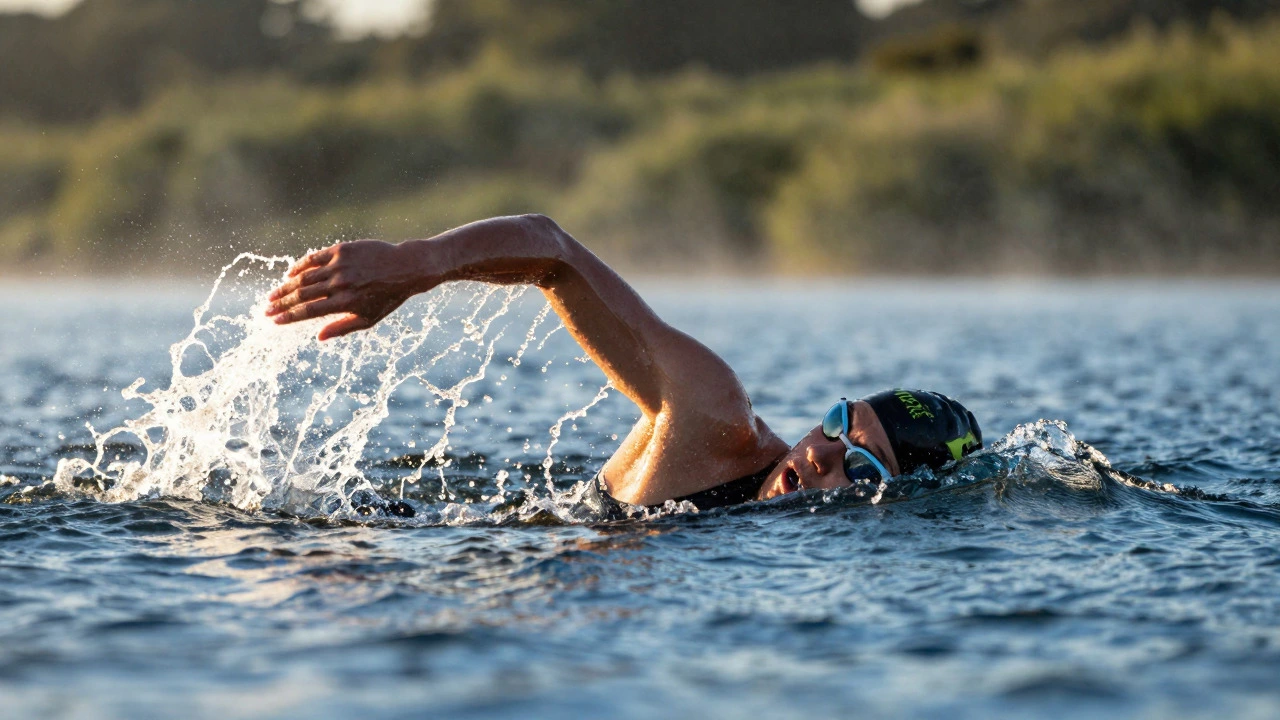
Front Crawl is the most efficient and widely used competitive swimming stroke, characterized by alternating arm movements and flutter kicks while facing forward. Also known as freestyle, it forms the foundation of modern swimming instruction because it builds the core coordination skills needed for all other strokes. However, it requires overcoming a significant hurdle: breathing sideways while keeping your face in the water.
Why Front Crawl Is the Standard Starting Point
Coaches worldwide recommend Front Crawl as the first skill to develop for a reason. It teaches you how to maintain a horizontal body position, which is crucial for reducing drag. When you lie flat in the water, you move with less resistance than if you were upright or tilted. This horizontal alignment is the baseline for efficient movement in any aquatic environment.
The stroke also introduces the concept of continuous motion. Unlike some other strokes where there are distinct pauses or phases, front crawl demands a rhythmic flow. Your arms pull while your legs kick, creating a constant propulsion. This rhythm helps beginners understand that swimming is about timing, not just strength. If you can master the timing of your breaths relative to your arm rotation, you’ve built a framework that applies to butterfly, backstroke, and even diving entries.
From a safety perspective, front crawl is superior for endurance. If you find yourself in open water, such as a lake or river, you need a stroke that conserves energy over long distances. Backstroke can be disorienting when you lose sight of your destination, and breaststroke becomes tiring quickly due to its stop-and-go nature. Front crawl allows you to keep your eyes up (with proper technique) or at least oriented toward your target, making it the safest bet for navigation in non-pool environments.
The Case for Backstroke: Facing Up, Feeling Safe
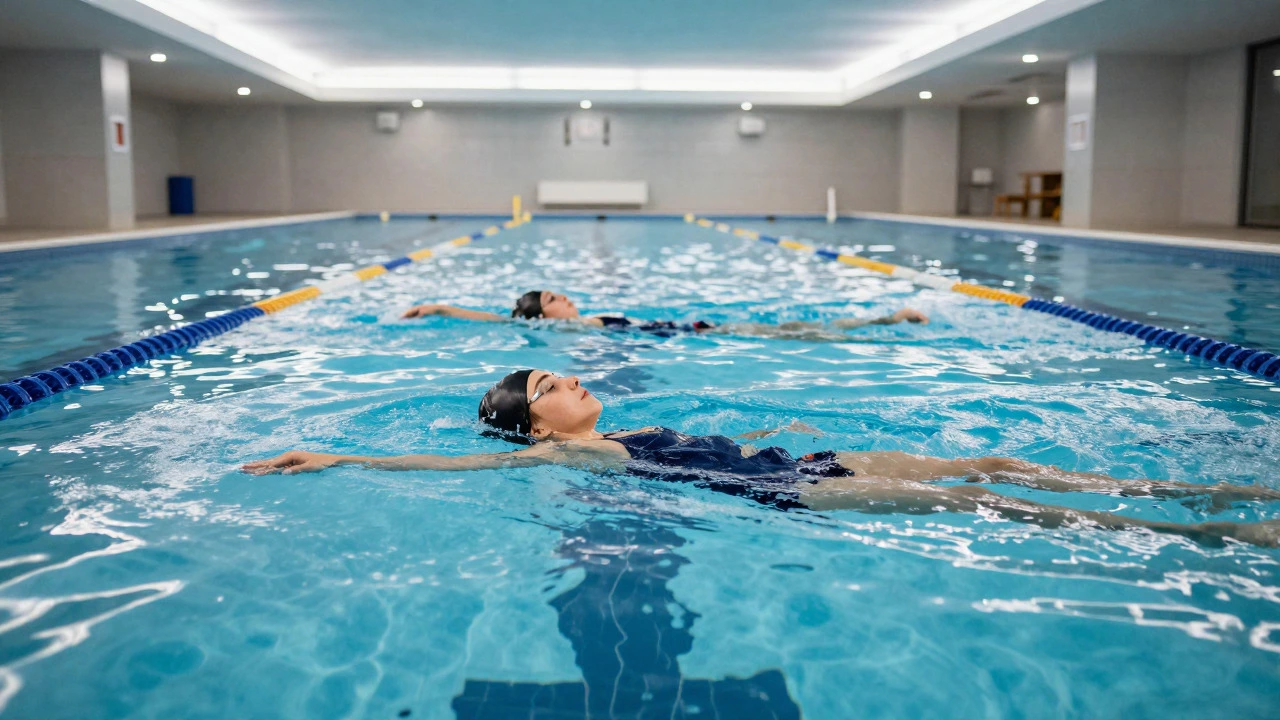
Not everyone thrives with their face in the water. For many adults, the idea of submerging their face triggers a primal panic response. In these cases, Backstroke is a swimming stroke performed on the back with arms moving in an alternating overhead motion and legs performing a flutter kick. It offers a psychological advantage: you can see the sky, the pool lane markers, and your coach. This visual stability reduces anxiety significantly.
Backstroke is mechanically similar to front crawl in terms of arm rotation and leg action, but inverted. Because you’re already comfortable with the water supporting your head, transitioning from backstroke to front crawl later is often smoother than starting with front crawl and struggling with breathing. Many adult learners report that once they feel safe on their backs, flipping over to face down feels less intimidating.
However, backstroke has limitations. It’s harder to navigate in open water because you can’t see where you’re going. You rely on turning your head to check direction, which breaks your streamline. Additionally, backstroke is generally slower than front crawl for the same effort level. If your goal is recreational lap swimming in a pool, backstroke is an excellent secondary stroke, but it might not be the best *first* choice if you want maximum efficiency immediately.
Breaststroke: The Intuitive Choice for Water Safety
Breaststroke is a swimming stroke where both arms and legs move simultaneously in a symmetrical pattern, allowing the swimmer to keep their face above water during recovery. It’s often called the "easy" stroke because you can breathe without turning your head. You lift your head out of the water every cycle, look forward, and then dive back down. For many beginners, this feels natural, like wading in a shallow pool.
Breaststroke is the standard rescue stroke taught in lifeguard training. Why? Because it’s stable. You can hold someone else’s hand or torso while maintaining your own balance. The wide arm pull provides strong initial propulsion, and the frog-like kick keeps you close to the surface. If you’re learning for water safety purposes-like knowing how to stay afloat in a lake-breaststroke is incredibly valuable.
But here’s the catch: breaststroke is inefficient for distance. The glide phase after each kick means you’re constantly accelerating and decelerating. Over 100 meters, this fatigue accumulates rapidly. Furthermore, the head-up breathing position can strain the neck if done incorrectly. Many beginners hyperextend their necks to see, leading to pain. So, while it’s intuitive, it requires careful coaching to avoid injury.
Comparing the Big Three: What Fits Your Goals?
To help you decide, let’s look at how these three main strokes compare across key factors. This table breaks down the pros and cons based on common learner profiles.
| Feature | Front Crawl | Backstroke | Breaststroke |
|---|---|---|---|
| Learning Curve | Steep (breathing coordination) | Moderate (balance issues) | Gentle (intuitive motion) |
| Speed Efficiency | Highest | Medium | Lowest |
| Open Water Suitability | Excellent | Poor (navigation difficult) | Good (visibility) |
| Anxiety Level | High (face submerged) | Low (face up) | Low (face up periodically) |
| Endurance Capacity | Very High | Medium | Low |
| Injury Risk | Shoulder (if form poor) | Neck (if looking wrong) | Neck/Lower Back |
If you’re a child, front crawl is almost always the answer. Kids adapt to submersion quickly, and early exposure to side-breathing prevents bad habits. If you’re an adult with mild hydrophobia, start with backstroke to build confidence, then transition to front crawl. If you’re learning specifically for water safety or rescue scenarios, prioritize breaststroke alongside basic floating techniques.
Common Mistakes That Stall Progress
No matter which style you choose, certain errors will slow you down. The most common mistake in front crawl is lifting the head too high. Swimmers often think they need to look straight ahead, so they raise their chin. This causes their hips to sink, creating massive drag. Instead, keep your gaze on the bottom of the pool between your hands. Your nose should be in the water, and you only turn your head to breathe when your elbow exits the water.
In backstroke, the biggest issue is arching the lower back. Beginners tend to push their chest up and arch their spine, which makes them unstable. Keep your body neutral, like a plank. Engage your core muscles to keep your hips and shoulders aligned. Another pitfall is crossing the midline with your arms. Your arms should enter the water directly in front of your shoulders, not past your ears. Crossing creates turbulence and slows you down.
For breaststroke, the "head rush" is a classic error. Swimmers lift their heads too aggressively to breathe, causing their bodies to fold in half. This stops your momentum completely. Practice lifting your head just enough to clear the water surface, then smoothly lowering it back down before extending your arms. Timing is everything here. If you extend your arms before kicking, you stall. If you kick before extending, you lose the glide. Aim for a sequence: pull, breathe, extend, kick, glide.

How to Structure Your First Few Lessons
Your first few sessions should focus on fundamentals, not perfect technique. Here’s a realistic progression plan for a complete beginner:
- Week 1-2: Floating and Gliding. Don’t worry about strokes yet. Learn to float on your front and back. Practice blowing bubbles underwater. Get comfortable with water in your mouth and nose. Use a kickboard to practice flutter kicks without worrying about arms.
- Week 3-4: Basic Stroke Mechanics. Introduce the chosen stroke. If it’s front crawl, work on arm rotations without breathing. Focus on keeping your body flat. Add breathing exercises separately, using a wall or kickboard to isolate the head turn.
- Month 2: Combining Elements. Start combining kicks, arms, and breaths. Expect it to feel clumsy. That’s normal. Short sets of 10-25 meters are better than trying to swim 50 meters badly. Rest between reps to maintain good form.
- Month 3+: Refinement and Distance. Once the basic rhythm is established, focus on correcting specific flaws. Increase distance gradually. Try adding a second stroke, like backstroke, to cross-train your muscles and prevent overuse injuries.
Consistency beats intensity. Swimming twice a week for 30 minutes is far more effective than once a week for two hours. The muscle memory required for swimming is delicate; frequent reinforcement helps solidify the neural pathways.
Frequently Asked Questions
Is front crawl really harder than breaststroke?
Yes, for most beginners, front crawl is harder initially because of the breathing coordination. You have to synchronize your arm rotation with a head turn while keeping your body horizontal. Breaststroke feels easier because you can breathe naturally by lifting your head, but it becomes harder to maintain over long distances due to its inefficiency.
Can I learn to swim without lessons?
It is possible, but risky. Self-teaching often leads to ingrained bad habits that are hard to fix later. More importantly, without supervision, you miss out on immediate feedback on safety techniques. If you do self-learn, start in shallow water, use a kickboard, and consider video recording yourself to analyze your form. However, professional lessons provide structure and safety nets that are invaluable for true beginners.
What if I hate having my face in the water?
Start with backstroke. It allows you to keep your face dry and see your surroundings. As you become comfortable with the water supporting your weight, you can gradually introduce face-submersion exercises, like blowing bubbles or gliding on your front. Many swimmers overcome hydrophobia this way by building trust in the water’s buoyancy before demanding they submerge.
Which stroke is best for open water swimming?
Front crawl is the undisputed king of open water swimming. It is the most efficient, allowing you to cover more ground with less energy. It also allows for sighting (lifting your head slightly to see landmarks) without breaking your rhythm significantly. Breaststroke is a good backup for short distances or when you need to rest, but it will exhaust you quickly over miles.
How long does it take to learn a swimming stroke?
Basic competency usually takes 6 to 12 weeks of consistent practice, assuming 2-3 sessions per week. "Competency" means you can swim 25 meters continuously with good form. Mastery, where you can swim long distances efficiently, takes months or years. The timeline varies greatly depending on your age, fitness level, and previous experience with water activities.