Sports Equipment February 23, 2026
What Are Sports Products Called? The Full Guide to Sports Equipment Types
Sports Equipment Classification Quiz
Test Your Knowledge
Identify whether each item is considered sports equipment, sports gear, or just a sports product.
Remember: Equipment = used directly in play; Gear = worn or carried for protection; Products = support items but not essential for play.
Question:
What is a soccer ball classified as?
Question 1 of 10
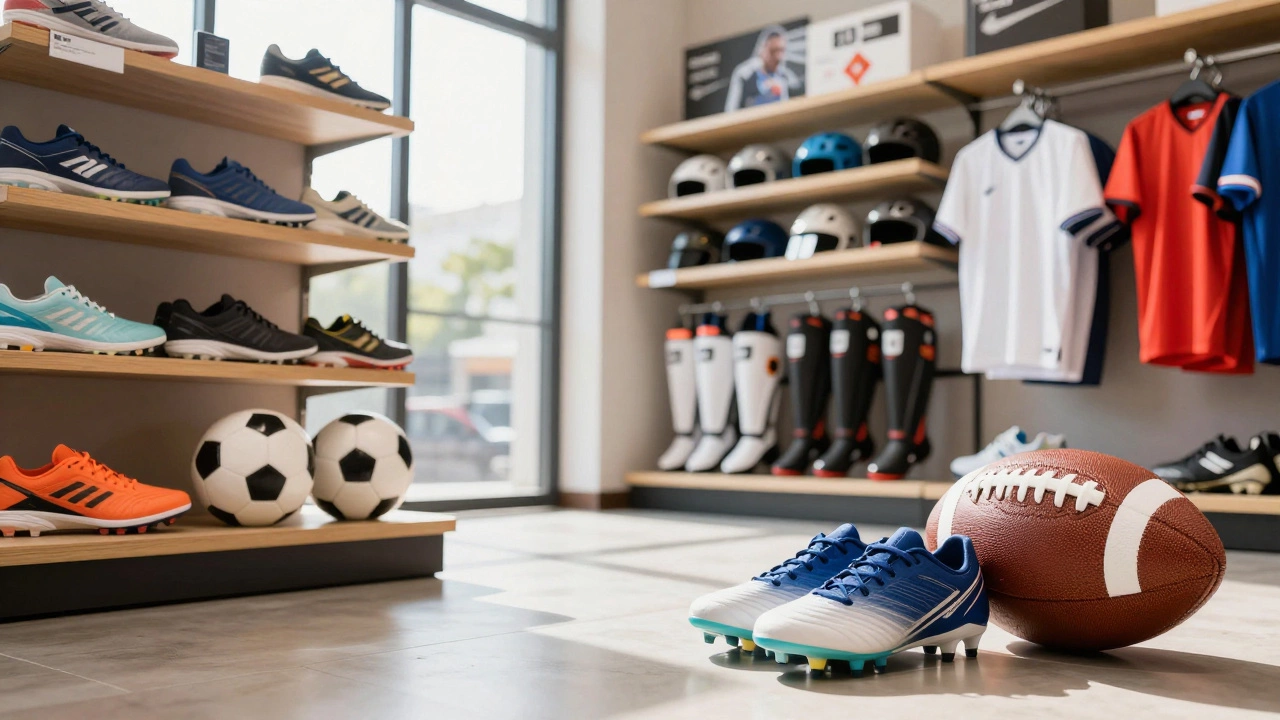
When you walk into a sports store, you see racks of shoes, balls, nets, helmets, and pads. You might grab a pair of running shoes or a basketball without thinking twice. But have you ever stopped to ask: sports products are called what? The answer isn’t just one word. It’s a whole system of terms, each with its own meaning and use. Let’s cut through the confusion and break down exactly what these things are called - and why it matters.
What’s the right term: gear, equipment, or products?
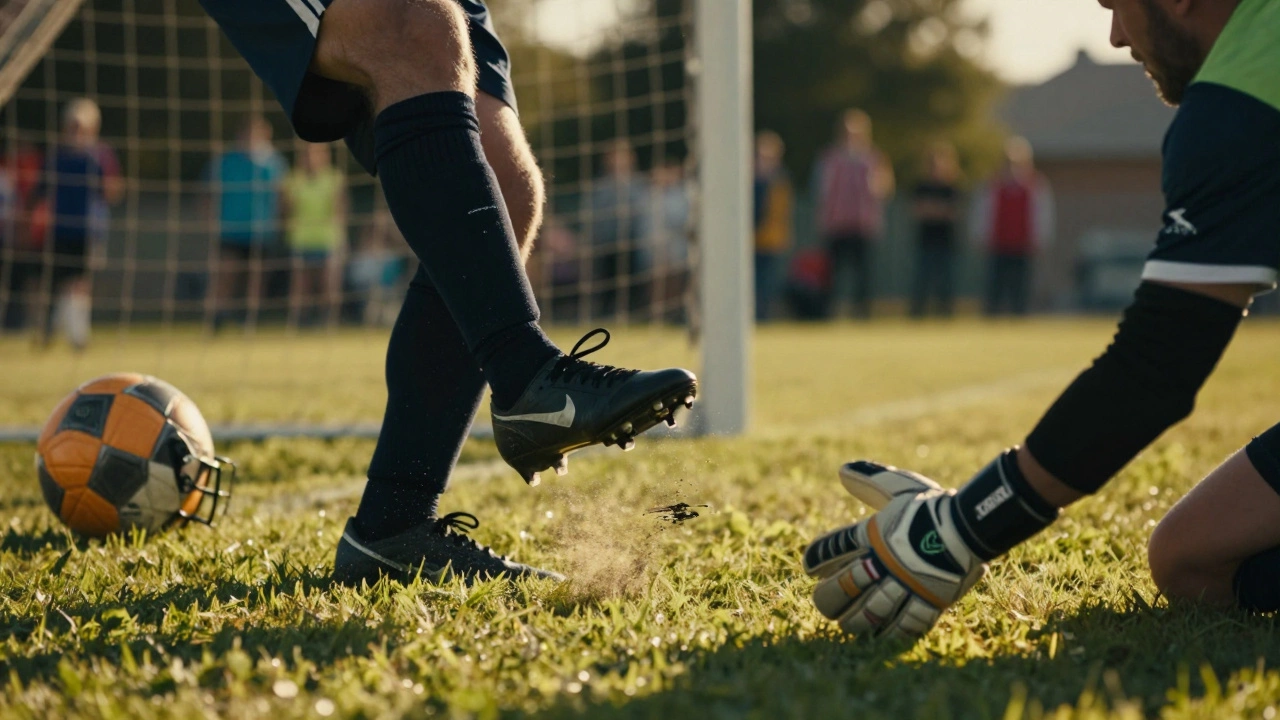
People use "sports gear," "sports equipment," and "sports products" interchangeably. But they’re not the same. "Sports products" is the broadest term - it includes everything from a single water bottle to a full training system. "Sports equipment" is the most accurate word for gear you use to play a sport. Think: bats, rackets, cleats, goalposts. "Gear" usually refers to what you wear or carry - helmets, gloves, shin guards, backpacks.If you’re talking about a soccer player, their sports equipment includes the ball, cleats, and goalkeeping gloves. Their gear? The jersey, socks, and mouthguard. The water bottle? That’s a sports product, but not equipment. Precision matters, especially if you’re shopping, researching, or writing about sports.
Core categories of sports equipment
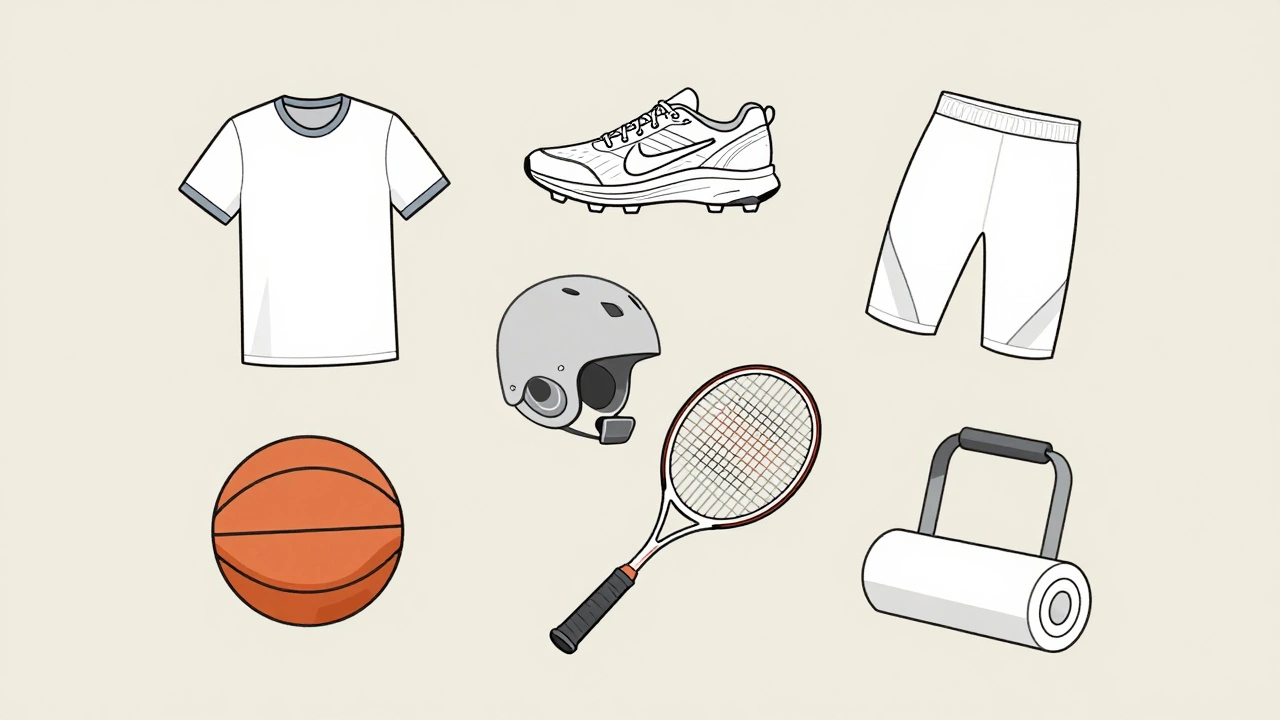
Not all sports gear is the same. There are five main types of equipment you’ll find across nearly every sport:- Apparel - Jerseys, shorts, compression wear, sports bras. Designed for movement, sweat-wicking, and protection. Made from synthetic fabrics like polyester and spandex.
- Footwear - Cleats for soccer, running shoes, basketball sneakers, tennis court shoes. Each is engineered for specific surface traction and foot support.
- Protective gear - Helmets, pads, mouthguards, shin guards, cup protectors. Critical for safety in contact sports like football, hockey, and lacrosse.
- Playing equipment - The actual tools of the game: balls, bats, rackets, sticks, nets, goals. These define the sport itself. A tennis racket isn’t just gear - it’s what makes tennis tennis.
- Training equipment - Resistance bands, kettlebells, agility ladders, foam rollers. Used for conditioning, not competition.
These categories overlap sometimes. A football helmet is both protective gear and equipment. A yoga mat is training equipment but also considered gear. The key is understanding function: if it’s used to play the game, it’s equipment. If it’s worn or carried for support, it’s gear.
What’s not considered sports equipment?
You might think a gym membership or a fitness tracker counts. It doesn’t. Here’s what’s left out:- Supplements - Protein powder, pre-workout, vitamins. These are nutrition products, not equipment.
- Smartwatches and heart rate monitors - While used during sports, they’re wearable tech, not sport-specific gear.
- Recovery tools like ice baths or massage guns - These are recovery aids, not equipment used during play.
- Stadium seating or scoreboard systems - These are facilities, not personal equipment.
Some people lump all of these together under "sports products," and technically, they are. But if you’re trying to find replacement gear for your basketball shoes or a new soccer ball, you need to search for sports equipment, not "sports products." The difference saves time, money, and frustration.
How brands label their gear
Major brands like Nike, Adidas, and Under Armour don’t just say "sports products." They break it down on their websites:- Nike’s site has sections: "Running," "Basketball," "Training," "Apparel," and "Accessories."
- Adidas labels their soccer line as "Football Equipment," with subcategories like "Cleats," "Balls," and "Goalkeeping Gear."
- Decathlon, the European sports retailer, uses "Equipment" as the main category, then filters by sport and type: "Cycling Equipment," "Swimming Gear," "Tennis Rackets."
These labels aren’t random. They’re based on industry standards used by retailers, manufacturers, and even governing bodies like FIFA and the NBA. If you want to buy the right thing, follow their terminology.
Why this matters: buying, repairing, and replacing
Let’s say your running shoes wear out after 500 miles. You go to a store and ask for "sports products." The clerk might hand you a yoga mat. Ask for "running shoes," and you get exactly what you need.Same with repairs. If your hockey stick breaks, you need to know it’s called a "stick" - not "equipment" or "gear." Search terms matter. Online retailers use filters like "Type: Hockey Stick," not "Type: Sports Product."
Even insurance claims and warranties depend on correct labeling. A manufacturer’s warranty for a basketball may cover stitching defects but not "sports equipment" in general. If you can’t name the item correctly, you might lose coverage.
Examples by sport
Here’s how the terms break down in real sports:- Baseball: Equipment = bat, glove, ball, cleats. Gear = helmet, catcher’s mask, sliding shorts. Product = batting gloves, wrist tape.
- Swimming: Equipment = lane ropes, starting blocks. Gear = goggles, swim cap, kickboard. Product = waterproof phone case.
- Running: Equipment = treadmill (if used competitively). Gear = running shoes, hydration vest. Product = energy gels, GPS watch.
- Cycling: Equipment = bike, helmet, pedals. Gear = jersey, shorts, gloves. Product = bike lock, tire pump.
Notice how each sport has its own vocabulary. What’s gear in one might be equipment in another. That’s why general terms like "sports products" don’t cut it.
What’s new in 2026?
This year, manufacturers are moving toward smarter labeling. Some brands now tag gear with QR codes that link to product type, care instructions, and warranty info. The industry is standardizing on "equipment" for performance items and "gear" for wearable accessories.Also, sustainability is changing terminology. "Eco-friendly sports equipment" is now a common search term. Brands like Puma and Patagonia highlight materials like recycled polyester in their equipment lines - not just "products."
So if you’re shopping, don’t just search "sports gear." Try "running equipment," "soccer cleats," or "tennis rackets." You’ll get better results, faster.
Final takeaway
There’s no single word for all sports products. The best term depends on context. For performance, use "sports equipment." For clothing and accessories, "gear" works. "Sports products" is fine for broad searches, but it’s too vague for real decisions.If you want to buy, replace, or repair something - be specific. Know what you’re holding. Name it correctly. And you’ll never waste time again.
What’s the difference between sports gear and sports equipment?
Sports equipment refers to the tools used to play the sport - like balls, bats, rackets, and cleats. Sports gear usually means what you wear or carry to support performance - like jerseys, helmets, and sweatbands. Equipment is about function in the game; gear is about comfort and protection during it.
Are running shoes considered sports equipment?
Yes. Running shoes are classified as sports equipment because they’re essential for participating in the sport. They’re not just footwear - they’re engineered for impact absorption, traction, and biomechanical support. Without them, you’re not fully equipped to run safely or effectively.
Can I call a yoga mat sports equipment?
It depends. If you’re using it for yoga as a sport or competition, then yes - it’s equipment. If you’re using it at home for general stretching, it’s better called training gear or fitness accessory. Context matters.
Is a water bottle considered sports equipment?
No. A water bottle is a sports product, but not equipment. It’s a support item - useful, but not part of how the game is played. Equipment directly enables performance in the sport; a water bottle just keeps you hydrated.
Why do stores use "sports products" instead of "equipment"?
Stores use "sports products" because it’s a broad term that covers everything they sell - from equipment to supplements to socks. It’s marketing language. But if you’re looking for something specific, like a tennis racket, you’ll get better results by searching for the exact item name, not the umbrella term.