General Sports September 17, 2026
What Is the Oldest Sport? A Look at Ancient Games
Ancient Sports Explorer
Explore the timeline of human competition and test your knowledge on which activities qualify as the "oldest sports."
Note: Dates represent the earliest strong archaeological or literary evidence of organized competition, not necessarily the invention of the physical activity itself.
Question 1 of 5
Score: 0
Loading question...
0/5
Quiz Complete!
You probably think you know what the oldest sport is. Maybe it’s running, because we’ve been doing that since before we had shoes. Or maybe it’s wrestling, because two guys grappling in the dirt seems pretty primal. But if you dig into the archaeological record, the answer gets messy fast. It depends entirely on how you define "sport." Are we talking about any physical activity with rules? Or do we mean organized competition with spectators and winners?
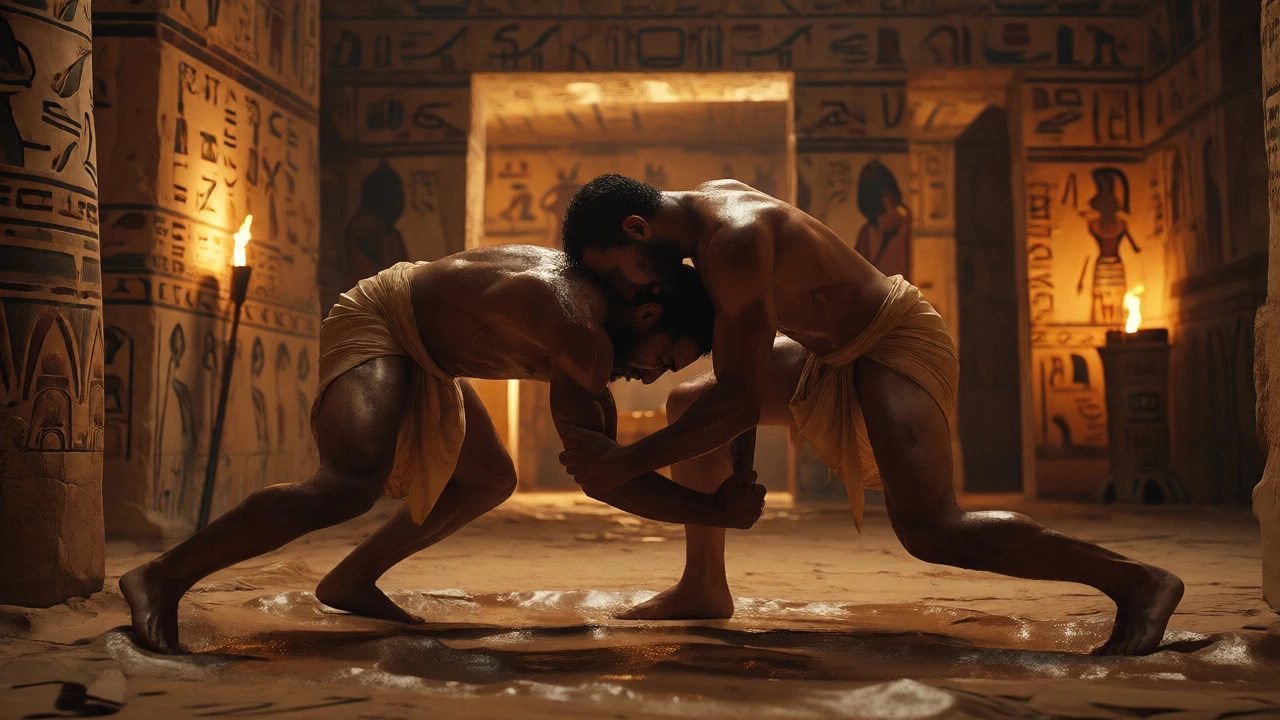
Most historians agree that wrestling is likely the oldest codified sport in human history. Evidence dates back to around 3000 BCE in Egypt, but cave paintings suggest it existed much earlier. However, there are other contenders like polo, which has roots in Persia, and even hockey, which might be older than you think. The tricky part isn’t just finding an old game; it’s proving it was a "sport" and not just a ritual or military training exercise.
Defining What Counts as a Sport
Before we crown a champion, we need to set some ground rules. If we count every time a caveman chased another caveman for fun, then running wins by a landslide. But that’s too broad. For something to be considered the "oldest sport," it usually needs three things: structured rules, competitive intent, and historical documentation.
This distinction matters because many ancient activities blur the line between play, religion, and war. For example, the Mesoamerican ballgame wasn’t just a game; it was a religious ceremony where losers could sometimes be sacrificed. Was that a sport? Technically, yes, but it served a different purpose than modern athletics. When experts debate the oldest sport, they’re usually looking for activities that resemble what we see in stadiums today: teams or individuals competing under agreed-upon rules for victory.
Wrestling: The Strongest Candidate
If you had to bet money on one answer, put it on wrestling. Why? Because the evidence is overwhelming and spans thousands of years across multiple civilizations. The earliest known depiction of wrestling comes from the Beni Hasan tombs in Egypt, dating back to approximately 2000 BCE. These wall paintings show over 400 distinct wrestling holds and techniques. That’s not just random grabbing; that’s a sophisticated system of moves.
But wait, it gets older. Cave paintings in France and Mongolia depict wrestlers dating back to 15,000-20,000 years ago. While these images prove humans have been grappling for millennia, they don’t necessarily prove it was a formalized "sport" with referees and scoreboards. Still, the continuity is undeniable. Wrestling appears in the Epic of Gilgamesh (circa 2100 BCE), one of the oldest pieces of literature ever found. In the story, the hero Gilgamesh wrestles Enkidu, and their fight ends in a draw, leading to friendship. This literary reference confirms that wrestling was culturally significant and rule-bound long before the Olympics began.
Polo: The Game of Kings
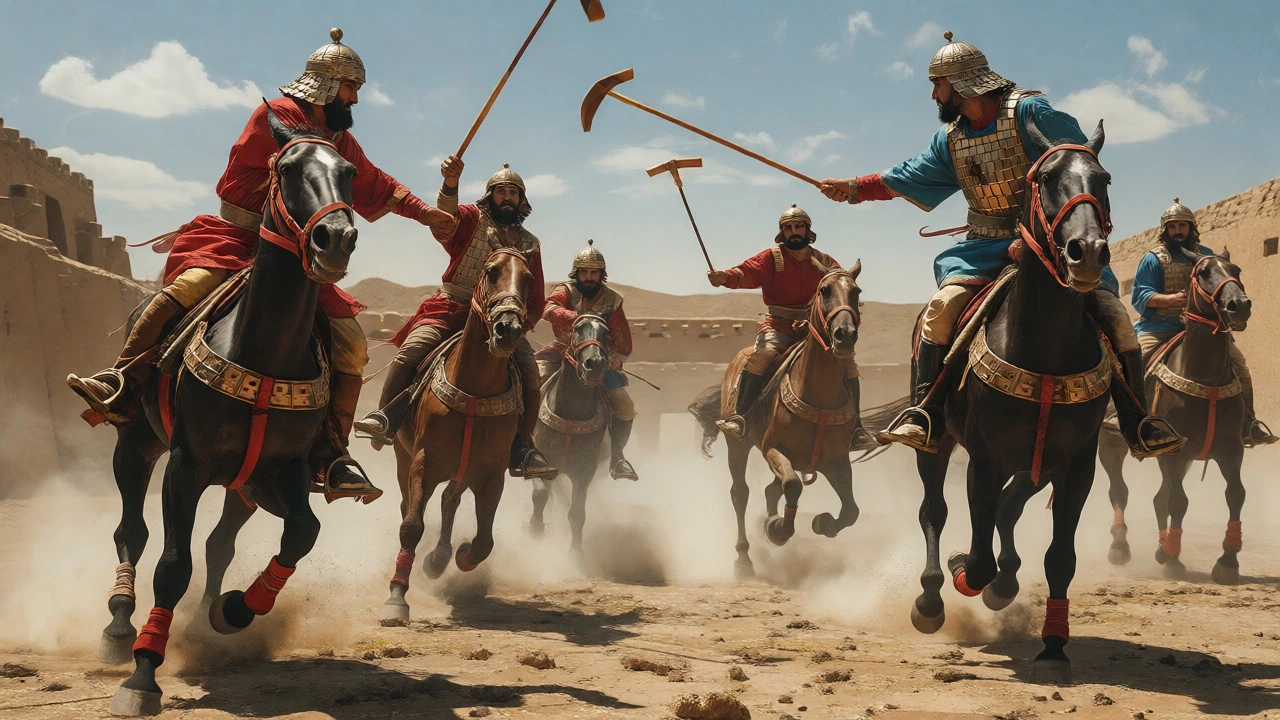
While wrestling grabs the title for individual combat, polo often claims the spot for the oldest team sport. Originating in Persia (modern-day Iran) around 600 BCE, it was originally called "Chovgan." Unlike wrestling, which evolved naturally from human interaction, polo required specific technology: horses and sticks. This makes its emergence later but also more complex.
Polo was exclusive. You needed wealth to maintain horses and land to play on, so it started as a training exercise for cavalry officers and nobility. Over time, it became a high-stakes spectator event. By the time it reached India and China, it had strict rules regarding scoring and gameplay. The fact that it survived centuries and spread across continents shows how adaptable it was. Today, polo is still played globally, making it a living link to ancient Persian culture.
| Sport | Estimated Origin | Evidence Type | Key Characteristics |
|---|---|---|---|
| Wrestling | ~3000 BCE (Egypt) | Cave paintings, tomb art, literature | Individual combat, no equipment, global presence |
| Polo | ~600 BCE (Persia) | Historical texts, archaeological finds | Team sport, requires horses/sticks, elite origin |
| Hockey | ~3000 BCE (Sumeria/Egypt) | Wall carvings, pottery | Stick-and-ball game, early variations existed |
| Running | Prehistoric | Inferred from survival needs | Basic movement, lacks formal ancient rules |
Hockey: Older Than You Think?
Here’s a curveball: hockey might be older than football, baseball, or basketball combined. Archaeologists have found carvings in Sumerian tombs dating back to 3000 BCE that show men playing a stick-and-ball game. Similar depictions appear in Egyptian tombs from the same era. These games involved hitting a ball with a curved stick toward a goal.
However, historians debate whether this was "hockey" in the modern sense. The rules were likely loose, and the primary purpose may have been military training-teaching soldiers coordination and teamwork. Still, the mechanics match. You have a stick, a ball, and opponents trying to stop you. If we accept loose definitions, hockey rivals wrestling for the top spot. If we require strict rulebooks, it falls behind. This ambiguity is why wrestling usually takes the gold medal in these debates-it’s harder to argue against its continuous, documented evolution.
The Olympic Connection
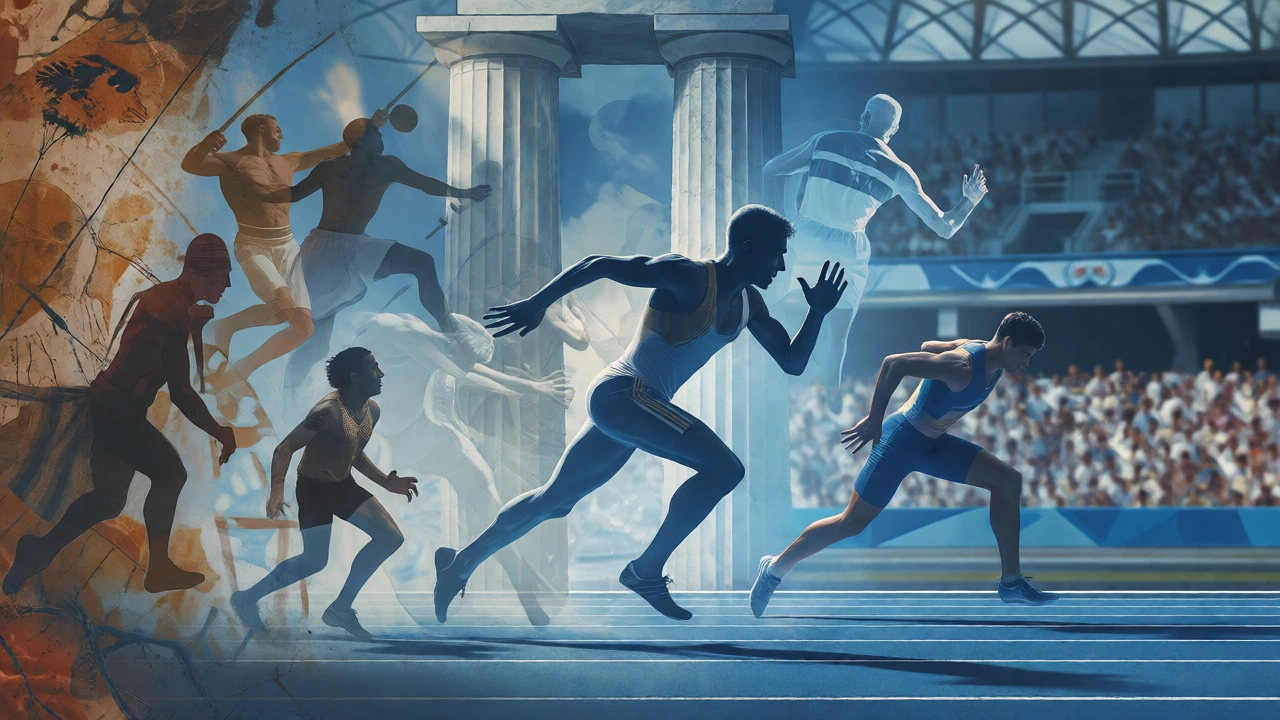
We can’t talk about ancient sports without mentioning the Olympics. The first recorded Olympic Games took place in 776 BCE in Olympia, Greece. Only one event was held: the stadion, a foot race of about 190 meters. Does this make running the oldest "Olympic" sport? Yes. But does it make running the oldest sport overall? No.
Why? Because the Greeks didn’t invent running. They just organized it into a festival. By 776 BCE, wrestling, boxing, and chariot racing were already established practices elsewhere. The Olympics provided a standardized framework that helped preserve these sports, but they didn’t create them. This highlights a key point: organization doesn’t equal invention. Just because a sport got its own league in 1869 (like American football) doesn’t mean it didn’t exist in primitive forms for centuries prior.
Other Ancient Contenders
Beyond the big names, several other activities have strong claims to antiquity:
- Boxing: Depicted in Sumerian relief carvings from 3000 BCE. Like wrestling, it appears in the Iliad, suggesting it was a respected martial skill.
- Javelin Throw: Originally a hunting tool, it became a competitive event in Greek pentathlons. Its transition from utility to sport is seamless.
- Weightlifting: Stone lifting competitions were common in ancient Scotland and China. Records from China date back to 2000 BCE, where officials tested strength by lifting heavy stones.
- Board Games: While not physical, games like Senet (Egypt, 3100 BCE) and Go (China, ~2000 BCE) show that humans have always loved structured competition.
These examples show that "sport" is a broad umbrella. Some definitions exclude non-physical contests, while others include mental athletics. If you broaden the scope, board games might actually beat wrestling. But most people asking "what is the oldest sport" are thinking about physical exertion, so we’ll stick to the athletic events.
How We Know: Archaeology vs. Myth
So, how do we separate fact from fiction? We rely on two main sources: artifacts and texts. Artifacts include tools, clothing, and stadium ruins. Texts include myths, laws, and historical chronicles.
For wrestling, we have both. We have the physical remains of gyms (palaestrae) and detailed descriptions of matches. For polo, we have royal decrees banning or encouraging play. For running, we have fewer direct artifacts because feet leave little trace, but we infer its age from the universal nature of sprinting.
A major pitfall in this research is confirmation bias. Historians want to find ancient versions of modern sports. So, when they see a stick-and-ball carving, they label it "hockey." But it might have been a religious ritual with no winner. Without clear evidence of scoring or winning, calling it a "sport" is a stretch. This is why the definition section at the start of this article is crucial. Your answer changes based on your criteria.
Why This Matters Today
Understanding the origins of sports helps us appreciate what we watch today. When you see a wrestler lock up, you’re witnessing a practice that predates writing, pyramids, and empires. When you watch a polo match, you’re seeing a tradition that once defined royalty in Asia.
It also challenges our notion of progress. Modern sports aren’t necessarily "better" than ancient ones; they’re just more regulated. Ancient wrestling had fouls and penalties, just like today. Ancient fans argued about calls, just like Twitter users do now. The core human drive to compete, test limits, and entertain communities hasn’t changed in 5,000 years.
Next time you’re bored with a standard game, remember: you’re participating in a lineage that stretches back to the dawn of civilization. Whether you’re jogging, shooting hoops, or arm-wrestling a friend, you’re keeping alive traditions that outlasted the Roman Empire.
Is wrestling really the oldest sport?
Yes, most historians consider wrestling the oldest codified sport. Evidence from Egyptian tombs (2000 BCE) and cave paintings (up to 20,000 years old) shows structured grappling. It appears in ancient literature like the Epic of Gilgamesh, confirming its status as a formal competition rather than just casual fighting.
What is the oldest team sport?
Polo is widely regarded as the oldest team sport, originating in Persia around 600 BCE. It required horses and specialized equipment, distinguishing it from earlier individual pursuits. Other candidates include early forms of rugby or soccer-like games in China and Greece, but polo has clearer historical documentation of rules and teams.
Was running a sport in ancient times?
Running was practiced for survival and hunting long before it was a sport. It became a formalized sport with rules and spectators during the first Olympic Games in 776 BCE. Before that, it was likely used in rituals and military training, but lacked the structured competition we associate with modern track and field.
Are ancient sports still played today?
Many ancient sports survive in modified forms. Wrestling, boxing, and running are staples of the modern Olympics. Polo is still played professionally. Others, like the Mesoamerican ballgame, have died out or been revived as cultural demonstrations. The core mechanics of these games remain remarkably similar to their ancient counterparts.
Why is defining 'sport' difficult for historians?
Ancient activities often mixed religion, warfare, and leisure. A ritual dance might look like gymnastics, and military drills might look like team sports. Historians struggle to distinguish between pure competition and ceremonial performance. Therefore, the "oldest sport" depends heavily on whether you require written rules, official referees, or just physical contest.