
Boxing Matches June 1, 2026
What is an Illegal Punch in Boxing? Rules, Penalties, and Safety
Boxing Foul & Penalty Simulator
Step 1: Select the Infraction
Click on the foul that occurred in the ring.
DANGER
Rabbit Punch
Hit to back of head/neck
PAIN
Below the Belt
Groin strike
CUT
Elbow Strike
Hit with elbow joint
CRASH
Headbutt
Forehead contact
TRAP
Holding & Hitting
Grabbing while punching
LATE
After the Bell
Striking when round ends
Step 2: Determine Context
Select a foul and click "Referee Call" to see the ruling.
Imagine you are watching a high-stakes fight. The crowd is roaring, the bell rings, and suddenly one fighter drops to the canvas. But instead of a clean knockout, the referee steps in immediately, waves his arms, and shouts "Stop!" What just happened? Was it a lucky shot? Or was it something else entirely?
In boxing, not every hit counts. In fact, some hits can get you disqualified, fined, or even banned from the sport for life. These are called illegal punches. Understanding what makes a punch illegal isn't just about knowing the rulebook; it's about understanding the safety mechanisms that keep this brutal sport from becoming a brawl.
Whether you are a new fan trying to follow the action or a fighter stepping into the ring for the first time, knowing these boundaries is crucial. Let’s break down exactly what constitutes an illegal punch, why these rules exist, and how referees enforce them.
The Core Principle: Clean Hits Only
At its heart, boxing is a contest of skill, speed, and power delivered with specific tools: the knuckles of a closed fist. The rules, governed by organizations like the World Boxing Association (WBA), World Boxing Council (WBC), and the International Boxing Federation (IBF), are designed to protect fighters while maintaining fairness.
An illegal punch is any strike that violates these core principles. It usually involves hitting with the wrong part of the glove, striking a forbidden area of the body, or attacking when the opponent is vulnerable and unable to defend themselves. The goal is to prevent unnecessary injury while ensuring the winner is determined by superior technique, not dirty tricks.
Boxing Regulations are
a set of rules established by sanctioning bodies to ensure fair play and fighter safety during matches.
These regulations define legal strikes, equipment standards, and penalty structures.
Common Types of Illegal Punches
Not all fouls are created equal. Some are accidental slips in the heat of battle, while others are deliberate acts of aggression. Here are the most common types of illegal punches you will see in the ring.
- The Rabbit Punch: This is perhaps the most dangerous foul. A rabbit punch is a blow to the back of the head or the neck. Why is it so bad? Because the brainstem controls vital functions like breathing and heart rate. A hard hit here can cause severe spinal damage or even death. Referees take zero risks with this. If they suspect a rabbit punch, they often stop the fight immediately to have the fighter checked by medical staff.
- Hitting Below the Belt: Striking the groin area is strictly prohibited. It causes immense pain and can lead to long-term reproductive health issues. Even if it’s accidental, the referee will pause the fight, give the victim time to recover, and issue a warning. Repeated offenses lead to point deductions or disqualification.
- Elbows: While elbow strikes are devastating in Muay Thai or MMA, they are illegal in boxing. An elbow strike can cut open the skin easily and cause significant blunt force trauma. If a fighter extends their arm fully and hits with the elbow joint, it’s a foul.
- Headbutts: Using your forehead to strike an opponent is a clear violation. It often happens in close quarters when fighters are clinching. Headbutts can cause concussions and facial fractures. Unlike other fouls, headbutts are rarely accidental; they are usually seen as an act of frustration or anger.
- Low Blows to the Body: You can punch the torso, but only above the belt line. Hitting the kidneys or lower abdomen below the waistband is illegal because these organs are vulnerable to rupture or internal bleeding.
Illegal Techniques: More Than Just the Punch
Sometimes the punch itself might look okay, but the way it was thrown makes it illegal. Context matters in boxing enforcement.
- Holding and Hitting: If you grab your opponent’s trunks or body with one hand and punch them with the other, that’s a foul. It traps the opponent, preventing them from defending themselves or moving away. It turns a sporting contest into a beating.
- Pushing Behind the Head: Pushing an opponent backward by grabbing the back of their head or neck is illegal. It destabilizes them and can lead to awkward falls. However, pushing on the chest or shoulders to create distance is generally allowed.
- Striking with the Open Glove or Wrist: You must hit with the knuckles. Slapping with the open palm, punching with the wrist, or using the forearm is illegal. These strikes don’t register well on scorecards and can cause different types of injuries than intended.
- Hitting After the Bell: Once the round ends, fighting stops. Continuing to throw punches after the bell rings is a serious breach of conduct. It shows disrespect for the officials and endangers the opponent who may be relaxing or walking toward their corner.

Amateur vs. Professional Boxing Rules
While the core idea of illegal punches remains the same, there are subtle differences between amateur (Olympic style) and professional boxing. Understanding these nuances helps explain why certain actions are penalized differently.
| Feature | Amateur Boxing (IBA/Olympics) | Professional Boxing (WBA/WBC/IBF) |
|---|---|---|
| Primary Goal | Safety and scoring points | Dominance and knockouts |
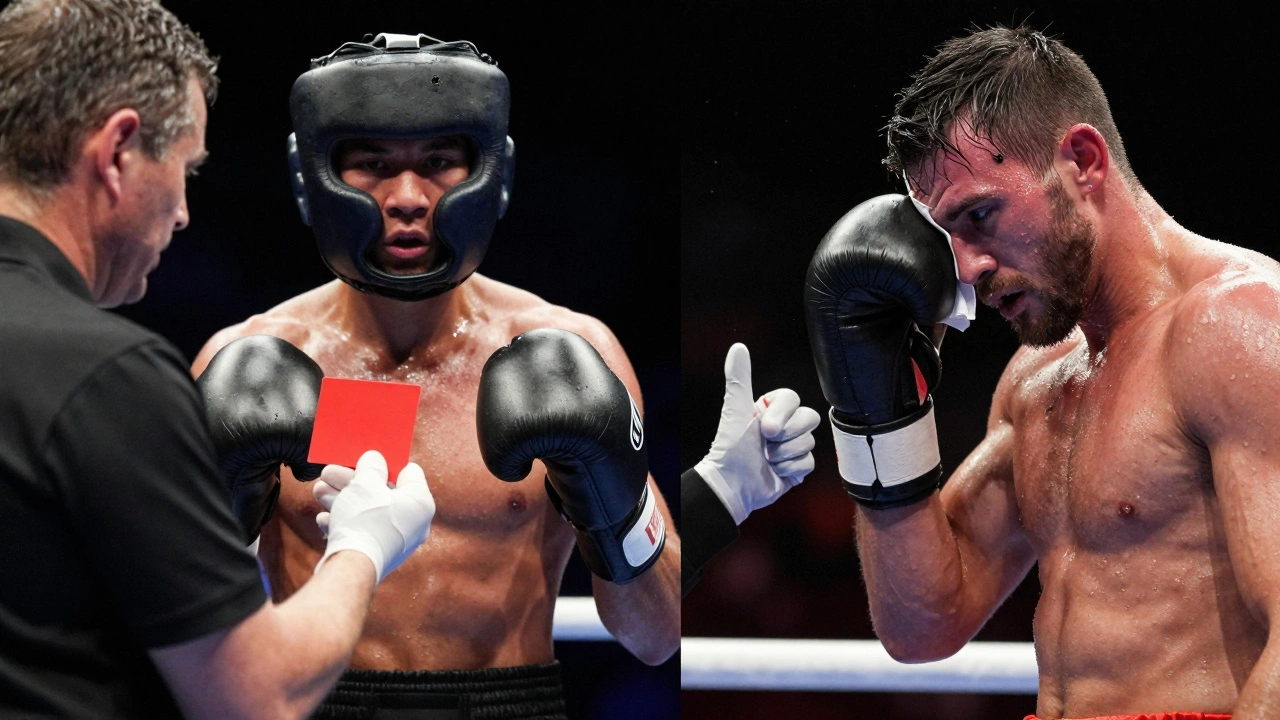
| Rabbit Punch Penalty | Immediate disqualification or red card | Warning, point deduction, or DQ depending on severity |
| Headbutt Handling | Strict disqualification for intent | Often judged based on whether it was accidental or deliberate |
| Scoring System | 10-point must system with emphasis on clean hits | 10-point must system with emphasis on effective aggression |
| Referee Intervention | More frequent stoppages for safety | Allows more action before stepping in |
In amateur boxing, the focus is heavily on safety because many participants are younger or less experienced. Therefore, referees tend to be stricter with fouls. A single warning might turn into a red card (disqualification) faster than in the pros. In professional boxing, referees allow a bit more leeway for accidental contact, recognizing that two people swinging gloves at high speeds will sometimes make mistakes. However, intentional fouls are punished severely in both levels.
How Referees Enforce the Rules
The referee is the ultimate authority in the ring. Their job is to interpret the rules in real-time. When an illegal punch occurs, the referee follows a structured process.
First, the referee calls "Time!" to stop the action. They then assess the situation. Was the foul accidental? Did it hurt the opponent? Based on this, they decide on the penalty. The typical progression of penalties includes:
- Verbal Warning: For minor, first-time accidental fouls. The referee warns the fighter to watch their form.
- Point Deduction: If the foul was deliberate or caused significant harm, the referee deducts a point from the offending fighter’s scorecard. This puts them at a disadvantage, as they now need to win the remaining rounds more convincingly.
- Disqualification (DQ): If a fighter repeatedly commits fouls, ignores warnings, or delivers a particularly dangerous blow (like a rabbit punch), the referee can disqualify them. The opponent wins by default.
It’s important to note that judges also play a role. Even if a referee doesn’t deduct a point, judges can mark down a fighter for excessive fouls on their scorecards. This means a fighter can lose a decision simply because they were too dirty to compete fairly.
Why Do Fighters Throw Illegal Punches?
You might wonder, why risk disqualification? There are several reasons fighters resort to illegal tactics.
Frustration and Anger: Boxing is mentally exhausting. When a fighter feels they are losing or being outmaneuvered, emotions can take over. A headbutt or a low blow might be an explosive reaction to stress rather than a calculated move.
Tactical Advantage: Some fighters use fouls strategically. A quick jab to the ribs below the belt can slow down an opponent’s movement. Holding and hitting can control the pace of the fight. While risky, some fighters believe the short-term gain outweighs the potential penalty.
Lack of Discipline: Especially among newer or less trained fighters, poor technique can lead to accidental fouls. They might not realize they are hitting with the elbow or striking the back of the head until it’s too late.
The Impact on Fighter Health
The existence of these rules is not arbitrary; it is rooted in medical science. The human body has weak points that boxing gloves cannot fully protect against certain angles of impact.
A blow to the back of the head can disrupt the cerebellum, affecting balance and coordination. Worse, it can injure the medulla oblongata, which controls breathing. A hit to the solar plexus or kidneys can cause internal bleeding or organ failure. By banning these strikes, boxing authorities aim to reduce the risk of catastrophic injury.
However, despite these rules, injuries still happen. This is why pre-fight medical exams and in-ring medical teams are essential components of modern boxing. The rules are the first line of defense, but they are not foolproof.
What Happens After a Disqualification?
If a fighter is disqualified for an illegal punch, the consequences extend beyond the immediate loss. The athletic commission overseeing the fight may impose additional sanctions.
- Fines: The fighter may be fined a portion of their purse.
- Suspensions: They might be banned from fighting for a set period, ranging from months to years.
- License Revocation: In extreme cases, such as repeated violent conduct, a fighter’s license to box may be revoked permanently.
These measures serve as deterrents, encouraging fighters to adhere to the rules and respect their opponents.
Final Thoughts on Fair Play
Understanding illegal punches changes how you watch a boxing match. You start noticing the subtle holds, the glancing blows to the neck, and the moments where the referee steps in to correct course. It highlights the skill required not just to hit hard, but to hit legally and effectively.
For fans, it adds a layer of appreciation for the discipline involved. For fighters, it reinforces the importance of training under strict supervision to avoid costly mistakes. Ultimately, the rules exist to preserve the integrity of the sport and, most importantly, the safety of the athletes who dedicate their lives to it.
Is a headbutt always considered an illegal punch?
Yes, a headbutt is always considered a foul in boxing. Whether accidental or intentional, striking an opponent with your forehead is prohibited because it can cause severe concussions and facial injuries. Referees typically warn fighters for accidental headbutts but may disqualify them if the act appears deliberate or repeated.
What is the penalty for a rabbit punch in professional boxing?
The penalty for a rabbit punch depends on the severity and intent. A minor, accidental blow to the back of the head might result in a warning. However, a hard or intentional rabbit punch can lead to a point deduction or immediate disqualification. Referees prioritize fighter safety and often stop the fight to have the victim medically evaluated.
Can you punch below the belt in amateur boxing?
No, punching below the belt is strictly illegal in both amateur and professional boxing. Striking the groin area is a foul that results in a warning, point deduction, or disqualification depending on the frequency and impact. In amateur boxing, penalties are often enforced more quickly due to the emphasis on safety.
Are elbows allowed in boxing?
No, elbows are not allowed in boxing. Strikes must be delivered with the knuckles of a closed fist. Elbow strikes are considered illegal because they can cause cuts and significant blunt force trauma. If a fighter hits with their elbow, the referee will call a foul and potentially deduct points.
What happens if a fighter hits after the bell?
Hitting after the bell rings is a serious foul. The referee will stop the action immediately and likely issue a warning or deduct a point. Repeated offenses can lead to disqualification. This rule ensures that fights end cleanly and respects the structure of the rounds.
Is holding and hitting always a foul?
Yes, holding and hitting is a foul. If a fighter grabs their opponent with one hand (e.g., holding their trunks or body) and punches with the other, it is illegal. This tactic prevents the opponent from defending themselves or moving away, creating an unfair advantage. Clinching without hitting is allowed, but striking while holding is not.
How do referees decide between a warning and a point deduction?
Referees consider the intent, severity, and impact of the foul. Accidental, minor fouls usually result in a warning. Deliberate fouls, those causing significant pain or injury, or repeated offenses lead to point deductions. The referee’s judgment is final, and they aim to maintain fairness and safety throughout the match.