Sports Equipment June 25, 2026
What Is Sports Gear Made Of? A Breakdown of Modern Materials
Sports Material Selector
Select a Material
Choose a component to learn about its composition.
Ready to Explore?
Click on a material on the left to see its breakdown, pros, cons, and best uses.
Material Name
CategoryDescription goes here...
Key Benefit
Benefit text...
Drawback
Drawback text...
Common Uses:
Have you ever wondered why your running shoes feel like clouds while your hiking boots feel like tanks? Or why a tennis racket can withstand the force of a serve without shattering? The answer isn't magic; it's material science. Today’s sports gear is athletic equipment engineered from advanced synthetic and natural materials to enhance performance, durability, and safety. It’s no longer just about leather and wood. We are living in an era where polymers, carbon fibers, and bio-engineered textiles dictate how far we run, how high we jump, and how safely we crash.
If you’re buying new equipment or just curious about what’s inside your favorite kit, understanding these materials helps you make smarter choices. Let’s break down exactly what modern sports gear is made of, moving from the clothes on your back to the tools in your hands.
The Fabric Revolution: What You Wear Matters
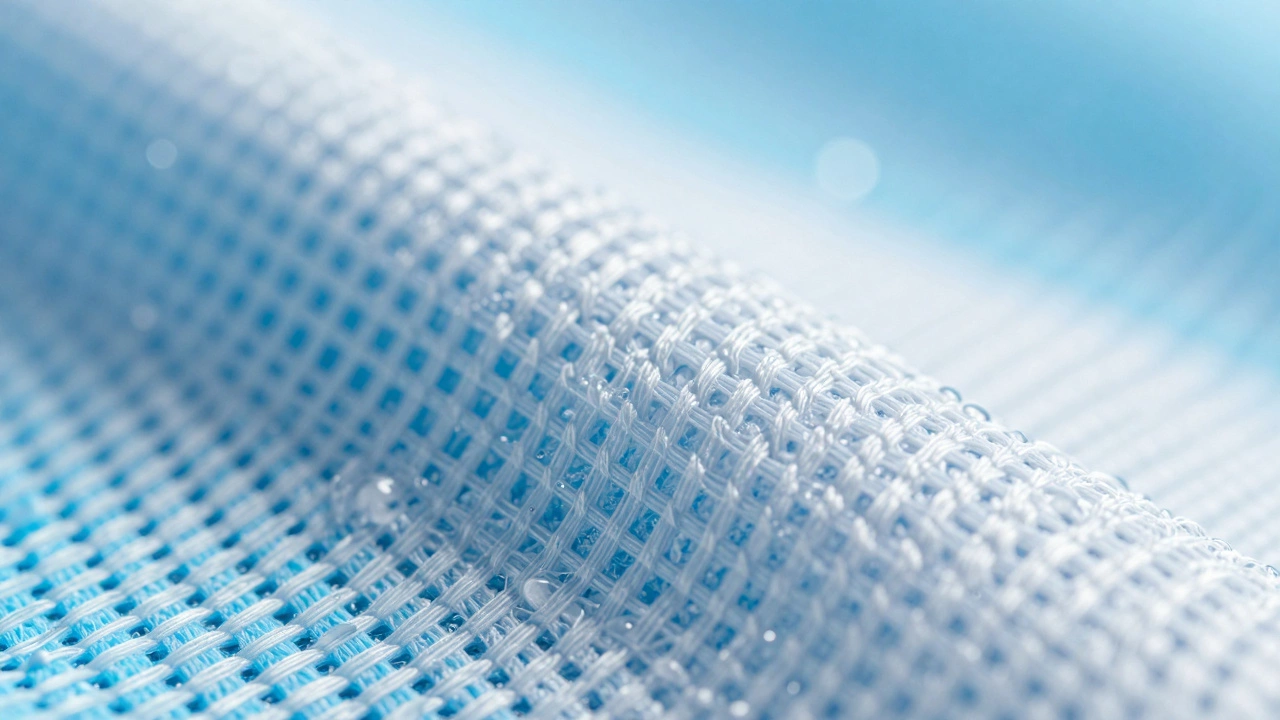
Gone are the days when cotton was king. If you’ve worn a cotton t-shirt during a heavy sweat session, you know the misery: it gets heavy, stays wet, and chafes. Modern athletic apparel relies heavily on synthetic polymers, specifically polyester and nylon. These aren’t just cheap plastics; they are engineered at the molecular level.
Polyester is the workhorse of the industry. Manufacturers twist polyester fibers into specific shapes-sometimes hollow, sometimes flat-to control how air moves through them. This creates moisture-wicking fabric, which textile technology that pulls sweat away from the skin to the outer surface where it evaporates quickly. Nylon adds durability and stretch. When you buy compression shorts or a yoga legging, you’re usually getting a blend of nylon and elastane (also known as spandex or Lycra). Elastane provides the snap-back elasticity that keeps the garment hugging your muscles without restricting blood flow.
- Polyester: Best for drying speed and odor resistance (when treated).
- Nylon: Offers superior abrasion resistance and softness against the skin.
- Elastane/Spandex: Provides the necessary stretch for range of motion.
But there’s a catch. Synthetics don’t breathe naturally like wool or cotton. To fix this, brands use mesh panels and strategic perforations. Also, many outdoor brands now use recycled polyester (rPET) made from plastic bottles to reduce environmental impact, proving that sustainability and performance can coexist.
Footwear Engineering: Soles, Midsoles, and Uppers
Your feet take a pounding. Every time you land from a jump or strike the pavement, your body absorbs shock equal to two or three times your body weight. Shoes are designed to manage this energy. The upper part of most modern sneakers uses knit technologies-essentially complex weaves of polyester and nylon threads that act like a sock, conforming to your foot shape without needing bulky laces or stiff overlays.
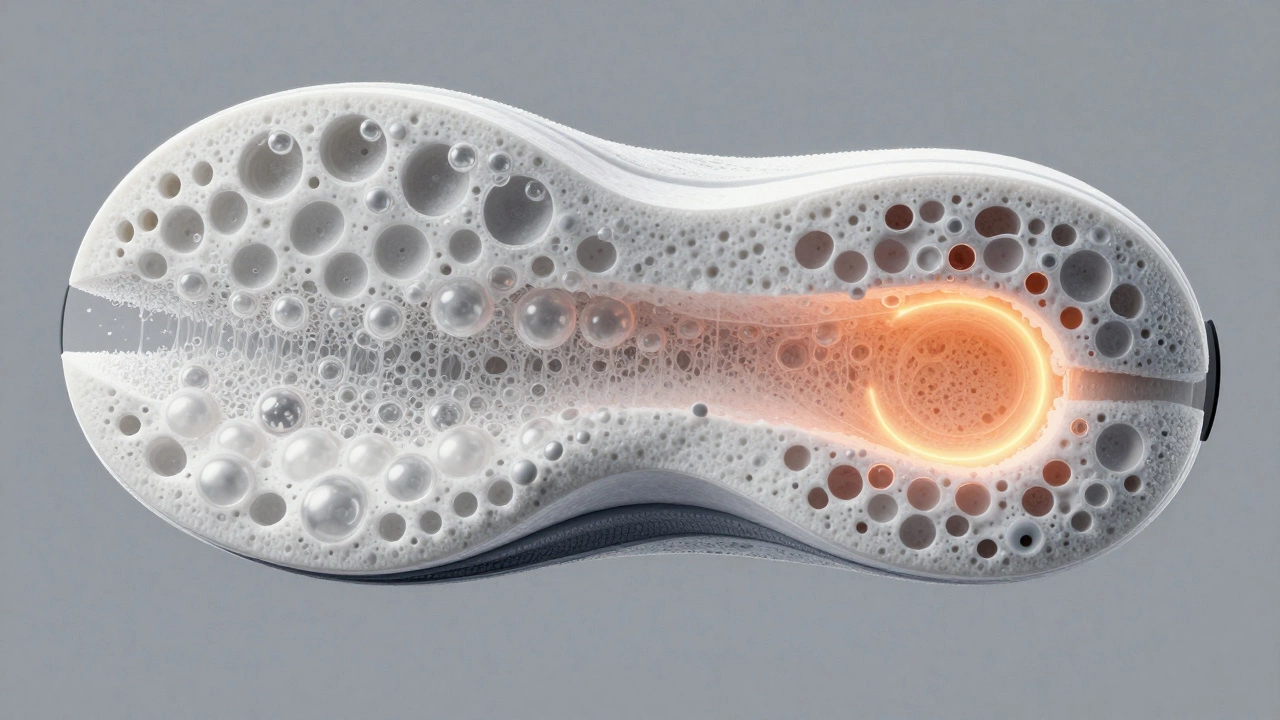
The real science happens in the midsole. This is the layer between your foot and the ground. For decades, Ethylene-Vinyl Acetate (EVA) foam was the standard. It’s lightweight and cushiony. But EVA compresses over time, losing its bounce. Enter Thermoplastic Polyurethane (TPU) and newer proprietary foams. Brands like Nike (ZoomX), Adidas (Boost), and Asics (FF Blast+) use supercritical foaming processes. They inject gas into liquid polymer under high pressure, creating millions of tiny bubbles. The result? A foam that is incredibly light yet returns more energy with every step than traditional rubber.
For the outsole-the part touching the road-brands use carbon rubber or blown rubber. Carbon rubber is dense and lasts forever, perfect for heel strikes. Blown rubber is lighter but wears out faster, often used in the forefoot of racing shoes where weight savings matter more than longevity.
Hard Goods: Rackets, Clubs, and Bats
When it comes to rackets, golf clubs, and baseball bats, strength-to-weight ratio is everything. You want something stiff enough to transfer power but light enough to swing fast. Wood is largely gone from competitive play, replaced by composites.
Carbon Fiber is a composite material consisting of thin carbon filaments woven together, offering exceptional tensile strength and low weight. It’s the gold standard. In tennis rackets, carbon fiber frames allow players to generate massive racquet head speed. Because carbon is so stiff, it doesn’t flex much upon impact, meaning less energy is lost to the frame bending and more is transferred to the ball. However, pure carbon can be brittle. That’s why manufacturers often layer it with fiberglass or graphite. Fiberglass adds flexibility and dampens vibration, making the shot feel "softer" and reducing arm strain.
In cycling, carbon fiber frames have revolutionized the sport. A high-end carbon bike frame can weigh less than 800 grams while being stiffer than aluminum. Aluminum itself is still popular for entry-level bikes because it’s durable, affordable, and resistant to dents, even if it transmits more road vibration to the rider.
| Material | Key Benefit | Drawback | Common Use |
|---|---|---|---|
| Carbon Fiber | Lightweight, high stiffness | Expensive, can crack on impact | Tennis rackets, bike frames, golf shafts |
| Aluminum Alloy | Durable, affordable | Heavier, vibrates more | Budget bikes, hockey sticks, poles |
| Titanium | Corrosion-resistant, flexible | Very expensive, hard to machine | High-end golf clubs, trekking poles |
| Fiberglass | Flexible, shock-absorbing | Less powerful than carbon | Junior tennis rackets, fishing rods |
Protective Gear: Safety Through Absorption
Safety gear works differently. Here, you don’t want rigidity; you want energy absorption. Helmets, knee pads, and mouthguards rely on foam technology. The most common material is Expanded Polystyrene (EPS) foam. EPS is the same stuff used in packing peanuts and coffee cups. It looks like fused beads. When you hit your head, the EPS crushes. This crushing action dissipates the kinetic energy of the impact, preventing it from reaching your skull. Once crushed, the helmet is compromised and must be replaced because it can’t crush again to absorb another big hit.
Newer helmets are introducing MIPS (Multi-directional Impact Protection System) liners. These are low-friction layers that allow the helmet to slide slightly relative to the head during an angled impact. This reduces rotational forces, which are a major cause of concussions. The liner is usually made from polyethylene or other slippery polymers.
For contact sports like rugby or football, shoulder pads use a combination of hard plastic shells (often ABS or polycarbonate) and soft inner foams. The shell spreads the force over a larger area, while the foam cushions the blow. Modern designs also incorporate ventilation channels directly into the plastic mold to keep athletes cool, merging comfort with protection.

Ball Construction: Precision and Flight
Even the balls themselves are marvels of engineering. A soccer ball isn’t just leather anymore. Traditional leather absorbed water, becoming heavy and unpredictable in rain. Modern balls use thermally bonded synthetic panels. No stitching means fewer leak points and a smoother surface. The bladder inside, which holds the air, is usually made of latex or butyl. Latex bladders hold air better but require frequent reinflation. Butyl bladders retain air for weeks but feel slightly harder.
Golf balls are layered. A typical tour ball has four or five layers: a urethane cover (for spin and feel around the greens), a mantle layer (for distance control), and a core (usually rubber-based) for initial velocity. Each layer is made of different polymers tuned to react specifically to clubface speeds.
The Future: Bio-Materials and Smart Fabrics
We are standing on the brink of a new material age. Researchers are developing spider-silk-like proteins using yeast fermentation. These bio-materials offer strength comparable to Kevlar but are biodegradable. Imagine a running shoe that performs like today’s best tech but dissolves harmlessly in soil after ten years of use.
Smart fabrics are also emerging. Some experimental jerseys contain conductive threads that monitor heart rate and muscle activity without external sensors. While not yet mainstream, this integration of electronics into textiles suggests that future sports gear will not only protect and enhance us but also communicate our physiological data in real-time.
Understanding what your gear is made of changes how you treat it. You won’t throw your carbon fiber racket in the trunk of your car, knowing it’s sensitive to extreme temperature changes. You’ll wash your moisture-wicking shirts inside out to preserve the chemical treatments. Knowledge empowers you to get the most out of your investment.
Is organic cotton good for sports?
Generally, no. Organic cotton is breathable and soft, but it retains moisture. When you sweat, cotton becomes heavy, slow-drying, and can lead to chafing or hypothermia in cold conditions. Synthetic blends or merino wool are better choices for active wear.
Why is carbon fiber so expensive?
The manufacturing process is complex and energy-intensive. Carbon fiber precursors (like polyacrylonitrile) must be spun into filaments, oxidized, and then carbonized at extremely high temperatures in inert atmospheres. This takes time and precision, driving up costs compared to metals like aluminum.
Do all running shoes use the same foam?
No. Different brands use proprietary foam compounds. While many start with EVA or TPU bases, they add various blowing agents and chemical structures to alter density, resilience, and weight. This is why a Nike shoe feels different from an Adidas or Brooks shoe, even if they look similar.
Can I repair a cracked carbon fiber racket?
Technically yes, but it’s rarely recommended for competitive play. Repair kits involve epoxy resin and additional carbon patches. However, the structural integrity is never fully restored, and the balance of the racket changes, affecting performance. For safety-critical items like bike frames, professional assessment is mandatory.
What is the most eco-friendly sports material?
Merino wool is a strong contender because it’s renewable, biodegradable, and naturally odor-resistant. Recycled polyester (rPET) is also popular as it diverts plastic waste from landfills. However, the truest eco-friendly option depends on the full lifecycle, including dyeing processes and transportation emissions.