
Fitness March 4, 2026
How to Build 90 Minutes of Stamina for Sports and Daily Life
Stamina Builder Calculator
Start Your 8-Week Stamina Journey
Answer these questions to get a personalized plan based on the article's science-backed approach.
Your 8-Week Stamina Plan
Stamina Progress
Key Principles
Based on your inputs, this plan follows the article's science-backed approach:
- Build your aerobic base before adding intensity
- Recovery is as important as training
- Consistency beats intensity
Tip: Your plan is designed for 6-8 weeks of consistent effort. Most people see real improvements in 6-8 weeks with steady training.
Week 1-2
3 days/week
30 minutes of Walking at Zone 2 (can talk but not sing)
4th day
Light activity (20 min walk/yoga)
5th-7th days
Full rest days
Week 3-4
3 days/week
40 minutes of Walking
4th day
Light activity
5th-7th days
Rest
Week 5-8
3 days/week
50-60 minutes of Walking
4th day
Optional: 2x 5-min intervals at Zone 3
5th-7th days
Rest
Key Nutrition & Recovery Tips
Hydration: Drink 2-3 liters daily. Check urine color (pale yellow = good).
Nutrition: Eat complex carbs (oats, sweet potatoes) 90 minutes before activity.
Recovery: Sleep 7-8 hours nightly. 40% slower recovery if less than 7 hours.
Want to keep going for 90 minutes straight-whether it’s a full rugby match, a long hike, or just chasing kids around the park without collapsing? You’re not alone. Most people think stamina is something you’re born with, but the truth is, it’s built. Not in days. Not in weeks. But over time, with smart effort. And it’s not about running marathons or lifting heavy weights. It’s about consistency, pacing, and recovery.
Stamina isn’t just about running
When you hear "stamina," you probably picture a runner on a track. But stamina is your body’s ability to keep doing something-any activity-without getting worn out. That’s why a rugby player needs it as much as a gardener. Your heart, lungs, and muscles all have to work together. If one part gives out, you’re done.
Think of stamina like a battery. You don’t charge it by plugging it into a wall for five minutes. You charge it slowly, day after day. And the best way to do that? Move often, move steady.
Start with 30 minutes, not 90
If you’ve never held a steady pace for more than 20 minutes, trying to jump straight to 90 is a recipe for burnout. Start where you are. If you can walk briskly for 30 minutes without stopping, that’s your baseline. Do that three times a week. No sprinting. No hills. Just steady movement.
Why 30 minutes? Because research from the American College of Sports Medicine shows that 30 minutes of moderate activity five days a week improves cardiovascular endurance by 20-30% in just six weeks. That’s not magic. That’s biology. Your body adapts when you give it a clear, repeatable signal.
Try this: Every Monday, Wednesday, and Friday, go for a 30-minute walk or bike ride. Keep your heart rate at a level where you can talk but not sing. That’s Zone 2 training-the sweet spot for building endurance without frying your nervous system.
Build your aerobic base before adding intensity
Most people skip this step. They jump into HIIT, sprints, or heavy circuits because they want results fast. But if your aerobic system is weak, those workouts won’t help. They’ll just make you tired.
Your aerobic system is what keeps you going when you’re not sprinting. It’s the engine that uses oxygen to produce energy. To build it, you need low-intensity, long-duration work. Think swimming laps, cycling on flat ground, or hiking with a light backpack.
Once you can do 45 minutes of steady movement without feeling wiped out, you’re ready to add 10-minute intervals. For example: 5 minutes easy, 2 minutes faster, repeat 5 times. That’s it. No need to go all-out. Just enough to make your breathing heavier.
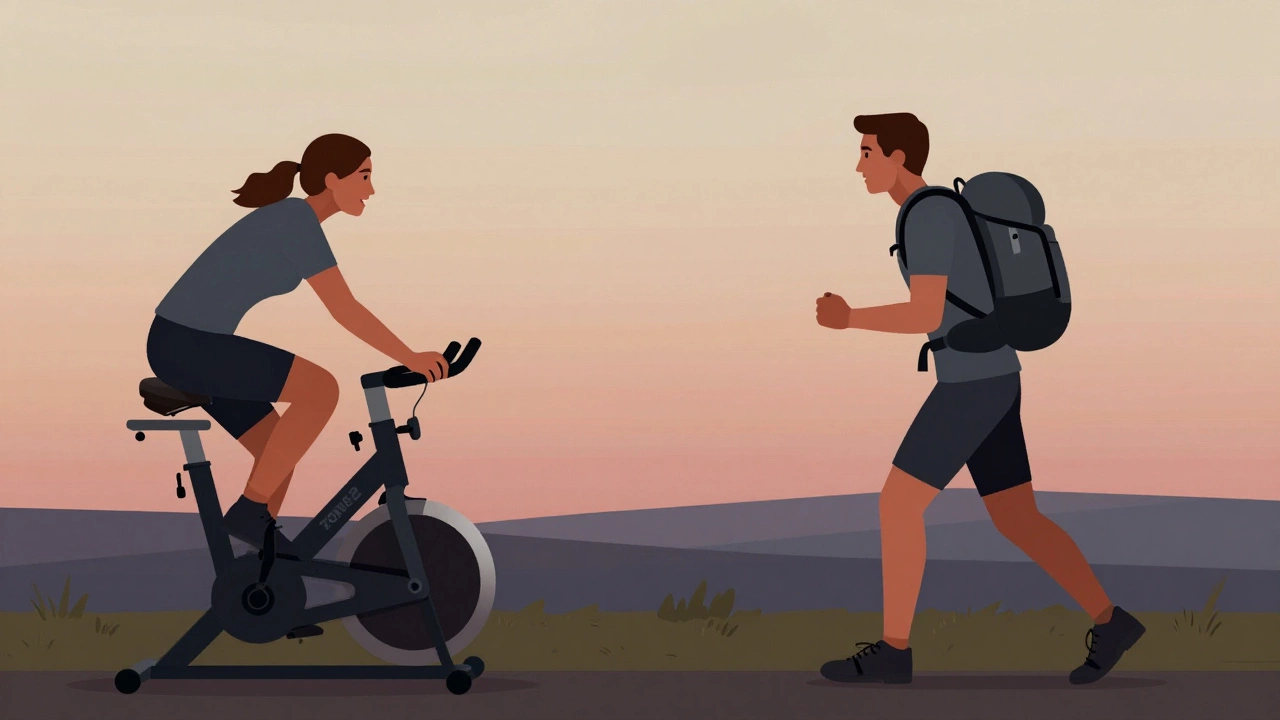
Recovery isn’t optional-it’s the secret ingredient
You don’t get stronger when you train. You get stronger when you rest. That’s how the body repairs itself. If you’re training hard every day, you’re not building stamina-you’re breaking it down.
Here’s what works: three days of steady movement, one day of light activity (like a 20-minute walk or yoga), then one full rest day. Repeat. This pattern lets your muscles recover, your heart rate normalize, and your energy levels rebuild.
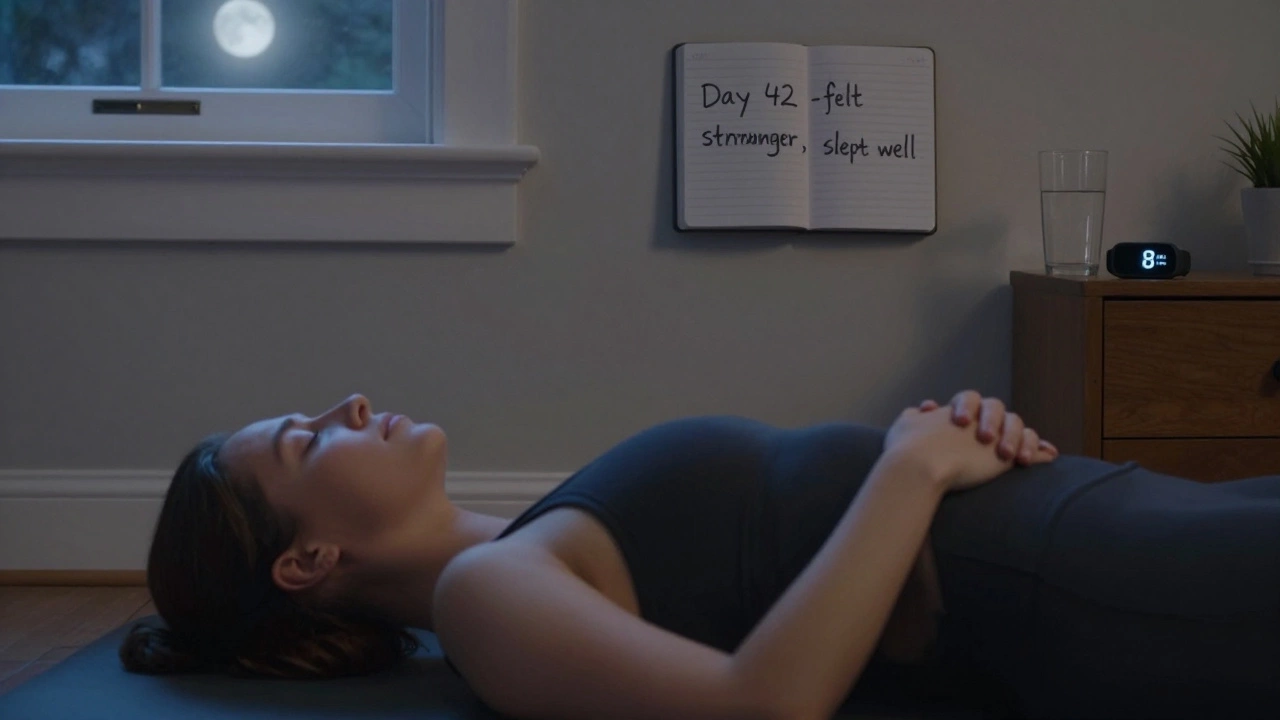
Also, sleep. If you’re sleeping less than 7 hours a night, your stamina gains will stall. Studies show that people who sleep 6 hours or less recover 40% slower than those who get 8 hours. No exceptions. No "I’ll sleep more later." Your body doesn’t work that way.
What you eat matters more than you think
Stamina isn’t just about muscles. It’s about fuel. You can’t run on sugar crashes. You need steady energy.
Carbs aren’t the enemy. Complex carbs are your best friend. Oats, sweet potatoes, brown rice, quinoa, and whole grain bread give you slow-burning energy. Eat them before long sessions. A banana with peanut butter 90 minutes before activity? Perfect.
Protein helps repair muscle tissue. Aim for 1.2-1.6 grams per kilogram of body weight. That’s about 80-110 grams a day for someone who weighs 70kg. Eggs, lentils, chicken, tofu-all good.
Hydration is non-negotiable. Dehydration by just 2% drops endurance by 10-15%. Drink water all day, not just when you’re thirsty. A good rule: if your pee is pale yellow, you’re good. If it’s dark, drink more.
Track your progress-not your time
Don’t obsess over how long you can go. Track how you feel. Are you breathing easier? Can you hold a conversation while walking uphill? Are you sleeping better? Those are real signs of progress.
Keep a simple log: date, activity, duration, how you felt (1-5 scale), and if you finished strong. After four weeks, look back. You’ll see patterns. Maybe you’re better on days you ate dinner earlier. Or maybe you crash if you skip breakfast. That’s gold.
Real-world test: Can you do 90 minutes?
After 6-8 weeks of consistent effort, try this:
- Warm up with 10 minutes of walking or light cycling.
- Go for a 90-minute walk, bike ride, or swim at a steady pace.
- Don’t stop. Don’t speed up. Just keep going.
- At the end, how do you feel? Tired? Or just pleasantly worn out?
If you finished without collapsing, you’ve built real stamina. Not because you did one hard workout. But because you showed up, day after day.
What kills stamina (and what to avoid)
Here are the three biggest mistakes people make:
- Doing too much too soon-Jumping from 10 minutes to 60 in a week leads to injury or quitting.
- Ignoring recovery-Training hard every day without rest is like trying to fill a bucket with a hole in the bottom.
- Chasing quick fixes-Energy drinks, caffeine pills, or supplements won’t build stamina. Only consistent movement will.
There’s no shortcut. No app. No gadget. Just you, your body, and time.
Stamina is a habit, not a goal
You don’t "get" 90 minutes of stamina. You earn it. Slowly. Quietly. Day after day.
Some people think stamina is for athletes. But it’s for anyone who wants to keep going-whether it’s playing with your kids, walking the dog without gasping, or just standing on your feet all day without dreading the next break.
Start small. Stay consistent. Recover like your life depends on it. And in 8 weeks, you’ll look back and wonder why you ever thought it was impossible.
Can I build 90 minutes of stamina in 2 weeks?
No. Stamina is built through repeated, consistent effort over time. Two weeks is not enough for your body to adapt at a deep level. Most people see real improvements in 6-8 weeks with steady training. Rushing it leads to burnout or injury.
Do I need to run to build stamina?
No. Running is one way, but not the only way. Walking, cycling, swimming, rowing, stair climbing, even dancing-any activity that keeps your heart rate steady for 30+ minutes builds stamina. Choose what you enjoy. You’ll stick with it longer.
How much water should I drink for better stamina?
Drink enough so your urine is pale yellow. That usually means 2-3 liters a day, depending on your size and activity level. Dehydration as low as 2% reduces endurance by 10-15%. Don’t wait until you’re thirsty-drink regularly throughout the day.
Is cardio the only way to build stamina?
Cardio is the main driver, but strength training helps too. Stronger muscles use less energy to do the same job. Doing bodyweight squats, lunges, or light resistance work twice a week improves your efficiency. That means less fatigue during long activities.
What if I miss a day of training?
It’s fine. Missing one day won’t undo progress. What matters is consistency over weeks and months, not perfection. If you miss a day, just get back on track the next day. Don’t try to "make up" for it by overtraining-that’s how injuries happen.
Can diet alone improve my stamina?
Diet supports stamina, but it doesn’t build it. You need movement. Eating well gives you the fuel and recovery your body needs, but without regular activity, your stamina won’t improve. Food fuels the engine-but movement builds the engine.