Sports Equipment August 30, 2026
What is Playground Equipment? A Guide to Types, Safety, and Materials
Playground Safety & Maintenance Checker
Fall Zone Depth Estimator
Enter the height of the highest platform or slide exit to determine the required depth of impact-absorbing surface (mulch/rubber).
Standard slides are often 6-8 ft. Monkey bars vary.
Safety Recommendation
For a height of ft:
Minimum Surface Depth: inches
Note: This is an estimate based on general ASTM/EN guidelines. Always consult local regulations.
Daily Visual Inspection
Check these critical items before allowing children to play. If any are unchecked, the equipment may be unsafe.
Status:
Pending
Did you know? Playground equipment is distinct from sports equipment because it focuses on free-form exploration rather than regulated competition. Regular maintenance extends the life of steel frames by up to 20 years.
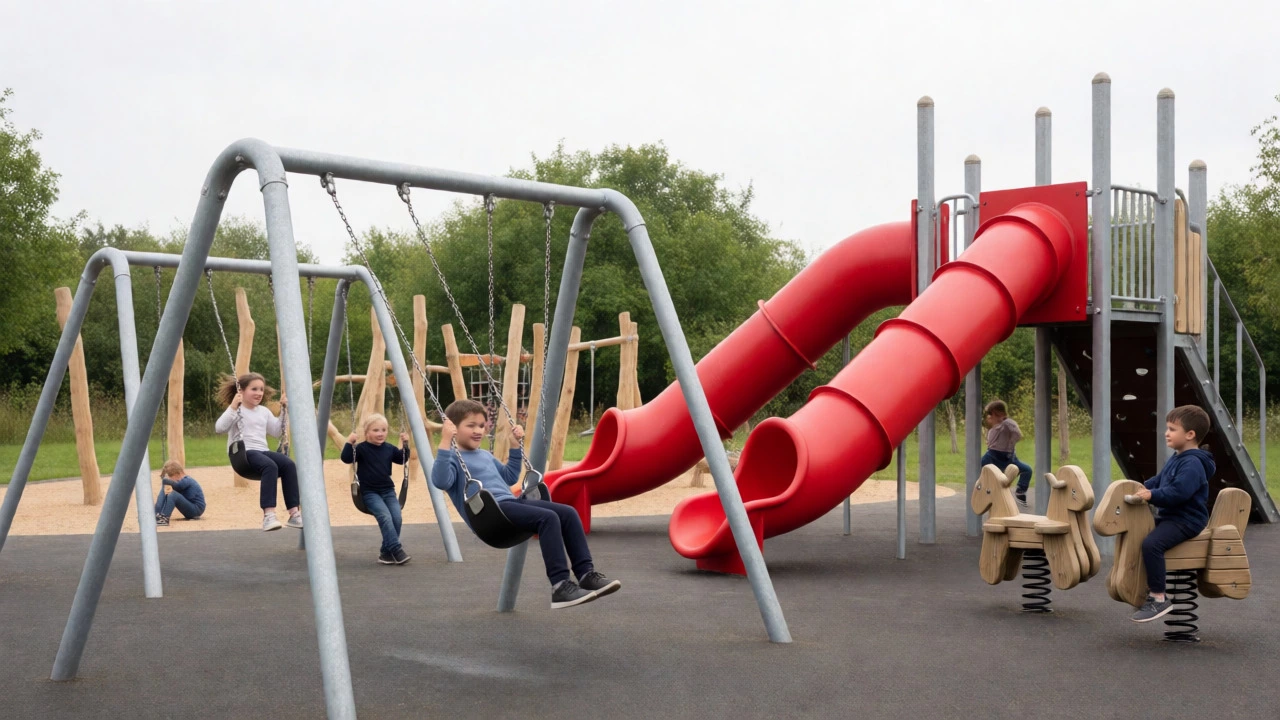
You probably walked past a set of playground equipment this morning. Maybe you saw kids swinging on a swing set or sliding down a metal slide. But have you ever stopped to think about what actually counts as playground gear? It’s not just the big plastic castle in the park. It includes everything from the humble seesaw to complex climbing frames designed to build muscle and coordination.
Understanding what playground equipment is helps parents, schools, and local councils make better choices. It’s about more than just fun; it’s about safety, durability, and how these structures help children develop physically. If you’re confused by the jargon-like "fall zones" or "impact-absorbing surfaces"-you’re in the right place. We’ll break down the types, the materials used, and why the design matters so much for child development.
Defining Playground Equipment
Playground equipment is any structure or apparatus installed in a designated area for children to play on, climb, swing, or slide. Unlike standard sports equipment like footballs or tennis rackets, which require active manipulation by the user, playground equipment is often stationary infrastructure that users interact with physically. The primary goal isn’t competition; it’s exploration and physical activity.
Think of it as outdoor fitness gear scaled down for smaller bodies. When a child climbs a monkey bar, they are doing pull-ups. When they go down a spiral slide, they are managing their balance and speed. This distinction is crucial because it changes how we maintain and inspect the gear. You don’t check a football for rust; you check a metal swing chain for wear and tear.
The Main Categories of Play Structures
Not all playground gear serves the same purpose. Manufacturers typically group items into specific functional categories. Knowing these helps you spot what’s missing in your local park or school yard.
- Swinging Equipment: This includes traditional swings, tire swings, and saucer swings. They focus on vestibular system development (balance) and leg strength.
- Sliding Structures: Straight slides, tube slides, and rolling bars. These teach gravity concepts and speed control.
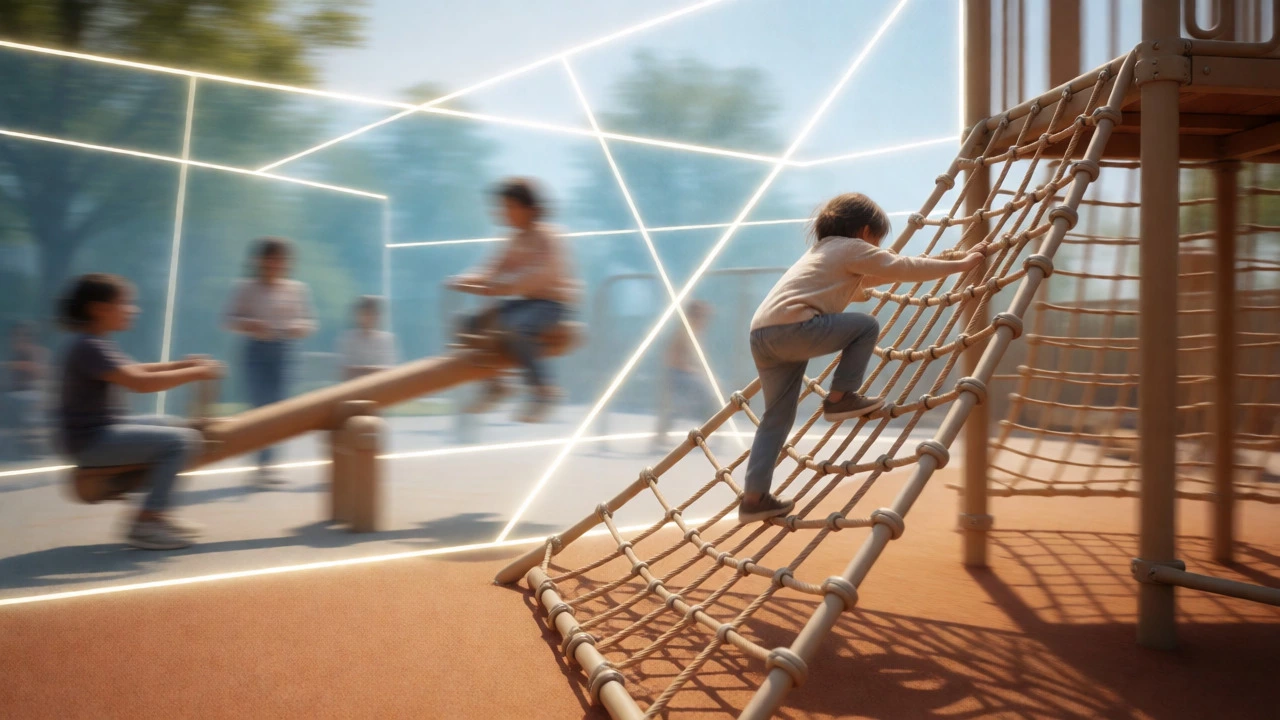
- Climbing Apparatus: Monkey bars, cargo nets, rock walls, and rope ladders. These are heavy hitters for upper body strength and problem-solving skills.
- Spring Riders: Small, animal-shaped seats mounted on springs. Common for toddlers, they provide gentle rocking motion without high fall risks.
- Seesaws and Teeter-Totters: Simple lever mechanisms that teach weight distribution and cooperation between two players.
Each category targets different muscle groups. For instance, climbing requires grip strength and core stability, while swinging relies on leg pumping and rhythm. A well-rounded playground mixes these elements to ensure full-body engagement.
Materials: What Are They Made Of?
The material determines the lifespan and safety of the equipment. You’ll mostly see three main types in modern installations.
| Material | Durability | Maintenance | Best Use Case |
|---|---|---|---|
| Galvanized Steel | High | Low | Frames, chains, high-traffic areas |
| Engineered Wood | Medium-High | Medium | Natural aesthetics, climbing posts |
| HDPE Plastic | Medium | Very Low | Slides, panels, colorful accents |
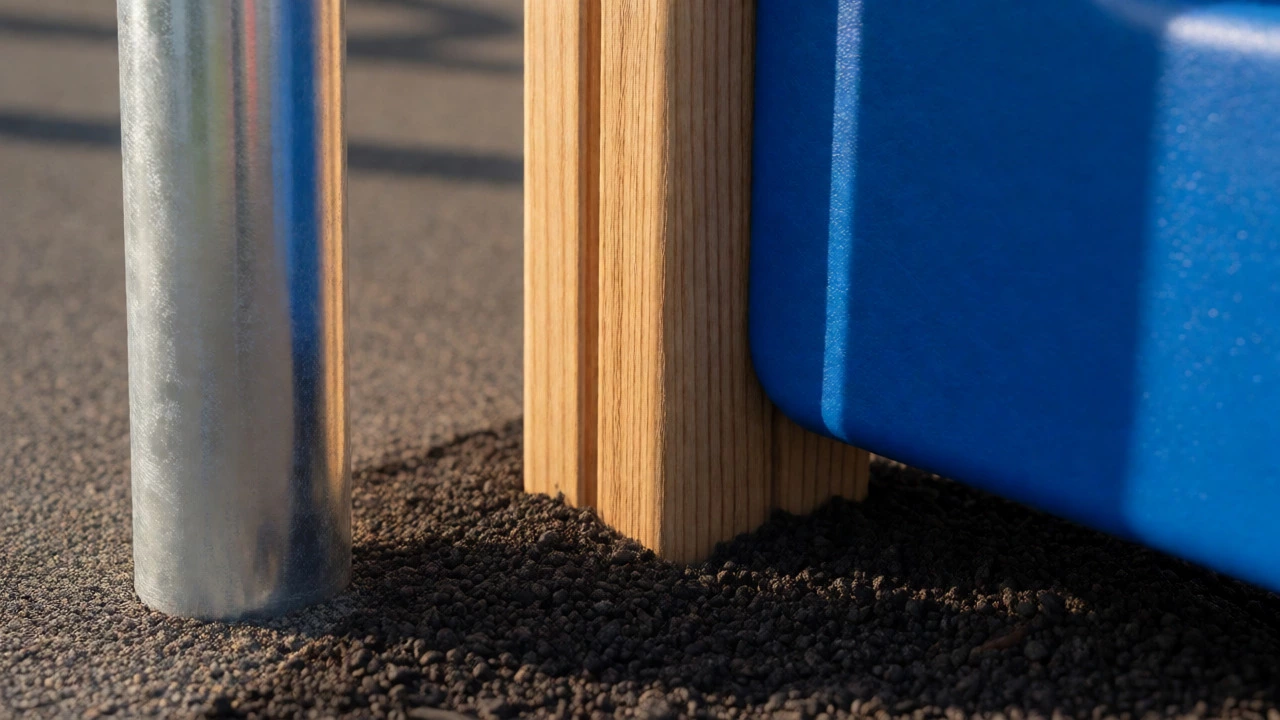
Galvanized steel is steel coated with zinc to prevent rusting. It’s the backbone of most commercial playgrounds. Why? Because it handles weather and heavy use without warping. You’ll find it in swing hangers and support poles. If you see a shiny, silver pole, it’s likely galvanized.
Engineered wood, often called Laminated Veneer Lumber (LVL), offers a natural look. Unlike raw timber, it doesn’t splinter easily if treated correctly. However, it needs regular sealing to stop rot. Councils in rural areas often prefer this for blending into nature parks.
High-Density Polyethylene (HDPE) is a tough, flexible plastic resistant to UV damage and graffiti. It’s perfect for slides because it stays cool enough to touch even in summer sun, unlike black metal. It’s also easy to mold into bright shapes that attract younger children.
Safety Standards and Fall Zones
Here is where things get technical but important. You can’t just drop a kid off a slide onto concrete. That’s a broken bone waiting to happen. Every piece of equipment has a required "fall zone." This is the clear area around the structure where no obstacles should exist.
In the UK, we follow BS EN 1176 standards. In the US, it’s ASTM F1487. These rules dictate how deep the ground cover must be based on the height of the equipment. Higher slides need deeper padding.
Common surface materials include:
- Rubber Mulch: Cheap and effective, but scatters easily and needs topping up.
- Pour-in-Place Rubber: Expensive upfront, but seamless and ADA-compliant (accessible for wheelchairs). No loose bits to trip on.
- Artificial Turf: Looks nice, but usually needs a shock-pad underneath to meet safety impact ratings.
If you’re assessing a local park, check the depth of the mulch near the bottom of the slide. If you can see soil through it, it’s too thin. That’s a red flag for liability and injury risk.
Why Playground Gear Matters for Child Development
It’s tempting to view playgrounds as just places to burn energy. But researchers link unstructured play on equipment to cognitive and social growth. When kids navigate a complex climbing frame, they aren’t just exercising; they’re planning routes. This is spatial reasoning in action.
Socially, equipment forces interaction. A seesaw doesn’t work alone. A crowded slide queue teaches patience and turn-taking. These soft skills are hard to teach in a classroom but come naturally on the playground.
Physically, the variety prevents repetitive strain. Running uses legs; climbing uses arms and back. Swinging works the core. By offering diverse equipment, we ensure balanced muscular development during critical growth years.
Maintenance: Keeping It Safe
Equipment doesn’t last forever. Metal fatigues, wood rots, and plastic fades. Regular checks are non-negotiable. Most councils do annual professional inspections, but daily visual checks by staff or parents help catch issues early.
Look for these common problems:
- Loose Bolts: Vibration from usage loosens fasteners over time. Tighten them immediately.
- Worn Chains: Swing chains stretch. If links are elongated, replace the whole chain.
- Sharp Edges: Check for burrs on metal or splinters on wood. Sand them down before someone gets cut.
- Surface Degradation: If rubber tiles lift or mulch compresses, the impact protection fails.
A simple rule of thumb: if it wobbles when you push it, it’s dangerous. Fix it or close it. Don’t hope it holds up for another week.
Frequently Asked Questions
Is playground equipment considered sports equipment?
Technically, yes, in broad terms, because it facilitates physical activity. However, industry classifications usually separate "sports equipment" (used for competitive games like soccer balls) from "playground equipment" (static infrastructure for recreational play). Playground gear focuses on free-form movement rather than regulated game rules.
How long does playground equipment last?
With proper maintenance, steel and HDPE components can last 15-20 years. Engineered wood may last 10-15 years depending on climate and treatment. Moving parts like swing bearings wear out faster, often needing replacement every 5-7 years due to friction and load stress.
Can adults use playground equipment?
Most residential and public playgrounds are rated for users aged 2-12. Adults using them risk structural failure because the weight limits are lower. However, some gyms now install "adult-sized" versions of monkey bars or rings specifically for calisthenics training.
What is the safest playground surface?
Pour-in-place rubber is generally considered the safest and most accessible option. It provides consistent shock absorption regardless of weather and eliminates tripping hazards from loose materials like gravel or bark chips. It also meets accessibility standards for wheelchair users more effectively than loose fill.
Do I need a permit to install playground equipment at home?
In many jurisdictions, small backyard sets don’t require permits. However, large commercial-style structures or those exceeding certain height limits might need building regulation approval. Always check local council guidelines regarding fence heights and noise ordinances before installation.