Rugby Fixtures July 16, 2026
What Do Rugby Players Get Paid? Salaries, Bonuses, and the Real Numbers
Rugby Player Salary Estimator
Player Profile
More caps usually mean higher leverage.
Financial Breakdown
Estimated Gross Salary:
Deductions & Costs
- • Taxes (Est. 30%):
- • Health/Physio:
- • Diet/Nutrition:
- • Travel/Lifestyle:
Net Disposable Income:
Select a profile and click "Estimate Income" to see the breakdown.
Ever watched a rugby match and wondered how much that scrum-half is actually taking home? It’s a fair question. When you see players diving for tries or smashing tackles at full speed, it’s easy to assume they are all millionaires living in mansions. The truth is a lot more complicated. Some top stars earn enough to retire young, while many professionals struggle to make ends meet between contracts.
If you are trying to understand what rugby players get paid, you need to look beyond the headlines. The money varies wildly depending on whether they play Union or League, which country they represent, and their position on the field. Let’s break down the real numbers, from the entry-level rookie to the global superstars.
The Big Divide: Rugby Union vs. Rugby League
Before we talk specific dollar amounts, you have to know which code of rugby we are discussing. This is the biggest factor in determining salary. Rugby Union and Rugby League operate differently, and so do their payment structures.
In Rugby Union, especially in the northern hemisphere (England, France, Wales), the clubs generate massive revenue from broadcasting deals and sponsorships. This means players here generally earn higher base salaries. In Rugby League, popular in Australia and parts of England, the salaries are lower but often more standardized across teams. There is also a cap system in League that limits how much a club can spend on its squad, which keeps wages somewhat balanced.
| Feature | Rugby Union (Top Tier) | Rugby League (Top Tier) |
|---|---|---|
| Average Annual Salary | $80,000 - $150,000 | $40,000 - $80,000 |
| Top Earner Potential | $1M+ per year | $300k - $500k per year |
| Salary Cap | Yes (varies by league) | Strictly enforced |
| Primary Revenue Source | TV Rights & Sponsorship | Gate Receipts & Local Sponsors |
How Much Do Top Professional Players Earn?
Let’s get into the specifics. If you are playing for a top-tier club in England’s Premiership or France’s Top 14, your paycheck looks very different than if you are playing in a second-division team in Wales or Italy.
In the English Premiership, the average salary hovers around £60,000 to £80,000 ($75,000 - $100,000) per year. However, this average hides a huge gap. Star players like Owen Farrell or Maro Itoje command significantly more. Reports suggest these elite talents can earn upwards of £1 million annually when you include appearance fees and bonuses. They are the exceptions, not the rule.
France’s Top 14 is known for paying even better. Clubs like Toulon and Toulouse have deep pockets. A starting prop in France might earn €150,000 ($160,000) just for showing up every week. Add in performance bonuses, and that number jumps quickly.
On the other side of the world, in Super Rugby (the competition featuring teams from New Zealand, Australia, South Africa, and Argentina), salaries are high but structured differently. The New Zealand All Blacks, for instance, receive a share of the revenue from their tours. While their base contract with their provincial union might be modest, the national team payments push their total annual income well over $500,000 for senior members.
The Reality for Average Professionals
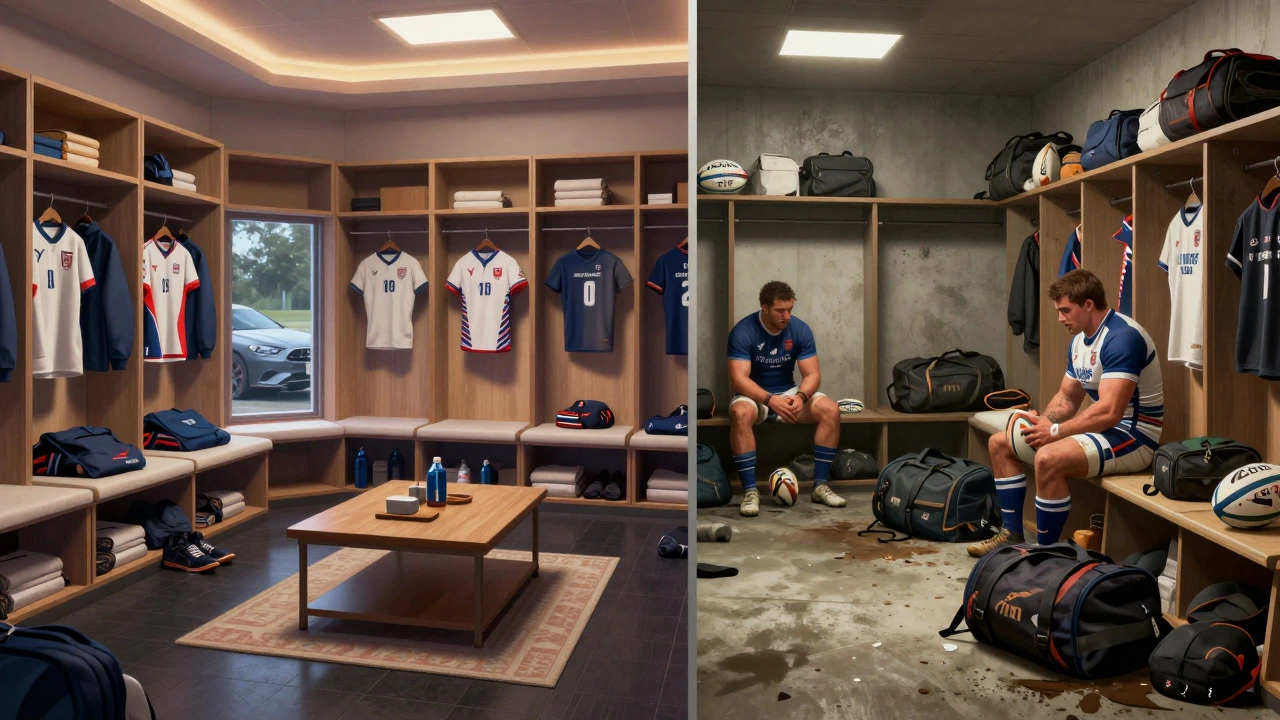
Here is where the story gets gritty. Not everyone is an Owen Farrell. For every superstar, there are dozens of journeyman players who work incredibly hard just to stay employed. In many leagues, especially outside the UK and France, the average professional rugby player earns less than $50,000 a year.
Consider a player in the English Championship (the tier below the Premiership). Their salary might be £30,000 ($38,000). After taxes, insurance, and the cost of maintaining their body (physio, diet, travel), that money disappears fast. Many of these players have second jobs during the off-season. You might find your favorite center working as a teacher, a mechanic, or in retail when the rugby season ends.
This financial pressure is real. It adds stress to a sport that is already physically demanding. Players often worry about injury ending their career before they can save enough for retirement. Unlike soccer or American football, rugby has fewer lucrative endorsement deals available to mid-tier players.
Bonuses and Performance Pay
Your base salary is only part of the picture. Rugby contracts are heavily weighted toward performance bonuses. This incentivizes players to keep fit and perform well under pressure.
- Selection Bonuses: Getting picked for the starting XV often comes with a weekly bonus. Missing a game through no fault of your own might mean losing that extra cash.
- Win Bonuses: Teams often have targets for wins or finishing in the top four. If the club achieves these, the squad shares a pool of money.
- Trial Fees: When players are called up to their national team, they receive trial fees. These vary by country. In some nations, this is substantial; in others, it barely covers the cost of flying home.
- Individual Stats: Some contracts include bonuses for scoring tries, kicking conversions, or making a certain number of tackles. This is more common in Rugby League.
These bonuses can add 20% to 50% to a player’s annual income. But they are unpredictable. A bad season or a string of injuries can wipe out that extra income entirely.
Endorsements and Commercial Deals
This is where the real wealth is made, but only for the top 1% of players. Endorsement deals involve wearing branded gear, appearing in ads, or promoting products on social media.
Global icons like Sam Cane or Antoine Dupont have multi-million dollar deals with brands like Adidas, Nike, or local sponsors. These deals are separate from their club salaries. For most players, however, endorsements are limited to local businesses-maybe a deal with a nearby gym or a car dealership. The value of these local deals is often low, sometimes just free services rather than cash.
Social media has changed this slightly. Players with large followings on Instagram or TikTok can monetize their content directly. But building that audience takes time and effort, which distracts from training. Most players focus on their game first, knowing that commercial opportunities will come later, if at all.
Women’s Rugby: A Growing Gap
We cannot talk about rugby pay without addressing women’s rugby. Historically, female players were unpaid amateurs. That is changing rapidly, but the gap remains wide.
In recent years, major unions like World Rugby and national bodies in England, France, and New Zealand have started offering professional contracts to women. In the Women’s Six Nations, for example, players now receive significant stipends and salaries. Top players in the French Elite 1 Féminine can earn €30,000 to €50,000 annually. While this is a massive step forward, it is still a fraction of what male counterparts earn.
The investment in women’s rugby is growing because the sport is becoming more popular. Broadcasters are picking up matches, and sponsors are seeing value. As viewership increases, so will the salaries. But for now, many women players still balance rugby with full-time jobs outside the sport.

Factors That Influence Your Paycheck
If you are wondering why one player earns double another in the same team, it usually comes down to these factors:
- Position: Backs (especially fly-halves and centers) often earn more than forwards because they are more visible to fans and broadcasters. However, props and locks are crucial for set-piece stability, so top-tier forwards command high wages too.
- Experience: Veterans with international caps have leverage. They can negotiate better deals because they bring prestige and experience to the squad.
- Market Size: Playing in a big city with a large fanbase (like London or Paris) means more ticket sales and more sponsorship money, which trickles down to players.
- Nationality: In some leagues, foreign players are restricted by quotas. If a team wants a top New Zealand winger, they might have to pay a premium to secure his spot within those rules.
The Hidden Costs of Being a Pro
High salaries don’t always mean high savings. Professional rugby players face unique expenses that regular employees do not.
Health Insurance: Rugby is brutal. Concussions, broken bones, and joint damage are common. Players often pay for private physiotherapy, sports medicine, and rehabilitation out of pocket. This can cost thousands of dollars a month.
Diet and Nutrition: Maintaining peak physical condition requires expensive food. High-quality protein, supplements, and specialized meals add up. Many players spend $500-$1,000 a month just on groceries.
Travel: Away games mean hotels, flights, and meals on the road. While clubs cover some costs, players often pay for family travel or personal comfort upgrades.
When you subtract these costs from a £60,000 salary, the disposable income isn’t as high as it seems. Financial planning is essential for rugby players to avoid going broke after their careers end.
Future Trends: Will Salaries Go Up?
Looking ahead, rugby salaries are likely to rise, but unevenly. The sale of broadcast rights for the Rugby World Cup and Six Nations continues to grow. More money flowing into the sport means more money for players.
However, governing bodies are also pushing for financial sustainability. Salary caps may become stricter to prevent wealthy clubs from hoarding talent. This could compress the wage gap between top stars and average players, leading to a more balanced distribution of income.
Additionally, the rise of data analytics might change how players are valued. Teams will pay more for players who provide specific statistical advantages, such as high tackle success rates or efficient ball-carrying metrics. This could lead to new types of bonuses based on data-driven performance.
Do rugby players get paid per game?
Most professional rugby players are paid an annual salary, not a per-game fee. However, they often receive selection bonuses for each match they start or substitute in. National team players may also receive trial fees for each camp or test match they participate in.
Who is the highest-paid rugby player in the world?
The title fluctuates, but players like Antoine Dupont (France) and Owen Farrell (England) are among the highest earners due to a combination of high club salaries and lucrative endorsement deals. In terms of pure salary, players in France's Top 14 often earn the most base pay.
How much do amateur rugby players get paid?
Amateur rugby players typically do not get paid. They play for love of the game. Some semi-professional players in lower leagues might receive small stipends or expense reimbursements, but it is not a source of primary income.
Do rugby players get paid during the off-season?
Yes, most professional contracts are annual, meaning players are paid throughout the year, including the off-season. However, some contracts may have clauses that reduce pay if the player is not meeting fitness standards or attending mandatory training camps.
Is rugby pay tax-free?
No, rugby salaries are subject to standard income tax laws in the country where the player resides and works. In countries like the UK and France, high-income players pay significant portions of their earnings in tax.