Fitness December 1, 2025
How to Choose a Yoga Class for Beginners
Yoga Class Finder
Find Your Perfect Beginner Yoga Class
Take this 30-second quiz to get personalized recommendations for your first yoga class. Just answer a few questions about your preferences and physical condition.
Starting yoga can feel overwhelming. You walk into a studio, see people folding themselves into shapes you didn’t know were possible, and wonder if you’re even in the right place. The truth? You are. Every expert was once a beginner. The real question isn’t whether you can do it-it’s how to pick the right class so you actually stick with it.
Start with the right type of yoga
Not all yoga is the same. There are over 20 styles, but for beginners, only a few make sense. Hatha yoga is the most common starting point. It moves slowly, focuses on basic poses, and teaches you how to breathe with movement. If you see a class labeled "Hatha," that’s your best bet.Vinyasa looks flashy-flowing from one pose to the next-but it’s often too fast for someone who doesn’t know how to downward dog from tree pose. Yin yoga is gentle and meditative, holding poses for minutes at a time. Great if you’re stressed or recovering from injury. Restorative yoga uses props like bolsters and blankets to help you relax completely. No stretching, no effort-just rest.
Avoid Ashtanga or Power Yoga at first. These are intense, fast-paced, and designed for people who’ve been practicing for months or years. You’ll get injured or discouraged. Stick with Hatha, Yin, or Restorative until you feel comfortable in your own body.
Look for "Beginner" or "All Levels" classes
Don’t fall for the trap of a class called "Yoga for Everyone." That usually means "I’ll teach advanced poses and assume you know what to do." Always look for classes labeled "Beginner" or "All Levels Welcome." The word "welcome" matters. It means the teacher will adjust poses, offer modifications, and not shame you for wobbling.Check the class description. If it says "no experience needed," that’s good. If it mentions "flowing sequences" or "building strength," tread carefully. A good beginner class will spend time explaining how to align your wrists in plank, how to bend your knees in forward fold, and why you shouldn’t force your heels to the floor.
Find a teacher who teaches, not performs
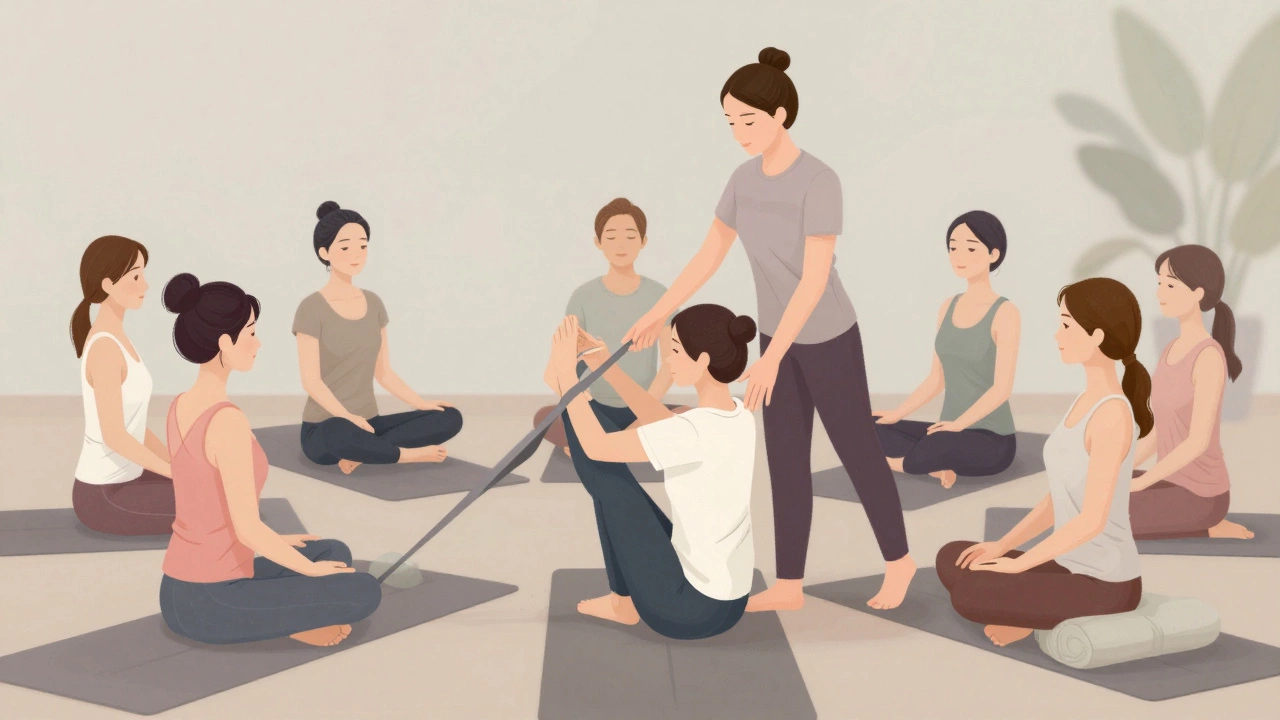
The best yoga teachers don’t show off. They watch. They walk around. They offer gentle corrections. You’ll know a good one when they say things like, "If your shoulders hurt, lower them," or "You don’t need to go deeper today."Watch a class before you join. Or better yet, ask if they offer a free trial. A teacher who spends more time demonstrating poses than talking about them might be more focused on their own practice than yours. A great beginner teacher will repeat instructions, use simple language, and remind you it’s okay to rest.
Location and timing matter more than you think
You can have the perfect class, but if it’s 45 minutes from your house and you have to rush after work, you won’t go. Pick a studio or gym that’s on your way home-or close to your job, your kid’s school, or your favorite coffee shop.Time of day matters too. Morning classes help set a calm tone for the day. Evening classes help you unwind. Try both. Most people stick with the time that fits their rhythm, not the one they think they "should" do.
Online classes are fine too. But if you’re new, in-person is better. You’ll get hands-on adjustments, see how others move, and feel the energy of a group. That connection keeps people coming back.
Check the class size
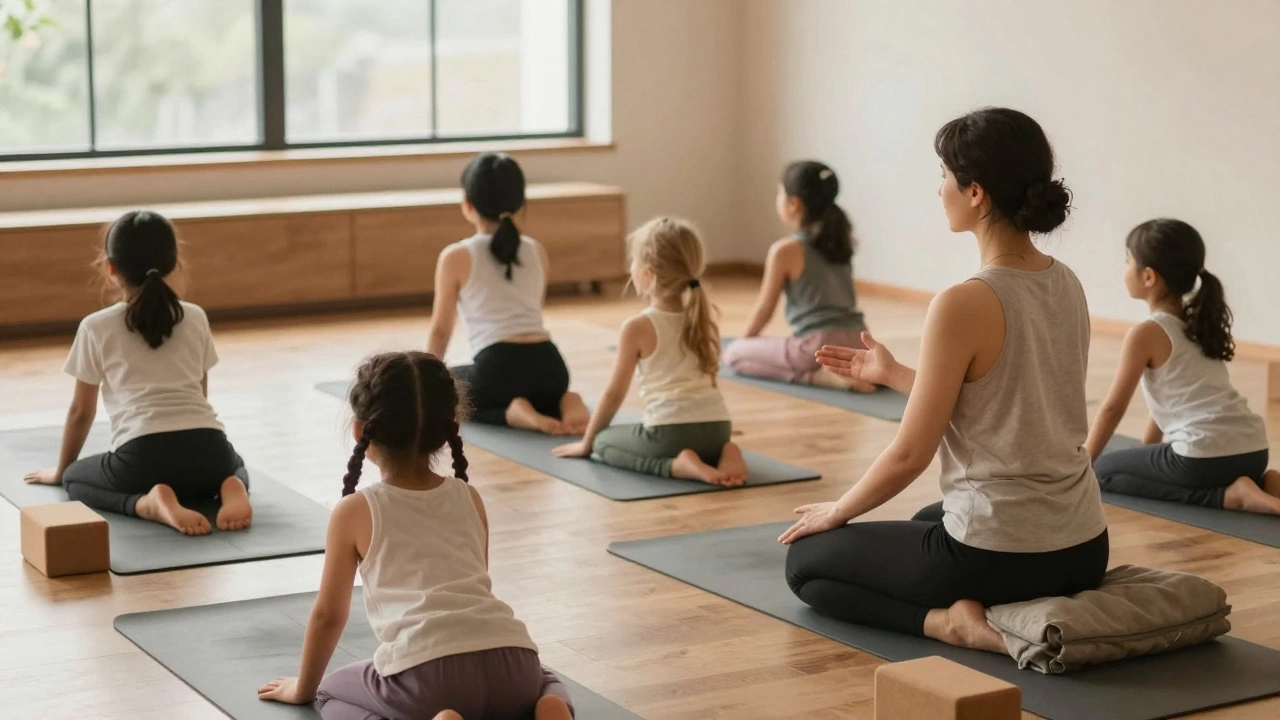
A class with more than 15 people is too big for a beginner. In a crowded room, the teacher can’t see you. You’ll feel lost. You might copy the person next to you and end up hurting yourself.Look for classes capped at 8-12 people. Smaller groups mean more attention. You’ll get help adjusting your hips in pigeon pose or realigning your spine in mountain pose. That kind of feedback is priceless when you’re learning.
Ask about props
Yoga isn’t about being flexible. It’s about building awareness. Props-blocks, straps, bolsters, blankets-are tools, not signs of weakness. A good beginner class will use them regularly.If a studio doesn’t offer props, or acts like they’re optional, that’s a red flag. Blocks help you reach the floor without rounding your back. Straps let you hold your foot in seated forward fold without straining. Blankets support your knees in seated poses. These aren’t luxuries-they’re essentials for safety.
Watch for pricing and commitment traps
Many studios push 10-class packs or monthly memberships. Don’t buy one right away. Most places offer a single class drop-in rate-usually £10-£15 in the UK. Try three different classes before committing.Watch out for contracts. Some studios lock you into 3-month plans with cancellation fees. Avoid them. You should be able to pause, skip, or cancel without penalty. Yoga is personal. Your schedule will change. Your body will change. Your commitment should too.
What to wear and bring
Wear something that lets you move. Leggings or shorts with a fitted top. No baggy T-shirts-they ride up. Bare feet are standard. You don’t need special yoga socks unless the floor is cold.Bring a water bottle. Most studios have mats you can borrow, but if you plan to keep going, buy your own. A non-slip mat costs £20-£30. Avoid the cheap ones-they slide around and wear out fast.
Don’t bring your phone. Turn it off. Leave it in your bag. This isn’t a workout you check off a list. It’s a moment to be still.
First class? Here’s what to expect
You’ll arrive 10 minutes early. The teacher will ask if you’re new. Say yes. They’ll guide you to a spot, hand you a mat, and show you where to put your stuff. Don’t worry if you’re the only beginner. Most people were once exactly where you are.The class will start with breathing. That’s not fluff-it’s the foundation. Then you’ll move slowly through poses. You’ll feel wobbly. That’s normal. You might not get every pose right. That’s okay. The goal isn’t perfection. It’s presence.
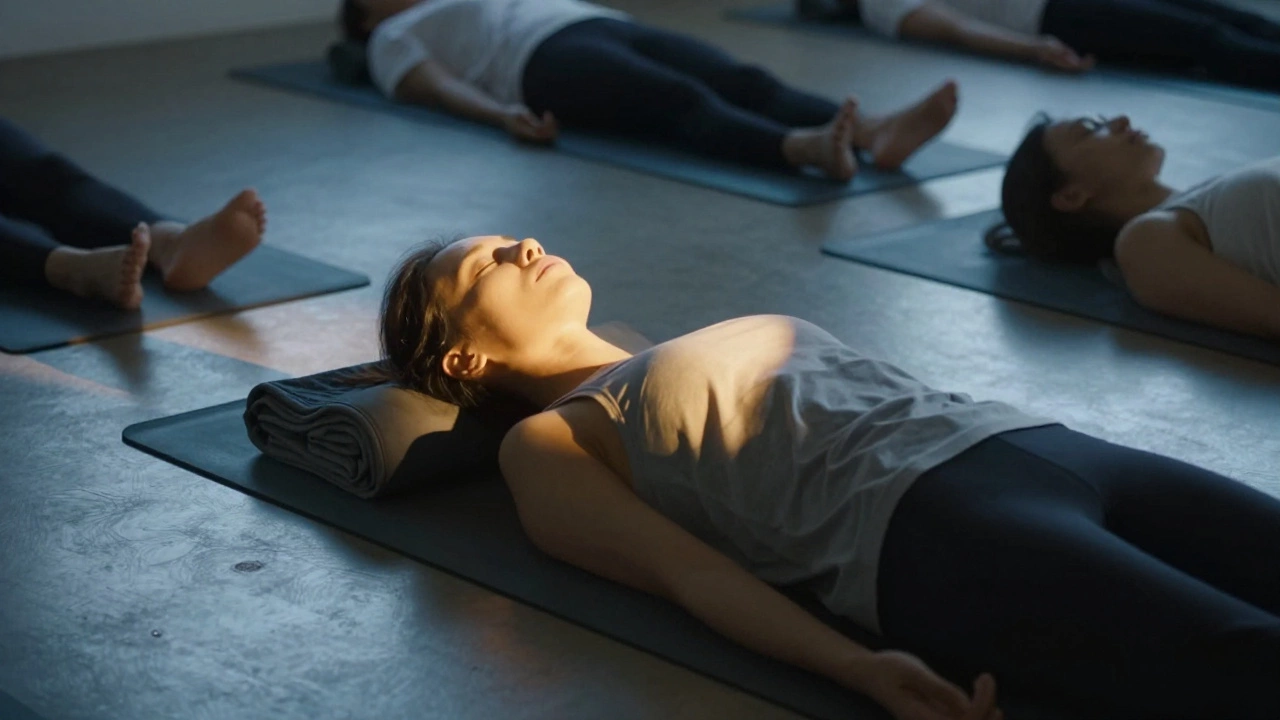
At the end, you’ll lie down in Savasana-corpse pose-for five minutes. People often think this is the easiest part. It’s not. It’s the hardest. Your mind will race. That’s fine. Just breathe. You’re doing it right.
What to do after your first class
Don’t rush to the next one. Give yourself 24 hours. Notice how your body feels. Are your shoulders looser? Did your breathing slow down? Did you sleep better?If you felt calm, even a little, that’s the sign you’re on the right path. Yoga doesn’t change you overnight. It changes you quietly-over weeks, months, years. One class won’t make you bend like a pretzel. But it might make you breathe deeper the next time you’re stuck in traffic.
Try the same class again next week. Same teacher. Same time. Same space. Consistency beats intensity every time.
Common beginner mistakes (and how to avoid them)
- Comparing yourself to others. Someone else’s backbend isn’t your goal. Your goal is to show up.
- Pushing into pain. Discomfort is normal. Sharp pain is not. Stop. Adjust. Ask.
- Skipping breath. If you’re holding your breath, you’re not doing yoga. Breathe through every movement.
- Thinking you need to be flexible. You don’t. You just need to show up.
- Quitting after one bad class. One bad teacher, one bad day, doesn’t mean yoga isn’t for you.
Can I do yoga if I’m not flexible?
Yes, absolutely. Yoga isn’t about touching your toes. It’s about building awareness, strength, and calm. Many people start yoga because they’re stiff. The poses are designed to meet you where you are-not to force you into someone else’s version of flexibility.
How often should a beginner do yoga?
Once or twice a week is enough to start. The goal isn’t to burn out. It’s to build a habit. After a few weeks, you’ll naturally want to do more. Listen to your body. Some weeks you’ll feel like moving. Other weeks you’ll just want to lie down. Both are fine.
Is yoga a good workout for weight loss?
Yoga alone won’t melt fat fast, but it helps in ways that matter. It reduces stress, which lowers cortisol-a hormone linked to belly fat. It improves sleep and body awareness, so you eat less out of habit. Over time, combining yoga with better nutrition leads to steady, sustainable results.
What if I have back pain or an injury?
Talk to your teacher before class. Many yoga styles are gentle enough for injuries, especially Yin or Restorative. Avoid deep twists or forward folds if your back is sensitive. Use props to support your spine. Always listen to your body-pain is a stop sign, not a challenge.
Can I do yoga at home instead of going to a studio?
Yes, but start with in-person classes first. Learning from a screen means missing feedback on alignment. Once you know the basics, home practice is a great way to build consistency. Use apps like Down Dog or YouTube channels like Yoga with Adriene-they’re beginner-friendly and free.