Fitness December 28, 2025
Can I Go From Fat to Ripped in 2 Months? The Realistic Truth
Fat to Ripped Calculator
Your Transformation Calculator
Your Weekly Progress
Fat Loss Goal
12-16 lbs
Realistic Expectations: In 2 months, you can safely lose 1-2 lbs of fat per week. Visible muscle definition will appear gradually as you stay consistent with protein intake and strength training.
Your Plan
Daily Calorie Deficit
0
Protein Target
0
Daily Calories
0
Your daily plan:
30% calorie deficit from maintenance level
1g protein per pound of body weight (at least 180g for 180lb person)
4-5 strength sessions weekly with compound movements
2-3 HIIT sessions per week
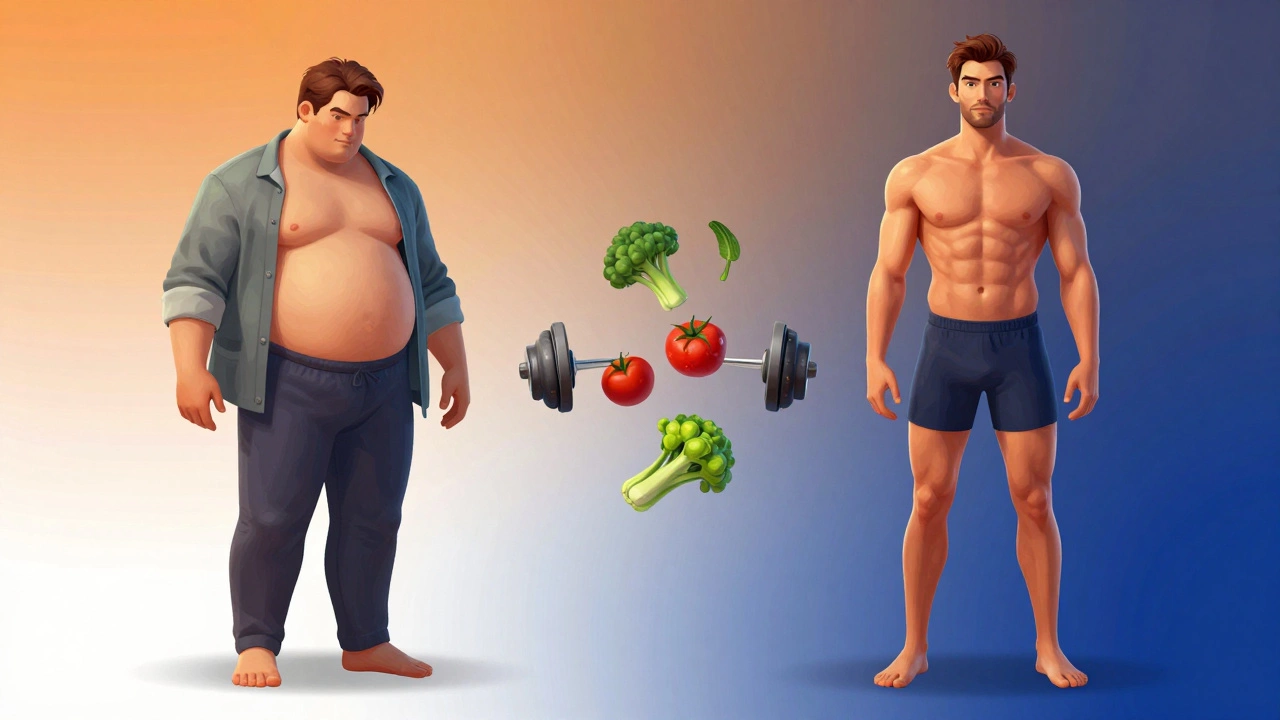
Can you go from fat to ripped in two months? The answer isn’t a simple yes or no. It’s not impossible-but it’s also not what most people think it is. If you’re hoping to drop 20 pounds of fat and pop out six-pack abs in 60 days, you’re setting yourself up for disappointment. But if you’re willing to work hard, eat smart, and accept that your transformation will be more about progress than perfection, you can make serious changes in just eight weeks.
What "Ripped" Really Means
"Ripped" isn’t just about being lean. It’s about having visible muscle definition under low body fat. For men, that usually means getting below 12% body fat. For women, it’s below 18%. That’s not just cutting calories-it’s preserving muscle while burning fat. And that’s where most people fail.
Think of your body like a bank account. You’re withdrawing fat, but if you don’t protect your muscle, you’re also draining your strength, metabolism, and energy. The goal isn’t to lose weight fast. It’s to lose fat while keeping or even gaining muscle. That’s the only way you’ll look ripped, not just skinny.
How Much Fat Can You Actually Lose in 2 Months?
Healthy fat loss is about 1 to 2 pounds per week. That’s 8 to 16 pounds in two months. If you start at 25% body fat, losing 12 pounds of fat will make a huge visual difference. But if you’re at 35% or higher, you’ll still look soft-even after losing 15 pounds-because muscle hasn’t caught up yet.
Here’s the hard truth: you can’t turn fat into muscle. They’re two different tissues. What you can do is burn fat while training your body to build new muscle. That’s why strength training isn’t optional-it’s the core of the plan. Without it, you’ll lose muscle along with fat. And that’s the opposite of ripped.
The 3 Pillars of a 2-Month Transformation
There’s no magic trick. Just three things that work every time:
- Calorie deficit with high protein-You need to eat fewer calories than you burn, but not too few. Aim for 30% deficit, not 50%. And get at least 1 gram of protein per pound of body weight. That’s 180g for a 180lb person. Protein keeps your muscle alive while you’re cutting.
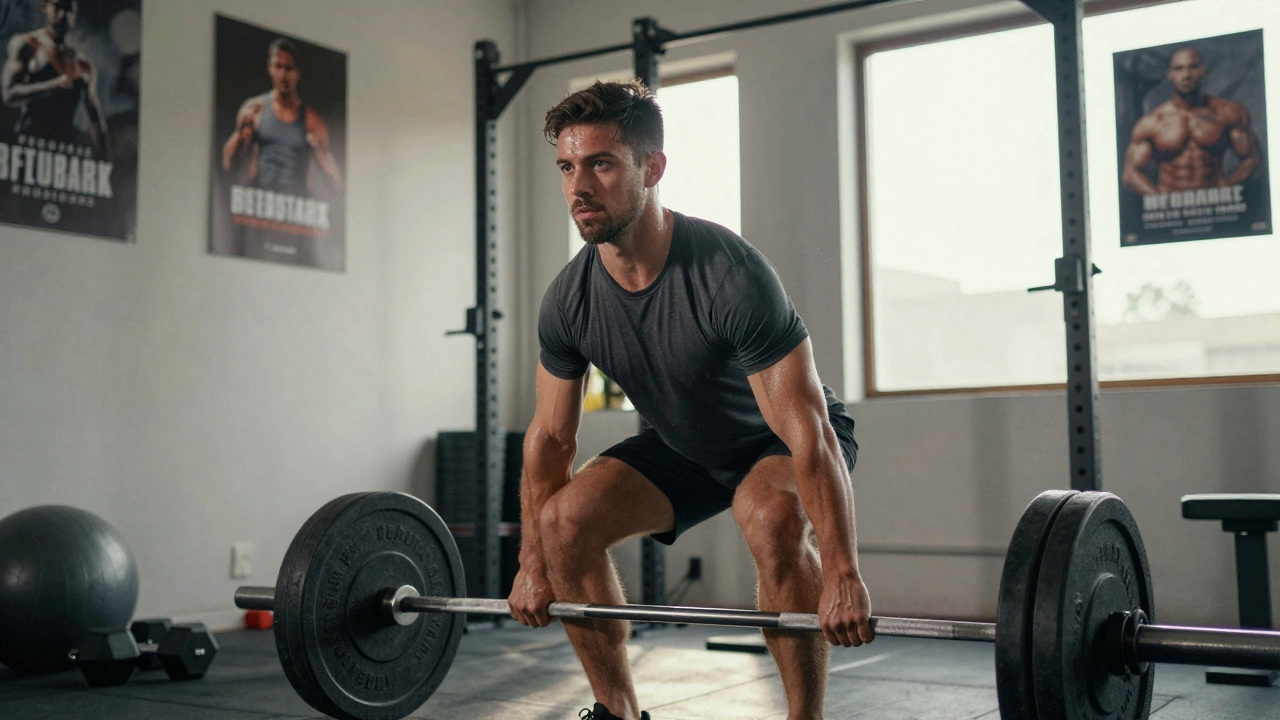
- Strength training 4-5 days a week-Lift heavy. Focus on compound moves: squats, deadlifts, bench press, rows, pull-ups. These work multiple muscle groups at once. You don’t need fancy machines. A barbell, dumbbells, and a pull-up bar are enough. Do 3-4 sets of 6-10 reps. Progressively add weight each week.
- Cardio that doesn’t burn you out-Not endless treadmill sessions. Do 2-3 sessions of high-intensity interval training (HIIT) per week. Think 20 minutes of sprints or battle ropes. Add 1-2 low-intensity walks (30-45 minutes) to burn extra calories without killing recovery.
That’s it. No detoxes. No miracle shakes. No 6 a.m. workouts if you hate them. Just consistency. You don’t need to be perfect. You just need to show up.
What Your Daily Routine Should Look Like
Here’s a real example from someone who did this in Bristol last winter:
- Morning: 15-minute walk before breakfast (fasted cardio helps burn fat)
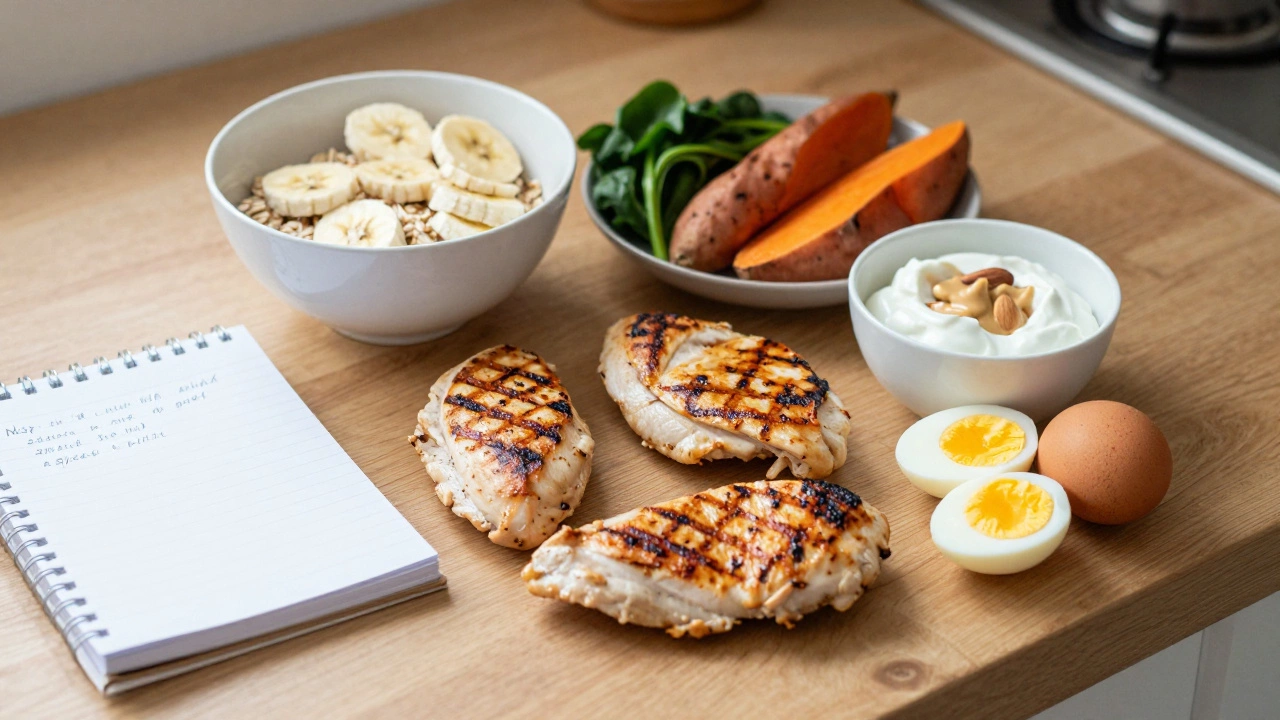
- Breakfast: 4 eggs, 1 cup oats, 1 banana
- Lunch: 6oz grilled chicken, 1 cup brown rice, broccoli
- Afternoon snack: Greek yogurt with 1 tbsp almond butter
- Dinner: 6oz salmon, roasted sweet potato, spinach
- Workout days: 60-minute strength session (full body or upper/lower split)
- Non-workout days: 30-minute walk or light cycling
That’s around 2,000 calories for a 180lb man. Adjust based on your size. Track your food for the first two weeks. Not forever-just long enough to learn portion sizes. After that, you’ll know what 4oz of chicken looks like without weighing it.
Why Most People Fail
They think it’s about willpower. It’s not. It’s about systems.
People start strong. They cut carbs, do 90-minute workouts, and feel amazing for the first week. Then life happens. A work meeting runs late. The fridge is empty. They skip a workout. Then another. And suddenly, it’s been two weeks. They feel guilty. They binge. They quit.
The fix? Make it stupid simple.
- Keep protein shakes or hard-boiled eggs in the fridge for quick snacks
- Prep 3 meals on Sunday night
- Do your workout first thing in the morning-it’s done before the day starts
- Don’t wait for motivation. Do it anyway.
Success isn’t about doing everything right. It’s about doing enough right, most of the time.
What to Expect Week by Week
Week 1-2: You’ll lose water weight fast. The scale drops 5-8 pounds. You feel lighter. Clothes fit better. But you’re not ripped yet.
Week 3-4: Fat loss slows. You might feel tired. Your strength might dip slightly. This is normal. Your body is adapting. Keep eating protein. Keep lifting. Don’t drop calories.
Week 5-6: You start seeing definition. Your arms look tighter. Your abs are more noticeable when you flex. Your energy comes back. This is the turning point.
Week 7-8: You’re in the zone. You’re stronger than when you started. Your clothes fit looser. You catch yourself looking in the mirror more. You’re not "ripped" like a model-but you’re lean, strong, and proud. And that’s real progress.
Can You Get Ripped Without Supplements?
Yes. Absolutely.
Protein powder? Helpful if you struggle to hit your protein goal. Not required. Creatine? Great for strength and muscle retention. Safe, cheap, and backed by science. BCAAs? Useless if you’re eating enough protein. Fat burners? Waste of money. They don’t melt fat. They might give you jittery energy for a week.
Real results come from food, lifting, and sleep. Not pills.
When You Should Walk Away
Some people are too far along the fat spectrum to get ripped in two months. If you’re over 30% body fat, you’ll need 4-6 months to get to that level of leanness safely. Pushing too hard risks muscle loss, hormonal crashes, and burnout.
Also, if you’re under 18, pregnant, or have a medical condition, talk to a doctor first. Extreme fat loss isn’t safe for everyone.
But if you’re a healthy adult with 20-25% body fat and you’re ready to work? Two months is enough to change how you look, feel, and move.
Final Reality Check
You won’t look like a bodybuilder in 60 days. You won’t have abs that glow under studio lights. But you will look like someone who takes care of themselves. You’ll have more energy. You’ll sleep better. You’ll stand taller. People will notice. And that’s more powerful than any before-and-after photo.
Transformation isn’t about perfection. It’s about proving to yourself that you can stick with something hard and come out stronger. That’s the real win.
Can I get ripped in 2 months if I’m a woman?
Yes, but the timeline and expectations are different. Women naturally carry more body fat for hormonal reasons, so getting visibly "ripped" usually means hitting 16-18% body fat, not 10%. You can lose fat and gain muscle in two months, but your abs might not pop like a man’s-and that’s normal. Focus on strength, energy, and how your clothes fit, not on achieving a male standard.
Do I need to cut out carbs to get ripped?
No. Carbs fuel your workouts and help you recover. Cutting them out makes strength training harder and can cause muscle loss. Instead of cutting carbs, focus on timing them. Eat most of your carbs around your workouts-breakfast and post-training. Choose whole sources like oats, sweet potatoes, rice, and fruit. Avoid sugary snacks and refined bread.
What if I lose weight but don’t look any more toned?
You’re probably losing muscle along with fat. That happens when you don’t lift weights or don’t eat enough protein. Add strength training if you’re not doing it. Increase protein to 1g per pound of body weight. And don’t drop calories below 1,400 for women or 1,800 for men unless under supervision. Muscle takes time to build, but it’s the only thing that makes you look toned.
Can I do this without a gym?
Yes. You can build muscle and burn fat with bodyweight training. Push-ups, pull-ups, squats, lunges, and dips are all you need. Add resistance bands or dumbbells if you have them. Do 4-5 sessions a week, 45 minutes each. Focus on progressive overload-make each rep harder over time. Do more reps, slower reps, or fewer rests. You don’t need machines to get strong.
How much sleep do I need for fat loss and muscle gain?
At least 7 hours. Less than that and your cortisol (stress hormone) rises, making fat loss harder and muscle recovery slower. Sleep is when your body repairs muscle and balances hunger hormones. If you’re tired, you’ll crave sugar. If you’re sleep-deprived, you’ll skip workouts. Prioritize sleep like you do your diet and training.
Next Steps
Start tomorrow. Don’t wait for Monday. Don’t wait until after the holidays. Right now, go to the fridge. Take out one unhealthy snack. Replace it with a hard-boiled egg or a piece of chicken. That’s your first step.
Then, find a 20-minute bodyweight workout online and do it. No equipment needed. Just your body. Do it today. Then do it again tomorrow.
You don’t need to be perfect. You just need to start. And keep going.