Rugby Fixtures May 4, 2026
What is Italy's Nickname in Rugby? The Azzurri Explained
Six Nations Nicknames & Colors Explorer
Explore why Italian rugby players are called Azzurri and how they compare to other European powerhouses. Click on a team card to reveal their nickname origin story.
Did You Know?
While both Italy (Azzurri) and France (Les Bleus) are known as "The Blues," the shade is distinct. Italy uses a light sky blue representing the House of Savoy, while France uses a deep navy blue.
If you have ever watched a rugby match involving the Italian national team, you might have noticed they are rarely referred to by their country name alone. Instead, commentators and fans call them something else entirely. You might hear "The Blues" or "The Italians," but there is one specific nickname that carries far more weight, history, and pride: Azzurri.
This isn't just a random label slapped on a sports jersey. It is a title shared with other major Italian sporting teams, deeply rooted in the nation's identity. But why do they use this word? Where does it come from? And how did a team that started as an underdog become known by such a prestigious name?
The Meaning Behind "Azzurri"
Azzurri translates directly to "Blues" in English. However, saying "the Blues" doesn't quite capture the nuance. In Italian culture, azzurro refers specifically to the light blue color of the sky or the sea. It is distinct from blu, which is a darker, deeper blue.
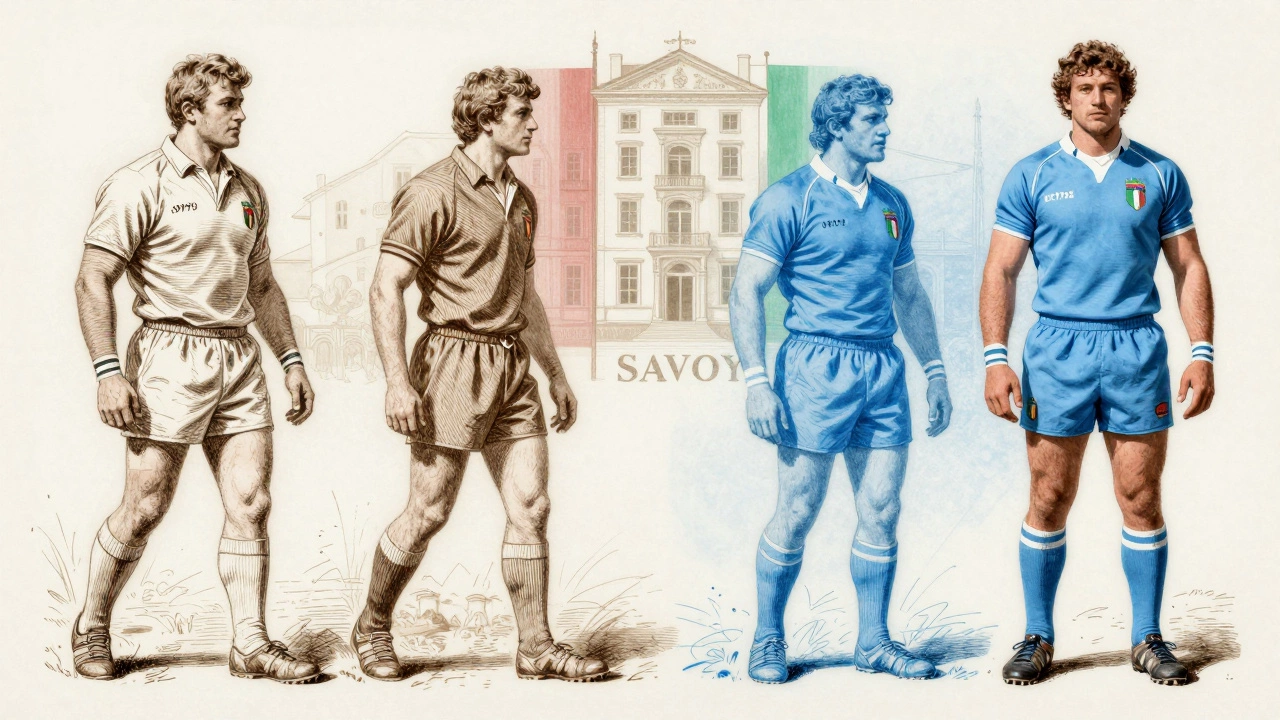
This color has been associated with Italy since the unification of the country in the 19th century. When the House of Savoy became the ruling dynasty of the Kingdom of Italy, their dynastic color was chosen for the national flag and uniforms. This shade of light blue became a symbol of unity and patriotism. So, when you see the Italian national rugby union team wearing their iconic light blue jerseys, they aren't just picking a color that looks good. They are wearing the historical color of the Italian state.
You will find this same nickname used for the Italian national football (soccer) team, the basketball team, and even the cycling team. It is a badge of honor. For a rugby player from Italy, being called an Azzurro means you represent the entire nation, not just your club or region.
History: From Underdogs to the Six Nations
To understand the weight of the nickname, you need to look at the journey of the team. The Italian rugby federation was founded in 1928, but the national team didn't play its first official international match until 1973 against Romania. Back then, Italy was considered a minor power in the sport.
For decades, they struggled against the established giants of European rugby. They played friendly matches and participated in lower-tier tournaments. But everything changed in the late 1990s. In 1998, Italy was invited to join the Five Nations Championship, transforming it into the Six Nations. This was a massive moment for the sport in Europe.
Joining the Six Nations meant playing against England, France, Ireland, Scotland, and Wales every year. These teams had centuries of tradition and massive budgets. Italy was the newcomer, often seen as the team to beat if you wanted an easy win. Yet, despite the odds, the team embraced the Azzurri identity with fierce determination.
They didn't just show up; they fought. Over the years, they earned respect through grit and tactical discipline. While they may not win the Grand Slams regularly, they have become a competitive force, capable of beating any opponent on their day. This resilience is part of what makes the nickname so powerful. It represents a team that punches above its weight.
The Jersey and Visual Identity
The visual representation of the Azzurri is striking. Their home kit consists of light blue shirts, white shorts, and blue socks. This combination is instantly recognizable across the globe. Even away kits usually incorporate elements of this light blue hue to maintain brand consistency.
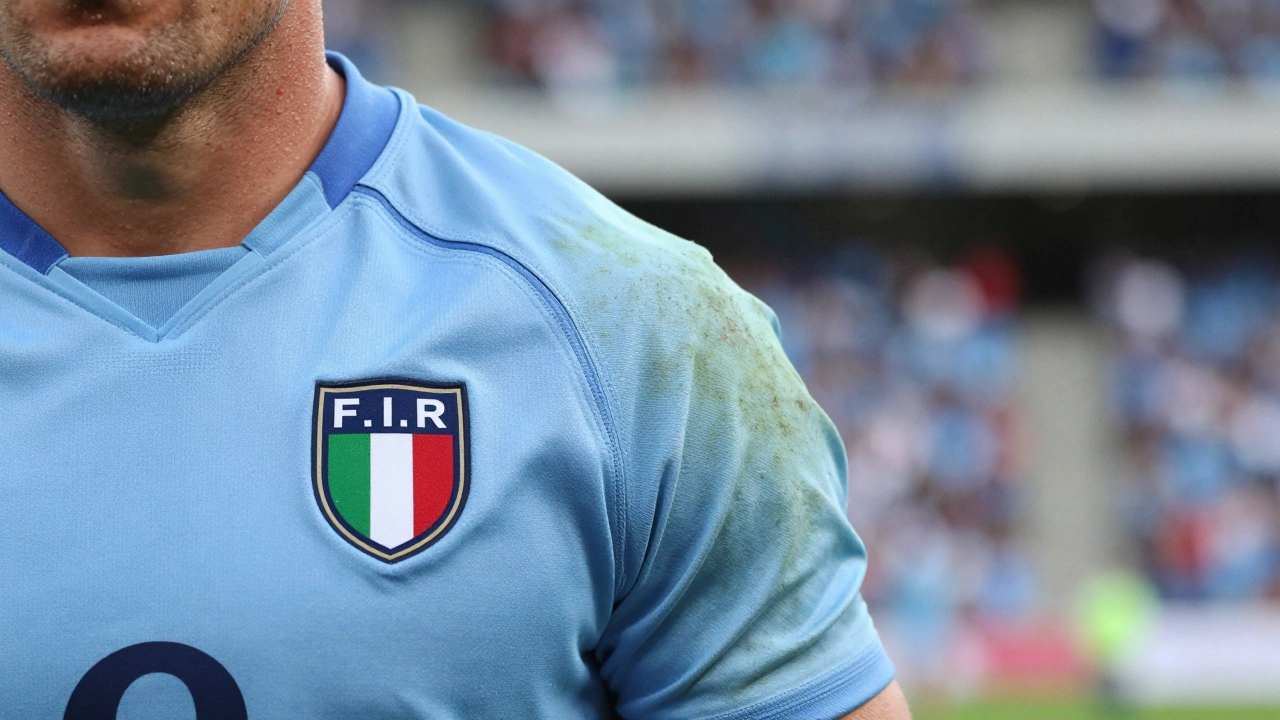
The crest on the chest features the letters F.I.R. (Federazione Italiana Rugby) surrounded by a wreath, often set against the light blue background. Sometimes, you will see the tricolor stripe of the Italian flag-green, white, and red-running down the side or on the collar. This blend of the royal blue and the national flag colors creates a strong visual link between the team and the country.
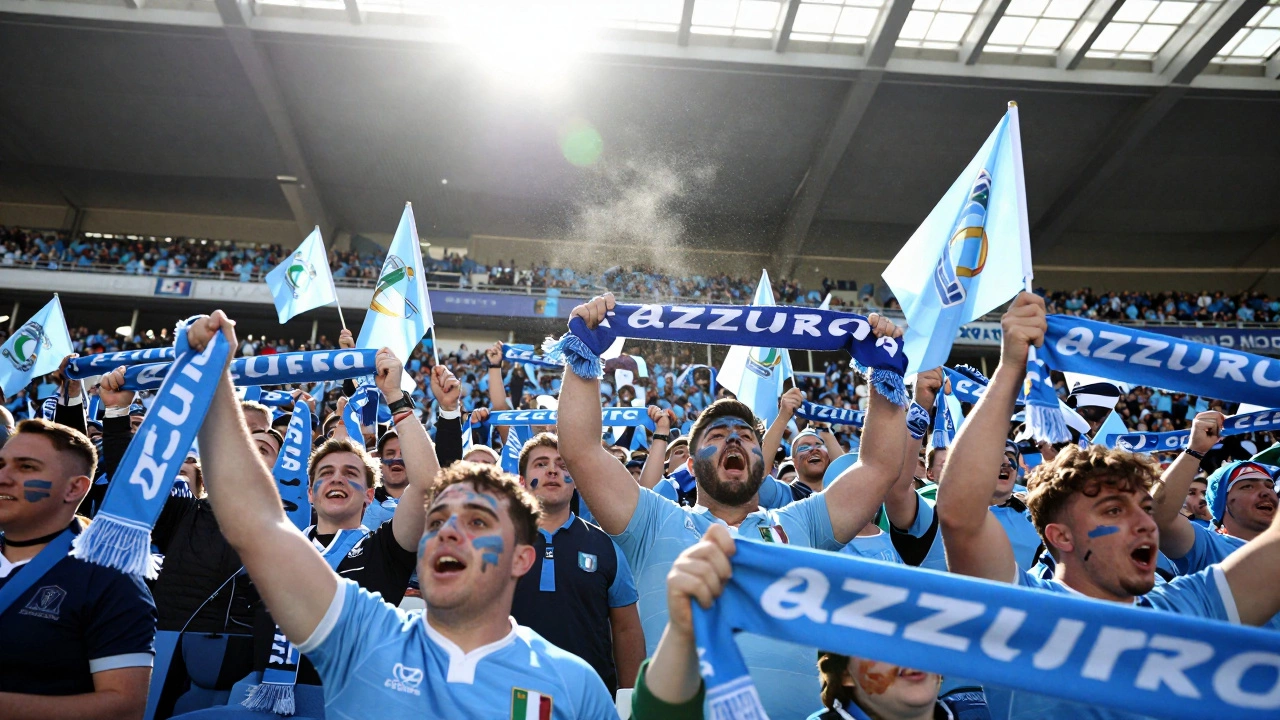
Fans also wear this color proudly. If you go to a match in Rome or Florence, the stadium fills with waves of light blue. Scarves, flags, and face paint all share this common thread. It creates a unified atmosphere that is unique to Italian sports culture. The color serves as a rallying point for supporters who travel across Europe to back their team.
Comparison with Other Rugby Nicknames
Rugby nicknames often reflect geography, animals, or historical traits. Let's look at how the Azzurri compare to their Six Nations rivals:
| Country | Nickname | Origin/Meaning |
|---|---|---|
| Italy | Azzurri | Light blue color of the House of Savoy/Italian sky |
| England | The Red Roses / Three Lions | Tudor Rose and Royal Arms of England |
| France | Les Bleus | Blue color of the French flag (Marianne) |
| Ireland | The Boys in Green / Emerald Isle | Dominant color of the Irish flag and landscape |
| Scotland | The Thistle | National flower of Scotland, symbolizing defense |
| Wales | The Dragons | Red dragon from the Welsh flag |
Notice a pattern? Most European rugby nicknames are tied to national symbols. France uses "Les Bleus" (The Blues), which is similar to Italy's Azzurri, but the shades differ significantly. France uses a deep navy blue, while Italy uses a bright, sky blue. This distinction helps avoid confusion during broadcasts and keeps each team's identity separate.
Unlike Wales, whose nickname comes from mythology (the Dragon), or Scotland, which uses a plant (the Thistle), Italy's nickname is purely chromatic and historical. It ties back to monarchy and statehood rather than folklore. This gives it a formal, dignified tone that fits the serious nature of international rugby.
Cultural Impact and Fan Culture
In Italy, rugby is not the most popular sport-football (soccer) holds that crown by a wide margin. However, rugby has a dedicated and passionate following. The Azzurri serve as the focal point for this community. When the team plays, especially during the Six Nations tournament, rugby becomes a mainstream topic.
Fans refer to themselves as part of the "blue family." There is a sense of collective ownership over the team's successes and failures. Because Italy often faces tough opponents, victories are celebrated as monumental achievements. Beating England or France, for example, is treated like a national holiday among rugby fans.
The nickname also helps bridge regional divides. Italy has strong regional identities, sometimes leading to rivalry. But when it comes to the Azzurri, those differences fade. Everyone supports the national team. The light blue jersey becomes a unifying symbol that transcends local loyalties.
Modern Challenges and Future Outlook
As we move into 2026, the Italian rugby landscape is evolving. The team continues to compete in the Six Nations, but they also participate in other international windows and tours. The goal is to build depth and develop talent from within Italy, rather than relying solely on players based abroad.
There is ongoing discussion about the structure of professional rugby in Italy. Some advocate for a domestic league that can support the national team better, while others prefer maintaining strong links with European clubs. Regardless of the path chosen, the identity remains constant. The players will always be the Azzurri.
Younger generations are growing up with this nickname. Schools and youth academies emphasize the values associated with the light blue shirt: teamwork, respect, and perseverance. This ensures that the legacy of the Azzurri will continue for decades to come.
Why is Italy called Azzurri instead of just "The Italians"?
"Azzurri" is a culturally significant term in Italy that refers to the light blue color of the national flag and the House of Savoy. It is used across multiple sports, including football and basketball, to denote the national team. Using "Azzurri" emphasizes national pride and historical continuity, whereas "The Italians" is generic and lacks emotional resonance.
What is the difference between Azzurri and Les Bleus?
Both nicknames translate to "The Blues," but they refer to different shades and countries. "Azzurri" refers to the light blue of Italy, while "Les Bleus" refers to the dark blue of France. The distinction is important for branding and avoiding confusion in international competitions.
When did Italy join the Six Nations?
Italy joined the tournament in 2000, expanding the Five Nations Championship to become the Six Nations. This marked a significant milestone for Italian rugby, allowing them to compete annually against Europe's top teams.
Do other Italian sports teams use the nickname Azzurri?
Yes, the nickname is widely used for all Italian national teams, including soccer (football), basketball, volleyball, and cycling. It is a standard term for representing Italy in international sports.
Is rugby popular in Italy compared to other sports?
Rugby is less popular than football (soccer) in Italy, but it has a loyal and growing fanbase. The success of the national team in the Six Nations has helped increase visibility and interest in the sport over the last two decades.