Tennis Tournaments November 29, 2026
What is a Bye in Tennis? Understanding Tournament Draws
Tournament Draw & Bye Calculator
Enter your tournament details below to see how many players receive a bye (automatic advancement) and how many first-round matches are required. This tool helps visualize why top seeds often skip the first round in smaller draws.
Must be less than or equal to Draw Size.
Draw Analysis
Byes Awarded
0
First Round Matches
0
Players Playing R1
0
Strategic Insight:
Who Gets the Byes?
Based on standard ATP/WTA seeding rules:
- Seeds 1–0 Receive automatic byes into Round 2.
- Remaining Players Must play in Round 1 to advance.
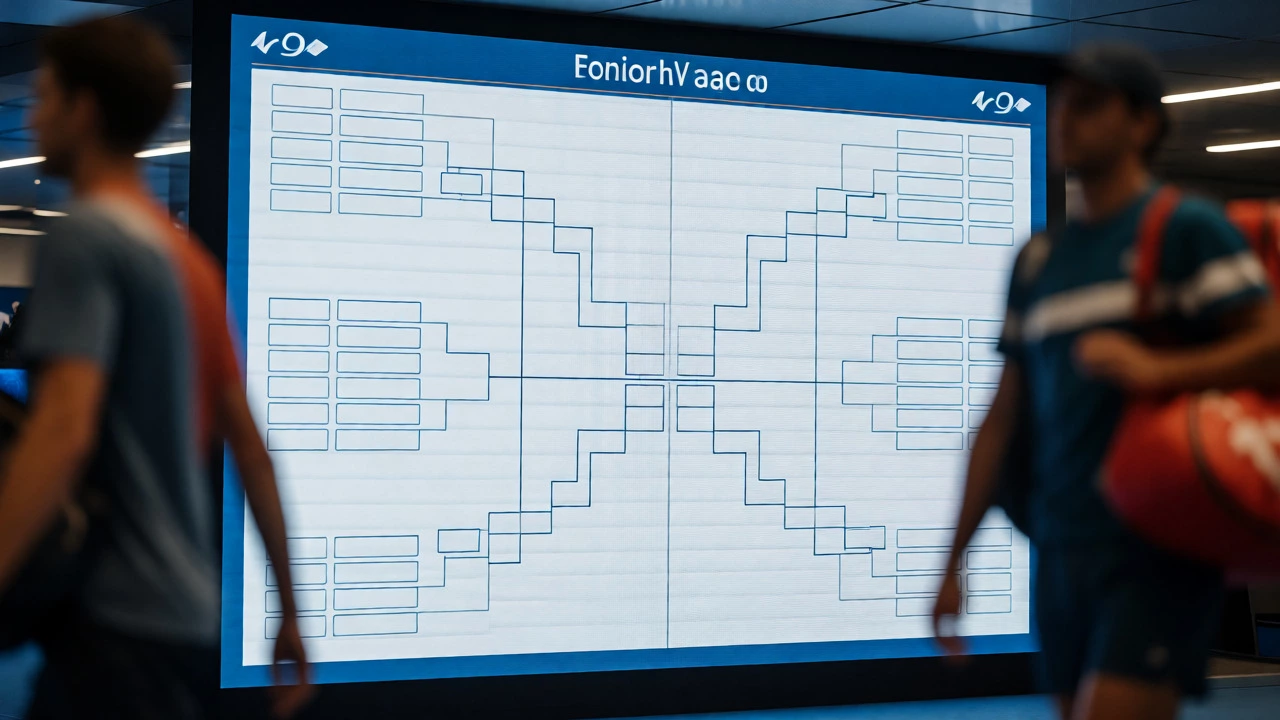
You are watching the first round of a major tennis tournament. The bracket shows 128 players, but only 64 matches are scheduled for that day. Where did the other 64 players go? Did they lose before even stepping on court? No. They received something called a bye, which is an automatic advancement to the next round without playing a match. It sounds like free real estate, but it’s actually a calculated strategic advantage rooted in tournament structure and player ranking.
The Math Behind the Draw
Tournament draws work on powers of two: 8, 16, 32, 64, or 128 players. But real life rarely fits neatly into these numbers. If a qualifying round produces 96 entrants for a 64-slot main draw, you have a mismatch. You can’t pair everyone up evenly. So, the organizers give byes to the top-ranked players who didn’t need to play in the final qualifying stage or who entered directly into the main draw with fewer than 64 participants initially.
Think of it this way: if you have 70 players and need to get down to 64, six players get to skip the first hurdle. These aren't random picks. Usually, the highest-seeded players receive these byes. This ensures that the best talent isn't wasted in early-round matchups against each other or lower-ranked qualifiers. It preserves the integrity of the competition by keeping the top seeds fresh for later stages.
Why Do Players Get Byes?
It’s not just about luck. It’s about seeding, which is the process of ranking players based on their current world position to prevent top competitors from meeting too early. When a tournament has fewer entries than its maximum capacity, or when the number of direct acceptances doesn't align perfectly with the draw size, byes fill the gaps.
- Ranking Protection: Top players often enter smaller tournaments or Challenger events where the draw size is 32 or 64, but entry lists might be uneven.
- Qualifying Structure: In Grand Slams, all 128 slots are filled, so no one gets a bye in the main draw. However, in the qualifying rounds themselves, if there are 128 qualifiers competing for 16 spots, the math might result in byes for the highest-ranked qualifiers if the field drops below 128 due to withdrawals.
- Small Tournaments: ITF World Tennis Tour events often have 32-player draws but may only attract 25-30 players. The top seeds will breeze through the first round while others fight for survival.
The Strategic Advantage (and Disadvantage)
Is getting a bye always good news? Mostly, yes. Skipping a match means less physical wear and tear. Tennis is brutal on the body. Avoiding a three-hour grind in the first round saves energy for the quarterfinals or semifinals. You also avoid the risk of an upset loss against a hungry qualifier who has nothing to lose.
But there’s a catch. Match fitness is real. A player who sits out the first round might come onto the court in the second round feeling rusty. Their timing might be off. Their serve rhythm might be sluggish. Meanwhile, their opponent has already played a high-intensity match, adjusted to the court speed, and warmed up their competitive nerves. This phenomenon is known as "ring rust." Coaches often schedule practice sets or exhibition matches during bye weeks to simulate match conditions, but it’s never quite the same as live competition.
| Factor | Receiving a Bye | Playing First Round |
|---|---|---|
| Physical Energy | Conserved; fresher for later rounds | Expended; potential fatigue accumulation |
| Match Rhythm | Risk of being cold/rusty | Warmed up and timed in |
| Injury Risk | Lower immediate risk | Higher immediate risk |
| Mental State | Can feel anticlimactic or anxious | Adrenaline-driven focus |

How Seeding Determines Who Gets a Bye
The ATP and WTA rankings dictate who gets priority. If a tournament has 16 byes available, the top 16 seeds usually claim them. This creates a specific dynamic in the draw sheet. Look at any professional tournament bracket, and you’ll see empty boxes next to the top seeds in the first round. Those aren’t errors; they’re intentional design choices.
Consider a hypothetical 32-player draw with only 24 entrants. Eight players need byes. Seeds 1 through 8 get them automatically. Seed 9 plays Seed 24. Seed 10 plays Seed 23. This protects the top tier of the field. If you’re ranked 50th in the world and enter a small event, don’t expect a bye unless the draw is incredibly sparse. You’ll likely have to earn your spot in the second round the hard way.
Grand Slams vs. Smaller Events
This is a common point of confusion. In the four Grand Slams (Australian Open, French Open, Wimbledon, US Open), there are no byes in the main draw. Why? Because the fields are full. 128 players enter, and 128 players must play. Every single slot is filled by direct acceptance, wild cards, special exempt status, or qualifiers.
However, look at the Olympics. The Olympic tennis draw is smaller, typically 64 players. If there are withdrawals close to the start date, and replacements aren't available, top seeds might receive byes. Similarly, in Challenger Tours or ITF Futures, byes are frequent. These tournaments serve as the developmental ladder for young pros. Getting a bye here allows a rising star to conserve energy for deeper runs, helping them climb the rankings faster.
What Happens If Everyone Withdraws?
Sometimes, chaos reigns. Late withdrawals can change the draw structure entirely. If a top seed withdraws after the draw is made, they might be replaced by a lucky loser from qualifying. But if the withdrawal happens before the draw is finalized, the organizers might restructure the seeding. This can shift who gets byes. A player who expected to play might suddenly find themselves skipping the first round, or vice versa. Always check the official entry list and draw updates on the tournament’s website or app for the latest changes.
Also, consider the impact on prize money. Players who receive byes still get paid for reaching the round they advanced to. If you get a bye into the second round, you collect the second-round prize money. You didn’t have to win a match to get it, but you do have to win the next one to advance further. This financial safety net is crucial for lower-tier professionals who struggle to cover travel and coaching costs.
Frequently Asked Questions
Do players get paid for receiving a bye?
Yes. Receiving a bye counts as reaching that round. For example, if you get a bye into the second round, you are entitled to the prize money awarded for reaching the second round. You do not need to play the first-round match to collect this fee.
Are byes given randomly?
No. Byes are almost exclusively awarded based on seeding and ranking. The highest-ranked players in the draw receive the byes when the number of participants does not match the draw size. This ensures the strongest players are protected in the early stages.
Do Grand Slam main draws ever have byes?
In the main draw of a Grand Slam, no. There are exactly 128 players, and every player plays in the first round. However, byes can occur in the qualifying rounds of Grand Slams if the number of qualified players is less than the required number for a complete draw.
Is a bye better than playing a weak opponent?
It depends on the player's needs. A bye saves physical energy and reduces injury risk, which is great for veterans or those recovering from injury. However, younger players or those needing match rhythm might prefer playing a weaker opponent to build confidence and sharpness before facing tougher competition.
How many byes are there in a typical ATP 250 tournament?
An ATP 250 tournament usually has a 28 or 32-player draw. If the draw is 32 and there are only 24 direct acceptances plus qualifiers, the exact number of byes varies. Typically, if the draw size is 32 but only 24 players are present, 8 byes would be distributed among the top seeds. Specific numbers depend on the final entry list and late withdrawals.