Golf August 23, 2026
What is a Bad Shot in Golf Called? The Complete Terminology Guide
Golf Shot Diagnosis Tool
Select Your Mistake
Pro Tip: A controlled version of a slice is called a Fade, and a controlled hook is a Draw. The difference is intent and severity.
Target Zone
Select a mistake to diagnose...
Choose an option from the list on the left to see how the ball flies and what it's called in golf terminology.
Ever stood on the tee box, watched your ball slice wildly into the trees, and wondered what the pros actually call that disaster? You’re not alone. Golf has a rich vocabulary for every type of mistake, from subtle flaws to complete disasters. Knowing these terms doesn’t just help you sound smarter at the bar after a round; it helps you diagnose exactly what went wrong so you can fix it next time.
Golf terminology for bad shots is surprisingly specific. There isn’t just one word for "bad." Instead, each error has its own name based on where the clubface was, how the ball struck the ground, or how far off-line it traveled. Let’s break down the most common ones you’ll hear on the course.
The Big Three: Hooks, Slices, and Fades
These are the directional errors that define a player's game. They happen when the clubface is open or closed relative to your swing path at impact.
- Slice: This is the classic right-side error for right-handed players. The ball starts slightly left but curves sharply to the right. It usually happens because the clubface is open to the path. If you hit a slice, you’ve likely lost 15-30 yards of distance and gained a lot of spin.
- Hook: The opposite of a slice. The ball starts right and curves sharply left. This occurs when the clubface is closed to the path. Hooks can be dangerous because they often carry farther than intended and roll out unpredictably.
- Fade: Technically, a fade is a controlled version of a slice. It’s a gentle curve to the right (for right-handers) that many pros use intentionally to shape their shots around obstacles. A draw is the controlled version of a hook, curving gently left.
If your shot curves more than you want, it’s a hook or slice. If it curves just enough to be useful, it’s a fade or draw. The difference is control and intent.
Height Errors: Duffs, Skies, and Topps
Not all bad shots go sideways. Some go up, some stay down, and some don’t leave the ground at all. These vertical errors are often caused by poor weight transfer or timing issues.
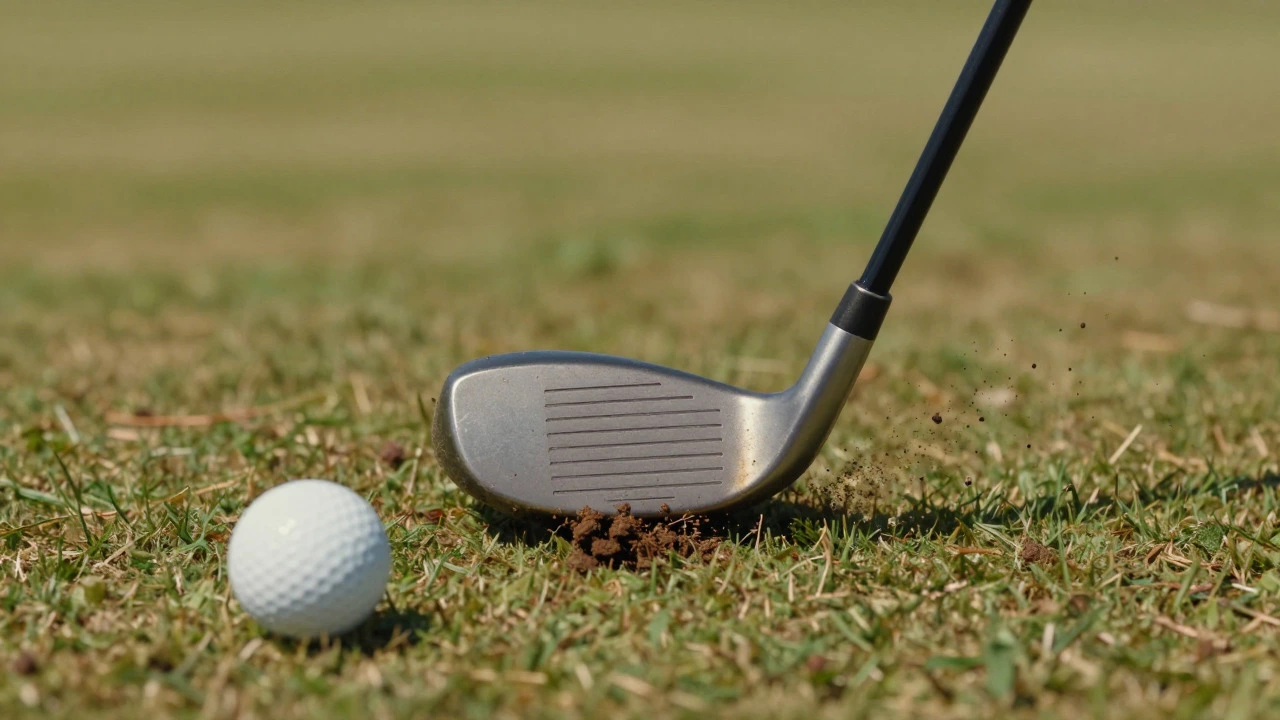
- Duff: Also known as a fat shot. This happens when you hit the ground before the ball. The clubhead digs into the turf, and the ball barely moves, if at all. It’s frustrating because it usually results in a short chip or a full recovery shot.
- Sky: The opposite of a duff. You hit the bottom half of the ball with an upward angle. The ball flies high, loses forward momentum, and drops softly. While sometimes useful for approach shots, an accidental sky from the fairway leaves you in trouble.
- Top: You strike the top half of the ball. This compresses the ball against the ground, resulting in a low, rolling shot with little height. It’s rare with irons but common with drivers if your swing plane is too flat.
Contact Quality: Thin, Fat, and Chunky
How the clubface meets the ball determines the quality of contact. Even if the direction is right, poor contact kills your score.
- Thin Shot: Hitting the upper portion of the ball. The result is a low, fast ball that skips along the ground. It’s difficult to control and often leads to overshooting the green.
- Fat Shot: Similar to a duff, but you still make contact with the ball after hitting the grass. The ball pops up with heavy backspin and no distance. It’s a sign your center of gravity dropped too much during the swing.
- Chunky: A colloquial term for a very fat shot where the club hits the ground significantly before the ball. The sound is distinct-a dull thud followed by a weak tap.
Specialized Mishits: Shanks, Whiffs, and Bogeys
Beyond standard directional and height errors, there are specific mishits that have unique names due to their severity or rarity.
- Shank: One of the most embarrassing shots in golf. It happens when you strike the ball with the hosel (the part connecting the shaft to the head). The ball shoots out at a sharp angle, usually 45 degrees to the right for right-handers. It’s often caused by standing too close to the ball or having a loose grip.
- Whiff: Swinging at the ball and missing it completely. No contact, no score penalty beyond the stroke count, but definitely a morale boost killer. Whiffs are common in the bunker or when trying to hit out of thick rough.
- Bogey: While not a shot type, a bogey is the scoring result of a bad shot sequence. It means one over par on a hole. A double bogey is two over, and so on. If you hit a shank into the water, you’re likely looking at a triple bogey.
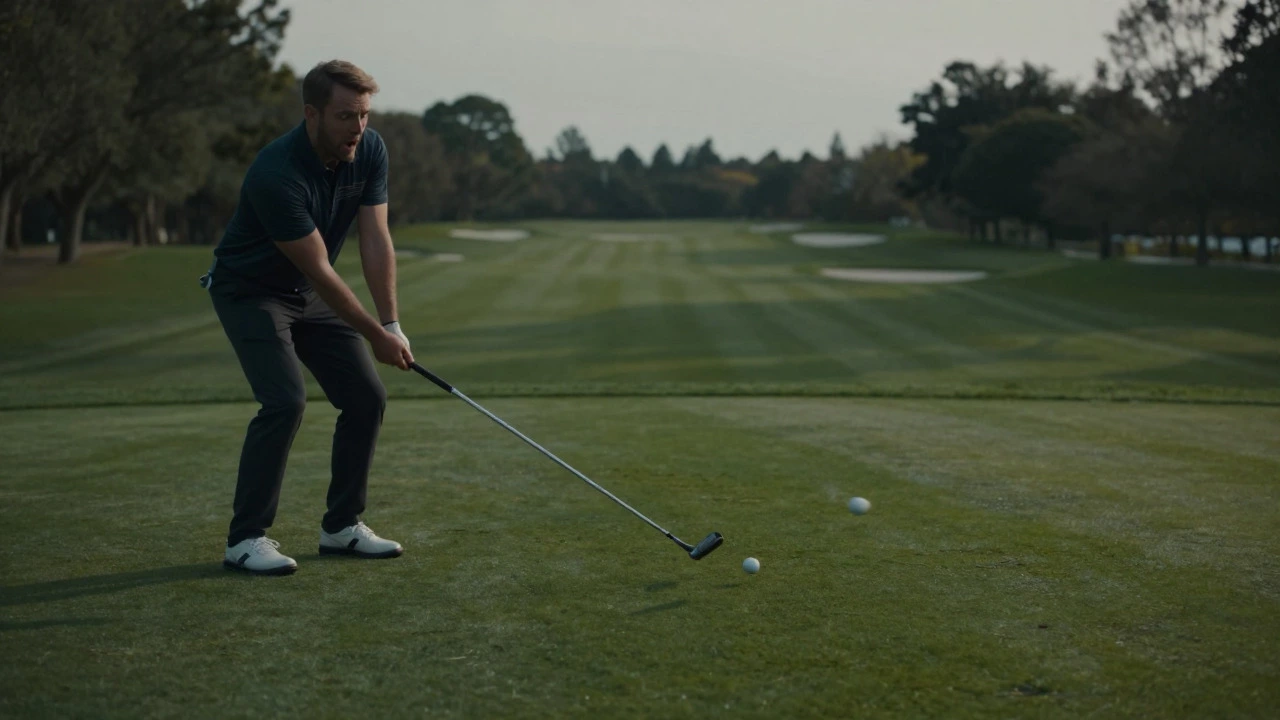
Quick Reference Table for Common Bad Shots
| Shot Name | Cause | Result | Severity |
|---|---|---|---|
| Slice | Open clubface | Curves right (RH) | Medium |
| Hook | Closed clubface | Curves left (RH) | Medium-High |
| Duff | Hitting ground first | Barely moves | High |
| Sky | Hitting lower half | High, short flight | Medium |
| Shank | Hosel contact | Sharp lateral deflection | Very High |
| Whiff | No contact | Ball stays put | Variable |
How to Fix Your Most Common Bad Shot
Knowing the name of your problem is the first step. But how do you fix it? Here are simple drills for the three most common errors.
- For Slices: Try the "towel drill." Place a towel under your lead foot. If you slide your body too far across the ball, you’ll hit the towel. This teaches you to rotate through impact rather than sliding.
- For Duffs: Focus on keeping your weight on your front foot. At address, place 60% of your weight on your lead leg. During the swing, maintain that pressure. If you feel your weight shift back, you’re likely to dig.
- For Shanks: Check your stance width. Stand slightly wider and ensure the ball is positioned just inside your lead heel. Many shanks happen because the player stands too close, causing the hosel to get involved.
Remember, consistency matters more than perfection. A controlled fade is better than a wild drive that finds the fairway by luck. Use these terms to track your progress. Next time you hit a bad shot, name it out loud. It turns frustration into data, and data into improvement.
What is the difference between a slice and a push?
A slice curves sharply to the right (for right-handers), while a push goes straight to the right without curving. A slice involves side spin; a push is a directional error with minimal curve.
Is a shank considered a valid shot?
Yes, any shot where the ball is moved counts as a stroke, even if it’s a shank. However, if you accidentally move the ball before your swing (e.g., by tripping), you incur a penalty stroke.
What does "chunking" mean in golf?
Chunking refers to hitting the ground well before the ball, resulting in a short, low trajectory. It’s similar to a duff but implies significant loss of distance and control.
Can a hook be good?
A controlled hook, often called a draw, is excellent for adding distance and shaping shots around hazards. An uncontrolled hook is bad, but the shape itself is a valuable tool.
Why do I keep topping my driver?
Topping the driver usually happens when your swing plane is too flat or you stand too close to the ball. Ensure the ball is positioned slightly forward and try to maintain a slight arch in your lower back throughout the swing.