Rugby Fixtures June 28, 2026
What Does 23 Mean in Rugby? The Story Behind the Jersey Number
Rugby Squad Number Decoder
Type a number between 1 and 23 to see the player's role.
Discover why every number matters in rugby strategy.
Squad Structure Overview
15
Starting Players
8
Substitutes
23
Total Match Day Squad
You watch a match on Sunday afternoon. A player wearing the number 23 steps onto the pitch. He isn't one of the starting fifteen. Yet, he has a name, a position, and a specific role. If you are new to the sport, this might confuse you. Why does the squad go up to 23 if only 15 players play at once? Is it just extra padding for the bench? Not quite.
The number 23 is not random. It represents the final piece of the puzzle in a standard rugby union team. To understand what 23 means, we have to look at how the game is structured, who wears that shirt, and why modern coaches treat that player with such importance. This isn't just about counting heads; it's about strategy, endurance, and the evolution of the sport.
The Basic Math: 15 Starters, 8 Subs
Rugby union is played with 15 players from each side on the field. That is the core rule. But a match lasts 80 minutes. It is physically brutal. Players tackle, sprint, and collide constantly. You cannot expect the same 15 men to maintain peak intensity for the full duration without burning out or getting injured.
This is where the substitutes come in. The laws of the game allow teams to carry eight additional players on their bench. These are your replacements. When you add the 15 starters to the 8 substitutes, you get 23. Simple arithmetic, but crucial for the flow of the game.
The first seven substitutes (numbers 16 through 22) usually replace specific positions. For example, number 16 is often a replacement hooker for number 2. Number 17 replaces a loosehead prop for number 1. This pattern continues down the line. Each number from 16 to 22 has a 'primary' counterpart they are likely to swap with.
So, who is left? Number 23. Since the direct positional swaps are taken by 16-22, number 23 becomes the 'free agent' of the bench. He is the generalist. He can step in anywhere there is a shortage, a tactical need, or an injury crisis.
Who Wears the Number 23 Shirt?
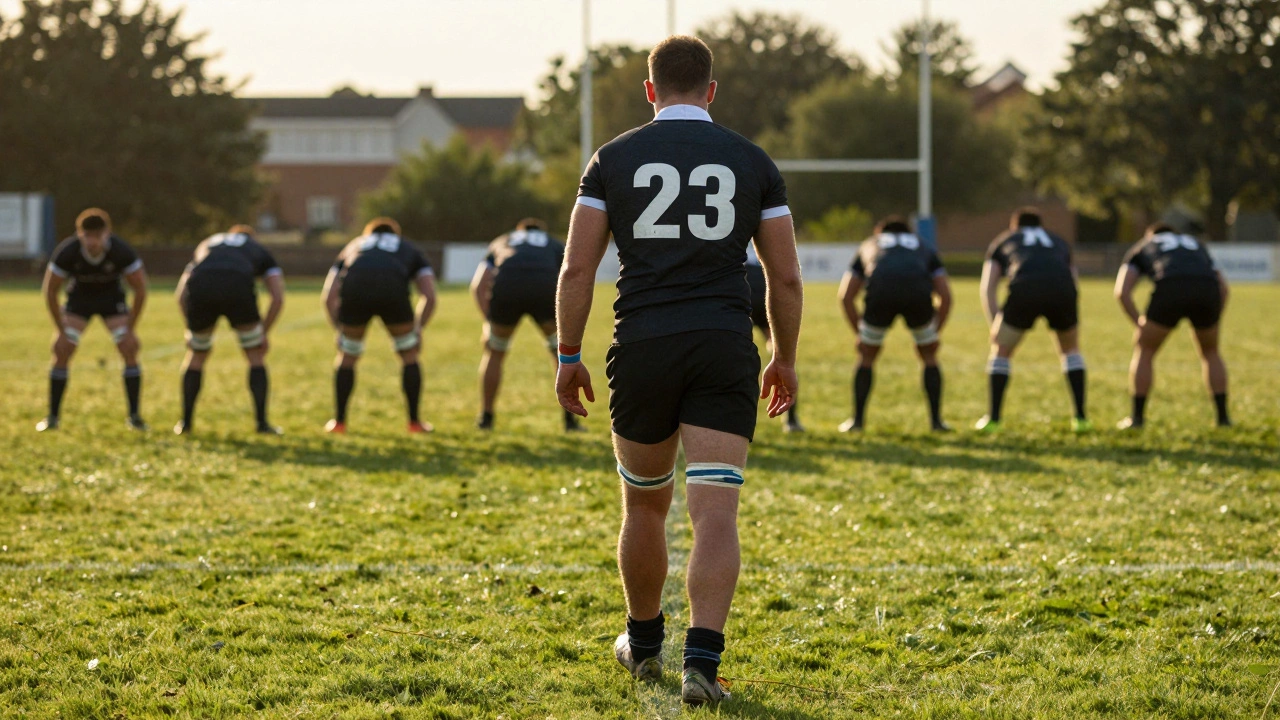
If you ask a veteran coach who should wear number 23, they will likely say: "The best athlete we have left." Unlike the other subs who specialize in scrummaging or lineout jumping, number 23 needs versatility. Most commonly, you will see one of two types of players in this jersey:
- The Back-Up Fly-Half: A player who can handle the ball, kick for territory, and organize the attack. This is perhaps the most common choice. If the main playmaker gets tired or injured, you need someone who understands the game plan. A fly-half substitute keeps the structure intact.
- The Super Sub Wing or Centre: A fast, explosive runner brought on late in the game to score tries. Coaches love bringing on fresh legs in the backline during the last 10 minutes. If the opposition is tiring, a fresh winger can exploit gaps. Number 23 is often that spark plug.
Sometimes, number 23 might be a backup flanker or a utility back who can play multiple positions. The key attribute is adaptability. You don't put a specialist lock forward in the number 23 spot unless you are expecting a massive physical battle and need extra height and weight off the bench. Even then, it's rare because locks are usually covered by numbers 19 or 20.
Tactical Importance: The Fresh Legs Factor
In modern rugby, fitness is king. The difference between winning and losing often comes down to the final ten minutes. This is when legs get heavy, tackles get missed, and discipline slips. Enter number 23.
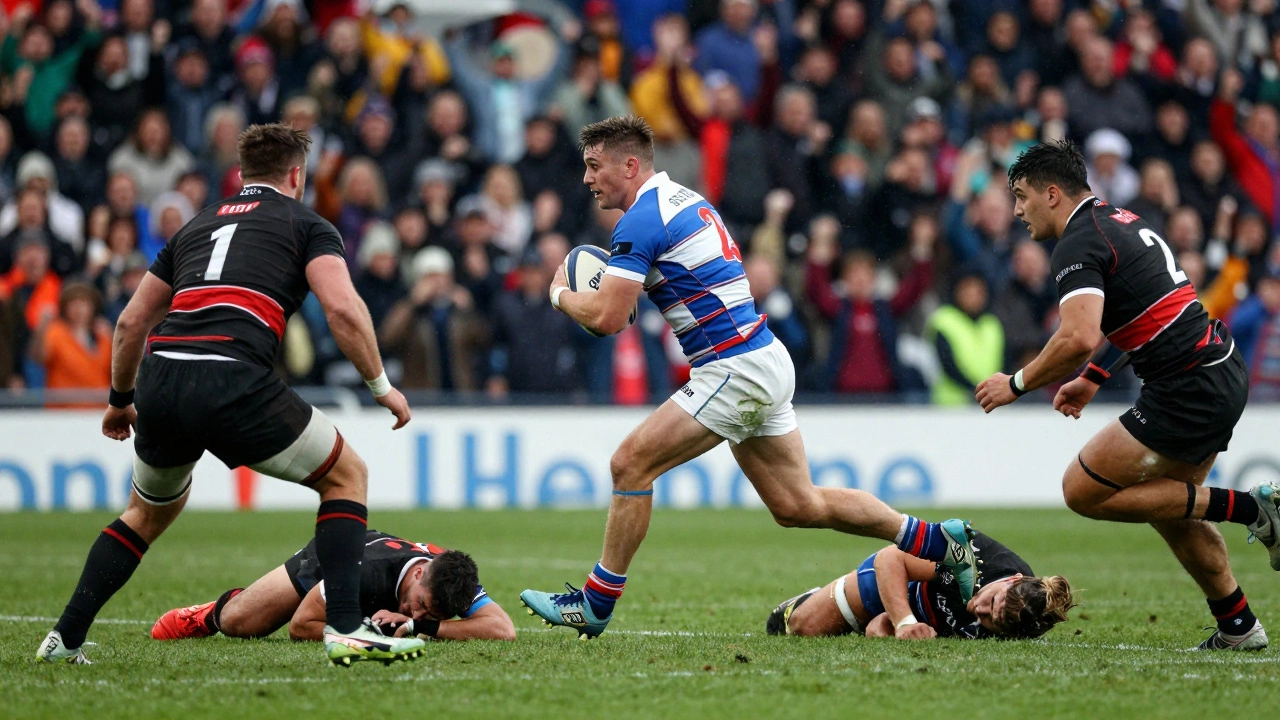
Coaches use number 23 as a tactical weapon. Imagine your team is trailing by three points with five minutes left. Your current backs are exhausted. They aren't making sharp passes. You pull off your tired centre and bring on number 23-a fresh, hungry runner. Suddenly, your pace increases. You create space. You score a try. That is the power of the 23rd man.
We saw this in many high-stakes matches. Think of the Six Nations or the World Cup. Teams that manage their substitutions well often win close games. Number 23 is part of that management. He is not just insurance; he is an offensive option.
Also, consider injuries. Rugby is a contact sport. Injuries happen. If a key player goes down with a hamstring tear, number 23 must be ready to step up immediately. He needs to know the playbook. He needs to fit into the defensive line. There is no time for confusion. This mental readiness is just as important as physical speed.
Why Not Number 24 or 25?
You might wonder, why stop at 23? Why not have more subs? The answer lies in tradition and logistics. Rugby union standardized the squad size decades ago. Having too many substitutes would dilute the competitive balance. It would turn the game into a chess match where teams rotate players like clockwork, reducing the endurance aspect.
Furthermore, stadium benches have limited space. Broadcast graphics are designed for 23 names. The laws of the game explicitly state the maximum squad size for a match day is 23. Any player beyond that number is simply not eligible to play unless there is a catastrophic injury situation involving multiple players, which is extremely rare.
In some lower-level leagues or youth rugby, you might see variations. Schools might have larger squads due to the number of students. But in professional rugby-whether it's the Premiership in England, the Top 14 in France, or Super Rugby-the limit is strict. 23 is the ceiling.
The Evolution of the Bench Role
Twenty years ago, number 23 was often the rookie. The young player waiting for his chance. He sat on the bench, watched, and hoped for an injury. Today, the role is much more strategic. Clubs sign specific players to fill the number 23 slot. They pay salaries for that versatility.
For example, a club might sign a experienced fly-half who is past his prime as a starter but still has great game sense. He becomes number 23. Or they might sign a lightning-fast winger who lacks the defensive consistency to start every week but can change a game in 15 minutes. These are calculated decisions.
This shift reflects how data analytics has changed rugby. Coaches track meters run, tackles made, and collision counts. They know exactly when their starters are dropping off. Number 23 is deployed based on these metrics. It's science meeting sport.
| Jersey Number | Primary Position | Typical Substitute Role |
|---|---|---|
| 1-8 | d>Forwards (Props, Hooker, Locks, Flankers, Number 8)Direct replacements for specific forward positions | |
| 9-15 | Backs (Scrum-half, Fly-half, Centres, Wings, Fullback) | Direct replacements for specific backline positions |
| 16-22 | Substitutes | Specialized backups (e.g., #16 for Hooker, #19 for Lock) |
| 23 | Substitute | Utility player: Often backup Fly-half or explosive Backline runner |

Real-World Examples
Let's look at a practical scenario. England plays France. The weather is rainy. The pitch is slick. England's fly-half, Owen Farrell (hypothetically), is struggling to gain territory with his kicking. His legs are heavy. The coach looks to the bench. Number 23 is a kicker specialist. He brings him on. The change in kicking game shifts momentum. England scores a penalty and wins.
Or consider a different case. New Zealand is playing South Africa. The All Blacks' wings are getting tackled hard. They are slowing down. With 10 minutes left, the coach brings on number 23, a young, fast winger from the academy. He makes a break, draws defenders, and sets up a try. The crowd erupts. Number 23 made the difference.
These stories show that number 23 is not passive. He is active. He is ready. He is part of the team's identity.
Conclusion: More Than Just a Number
So, what does 23 mean in rugby? It means depth. It means strategy. It means having a plan B, C, and D. It represents the collective effort of the entire squad, not just the starting fifteen. When you see number 23 run onto the field, remember: he is the final card in the coach's hand. Play it right, and you win the game.
Can number 23 be a forward?
Yes, but it is less common. Usually, numbers 16-22 cover the forward replacements. However, if a team expects a heavy physical contest or has injuries in the pack, a robust flanker or lock might wear 23 to provide extra power off the bench.
Is number 23 always a substitute?
In standard rugby union matches, yes. Number 23 is one of the eight permitted substitutes. He starts on the bench and enters the game only if called upon by the coach or if a starter is injured.
Why is the squad size limited to 23?
The limit of 23 ensures that players maintain high levels of fitness and endurance. It prevents teams from rotating players too frequently, preserving the traditional physical demands of the sport. It also aligns with logistical constraints like bench space and broadcast requirements.
Who typically wears number 23 in top teams?
Top teams often assign number 23 to a versatile back, such as a backup fly-half or a fast wing. These players offer tactical flexibility and can change the game's dynamic with fresh energy and skill in the closing stages.
Does number 23 have any special rules?
No, number 23 follows the same substitution rules as numbers 16-22. He can enter the game for any reason (tactical or injury) but cannot return to the bench once he has played, except in specific injury-related exceptions allowed by the laws of the game.