Long Distance Cycling: What You Need to Know to Ride Farther and Stronger
When you think about long distance cycling, a form of endurance sport where riders cover 100 miles or more in a single ride, often on roads or mixed terrain. Also known as endurance cycling, it’s not just about having strong legs—it’s about pacing, nutrition, and mental toughness. Whether you’re training for a century ride, a Gran Fondo, or just trying to go further than you ever have before, this isn’t a sprint. It’s a slow burn that rewards consistency more than intensity.
Long distance cycling requires more than just a bike. It demands cycling training, a structured approach to building aerobic capacity, muscular endurance, and recovery habits. Most riders who finish 100+ mile rides don’t do it by riding hard every day. They do it by riding smart—mixing long slow rides with shorter, higher-intensity sessions, and letting their bodies recover. And it’s not just about miles. bike fitness, the overall physical condition needed to sustain long rides without breakdown. includes core strength, hip mobility, and even breathing control. Skip these and you’ll hit the wall—hard.
Then there’s the gear. You don’t need the most expensive bike, but you do need one that fits. A poorly fitted saddle can ruin a 50-mile ride. Poorly tuned brakes? They’ll make descents scary. And nutrition? That’s where most amateurs fail. Eating a banana at mile 30 won’t cut it. You need steady fuel—gels, electrolytes, real food—planned like a schedule. Hydration isn’t optional. Neither is sleep. The people who finish long rides aren’t the strongest. They’re the ones who didn’t quit.
What You’ll Find in This Collection
Below, you’ll find real advice from riders who’ve been there. No fluff. No hype. Just what works: how to build stamina without burning out, how to pick gear that lasts, how to recover after a 120-mile ride, and why your training plan might be holding you back. Some posts talk about using Google Maps for routes. Others break down how to ride when you’re tired, how to avoid common injuries, and why your body needs more than just protein after a long ride. These aren’t theoretical tips. They’re lessons learned on the road, in the rain, and after hitting the wall.
If you’ve ever wondered if you can ride farther than you think—this is your starting point. The answers aren’t in fancy gadgets. They’re in consistency, preparation, and knowing when to push—and when to rest.
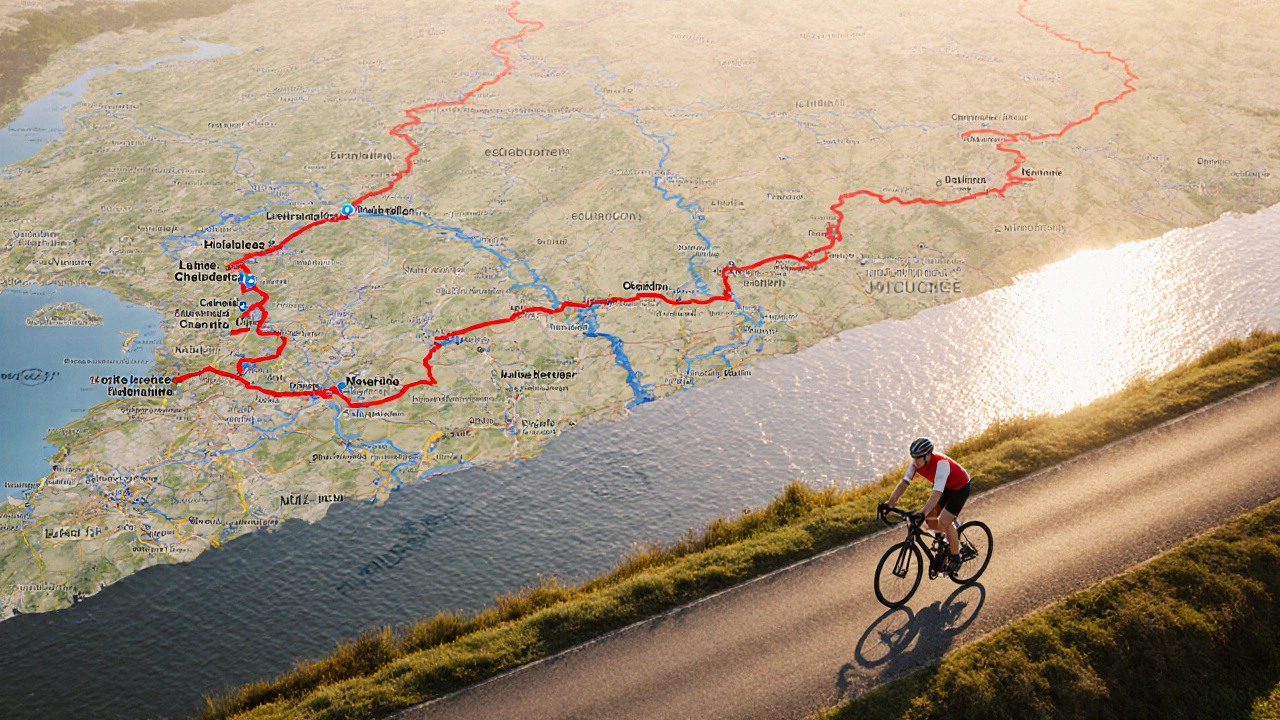
7 Major Cycling Routes Every Rider Should Know
Discover the 7 major cycling routes, from EuroVelo River Route to Hadrian's Wall, with distances, difficulty, highlights and planning tips for every rider.