Boxing Matches October 12, 2026
How Many Rounds Are in a Boxing Match? A Complete Guide
Boxing Match Duration Calculator
Configure Fight Parameters
Ready to Start
00:00
Remaining Time in Current Phase
- of -
Total Estimated Duration: --
Includes fight time + rest periods between rounds.
Includes fight time + rest periods between rounds.
You’re watching a fight on TV. The bell rings, the fighters touch gloves, and the crowd roars. Then, ten minutes later, another bell rings. And another. If you’ve ever sat there wondering, "Wait, how many times is this going to happen?" you aren’t alone. The number of rounds in a boxing match isn’t just a random number pulled from a hat; it depends entirely on who is fighting, why they are fighting, and which ruleset applies.
The short answer? It varies wildly. A local club fight might last three rounds. An Olympic final lasts three. But that massive heavyweight title bout you see on pay-per-view? That’s twelve rounds of pure endurance. Understanding the difference between these formats helps you appreciate the strategy, the pacing, and the sheer physical toll involved. Let’s break down exactly how long a boxing match lasts and why the numbers change.
Professional vs. Amateur: The Big Divide
The first thing you need to know is that professional boxing and amateur boxing (now often called Olympic-style or national federation boxing) operate under different rulebooks. This is the biggest factor determining match length.
Professional Boxing is a combat sport where two opponents fight for money, titles, and rankings over a predetermined number of rounds, typically ranging from four to twelve. Unlike amateurs, pros get paid by the round, so promoters want longer fights to sell more tickets and PPV buys. However, fighter safety limits cap most bouts at twelve rounds.
In contrast, Amateur Boxing is an Olympic-style format focused on speed, technique, and scoring points rather than damage, usually consisting of three rounds. Since the 2016 Olympics, men compete in three-minute rounds, while women also compete in three-minute rounds (previously two). The goal here isn't to knock someone out; it's to land clean punches before the timer stops.
Standard Professional Round Counts
If you are looking at professional cards, you’ll see a variety of round counts. Here is what each number actually means for the fighters and the fans.
- 4-Round Fights: These are "prospect" bouts. Fighters with less than five wins are usually kept to four rounds. It’s a learning experience. They don’t have the stamina or experience for longer distances yet.
- 6-Round Fights: The bread and butter of mid-level boxing. These are common for contenders trying to climb the rankings. Six rounds require significant cardio but allow fighters to make mistakes without immediate disaster.
- 8-Round Fights: Often used for main events on smaller cards or as tune-ups for major champions. Eight rounds test true durability. If a fighter can survive eight high-intensity rounds, they are ready for title shots.
- 10-Round Fights: Historically, ten rounds was the standard for non-title world-class bouts. Today, they are rare unless a specific contract demands it or it’s an older style exhibition. Most modern sanctioning bodies prefer 12 for titles.
- 12-Round Fights: The gold standard for championship matches. Whether it’s for a WBC, WBA, IBF, or WBO belt, if the stakes are high enough, the fight goes the distance-twelve rounds.
| Round Count | Typical Context | Fighter Experience Level | Total Fight Time (3-min rounds) |
|---|---|---|---|
| 4 Rounds | Debut / Novice | 0-5 Wins | 12 Minutes |
| 6 Rounds | Regional Contender | 5-15 Wins | 18 Minutes |
| 8 Rounds | Main Event / Tune-up | 15+ Wins | 24 Minutes |
| 12 Rounds | Title Fight | Elite / Champion | 36 Minutes |
Why Do Championship Fights Last 12 Rounds?
You might ask, "If 12 rounds is so long, why not keep everyone at 6?" The answer lies in history and safety evolution. In the early 20th century, fights could go 15 rounds. Jack Dempsey and Gene Tunney fought the famous "Long Count" fight over 15 rounds. It was brutal. Fighters were dying from exhaustion and brain trauma because they couldn’t recover between such long bouts.
In 1987, the Association of Boxing Commissions changed the limit to 12 rounds for all title fights. Why 12? Data showed that the risk of serious injury increased significantly after the tenth round. Twelve rounds provide enough time for a strategic battle, allowing judges to score based on consistent performance rather than a single lucky punch, while still keeping the athletes within a survivable physical window.
What About Women’s Boxing?
For years, women’s professional boxing was capped at ten rounds. Promoters argued that women didn’t need the extra distance. This was largely outdated thinking. As women’s boxing grew in popularity-with stars like Katie Taylor and Claressa Shields dominating headlines-the rules caught up.
Today, major sanctioning bodies allow women to fight for world titles over 12 rounds, just like men. However, some regional commissions may still default to 10 rounds for lower-tier women’s titles. Always check the specific commission rules for the event you are watching. The trend is clearly moving toward parity, recognizing that elite female athletes possess the same endurance capabilities as their male counterparts.
Exhibitions and Special Cases
Not every fight follows the standard rules. Exhibitions are fun, low-stakes affairs designed for entertainment rather than ranking. Think of Mike Tyson’s recent comeback against Jake Paul. These are often agreed upon privately between fighters and promoters.
- Exhibition Rules: Can be any length. Tyson vs. Paul was eight rounds. Some are two rounds. There is no official winner recorded on the pro record book, though a knockout can still occur.
- Catchweight Bouts: Sometimes fighters miss weight. The fight proceeds, but it’s no longer for a title. The round count remains the same (usually 12), but the stakes drop.
- Interim Titles: If a champion is injured, an interim champion fights for 12 rounds. When the real champ returns, they fight for unification. Still 12 rounds.

The Role of Rest Periods
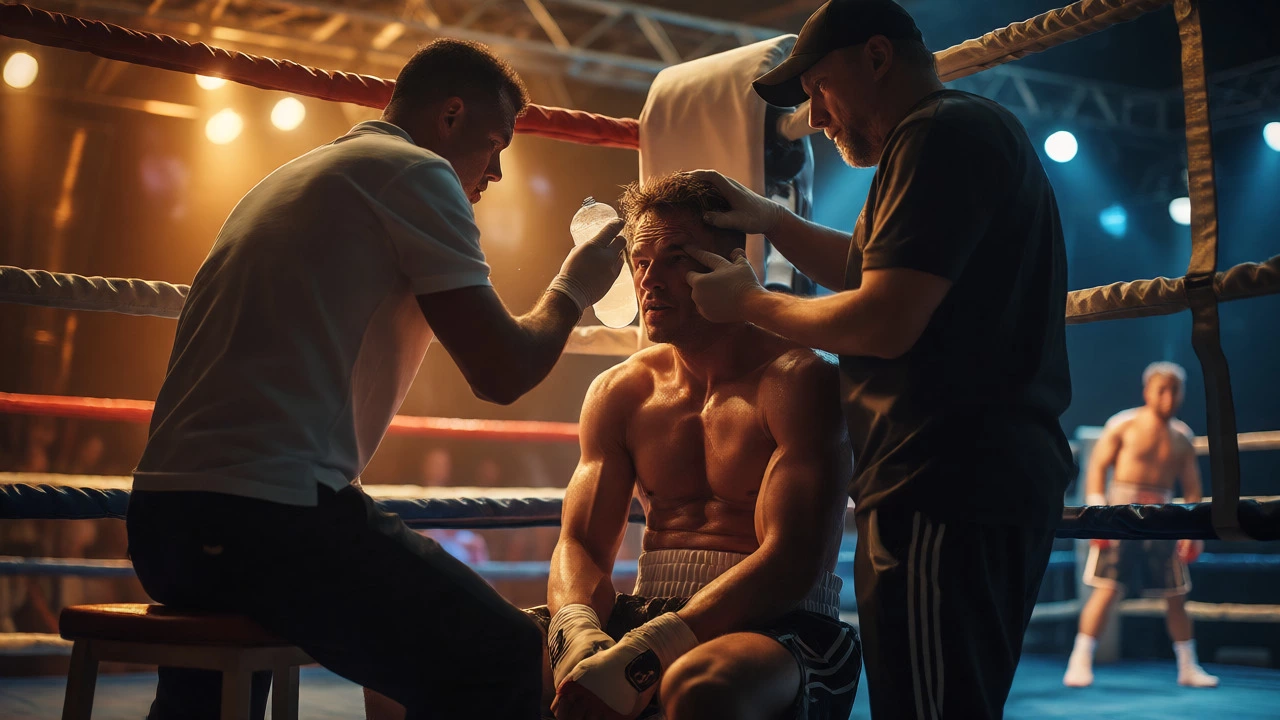
A common misconception is that a 12-round fight is 36 minutes of constant action. It’s not. Between every round, there is a one-minute rest period. So, a full 12-round fight takes 47 minutes of actual clock time (36 minutes of fighting + 11 minutes of rest).
This minute is crucial. It’s when corners work on cuts, give hydration advice, and reset tactics. For a novice watching, this seems like dead time. For the fighter, it’s survival. You can’t sustain maximum output for 36 minutes straight. The rhythm of three minutes on, one minute off is the heartbeat of boxing.
How Judges Score the Rounds
Since we’re talking about rounds, you need to understand how they are judged. Each round is scored independently. The judge looks for effective aggression, ring generalship, defense, and clean punching. At the end of the fight, the scores are added up.
If a fight goes the full 12 rounds, the decision rests on those individual round scores. A fighter can lose the first six rounds and win the next six, resulting in a draw or a split decision. This is why pacing matters. Winning the early rounds builds a cushion. Losing them forces you to dominate the late rounds, which is physically harder as fatigue sets in.
Frequently Asked Questions
How many rounds is a standard professional boxing match?
Most professional boxing matches range from 4 to 12 rounds. Lower-ranked fighters typically compete in 4 or 6 rounds, while championship title fights are scheduled for 12 rounds.
Are all boxing matches 12 rounds?
No. Only major title fights and high-profile bouts are scheduled for 12 rounds. Many professional fights are scheduled for 4, 6, or 8 rounds depending on the fighters' experience levels and the significance of the bout.
How long does a 12-round boxing fight take?
A 12-round fight consists of 36 minutes of active fighting (12 rounds x 3 minutes). With eleven one-minute rest periods between rounds, the total duration is approximately 47 minutes, excluding pre-fight ceremonies and post-fight decisions.
Do amateur boxers fight 12 rounds?
No. Amateur boxing matches are typically 3 rounds long. Men and women both compete in three-minute rounds in Olympic-style competition. The focus is on point-scoring rather than endurance over a long distance.
Can a boxing match end before the scheduled rounds?
Yes. A match can end early via knockout (KO), technical knockout (TKO), disqualification, or if the referee stops the fight due to a cut or lack of competitiveness. The scheduled rounds represent the maximum possible duration, not the guaranteed length.
Why did boxing switch from 15 to 12 rounds?
The switch occurred in 1987 primarily for fighter safety. Medical data indicated that the risk of severe injury and death increased significantly after the tenth round. Reducing the limit to 12 rounds helped protect boxers from extreme fatigue-related injuries.