Boxing Matches September 10, 2026
How Many Punches Are in a Boxing Match? Real Numbers & Stats
Boxing Punch Volume & Efficiency Calculator
Enter fight details to estimate official CompuBox-style statistics. Note that judges score based on impact, not just volume.
Estimated Fight Statistics
Total Thrown
0
Total Landed
0
Punches/Min
0
Your Effectiveness Score
0
Effectiveness combines volume and accuracy. Judges reward clean, hard shots over flurries.
Note: A knockout in round 4 with 200 punches is more impactful than a decision win with 1,000 low-impact jabs. Always normalize by rounds fought.
Hypothetical Opponent Comparison
Comparing your estimated output against a typical opponent of the same weight class.
You
0
Opponent
0
Your Landed Punches
Opponent Landed Punches
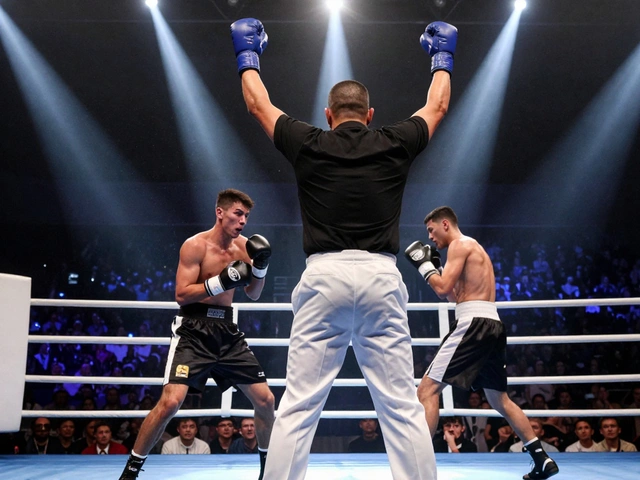
You watch a boxing match and see two guys throwing hands for thirty minutes. It looks like thousands of punches, right? But when you check the official stats afterward, the numbers often shock people. A typical heavyweight fight might show only 400 to 600 total punches thrown. That’s barely ten punches a minute. Why is there such a huge gap between what your eyes tell you and what the scorecards say? The answer lies in how we define a "punch," the difference between volume and power, and the strict rules that govern the sport.
The Short Answer: What’s the Average?
There isn’t one single number because it depends entirely on the weight class and the style of the fighters. However, data from major promotions like Top Rank and Matchroom gives us solid baselines. In professional boxing, a lightweight bout usually sees around 800 to 1,200 punches thrown over twelve rounds. Heavyweight fights are slower, often dropping to 500 to 700 punches. Amateur boxing, with its faster pace and shorter duration, can actually have higher punch rates per minute but fewer total strikes due to time limits.
| Weight Class | Total Punches (12 Rounds) | Punches Per Minute | Landing Rate |
|---|---|---|---|
| Lightweight | 900 - 1,200 | 35 - 45 | 35% - 40% |
| Middleweight | 700 - 900 | 25 - 35 | 30% - 35% |
| Heavyweight | 500 - 700 | 15 - 25 | 25% - 30% |
Why Your Eyes Lie About Volume
If you’re watching live or even on TV, your brain fills in the gaps. You see movement, feints, and defensive shifts, and you interpret them as action. But a feint isn’t a punch. A blocked jab isn’t always counted if it doesn’t land cleanly. CompuBox, the official statistics provider for many major US broadcasts, has specific criteria. For a punch to count, it must be a deliberate strike aimed at the opponent. Glancing blows or hits during clinches often don’t register the same way a clean, extended punch does. This is why a fighter who looks busy might have lower stats than a lazy-looking counter-puncher who lands hard shots.
Amateur vs. Professional: Different Rules, Different Numbers
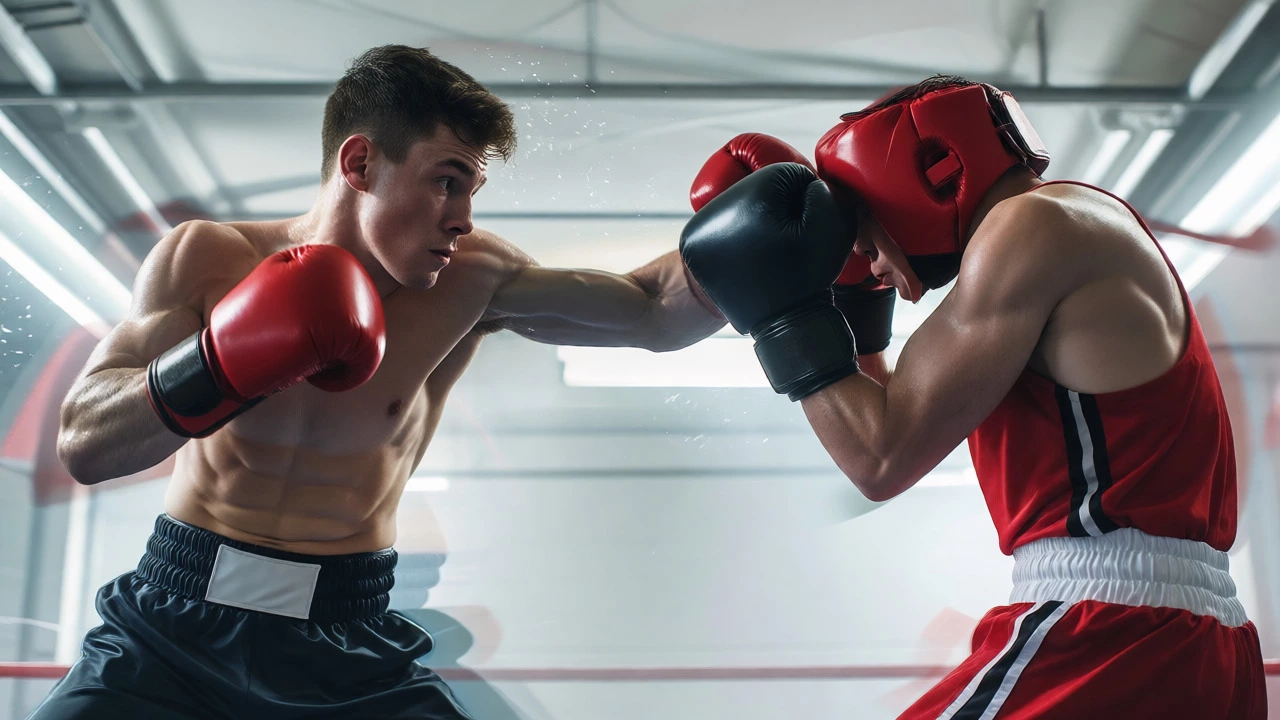
Amateur boxing, now often called Olympic-style boxing, operates differently. Fights are three rounds of three minutes each. Because points are awarded for clean contact rather than damage, fighters throw more jabs and less heavy combinations. You’ll see high punch counts-sometimes exceeding 100 punches per round-but the landing percentage is often lower because defenders are active. In pro boxing, especially in title fights, fighters are more cautious. They save energy for power shots. This changes the math completely. An amateur might throw 150 punches in a round; a pro heavyweight might throw 40.
The Role of Style: Volume Punchers vs. Power Punchers
Style dictates the count. Take Manny Pacquiao versus Deontay Wilder. Pacquiao is a volume puncher. He throws rapid-fire combinations, aiming to overwhelm his opponent with sheer quantity. His fights consistently break 1,000 punches thrown. Wilder, a classic power puncher, relies on timing and precision. He might throw only 300 punches in a fight but land the ones that matter. If you’re asking "how many punches," you also need to ask "what kind?" A fighter who throws 500 punches with a 40% landing rate is more effective than one who throws 1,000 with a 15% landing rate. Effectiveness beats volume every time in the judging criteria.
Do Judges Count Every Punch?
This is a common misconception. Judges do not use a clicker for every single hit. They score based on effective aggression, ring generalship, defense, and clean punching. While modern judges are trained to look for clear connections, they aren’t tallying marks like a scoreboard in basketball. A fighter can throw more punches and still lose the round if those punches are blocked, slip off, or lack impact. Conversely, a fighter who throws fewer punches but lands harder, cleaner shots will likely win the round. The "effective" part of "effective aggression" is key. A flurry of weak punches means nothing if the opponent walks through them without changing their stance.
How Technology Changed the Count
Before digital tracking, stats were rough estimates. Now, systems like CompuBox allow human analysts to tag every punch in real-time. This has standardized the numbers but also highlighted discrepancies. Sometimes, a punch is tagged as "thrown" but not "landed" because it grazed the glove. Other times, a heavy body shot might be missed if the camera angle was poor. Despite these flaws, the technology provides a consistent framework. It helps fans understand why a fight felt close even if one fighter had a higher punch count. It also exposes fighters who rely on flurries to steal rounds rather than winning them decisively.
What About Knockouts and Early Stops?
A knockout shortens the timeline drastically. If a fight ends in round four, the total punch count will be low, maybe 150 to 200. But the intensity per minute skyrockets. Fighters in a war leading up to a KO often throw their highest volume in the final moments before the stoppage. Comparing a 12-round decision to a 3rd-round TKO is apples to oranges. When analyzing stats, always normalize by rounds fought. A fighter averaging 50 punches per minute in a short fight is just as busy as one averaging 50 in a long fight. Context matters more than raw totals.
Key Takeaways for Fans and Fighters
- Volume varies by weight: Lightweights throw significantly more than heavyweights.
- Quality over quantity: Landing rate is a better predictor of success than total punches thrown.
- Rules matter: Amateur boxing favors speed and frequency; pro boxing favors power and efficiency.
- Judges aren’t calculators: They assess impact and control, not just hit counters.
Frequently Asked Questions
Is there a limit to how many punches you can throw in a round?
No, there is no legal limit. A fighter could theoretically throw 100 punches in a minute if they had the stamina. However, fatigue sets in quickly. Most fighters naturally cap out around 60-80 punches per minute due to physical exertion and recovery needs.
Do blocked punches count in the official stats?
In most modern statistical tracking systems like CompuBox, a punch that is fully blocked or parried is often not counted as a "landed" punch, though it may be counted as "thrown." Clean punches that make contact with the head or body are the primary focus for scoring and stats.
Why do some fighters have high punch counts but lose?
High volume doesn't equal effectiveness. If a fighter throws 100 punches but only 10 land, while their opponent throws 50 and lands 25, the second fighter likely won the round. Judges reward clean, impactful punches that affect the opponent's position or condition, not just activity.
How many punches does Mike Tyson typically throw?
Mike Tyson was known for explosive bursts rather than constant volume. In his prime, he might throw fewer punches overall compared to a pure volume boxer, but his landing percentage and power were elite. His peak periods would see intense clusters of 10-15 punches in seconds, followed by strategic pauses.
Does amateur boxing have more punches than pro boxing?
Per minute, yes. Amateur boxers tend to throw faster, lighter jabs to score points quickly. Pro boxers, especially in heavier divisions, move slower and conserve energy for power shots, resulting in fewer punches per minute but often greater impact per punch.