Golf November 22, 2026
Golf Slang Explained: Essential Terms for the Course
Golf Slang Quiz
Think you know the lingo? Answer these questions to see if you're ready for the clubhouse conversation.
Quiz Complete!
0/5
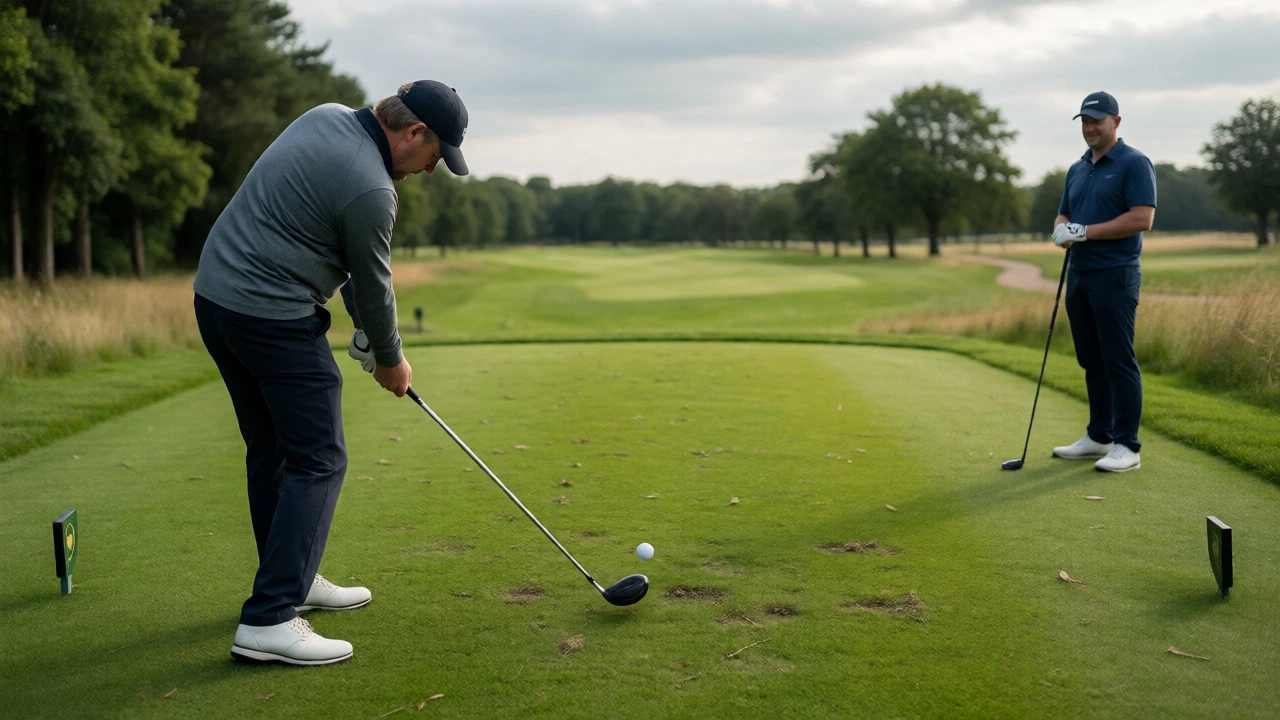
You step onto the first tee, nerves slightly frayed, and your playing partner leans in. "Don't worry," he says, "just hit a clean drive and we'll take a mulligan if it goes left." You nod politely, but inside, you're panicking. Did he just offer you a free shot? Is "mulligan" a type of club? Or is he mocking your swing?
If you've ever felt like golfers speak a secret code, you aren't alone. Golf slang isn't just about sounding cool; it's a shorthand language developed over centuries to describe specific shots, rules, and social norms on the course. Knowing these terms helps you keep up with banter, understand etiquette, and actually enjoy the game rather than feeling like an outsider looking in.
The Core Scoring Vocabulary
Most golf slang revolves around scoring. The sport uses a unique system where lower numbers are better, which leads to some colorful terminology when things go right or wrong. Understanding these basics is the fastest way to sound like you belong.
Let's start with the good stuff. A Birdie is a score of one stroke under par on a hole. If the hole is a Par 4 and you finish in 3 strokes, that's a birdie. It’s a solid achievement, worthy of a fist pump. Go further down the scale, and you get an Eagle, which is two strokes under par. Eagles are rare enough that players often buy their partners a drink after making one.
On the flip side, mistakes have names too. A Bogey is one stroke over par. Everyone makes bogeys; it’s part of the game. But if you make two over par, that’s a Double Bogey. Three over? That’s a Triple Bogey. As you can see, the prefix tells you exactly how bad things got. There’s also the term Snowman, which refers to a score of 8 because the number looks like a snowman. It’s a humorous way to cope with a disastrous hole.
| Term | Strokes Relative to Par | Context |
|---|---|---|
| Albatross (Double Eagle) | -3 | Extremely rare, usually on Par 5s |
| Eagle | -2 | A major highlight for amateurs |
| Birdie | -1 | Good play, common goal for pros |
| Par | 0 | The expected number of strokes |
| Bogey | +1 | Standard amateur mistake |
| Double Bogey | +2 | Trouble, often requires recovery |
Shots and Swing Descriptions
Golfers love describing what the ball did, especially when it didn't do what they wanted. This vocabulary is crucial for understanding why a shot failed or succeeded.
Ever heard someone say they "hit a slice"? A Slice is a shot that curves severely from left to right for a right-handed player. It’s the most common fault among beginners. The opposite is a Hook, which curves sharply from right to left. Both are considered misses unless intentionally played by advanced golfers.
Then there’s the Shank. This is the nightmare shot where the ball hits the hosel (the neck of the club) instead of the face, flying off at a 90-degree angle to the target line. It’s embarrassing and hard to fix. If you hear someone whisper "shanked it," feel pity-they’re likely having a rough day.
Conversely, a Punch is a low-trajectory shot used to keep the ball under the wind. Pros use this near coastal courses. A Flop is the opposite: a high, soft shot that lands gently on the green. These terms help you visualize the physics of the game without needing a physics degree.
Course Layout and Location Slang
The physical environment of a golf course has its own lexicon. Knowing where you are helps you communicate with your caddie or playing partners.
The area between the tee box and the green is called the Fairway. It’s short grass designed for easy hitting. Surrounding the fairway is the Rough, longer grass that penalizes errant shots. If you’re in the deepest cut of the rough, you might be in the "deep stuff," where finding the ball is half the battle.
Water hazards are simply called Water or sometimes "ponds," even if they’re large lakes. Sand traps are officially "bunkers," but everyone calls them bunkers. If you hit into a bunker, you’ll hear advice to "open your stance" and "hit the sand behind the ball."
One term you’ll hear constantly is Green. This is the ultra-short grass surrounding the hole. The edge of the green is the Fringe or Apron. Hitting from the fringe is tricky because the grass is slightly longer, affecting your putt. If you miss the green entirely and land on the closely mown area beyond the fringe, you’re "off the green," and putting becomes much harder.

Etiquette and Social Norms
Golf is as much about manners as mechanics. Certain slang terms enforce social contracts between players.
The most famous term here is Mulligan. A mulligan is an informal do-over, allowing a player to replay a poor shot without penalty. Usually, you only get one per round, often on the first tee. It’s not official in tournament play, but it’s standard in casual games. Never ask for a mulligan unless your group agrees beforehand-it’s rude to assume.
Another critical concept is Ready Golf. Traditionally, the player furthest from the hole hits first. Ready Golf means whoever is ready hits next, speeding up play. If you’re slow, someone might jokingly tell you to "play ready." It’s a polite nudge to pick up the pace.
When a ball lands dangerously close to another player, you yell "Fore!" This warns others to duck. It’s derived from "before" or "foremost," alerting people ahead. Ignoring a fore warning can lead to injury, so respect the shout.
Advanced and Regional Variations
As you progress, you’ll encounter niche terms. A Lip-out happens when your putt hits the edge of the cup and spins out. It’s heartbreaking. Conversely, a Dipper is a lucky bounce that saves your shot.
In the UK, particularly Scotland, you might hear Links referring to a specific type of course built on sandy soil near the sea, characterized by undulating terrain and natural obstacles. Not all golf courses are links courses; many inland courses are "parkland." Playing links golf requires different strategies due to wind and firm ground.
There’s also Nassau, a popular betting format. It splits the round into three bets: front nine, back nine, and overall total. It keeps the competition alive even if you lose the first half badly.

Why Learning Slang Matters
You might think, "I just want to hit the ball." But golf is social. Misunderstanding a term can lead to awkward pauses or rule disputes. For instance, if someone says they’re "taking a drop," they’re legally relocating their ball after an unplayable lie, not literally dropping it from their hand. If you don’t know this, you might think they’re cheating.
Moreover, knowing slang helps you read the course. When a caddie says, "It’s downhill left-to-right," they’re giving you break information for your putt. Using terms like "break," "grain," and "slope" shows you’re engaged and serious about improving.
Finally, it builds confidence. Walking onto a course and confidently saying, "I’m going to punch this under the trees," feels better than hesitating and hoping no one notices your uncertainty. Language shapes perception, both yours and others’.
Frequently Asked Questions
What is a mulligan in golf?
A mulligan is an informal agreement among players to allow a do-over of a poor shot, typically the first tee shot, without adding a penalty stroke to the scorecard. It is not recognized in official tournament rules but is common in casual recreational play.
Why do golfers say "fore"?
Golfers shout "fore" to warn other players nearby that a ball may be heading toward them. It serves as a safety alert, prompting people to duck or cover their heads to avoid being struck by the ball.
What does "scratch golfer" mean?
A scratch golfer is a player with a handicap of zero. This means they consistently shoot par or better on any course, representing a high level of skill compared to average amateurs who might have handicaps ranging from 10 to 30.
Is a shank worse than a slice?
Generally, yes. A slice curves moderately and can still travel forward, whereas a shank strikes the club's hosel, causing the ball to fly wildly sideways at a 90-degree angle. Shanks are more difficult to recover from and often indicate a fundamental setup issue.
What is the difference between a fairway and the rough?
The fairway is the well-maintained, short-grass pathway leading to the green, designed for optimal ball contact. The rough is the longer, unmowed grass bordering the fairway, intended to penalize inaccurate shots by reducing distance and control.