Running Shoes April 13, 2026
Can You Run in Sneakers? The Truth About Fashion Shoes vs. Running Shoes
Running Footwear Suitability Checker
Pro Tip:
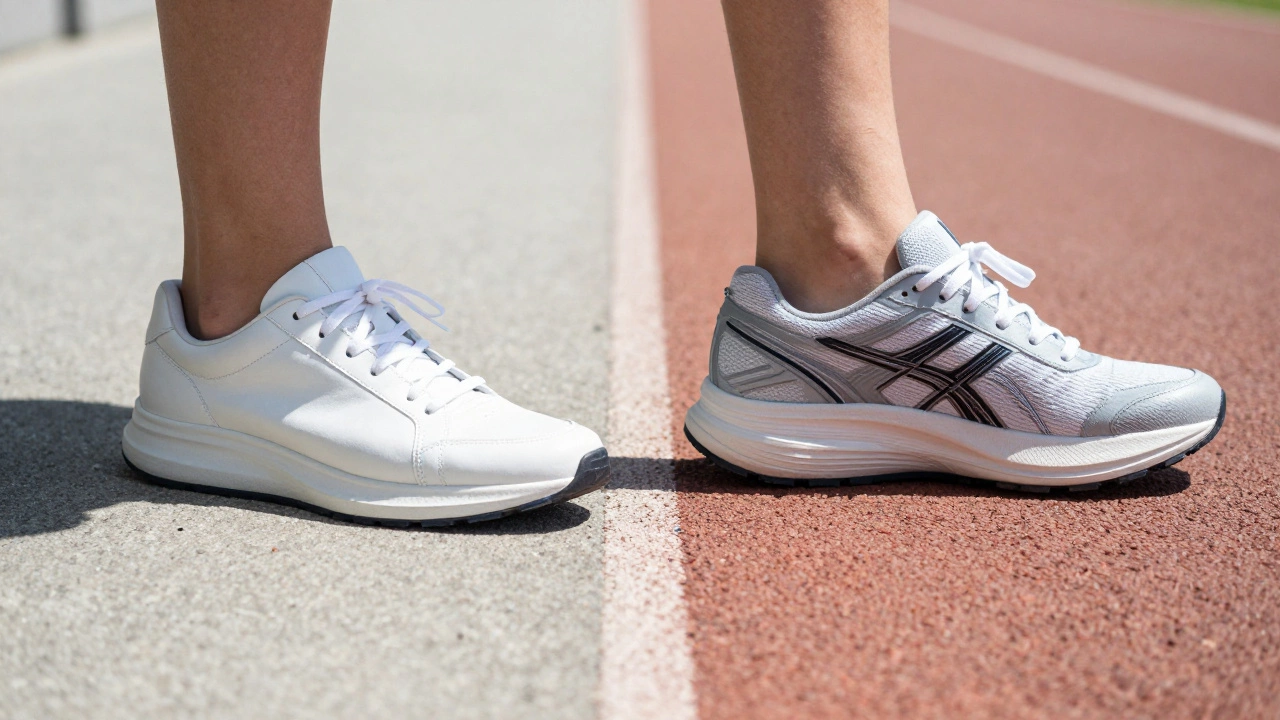
You've got a pair of stylish sneakers, they look great with your jeans, and you've suddenly felt the urge to hit the pavement for a quick 5K. But here is the cold truth: wearing fashion sneakers for a workout is a gamble with your joints. While you technically can run in them, whether you should depends entirely on how much you value your ankles and knees. Most casual sneakers aren't built to handle the repetitive, high-impact force of a running stride, which can reach up to three times your body weight per step.
Quick Guide: Sneakers vs. Running Shoes
- Fashion Sneakers: Prioritize aesthetics, flat soles, and basic durability. Great for walking, bad for impact.
- Running Shoes: Engineered for linear movement, shock absorption, and breathability.
- The Risk: Running in the wrong shoes often leads to blisters, shin splints, or worse, stress fractures.
- The Goal: Find a shoe that matches your arch type and running surface.
The Engineering Gap: Why Style Doesn't Equal Support
To understand the risk, we need to look at what's actually inside the shoe. A Running Shoe is a specialized piece of athletic equipment designed to mitigate the impact of repetitive forward motion. They aren't just shoes; they are tools for biomechanics. When you run, your foot goes through a complex cycle of landing, mid-stance, and push-off. Running shoes are built with a specific heel-to-toe drop-the height difference between the heel and the forefoot-to facilitate this movement.
Now, look at a standard fashion sneaker, like a classic Converse or a basic Vans. These often have flat soles. While a flat sole is great for stability while standing or skateboarding, it provides almost zero energy return. When you hit the ground in a flat sneaker, the shock doesn't get absorbed by the foam; it travels straight up into your Tibia and Patella. Over a few blocks, you might not notice. Over three miles, you're asking for an injury.
Understanding Your Gait: Pronation and Stability
Everyone's feet behave differently. This is where Gait Analysis comes into play. Your gait is essentially the way you move. Most runners fall into one of three categories: neutral, overpronation, or supination. Overpronation occurs when the foot rolls inward excessively during the gait cycle, which can put a massive strain on the arch and inner ankle.
Dedicated running shoes address this through different categories: Neutral, Stability, and Motion Control. A stability shoe, for example, uses a denser piece of foam called a medial post to prevent the foot from rolling too far inward. A fashion sneaker doesn't have this. It's a generic shape. If you overpronate in a flat sneaker, you're essentially forcing your ankle to bend in a way it shouldn't, thousands of times per run. This is a fast track to Plantar Fasciitis, that stabbing pain in your heel that makes the first steps of the morning feel like walking on glass.
| Feature | Fashion Sneakers | Performance Running Shoes | Trail Running Shoes |
|---|---|---|---|
| Cushioning | Minimal/Flat | High (EVA or PEBAX foam) | High & Firm |
| Upper Material | Leather/Canvas | Engineered Mesh | Ripstop/Waterproof |
| Traction | Smooth/Flat | Zoned Rubber Lugs | Deep Multi-directional Lugs |
| Arch Support | Generic | Customizable/Specific | Reinforced |
The Danger Zone: Common Injuries from Wrong Footwear
If you ignore the warning signs and keep running in non-performance sneakers, your body will eventually complain. The most common culprit is the Achilles Tendon. Because fashion sneakers lack flexibility in the forefoot and proper heel lift, they put excessive tension on the tendon. You might feel a tightness that eventually turns into Tendonitis.
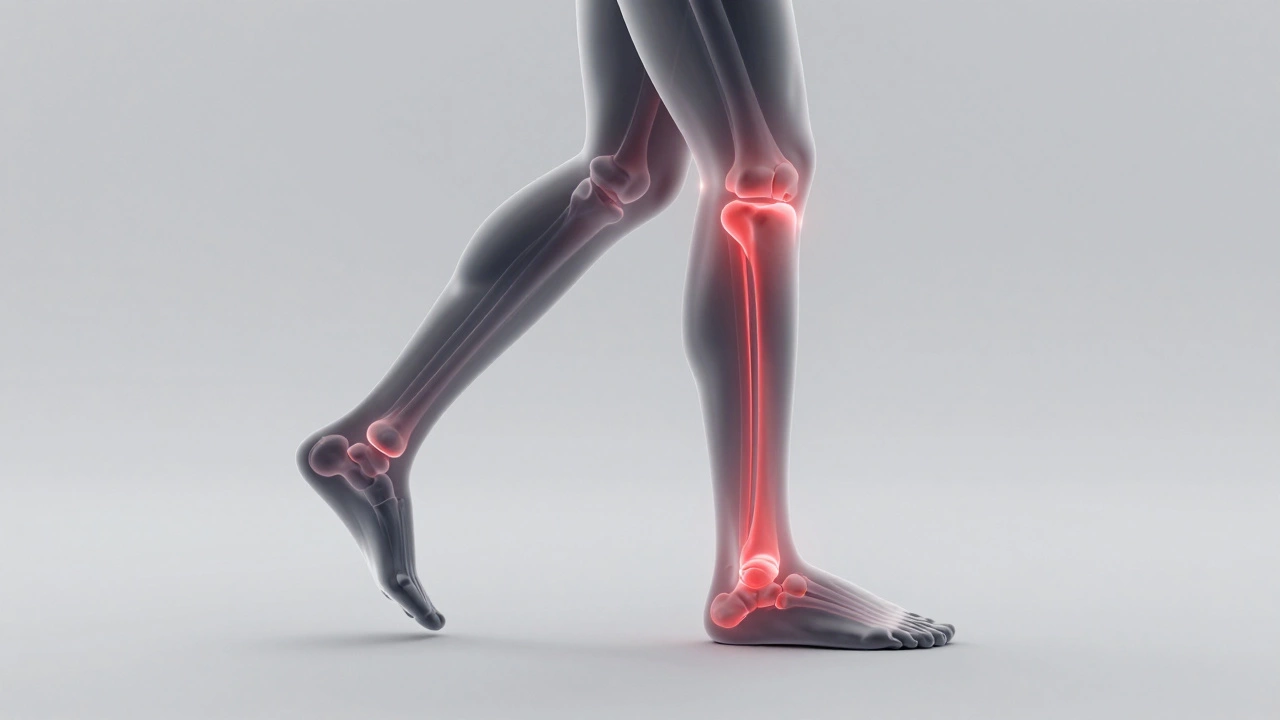
Then there are the shin splints. Shin splints are inflammation of the muscles, tendons, and bone tissues around your tibia. This usually happens when the muscles in your lower leg are overworked because the shoe isn't absorbing enough of the impact. If you've ever felt a dull ache along your shin bone after a run in flat shoes, that's your body telling you the equipment is failing. In severe cases, this progresses to a stress fracture, which can sideline you for months.
Different Terrains Require Different Tools
It's not just about "sneakers vs. runners." It's about where you are running. If you're on a treadmill, the surface is forgiving, so you might get away with a lifestyle sneaker for a short duration. But the moment you move to asphalt, the surface is unforgiving. Concrete has zero give, meaning the shoe must do 100% of the work.
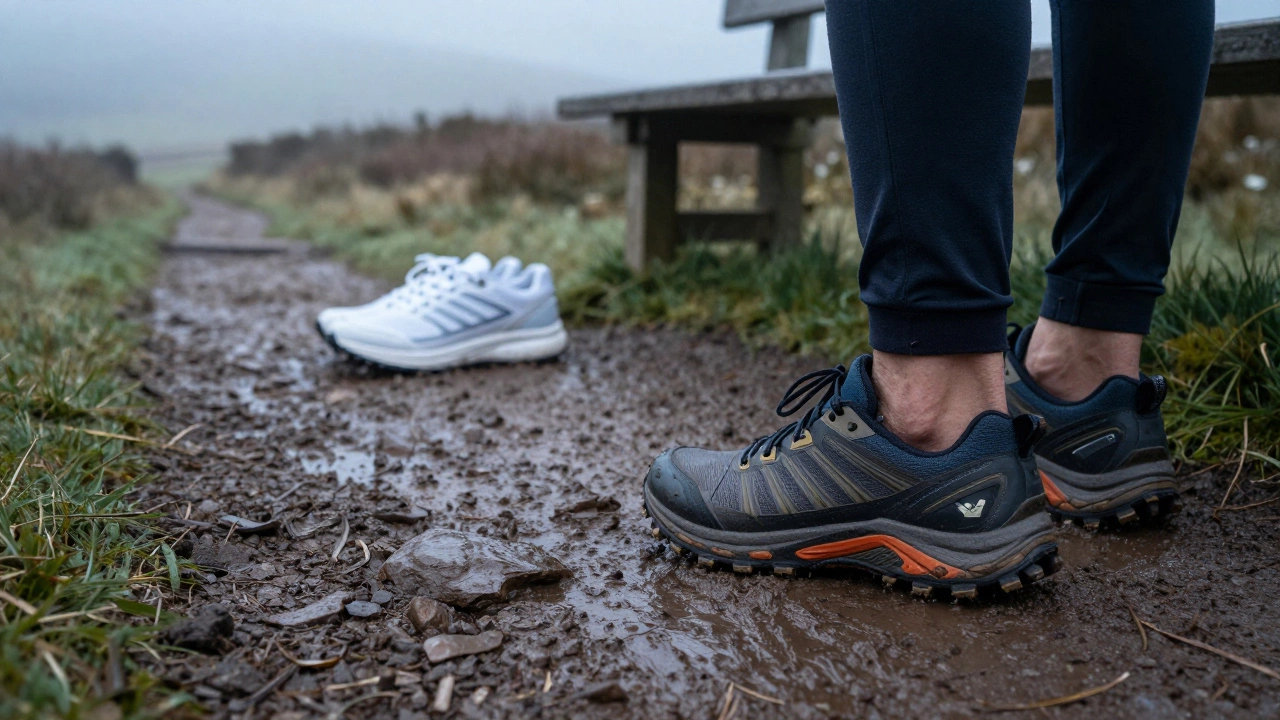
If you decide to head off-road, the stakes get even higher. Trail Running Shoes are built with reinforced toe caps to protect you from rocks and rugged outsoles for grip on mud or loose gravel. Trying to run a trail in a pair of white leather sneakers is a recipe for a twisted ankle. The lack of lateral stability means one wrong step on a pebble could result in a sprain.
How to Transition Without Breaking the Bank
You don't need to spend $200 on the latest carbon-plated super shoes unless you're trying to break a marathon record. For most of us, a reliable mid-range trainer is plenty. When shopping, look for the midsole material. Most modern shoes use EVA (Ethylene Vinyl Acetate), which is a lightweight, compressible foam that provides the necessary bounce and shock absorption.
A pro tip for choosing the right pair: shop in the afternoon. Your feet naturally swell throughout the day. If you buy running shoes first thing in the morning, you might find them too tight during an actual run when your feet have expanded. Also, leave about a thumb's width of space between your longest toe and the end of the shoe. Your feet slide forward when running; if the fit is too snug, you'll end up with bruised toenails-a rite of passage for some, but entirely avoidable.
The Verdict: Can You Do It?
If you're just jogging to the mailbox or doing a slow 10-minute warm-up, your sneakers probably won't kill you. But if you're starting a fitness journey, training for a race, or running more than twice a week, put the fashion shoes away. Investing in a pair of actual running shoes isn't just about performance; it's about health insurance for your joints. Your knees don't have a "reset" button, so treat them with respect.
Can I run in Converse or Vans?
It is not recommended. These are lifestyle sneakers with flat soles and minimal cushioning. Running in them increases the risk of shin splints, stress fractures, and joint pain because they don't absorb the shock of each stride.
How often should I replace my running shoes?
Generally, every 300 to 500 miles. Even if the outside looks clean, the internal foam (the midsole) loses its ability to absorb shock over time, which can lead to injuries.
What is the difference between a walking shoe and a running shoe?
Walking shoes are designed for a heel-to-toe roll and are often more flexible. Running shoes are designed for a higher impact and usually have more cushioning in the heel and forefoot to handle the force of flight and landing.
Do I really need an expensive pair of shoes to start running?
No, but you do need a performance shoe. You don't need top-of-the-line carbon fiber plates, but a basic, entry-level running shoe from a reputable brand is far safer than using casual sneakers.
What happens if I run in the wrong shoes?
Short term, you'll get blisters and sore muscles. Long term, you risk chronic issues like plantar fasciitis, Achilles tendonitis, and joint degradation in the knees and hips due to poor shock absorption.
Next Steps for Your Foot Health
If you're unsure what you need, start by doing a "wet foot test" at home. Wet your sole and step on a piece of cardboard. A full footprint suggests flat feet (overpronation), while a thin line connecting the heel and toe suggests high arches (supination). Use this info when you go to a store to ask for specific support. If you're already feeling pain in your shins or arches, stop running immediately and see a physical therapist before you buy new gear; a shoe can help, but it can't fix a tear.