Running Shoes December 7, 2025
Is It Bad to Wear Running Shoes a Half Size Too Big?
Running Shoe Fit Calculator
Check if your shoes fit properly using the thumb's width rule (10-12mm space between toe and shoe end).
Note: Shoe sizing varies by brand. This tool uses standard US men's sizing as a guide. For best fit, get professionally measured.
Wearing running shoes a half size too big might seem harmless-after all, your toes don’t feel squished, right? But if you’re pounding pavement or trails regularly, that extra space can cause real problems. It’s not just about comfort. It’s about injury risk, performance, and long-term foot health.
Why Your Feet Need a Snug Fit
Your feet aren’t static. They spread, flatten, and roll with every step, especially during running. A properly fitted shoe supports that motion. When your shoe is half a size too big, your foot slides forward with each stride. That constant movement forces your toes to jam against the front of the shoe. Over time, this leads to black toenails, bruising, or even permanent nerve damage like Morton’s neuroma.Runners who wear oversized shoes often develop blisters on the ball of the foot or heel because the foot isn’t locked in place. The shoe doesn’t move with your foot-it moves around it. That friction adds up fast. One runner in Bristol told me she kept getting heel blisters after every long run. She switched from a size 9.5 to a 9, and they disappeared within two weeks.
The Science Behind Shoe Fit
Studies from the American Podiatric Medical Association show that 70% of runners wear shoes that are either too small or too large. The ideal fit leaves about a thumb’s width (around 10-12 mm) between your longest toe and the end of the shoe. That’s not a full half size. Most people think they need extra room for swelling, but that’s a myth.Feet do swell during runs-by about 5-10%. But that’s already accounted for in the design of running shoes. Brands like Nike, Brooks, and ASICS build in toe box space based on average foot expansion. Adding an extra half size doesn’t help. It overcorrects. You end up with a shoe that’s too loose in the midfoot and heel, which reduces stability and control.
What Happens When Your Foot Slides
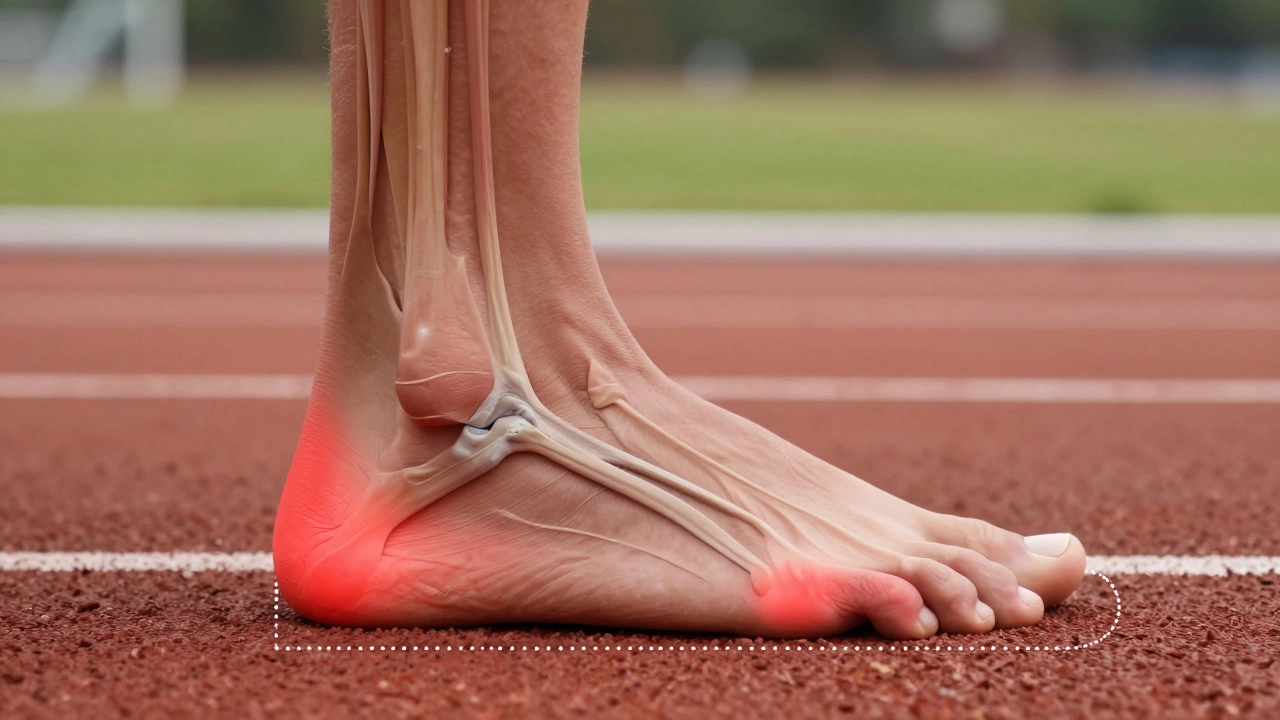
When your foot slides forward in a shoe that’s too big, your body compensates. Your toes grip harder to stabilize themselves. Your arch collapses slightly. Your ankle rolls inward more than it should. These tiny adjustments add up. Over hundreds of miles, they can lead to plantar fasciitis, Achilles tendonitis, or shin splints.Trail runners are especially at risk. Uneven terrain makes foot movement unpredictable. If your shoe doesn’t lock your foot in place, you’re more likely to twist an ankle or lose balance on a rock or root. A loose fit reduces your ability to feel the ground, which is critical for technical trails.
How to Tell If Your Shoes Are Too Big
Here’s a simple test: stand in your running shoes with the socks you usually run in. Press your big toe against the front of the shoe. Can you slip a finger behind your heel? If yes, the shoe is too big. If your heel lifts when you walk or run, that’s another sign.Try the “toe wiggle” test. If your toes can move side to side with space to spare, the shoe is too wide. If your toes are curled or cramped, it’s too small. The sweet spot? Toes have room to flex, but no extra space. Your heel stays locked. The midfoot feels snug but not tight.
When a Half Size Bigger Might Actually Help
There’s one exception: long-distance runners doing ultra-marathons or multi-day events. Some runners intentionally go up half a size because feet swell over many hours. But even then, they use lacing techniques to lock the heel down and prevent slippage. They don’t just buy a bigger shoe and call it a day.Another case: post-injury recovery. If you’ve had a stress fracture or surgery and your foot is still swollen, a slightly larger shoe can offer temporary relief. But this is a short-term fix, not a long-term solution.
What to Do Instead
Don’t guess your size. Get professionally fitted. Most running stores have trained staff who measure your foot length, width, and arch type. They’ll watch you walk or run on a treadmill to see how your foot moves inside the shoe.Measure your feet at the end of the day. That’s when they’re largest. Wear the same socks you run in. Stand on a piece of paper, trace your foot, then measure from heel to longest toe. Compare that to the brand’s sizing chart. Don’t assume your size is the same across brands. A size 9 in Asics might be a 9.5 in Hoka.
Use lacing techniques. If you have a high arch or narrow heel, try a “heel lock” lacing method. It pulls the shoe snug around your heel without tightening the whole shoe. It’s free, effective, and used by elite runners.
Signs You’re Wearing the Wrong Size
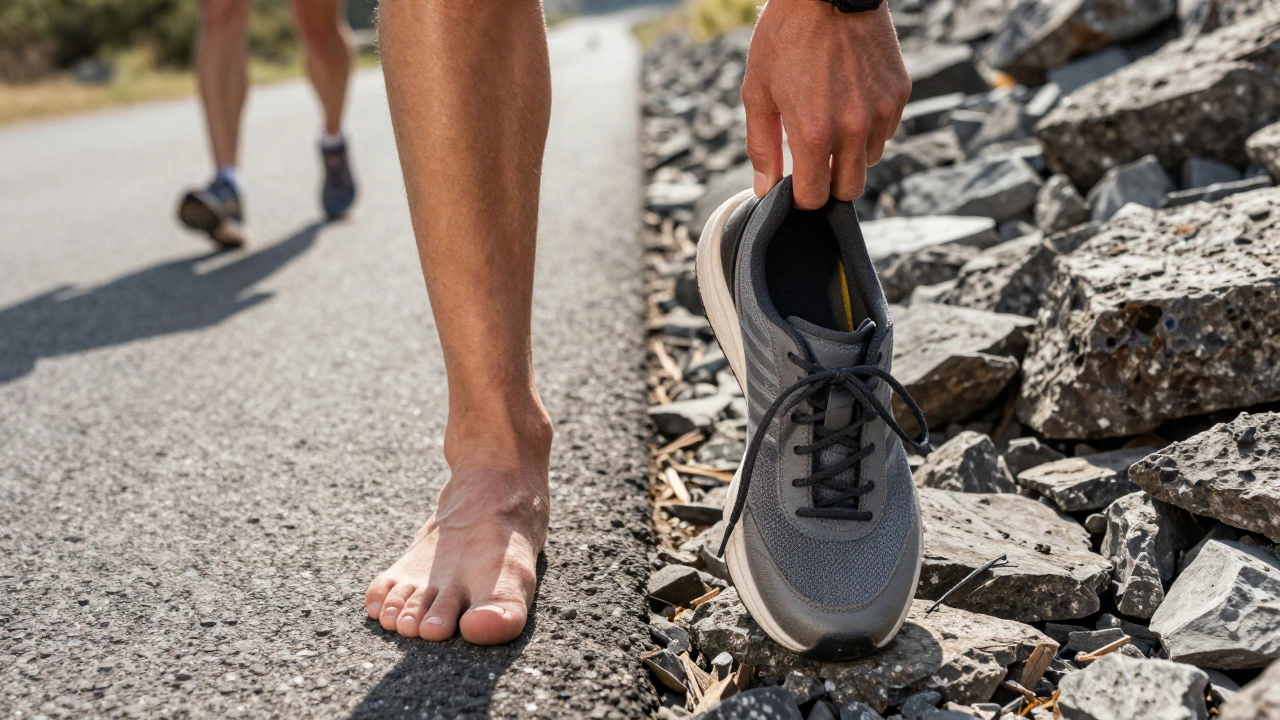
- Black or missing toenails after long runs
- Blistering on the heel or ball of the foot
- Feeling like your foot is sliding forward
- Shoes wear out faster on the front edge
- Chronic arch or heel pain that doesn’t improve with stretching
If you’re seeing any of these, your shoe size is likely the culprit. Don’t ignore them. Pain isn’t normal. It’s your body telling you something’s wrong.
What to Look for in a Running Shoe
A good running shoe should:- Have a snug heel with no slippage
- Allow your toes to wiggle slightly but not move side to side
- Feel stable when you push off
- Have a midsole that supports your arch type
- Match your foot width (many brands offer wide options)
Don’t chase cushioning or flashy colors. Focus on fit. The most expensive shoe won’t help if it doesn’t match your foot.
Final Verdict
Wearing running shoes a half size too big isn’t just a minor inconvenience-it’s a risk. It increases your chance of injury, reduces performance, and can cause lasting damage. Most runners think they need more room, but what they really need is the right fit.Get fitted. Try multiple brands. Test them on a short run before committing. Your feet will thank you after 100 miles-or 1,000.
Can wearing shoes a half size too big cause plantar fasciitis?
Yes. When your foot slides forward in an oversized shoe, your arch has to work harder to stabilize your stride. This extra strain can inflame the plantar fascia, especially if you already have tight calves or high arches. Many runners develop plantar fasciitis after switching to shoes that are too big without realizing the connection.
Should I size up if my feet swell during runs?
Feet swell by about 5-10% during runs, but that’s already built into shoe design. Instead of sizing up, try wearing a shoe with a slightly wider toe box or use a heel-lock lacing technique. Sizing up too much creates instability, which can lead to more problems than swelling.
Is it better to have shoes that are too big or too small?
Neither. Too small causes bruised toes, nerve damage, and black nails. Too big causes blisters, instability, and overuse injuries. The goal is a perfect fit: about a thumb’s width between your longest toe and the shoe’s end, with no heel slippage. Always prioritize fit over size.
Do running shoe sizes vary between brands?
Yes. A size 9 in Nike might be a 9.5 in Brooks or a 8.5 in Hoka. Always check the brand’s specific sizing chart. Never assume your size is the same across brands. The best way to know? Try them on and run in them.
Can I fix oversized shoes with insoles or thicker socks?
Thicker socks or insoles can help a little, but they don’t fix the core problem. They make the shoe feel tighter in the toe box but don’t secure the heel. You’ll still get slippage. The best fix is getting the right size. Insoles are better for arch support, not size correction.