Sports Equipment November 16, 2026
Athletics Starting Equipment: Blocks, Guns, and Sensors Explained
Reaction Time & False Start Simulator
Click "Start Sequence" to begin. Wait for the yellow light (the gun), then click anywhere in the dark area as fast as you can. Clicking before the light turns on is a False Start!
RUNNER
READY
Rule: Reaction times under 0.100s are automatically flagged as False Starts.
Result
0.000s
Wait for the signal...
You’ve seen the moment a thousand times. The stadium goes silent. Athletes crouch into their starting blocks, toes pressed against the pedals, fingers splayed on the track. Then-bang. They explode forward. But what exactly triggers that explosion? It’s not just a guy with a gun. Modern athletics relies on a sophisticated chain of specialized equipment designed to ensure fairness, accuracy, and safety.
If you’re wondering what gear actually starts a race, it’s more than meets the eye. From the mechanical tension in the blocks to the microsecond precision of electronic sensors, every piece plays a critical role. Let’s break down the kit that gets athletes moving.
The Foundation: Starting Blocks
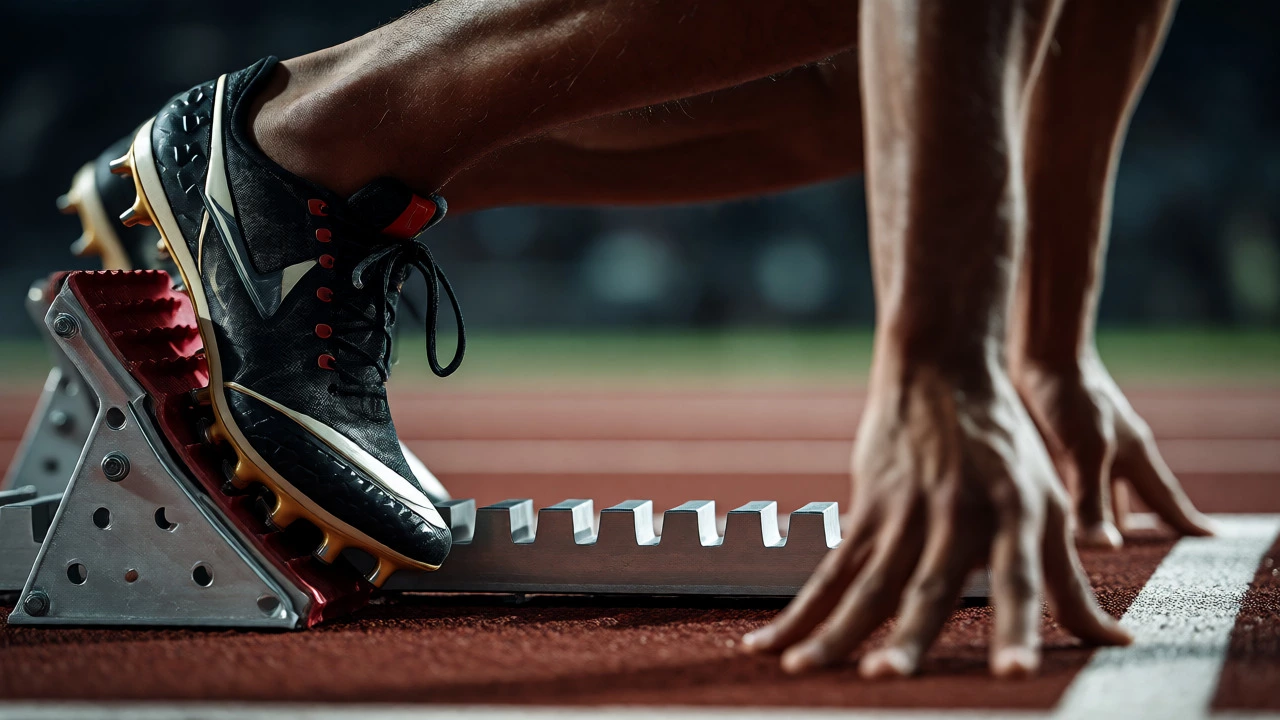
Starting blocks are the most visible piece of equipment. They aren’t just metal frames; they’re engineered for explosive power transfer. Elite athletes use adjustable aluminum or carbon-fiber blocks that bolt directly into the track surface. Why bolt them down? Because if your block slips when you push off, you lose momentum-and potentially the race.
There are two main types:
- Adjustable Blocks: These allow runners to customize the angle and distance between front and rear pedals. Sprinters like Usain Bolt famously tweaked these settings to optimize stride length and drive phase efficiency.
- Fixed-Position Blocks: Often used in training or lower-level competitions where customization isn’t required.
The key feature here is the pedal mechanism. Each pedal has a serrated surface to grip the spikes on the athlete’s shoes. When an athlete pushes back, the force transfers through the block into the ground, launching them forward. Poorly set up blocks can cause slipping, leading to slow starts or even injuries.
The Signal: Starter Pistol vs. Electronic Sound
For decades, the starter pistol was the gold standard. It fires blank cartridges, producing a loud bang and a puff of smoke. The sound travels at roughly 343 meters per second, meaning athletes in lanes further from the starter hear the shot slightly later than those closer. In short sprints (100m), this delay could mean milliseconds-a huge advantage in elite competition.
To fix this, World Athletics now mandates an electronic starting system for major events. Instead of relying solely on the acoustic sound of the pistol, speakers are placed behind each lane. These speakers emit the start signal simultaneously across all lanes. This ensures every athlete hears the command at the exact same millisecond, eliminating wind-direction biases.
| Feature | Traditional Starter Pistol | Electronic Starting System |
|---|---|---|
| Sound Source | Single point (starter's position) | Speakers behind each lane |
| Timing Accuracy | Affected by wind speed/direction | Synchronized via cable/wireless |
| Visual Cue | Smoke puff | Red light flash (optional) |
| Usage Level | Local meets, training | Olympics, World Championships |

Detecting False Starts: Pressure Sensors
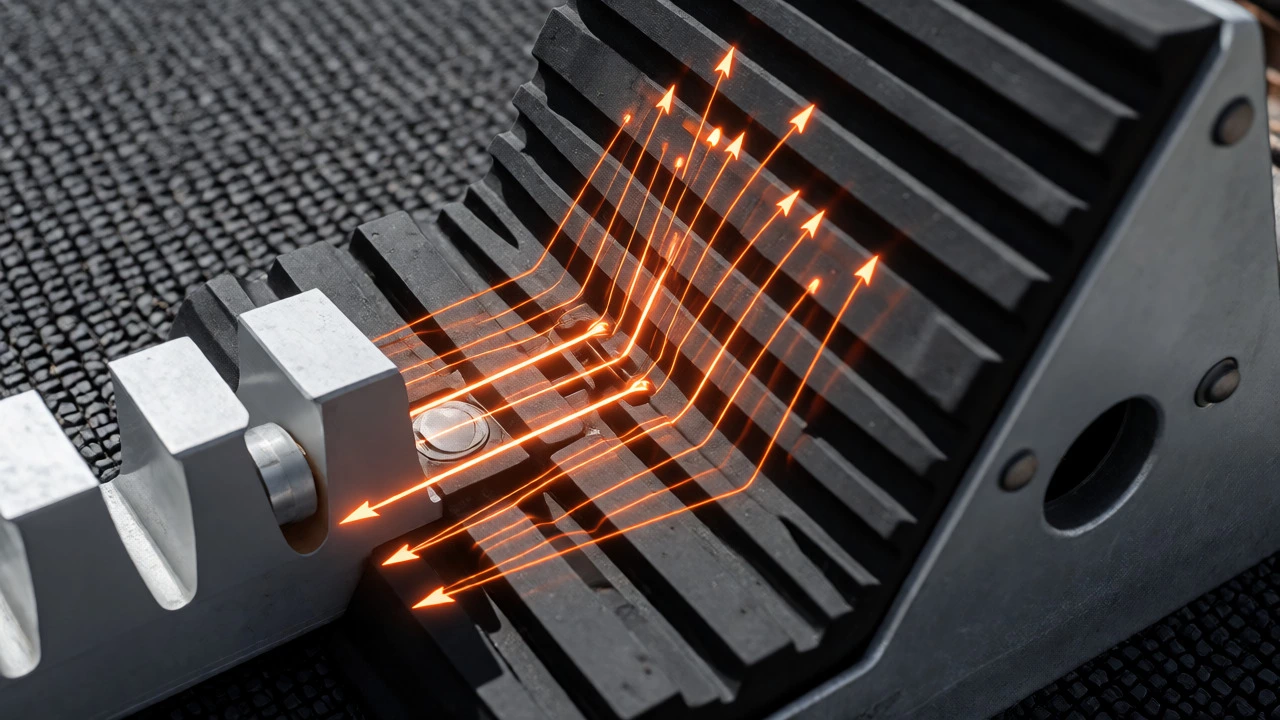
Ever wonder how officials know if someone moved too early? That’s the job of the false start detection system. These systems integrate pressure sensors into the rear pedal of each starting block. If an athlete applies more than 25 kilograms of force before the gun fires, the system registers a movement.
The process works like this:
- The athlete sets their feet in the blocks.
- The system calibrates to zero pressure.
- When the starter says "Set," athletes shift weight onto the front foot.
- If the rear sensor detects excessive pressure before the start signal, it sends a signal to the central computer.
- The system flags the lane as a potential false start.
This tech removes human error. Before sensors, starters had to visually spot tiny twitches, which was nearly impossible under pressure. Now, the data speaks for itself. However, the starter still makes the final call after reviewing the audio and visual feedback from the system.
The Brain: Electronic Timing Systems (ETS)
While not strictly part of the "start" mechanism, the Electronic Timing System is inseparable from the starting process. Companies like Omega and Tag Heuer provide these setups for global events. The ETS connects directly to the starting gun or electronic speaker.
Here’s why it matters:
- Automatic Trigger: The timer starts automatically when the gun fires or the electronic signal emits. No human reaction time delays the clock.
- Photo Finish Integration: Cameras at the finish line capture images at 100 frames per second, linking the start time to the finish time with nanosecond precision.
- Data Logging: Every reaction time is recorded. Coaches analyze this data to improve an athlete’s explosiveness off the blocks.
In fact, reaction time is now a scored metric. If an athlete reacts in less than 0.1 seconds, it’s considered a false start because humans physically cannot react faster than that neural limit. The ETS enforces this rule objectively.
Safety and Support Gear
Beyond the electronics, there’s physical safety equipment. The track surface itself must meet specific standards-usually synthetic rubber like Tartan or Mondotrack-to provide consistent friction. Wet tracks change everything, affecting both block stability and shoe traction.
Athletes also rely on specialized footwear. Sprint spikes have minimal cushioning but maximum stiffness to maximize energy return. The pins on the bottom dig into the track, working in tandem with the starting blocks to prevent slippage during the initial drive phase.
Common Pitfalls and Pro Tips
If you’re setting up for a local meet or training session, watch out for these issues:
- Loose Blocks: Always check that bolts are tight. A wobbly block wastes energy.
- Wind Interference: On windy days, traditional pistols can be unreliable. Use electronic speakers if available.
- Sensor Calibration: Ensure pressure sensors are reset before each race. Old data can trigger false alarms.
For beginners, don’t obsess over the latest carbon-fiber blocks. Start with sturdy aluminum ones. Focus on learning how to adjust the angles to match your leg length and strength. That skill translates to any equipment level.
Do all races use starting blocks?
No. Only sprints up to 400 meters require starting blocks. Middle-distance (800m+) and long-distance races use standing starts because athletes need to conserve energy and navigate congestion without tripping hazards.
Why do athletes wait so long after "Set"?
The starter waits until all athletes are still. If anyone moves, they get warned. Once everyone is motionless, the starter gives the signal. This pause prevents accidental false starts caused by settling into position.
Can wind affect the starting signal?
Yes, significantly. Wind carrying away from the starter can delay the sound reaching distant lanes. This is why top-tier competitions use wired electronic speakers behind each lane to ensure simultaneous sound delivery.
What happens if a starting block breaks mid-race?
If a block fails due to equipment defect, the race is usually restarted. Officials inspect the setup beforehand to minimize this risk. Athletes also test their blocks during warm-ups.
Are electronic starting systems mandatory everywhere?
Not yet. While required for Olympics and World Championships, many national and regional meets still use traditional pistols with manual timing or basic stopwatches due to cost constraints.