Running Shoes September 27, 2026
Are Vans Okay for Running? A Honest Review
Vans Running Suitability Calculator
Are you thinking about jogging in your Vans? Use this tool to assess the risk level based on your specific running scenario.
Your Run Profile
Short dashes are safer than long distances.
Hard surfaces amplify impact forces.
Heavier runners generate more impact force.
Assessment Result
Calculating...
Ready to Calculate
Enter your details and click 'Assess Risk' to see if Vans are suitable for your run.
Key Factors:
- • Distance over 3km increases injury risk significantly.
- • Asphalt creates high impact without cushioning.
- • Insoles can mitigate some shock absorption issues.
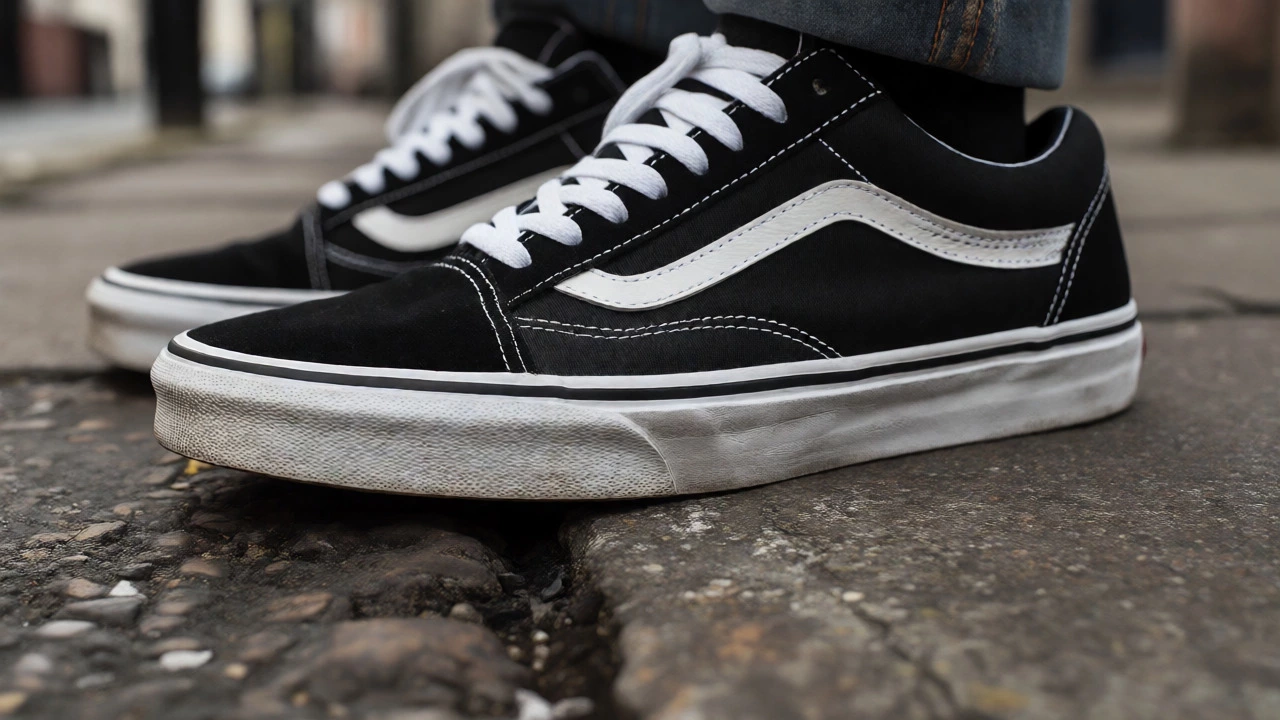
You’re standing in the street, looking at your beat-up pair of Vans classic skate sneakers with a vulcanized rubber sole and canvas upper. They look cool. They feel familiar. And you’re thinking, "I don’t want to buy another pair of specialized running shoes just for this one morning jog. Can I just run in these?" It’s a question every casual runner or student has asked at least once. The short answer is: technically, yes, you can physically move your legs fast enough in them. But should you? That depends entirely on how far you plan to go and what your body can tolerate.
Here’s the reality: Vans are not designed for running. They are built for board sports and casual wear. Using them for running is like trying to drive a Formula 1 car over a gravel road-it might work for a mile, but you’re going to feel every bump, and you risk damaging the machine (or in this case, your knees). If you’re planning a quick dash to the bus stop, you’ll survive. If you’re training for a 5K, you’re setting yourself up for pain.
The Anatomy of a Vans Shoe vs. a Running Shoe
To understand why Vans struggle as running shoes, you need to look at what’s actually inside them. Most people think all shoes are basically the same: rubber bottom, fabric top. But the engineering behind a sneaker meant for impact absorption is wildly different from one meant for board grip.
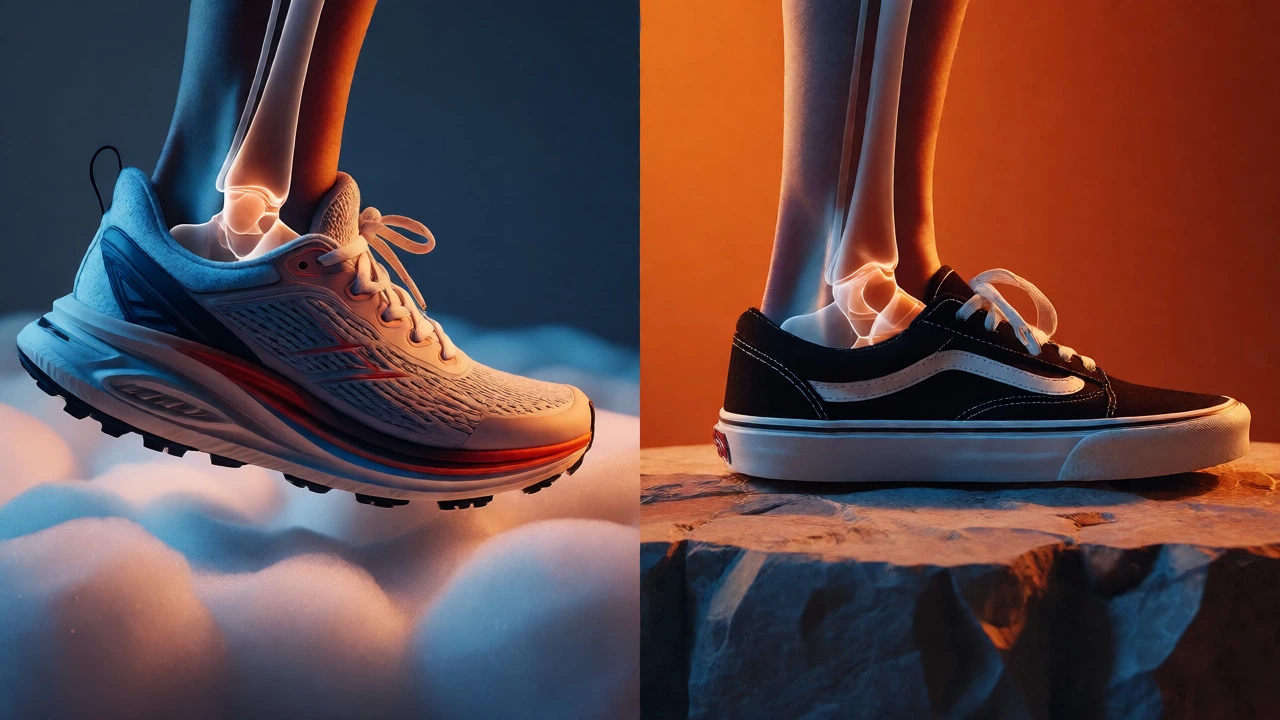
Vans Old Skool and Vans Slip-Ons rely on a vulcanized rubber sole. This process involves heating rubber to create a thin, flexible layer that provides excellent "board feel." Skateboarders love this because it lets them sense the wood under their feet. Runners hate it because it offers almost zero shock absorption. When your foot strikes the pavement, that force travels straight up through the thin rubber, into your heel bone, and up your tibia.
In contrast, modern running shoes feature thick midsoles made from EVA foam, polyurethane, or advanced compounds like Nike ZoomX or Adidas Boost. These materials compress under load and then spring back, dissipating energy. A standard running shoe might have 30mm of stack height; a Vans Old Skool has less than 10mm. That difference is massive when you consider that running generates forces equivalent to three times your body weight with every step.
| Feature | Vans (e.g., Old Skool) | Dedicated Running Shoe |
|---|---|---|
| Cushioning | Minimal; flat vulcanized rubber | High; responsive foam midsole |
| Weight | Heavy (~400g+ per shoe) | Lightweight (~200-250g per shoe) |
| Breathability | Poor; dense canvas/suede | Excellent; engineered mesh |
| Heel Drop | Flat (0mm) or very low | Typically 8-12mm |
| Intended Use | Skateboarding, casual walking | Repetitive high-impact stride |
The Comfort Factor: Why Your Feet Will Hurt
Let’s talk about the immediate sensation. If you lace up a pair of Vans and start jogging, the first thing you’ll notice is the lack of arch support. Most classic Vans models have a completely flat insole. For someone with neutral arches who runs sparingly, this might be manageable. But if you have flat feet or high arches, the lack of structural support can lead to plantar fasciitis-the inflammation of the thick band of tissue that runs across the bottom of your foot.
Then there’s the issue of breathability. Vans are often made from heavy canvas or suede. While durable, these materials trap heat and sweat. Running raises your core temperature significantly. In a mesh running shoe, air flows through the upper to cool your feet. In a Vans Slip-On, your feet become a sauna. Over time, this moisture buildup creates the perfect environment for blisters and fungal infections. You might not feel the burn on a cold January morning in Bristol, but try it in July, and you’ll understand why marathon runners never wear canvas.
Furthermore, the fit is rigid. Running shoes are designed with a wider toe box to allow your toes to splay out upon impact. Vans tend to be narrower, especially around the forefoot. This compression can cause numbness or tingling in your toes after just a few kilometers. It’s not just discomfort; it’s a sign that blood flow is being restricted during activity.

When Can You Actually Get Away With It?
So, are they ever okay? Yes, but only in specific scenarios. If you’re doing a short-distance warm-up, say under 2 kilometers, Vans are passable. The human body is resilient, and for a brief period, your muscles and joints can handle the extra impact without significant damage. Many people also use them for gym workouts involving lifting weights. Because Vans have a flat, stable sole, they provide a solid base for squats and deadlifts, similar to weightlifting shoes. In fact, some powerlifters prefer cheap canvas sneakers over expensive running shoes for this reason.
Another acceptable use case is mixed terrain walking or light hiking on well-maintained paths. If you’re strolling through a park or taking a brisk walk to the shops, the durability of the rubber sole holds up fine. But the moment you transition from walking to running-where both feet leave the ground simultaneously-the mechanics change drastically. The impact force spikes, and the minimal cushioning fails to protect your skeletal structure.
The Injury Risk: What Happens to Your Body
Ignoring the design flaws of Vans for running isn’t just about comfort; it’s about long-term health. The most common complaints from people who tried running in flat-soled casual shoes include shin splints and knee pain. Shin splints occur when the connective tissues along your tibia become inflamed due to repetitive stress. Without adequate cushioning to absorb the shock of heel striking, that stress accumulates rapidly.
Knee issues are another major concern. Running shoes are engineered with a slight heel elevation (drop) to encourage a smoother gait cycle. Vans, being flat, force many runners into an awkward stride pattern. This can alter your biomechanics, putting undue strain on the patellar tendon. If you already have weak hips or poor form, running in unsupportive shoes exacerbates these weaknesses rather than compensating for them.
Consider the analogy of driving a car with bald tires. You can still drive, but you have no traction, no grip, and no safety margin. In wet conditions, Vans become slippery. Their tread pattern is designed for grip on smooth skateboard decks, not for shedding water on asphalt. Slipping while running increases the risk of ankle sprains, which can sideline you for weeks.
Alternatives That Look Like Vans But Run Better
If you love the aesthetic of Vans but want the performance of a running shoe, you aren’t stuck. Several brands now offer "lifestyle" runners that mimic the retro look but use modern foam technology. For instance, New Balance Fresh Foam series offers a clean, minimalist look with serious cushioning. Similarly, Nike Killshot or Adidas Stan Smith Boost combine classic silhouettes with responsive midsoles.
These alternatives cost more upfront, but they save money in the long run by reducing the likelihood of physiotherapy bills or buying new shoes every two months because the foam collapsed. If budget is your primary constraint, look for second-hand running shoes from reputable brands. A used pair of Asics or Brooks will always outperform a brand-new pair of Vans for running purposes.
Practical Tips for Making Vans Work (If You Must)
If you’re determined to run in your Vans-perhaps you’re traveling light or just testing the waters-here are a few hacks to minimize the damage:
- Add Insoles: Swap the factory flat insole for a high-quality orthotic or gel insert. This adds a crucial layer of shock absorption and arch support.
- Run Shorter: Keep your distances under 3km. Treat it as a sprint interval session rather than a steady-state cardio workout.
- Avoid Hard Surfaces: Stick to grass, dirt trails, or synthetic tracks. Concrete and asphalt are unforgiving to thin soles.
- Listen to Your Shins: The moment you feel any throbbing in your shins or knees, stop. Do not push through the pain.
Remember, running is a high-impact sport. Your equipment matters. While Vans are iconic cultural symbols, they were never intended to carry your body weight repeatedly against gravity. Respect the physics, and your feet will thank you.
Can I run a marathon in Vans?
Technically, you could finish one, but it would be extremely painful and risky. The cumulative impact over 42 kilometers without proper cushioning would likely result in severe blisters, black toenails, and potential stress fractures. Most runners find that their feet swell significantly during a marathon, and the narrow fit of Vans would become unbearable by kilometer 10.
Are Vans good for treadmill running?
They are slightly better on a treadmill than on the road because the belt absorbs some vibration. However, the lack of breathability becomes a bigger issue indoors where airflow is limited. You will likely experience sweaty, hot feet quickly. For short sessions (under 20 minutes), it is manageable, but not ideal.
Why do skateboarders prefer Vans over running shoes?
Skateboarders need "board feel," which means sensing exactly where their feet are on the deck. Thick running shoe cushioning disconnects the skater from the board, making tricks harder to control. Vans' thin, grippy soles provide the stability and tactile feedback required for landing ollies and kickflips, whereas running shoes prioritize impact protection over precision.
Do Vans break in like running shoes?
Vans do stretch slightly with wear, particularly the canvas uppers, becoming more comfortable for walking. However, the rubber sole does not soften or mold to your foot's shape in the way foam midsoles do. The rigidity remains, meaning they won't become "custom-fit" for running dynamics even after hundreds of miles.
What is the cheapest alternative to Vans for running?
Brands like Skechers, New Balance, and Asics often have entry-level running models that cost roughly the same as a pair of Vans. Check outlet stores or online sales for last year's models. A $50 pair of dedicated running shoes will vastly outperform a $60 pair of Vans for athletic activities.