Rugby Fixtures June 14, 2026
Why is Rugby Called Rugby? The True Story Behind the Name
Rugby Origins Quiz
Loading question...
Have you ever watched a scrum collapse or seen a player sprint with an oval ball tucked under their arm and wondered why it’s called rugby? It doesn’t sound like a generic sport name. It sounds like a place. And that’s exactly what it is.
The game isn’t named after a type of movement, a mythological figure, or a descriptive word for tackling. It is named after a specific town in Warwickshire, England: Rugby. If you strip away the modern stadiums, the international rivalries, and the complex rulebooks, you are left with a simple geographic fact. But getting from a dusty schoolyard to the global stage involves a mix of verified history, persistent myth, and one very important rule change involving a ball.
The Myth of William Webb Ellis
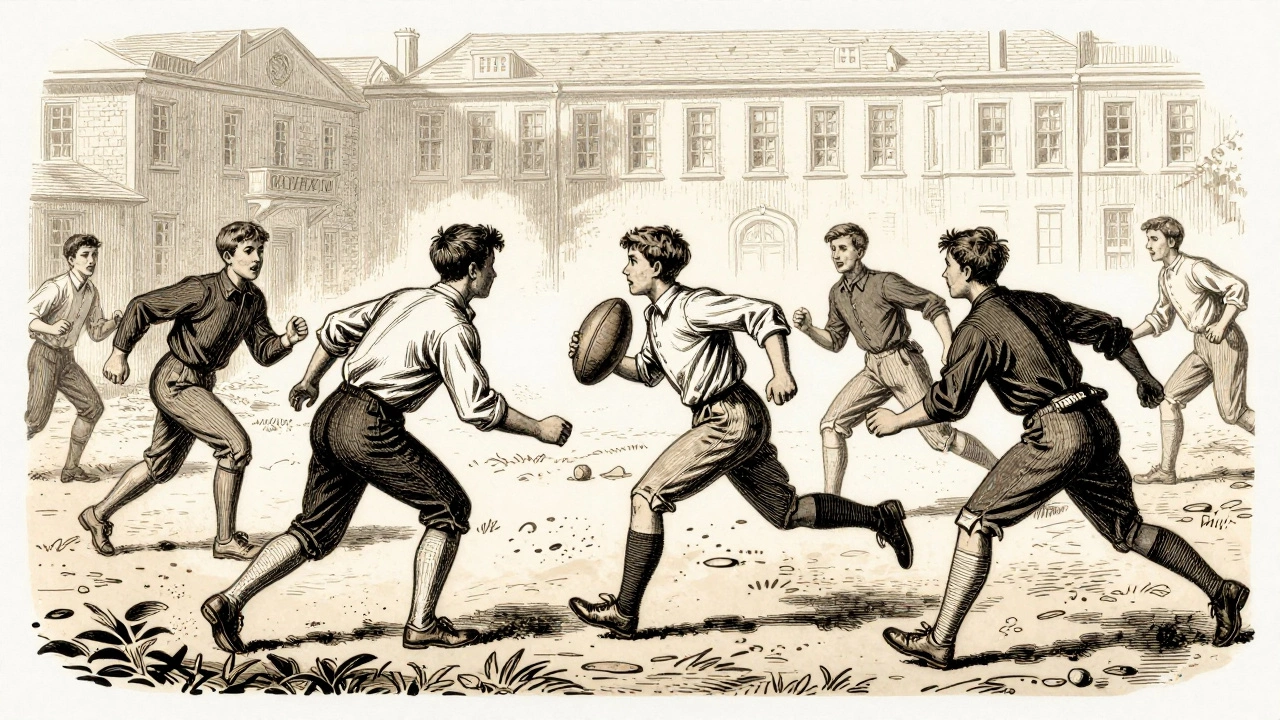
If you ask most rugby fans where the name comes from, they will tell you the story of William Webb Ellis. According to legend, on October 25, 1823, during a football match at Rugby School, a young student named Webb Ellis picked up the ball and ran with it toward the goalposts. This act of defiance against the rules of "football" (which at the time meant kicking only) supposedly sparked the creation of the new game.
This story is charming. It gives us a hero, a date, and a dramatic moment. However, historians largely consider it a fabrication created decades later to give the sport a romantic origin. There is no contemporary record of this incident from 1823. In fact, the first written mention of the "Webb Ellis legend" appeared in 1876, more than fifty years after the alleged event. It was likely invented by Charles Kingsley, a writer who wanted to distinguish rugby from soccer as a uniquely English, character-building pursuit.
Despite being a myth, the story stuck so firmly that the World Rugby Museum even has a statue of Webb Ellis holding the ball. So, while Webb Ellis didn’t invent the game in that single moment, he became the symbolic father of the sport. The name "Rugby" survived because the school itself survived, and the school was located in the town of Rugby.
Rugby School: The Real Birthplace
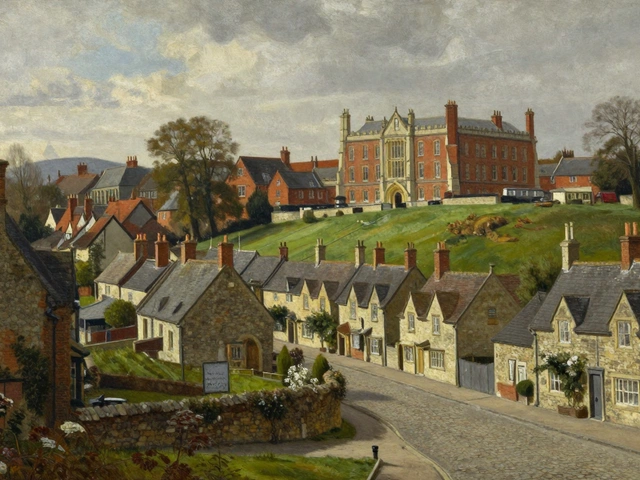
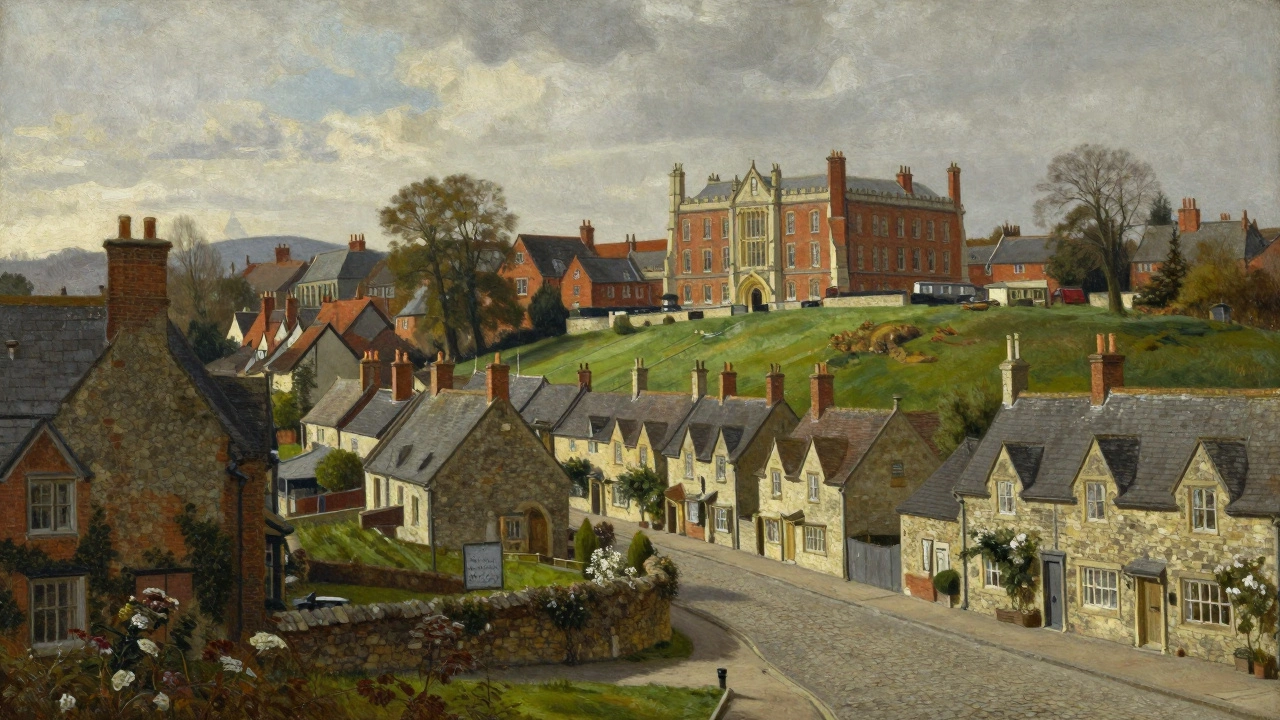
To understand the name, you have to look at the institution: Rugby School, founded in 1567 by Lawrence Sheriff in the town of Rugby, Warwickshire. For centuries, the boys at this school played various forms of folk football. These games were chaotic, violent, and lacked standardized rules. Different villages had different ways of playing, but at Rugby School, a specific style began to coalesce.
In the early 19th century, the headmaster, Thomas Arnold, tried to impose order on these playground brawls. He wanted to channel the boys' energy into something that built discipline and teamwork. While Arnold didn't write the rules himself, his influence encouraged the development of a code that allowed handling the ball. By the 1840s, students at Rugby School began writing down the rules of their local version of football. These were known as the "Rugby Rules."
This is the crucial link. When other schools and clubs started adopting these rules, they weren't just adopting a game; they were adopting the "Rugby" way of playing. The name traveled with the rulebook. As the sport spread to universities like Oxford and Cambridge, and eventually to professional clubs, the distinction between "Association Football" (soccer) and "Rugby Football" became clear. The name remained attached to the original source: the town and the school.
The Great Schism: Why Not Just "Football"?
In the mid-19th century, almost every school in England played some form of football. Some kicked, some carried, some did both. This confusion led to the formation of the Football Association (FA) in 1863. The FA met to standardize the rules of football across England. However, a major disagreement arose over two key issues: hacking (kicking opponents in the shins) and carrying the ball.
Representatives from Rugby School and other handling-focused institutions argued that carrying the ball was essential to their game. The majority, however, voted to ban handling and hacking. This caused a split. The schools that wanted to keep handling the ball left the meeting and formed their own governing body. They kept the name "Rugby Football" to distinguish themselves from the "Association Football" (soccer) played by the FA members.
This schism solidified the name. "Soccer" came from a slang abbreviation of "Association," while "Rugby" remained the formal name for the handling variant. Over time, "Rugby Football" shortened to just "Rugby." The name served as a geographical and historical marker, separating it from its cousin sport. Without this split, we might all be playing a single unified game, or the names would have evolved differently entirely.
Etymology of the Town Name
If the sport is named after the town, where does the town's name come from? The word "Rugby" itself has Old English roots. It is derived from "Hrycg-by." In Old English, "Hrycg" means ridge or back, and "by" means farmstead or village. So, literally, Rugby means "Village on the Ridge."
This makes perfect sense geographically. The town of Rugby sits on a prominent ridge in the West Midlands, offering a strategic vantage point. Over centuries, the pronunciation shifted from "Hrycg-by" to "Rugby." When the school adopted the name of its location, it carried this ancient topographical reference into the sporting world. Every time you say "Rugby," you are technically saying "Ridge Village." It’s a small detail, but it grounds the sport in the physical landscape of England.
| Feature | Association Football (Soccer) | Rugby Football |
|---|---|---|
| Governing Body Founded | 1863 (The Football Association) | 1871 (Rugby Football Union) |
| Ball Handling | Prohibited (except goalkeeper) | Allowed and central to gameplay |
| Origin of Name | Slang for "Association" | Town of Rugby, Warwickshire |
| Key Rule Split | Banned hacking and handling | Retained handling and forward passing restrictions |
Global Spread and Identity
As British sailors, soldiers, and teachers traveled the world in the 19th and 20th centuries, they took their sports with them. Rugby found particularly fertile ground in countries like New Zealand, Australia, South Africa, and France. In many of these places, the sport became a core part of national identity, often surpassing soccer in popularity.
The name "Rugby" helped maintain a connection to its English roots while allowing local cultures to adapt the game. For example, in New Zealand, the Maori culture blended with rugby traditions, creating unique haka rituals before matches. Despite these cultural adaptations, the name remained unchanged. It acted as a brand, a recognizable label for a specific set of rules and values. Even when the sport split again in the 1990s into Rugby Union and Rugby League, the root name persisted, anchoring both codes to their shared heritage.
Common Misconceptions About the Name
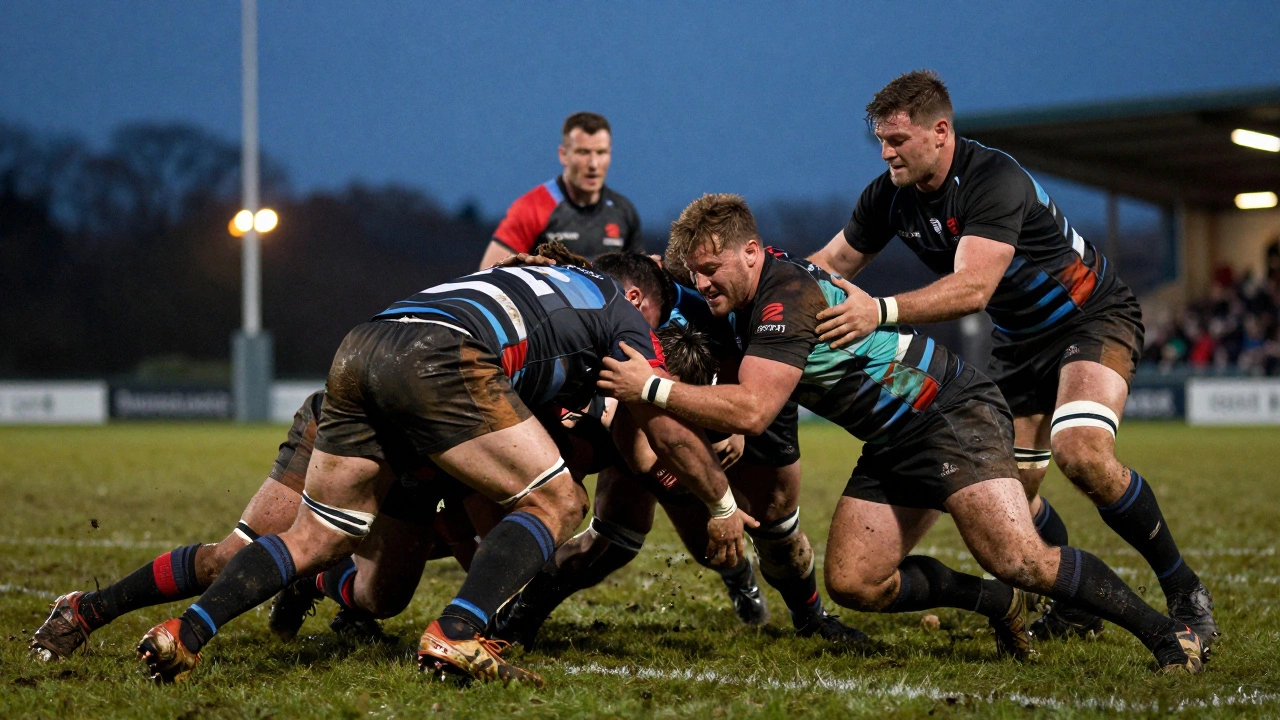
There are several persistent myths about why the game is called rugby that deserve debunking. One common misconception is that the name refers to the roughness of the game. While rugby is certainly physical, the name predates the modern emphasis on high-speed collisions. Another myth suggests that "rugby" is related to the word "rugged," implying toughness. Linguistically, there is no connection between the Old English "Hrycg-by" and the adjective "rugged."
Some people also believe the name was chosen arbitrarily by the founders of the Rugby Football Union. In reality, it was a natural evolution. You don't rename a game that is already widely known as "the Rugby game" when you formalize it. You keep the name that everyone already uses. The simplicity of the name helped it survive the transition from amateur pastime to professional global industry.
Conclusion: A Name That Endures
The reason the sport is called rugby is straightforward: it originated at a school in the town of Rugby. While the legend of William Webb Ellis adds flavor to the story, the truth lies in the codification of rules at Rugby School and the subsequent split from association football. The name serves as a historical anchor, linking modern players to a specific place in England.
Understanding the etymology and history of the name deepens your appreciation of the game. It reminds us that rugby is not just a collection of physical actions, but a tradition with deep roots. Whether you are watching a Six Nations clash or a local club match, the name carries the weight of history, geography, and community. Next time you hear the referee blow the whistle, remember: you're watching the game from the Ridge Village.
Who actually invented rugby?
No single person invented rugby. It evolved from various forms of folk football played in England. While William Webb Ellis is credited with picking up the ball in 1823, this is considered a myth. The rules were gradually codified by students and masters at Rugby School in the 1840s.
Is rugby named after the roughness of the game?
No. The name comes from the town of Rugby in Warwickshire, England. It is derived from the Old English words "Hrycg-by," meaning "village on the ridge." It has no linguistic connection to the word "rough" or "rugged."
What is the difference between Rugby Union and Rugby League?
Both sports share the same origin and name. They split in 1895 due to disagreements over payment for players. Rugby Union traditionally remained amateur longer and has 15 players per side with rucks and mauls. Rugby League allows professionalism earlier, has 13 players per side, and features a "play-the-ball" restart instead of rucks.
Where is Rugby School located?
Rugby School is located in the town of Rugby, in the county of Warwickshire, England. It was founded in 1567 and is still an active independent school today.
Why do Americans call it rugby?
Americans use the same name because the sport was introduced to the United States by British immigrants and students in the late 19th century. The international governing bodies standardized the name globally, so it is known as rugby everywhere outside of specific regional slang contexts.