Boxing Matches July 9, 2026
Why is boxing only 10 rounds? The history and rules explained
Boxing Match Duration Calculator
Configure Your Fight
Select the category to auto-fill standard round limits.
Total Scheduled Time
0 minutes
(Including all rest periods)
Active Fighting
0 min
Rest Breaks
0 min
Context: A standard 10-round pro fight is designed to balance safety with competitive depth.
Select a fight type and click calculate to see the time breakdown.
Why These Numbers Matter
Safety First
The reduction from 15 to 12 rounds for titles (and 10 for non-titles) directly addresses CTE risks. Less cumulative brain trauma saves careers and lives.
Economic Efficiency
Shorter fights mean lower costs for judges, officials, and venues. Promoters can fit more bouts into an evening card, maximizing revenue.
Fan Engagement
Ten rounds provide enough time for strategy to unfold without testing casual viewers' attention spans. It keeps the pace dynamic and exciting.
Walk into any gym or tune into a local fight night, and you’ll notice something interesting. Most fights don’t go for the full distance of a championship bout. Instead, they stop at 10 rounds. It’s the standard for professional non-title fights. But why ten? Why not eight? Why not twelve? The number isn’t random. It’s a compromise between safety, entertainment, and the brutal history of the sport.
If you’ve ever wondered what dictates the length of a boxing match, you’re looking at a mix of historical accidents and modern regulations. The answer lies in the transition from bare-knuckle brawls to gloved combat, and the specific rules that were put in place to keep fighters alive while keeping fans entertained.
The Shift From Championship Fights to Standard Contests
To understand why ten rounds became the norm, we first have to look at the other end of the spectrum: twelve rounds. In professional boxing, twelve rounds is the maximum limit for world title fights. This rule was established in 1982 by the International Boxing Federation (IBF) and later adopted by all major sanctioning bodies like the WBC, WBA, IBF, and WBO. Before that, champions fought over fifteen rounds. The reduction to twelve was a direct response to the tragic death of Kim Duk-koo in 1982, who suffered fatal brain damage after a fifteenth-round knockout.
So, if twelve is the max for titles, where does ten come in? Ten rounds is the standard duration for non-title professional bouts. These are fights where boxers are building their records, fighting for regional belts, or stepping up as opponents for top contenders. The ten-round format provides enough time to determine a clear winner through decision without exposing fighters to the cumulative damage of a full twelve-round marathon. It strikes a balance. It’s long enough to test endurance and strategy, but short enough to reduce the risk of severe chronic traumatic encephalopathy (CTE) associated with longer careers and longer fights.
| Fight Type | Number of Rounds | Round Duration | Rest Period | Total Fight Time |
|---|---|---|---|---|
| World Title Fight | 12 | 3 minutes | 1 minute | 36 minutes + breaks |
| Standard Pro Fight | 10 | 3 minutes | 1 minute | 30 minutes + breaks |
| Early Career Pro | 4-6 | 3 minutes | 1 minute | 12-18 minutes + breaks |
| Amateur/Olympic | 3 | 3 minutes | 1 minute | 9 minutes + breaks |
The Historical Roots: From Death Matches to Regulated Sport
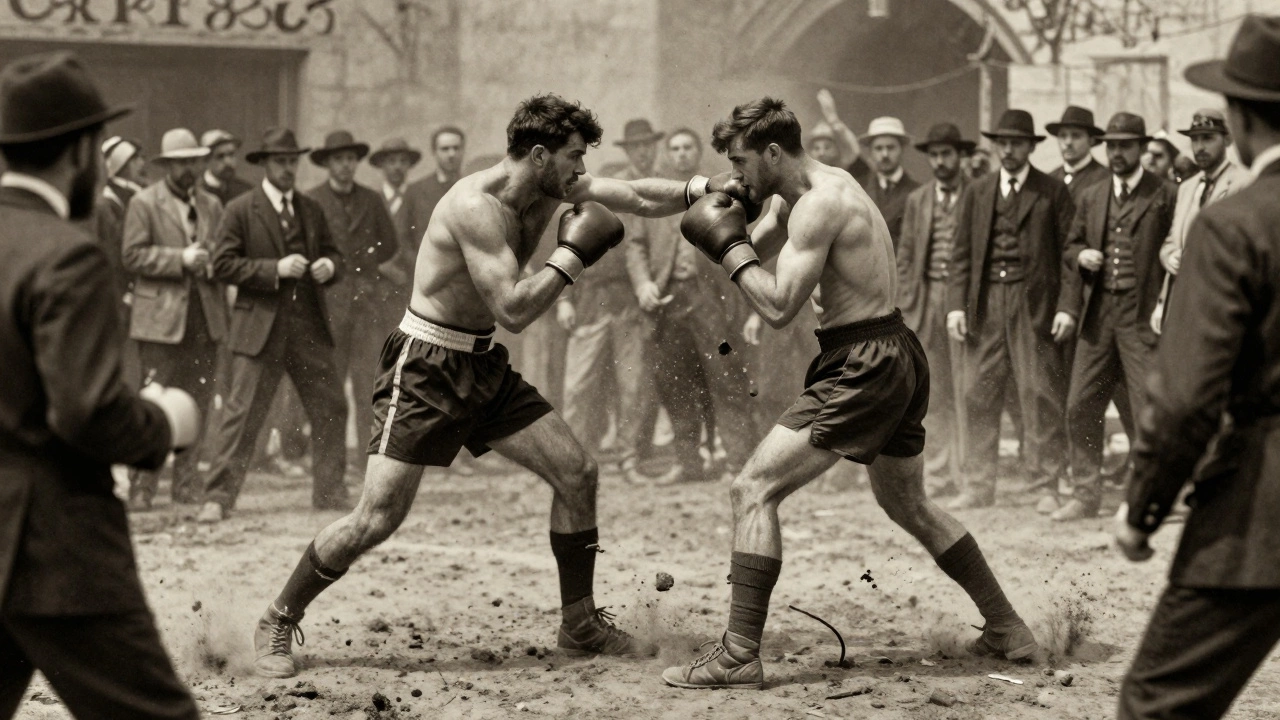
Boxing didn’t always have a fixed number of rounds. In the early days of prizefighting under the London Prize Ring Rules, matches could last anywhere from three rounds to thirty or more. There was no time limit per round either; a round ended when one fighter hit the ground. This meant fights could drag on for hours, leading to gruesome injuries and deaths. The introduction of the Marquess of Queensberry Rules in 1867 changed everything. These rules introduced timed three-minute rounds with one-minute rest periods and required the use of gloves. However, even then, there was no strict cap on the total number of rounds for non-title fights until much later.
The concept of limiting rounds gained traction in the early 20th century. A pivotal moment came in 1910 when heavyweight champion Jack Johnson won his title against Tommy Burns. The fight lasted twenty-one rounds. While Johnson won, the sheer length and brutality sparked public outcry and calls for regulation. State athletic commissions began to emerge across the United States, each trying to impose order on the chaotic sport. By the 1920s and 1930s, many states had set limits. Some capped fights at ten rounds, others at fifteen. The inconsistency was frustrating for promoters and fighters alike.
It wasn’t until the formation of unified national standards that the ten-round rule solidified for non-title bouts. Athletic commissions realized that most fights ended well before fifteen rounds. Statistics showed that a significant percentage of contests concluded via knockout or technical knockout within the first ten rounds. Extending the limit beyond ten for non-title fights added little value but increased medical risks. Thus, ten rounds became the practical standard for the vast majority of professional encounters.
Safety and Medical Considerations
The primary driver behind round limits is fighter safety. Every punch landed carries a risk of concussion or cumulative brain trauma. Reducing the number of rounds directly reduces the total exposure to these impacts. For a boxer fighting multiple times a year, the difference between a ten-round and a twelve-round schedule can be significant over a career. Promoters and athletic commissions are increasingly aware of the long-term health implications of boxing. CTE has been found in the brains of numerous former boxers, prompting stricter regulations worldwide.
Medical teams now play a crucial role in every fight. Ringside doctors have the authority to stop a contest if they deem it unsafe for a fighter to continue. In a ten-round framework, this decision-making process is slightly less pressured than in a high-stakes twelve-round title fight. Fighters and trainers know that if the scorecards are close going into the final rounds, the stakes are high. But in a ten-round non-title fight, the pressure to push through pain for a championship legacy is absent. This allows referees and doctors to intervene more objectively based on immediate safety rather than competitive necessity.
Furthermore, the ten-round structure encourages better pacing. Boxers cannot simply survive early rounds and hope for a late surge. They must maintain a consistent level of performance throughout. This leads to more dynamic action for fans and reduces the likelihood of a fighter being worn down to the point of vulnerability in the latter stages. It’s a win-win for both spectator experience and athlete welfare.
Economic Factors and Promoter Preferences
Let’s talk money. Boxing is a business, and promoters want to maximize profit while minimizing cost. A ten-round fight is cheaper to produce than a twelve-round fight. You need fewer judges, less overtime pay for officials, and potentially lower insurance premiums. The event runs shorter, which means venues can be booked more efficiently. For smaller clubs and regional promotions, the ten-round format is economically viable. It allows them to pack more fights into a single evening, creating a fuller card for fans.
From a fan perspective, attention spans matter. While hardcore boxing enthusiasts might enjoy a grueling twelve-round war, casual viewers often prefer faster-paced events. A ten-round main event keeps the energy high without dragging on. Television networks also appreciate the predictable timing. It fits neatly into broadcast slots, allowing for pre-fight analysis and post-fight interviews without excessive delays. This commercial viability reinforces the ten-round standard. As long as promoters see a return on investment and fans remain engaged, there’s little incentive to change the format.
Additionally, emerging talent benefits from the ten-round structure. Young professionals need experience but aren’t ready for the rigors of a twelve-round championship bout. Ten rounds provide a proving ground. It allows prospects to showcase their skills against seasoned veterans without facing the extreme physical toll of a title defense. This developmental pathway is essential for the health of the sport. Without it, the pipeline of future champions would dry up.

Exceptions and Variations
While ten rounds is the standard, it’s not an absolute law. Early-career professionals often start with four or six-round fights. This gradual progression helps newcomers adapt to the speed and power of professional boxing. Jumping straight into a ten-round fight can be overwhelming and dangerous for inexperienced fighters. Athletic commissions typically require a certain number of wins in shorter bouts before approving a ten-round license.
Conversely, some high-profile non-title fights may be scheduled for twelve rounds if both fighters are ranked highly or if the matchup has significant championship implications. These exceptions are rare and usually require special approval from the relevant athletic commission. The key factor is always the perceived risk versus reward. If the fight is expected to draw massive attention, promoters might argue for the extra two rounds to heighten the drama.
Amateur boxing operates under a completely different system. Olympic boxing, governed by USA Boxing and international federations, uses three-round matches for men and women. The focus here is on scoring points rather than knockouts. Gloves are lighter, headgear is mandatory, and the emphasis is on technique and agility. The shorter format aligns with the amateur ethos of developing skill without the prolonged physical punishment of professional bouts.
How Judges Score a Ten-Round Fight
In a ten-round fight, the outcome is determined by three judges using the 10-point must system. Each judge awards ten points to the round winner and nine or fewer to the loser, depending on the severity of the damage. If a round is even, both fighters get ten points. After ten rounds, the scores are tallied. A unanimous decision occurs if all three judges agree on the winner. A split decision happens if two judges favor one fighter and the third favors the other. A draw results if the total scores are identical.
This scoring system rewards aggression, effective punching, ring generalship, and defense. In a ten-round context, consistency is key. A fighter who dominates the first five rounds but fades in the second half may still lose if their opponent mounts a strong comeback. The ten-round format amplifies the importance of stamina. Unlike a six-round fight where bursts of energy suffice, ten rounds demand sustained effort. This tests a boxer’s cardiovascular fitness and mental resilience.
Trainers spend countless hours preparing fighters for this specific duration. Conditioning programs are designed to peak around the ten-round mark. Sparring sessions simulate the rhythm of a ten-round bout, teaching fighters how to manage energy reserves. Knowing when to press forward and when to conserve strength becomes a critical skill. The ten-round structure shapes not just the fight itself, but the entire training regimen leading up to it.
Can a boxing match go beyond 10 rounds?
Yes, but only if it is a world title fight. Non-title professional bouts are strictly limited to 10 rounds by most athletic commissions. World championship matches can go up to 12 rounds. Amateur fights are typically 3 rounds.
Why did boxing reduce from 15 rounds to 12?
The reduction happened in 1982 following the death of Kim Duk-koo. His tragic injury in the 15th round prompted regulatory bodies to cap championship fights at 12 rounds to improve fighter safety and reduce the risk of fatal brain trauma.
How long is each round in professional boxing?
Each round in professional boxing lasts exactly 3 minutes. There is a 1-minute rest period between rounds. So, a 10-round fight involves 30 minutes of actual fighting time plus 9 minutes of rest.
Do beginner boxers fight 10 rounds?
No, beginners typically start with 4 or 6-round fights. This allows them to gain experience and build stamina gradually. Athletic commissions usually require a record of wins in shorter bouts before approving a fighter for a 10-round license.
Is a 10-round fight considered a full professional bout?
Yes, a 10-round fight is considered a standard professional bout for non-title matches. It is the benchmark for experienced professionals who are not currently fighting for a world championship belt. It requires full professional conditioning and strategy.