Rugby Fixtures December 25, 2025
What Is Tougher: Rugby League or Rugby Union?
Rugby Toughness Calculator
Your Profile
Key Comparison
Rugby League
Tackles per game
60-70
High-impact collisions
15-20
Rugby Union
Tackles per game
15-20
High-force engagements
30+
Rugby League Toughness
League demands non-stop intensity with 8.5km average distance covered. Players experience 1,200+ tackles and 300+ high-impact collisions per season. The game breaks you through repetition and speed.
Recovery time: 4-5 days between matches
Rugby Union Toughness
Union demands crushing endurance with 50-60 scrums and 500+ ruck engagements per match. Players experience 37% higher spinal injury rates due to sustained pressure. The game breaks you through structural brutality.
Recovery time: 7-10 days between matches
Your Toughness Match
Which Code Suits You Best
Your profile shows you have a preference for . Based on the article's data, may be the better fit.
Ask any rugby player, coach, or fan which code is tougher-league or union-and you’ll get a heated debate. It’s not just about who hits harder or runs farther. It’s about how the game breaks you down, rebuilds you, and tests your limits in ways no other sport does. The truth? Both are brutal. But they break you in different ways.
Rugby League: Non-Stop, High-Intensity Warfare
Rugby league is built on speed, repetition, and relentless physicality. Six tackles. That’s it. No scrums, no lineouts, no stoppages. Once you lose possession, you’re under immediate pressure. The clock doesn’t stop. The tackles come fast. Players hit like freight trains, then get up and do it again 15 seconds later.
Think about that: 80 minutes of near-constant contact. No time to catch your breath. In the NRL, players cover an average of 8.5 kilometers per game. That’s more than a 5K run-on top of 60-70 tackles and 15-20 high-impact collisions. The average front-rower takes 12-15 hits per game. Some hit 20. Their bodies are battered, bruised, and exhausted by halftime.
There’s no hiding in league. If you’re slow, you get run over. If you’re weak, you get flattened. The game rewards explosive power and recovery speed. A player doesn’t need to be 6’4” and 120kg to survive-they need to be 180lbs of pure engine. That’s why you see so many smaller, agile players in league who wouldn’t last a minute in union.
Rugby Union: Endurance, Strategy, and Structural Brutality
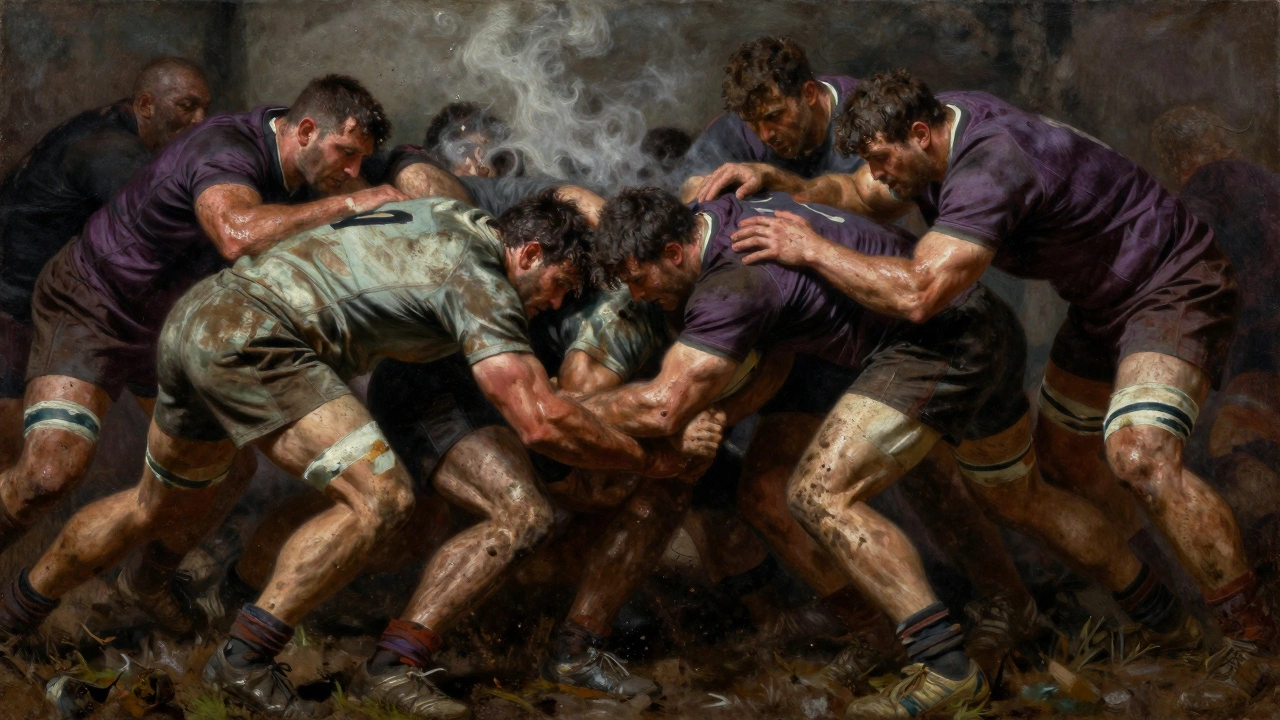
Rugby union is a different kind of war. It’s slower, more technical, and far more physically punishing over the long haul. The game lasts 80 minutes too, but the stoppages are endless. Scrums, lineouts, rucks, mauls, penalties-every single one of them is a full-body collision.
In union, the forward pack doesn’t just tackle-they lock into scrums that generate over 2,000 pounds of force per side. The front row? They’re absorbing that pressure with their necks, shoulders, and spines. One misalignment, one collapse, and you’re looking at a career-ending injury. The average prop plays 50-60 scrums per match. That’s 50-60 times they’re pushing against another human being who’s trying to crush them into the ground.
And then there’s the ruck. After every tackle, 4-6 players from each side pile in, stomping, hooking, and driving over fallen bodies. No rules against landing on the ball carrier. No mercy. You’re not just tackling-you’re fighting for every inch of ground, with your body as the weapon. Union forwards average 15-20 tackles per game, but they also take 8-12 impacts in rucks and scrums. That’s 30+ high-force collisions in 80 minutes.
Union players also run more. Backs cover 9-10km per game. Forwards? Around 7km. But they’re not just running-they’re sprinting, braking, changing direction, then immediately engaging in a 300-pound collision. The wear and tear is insane. A 2023 study from the University of Bath found union forwards have a 37% higher rate of spinal injuries than league forwards. Why? Because they’re constantly under load, not just impact.
Physical Toll: Who Takes More Damage?
Let’s look at the numbers. In a single season:
- A top-level rugby league player averages 1,200+ tackles and 300+ high-impact collisions.
- A top-level rugby union forward averages 800+ tackles, 500+ ruck engagements, and 200+ scrum engagements.
League players get hit more often. Union players get hit harder-and for longer. The difference isn’t just quantity. It’s duration. In league, you get a 10-second breather after each set. In union, you get maybe 5 seconds between rucks, then you’re back in the meat grinder.
And recovery? League players rest more between games-usually 4-5 days. Union players often play every 7-10 days, with less time to heal. That’s why you see more chronic injuries in union: torn ligaments, herniated discs, degenerative joint disease. The body doesn’t get time to rebuild.
One former NRL player told me: "In league, you get knocked out, you wake up, you go again." A former England union prop said: "In union, you get knocked out, you wake up, and you realize your shoulder’s dislocated-and you still have to play the next 20 minutes."
Who’s Tougher? It Depends on What You Mean
Ask a league player if union is tougher, and they’ll say: "They’re just slower. They get more time to recover. We do it all the time, non-stop." Ask a union player, and they’ll say: "You don’t know what real pressure is. We’re holding the line with our bones."
Neither side is wrong. League demands explosive, repeated effort. Union demands sustained, crushing force. League is like a 10-round boxing match with no breaks. Union is like a 10-round match where you’re also lifting a car between rounds.
If toughness means how often you get hit, league wins. If toughness means how much your body endures per hit, union wins. If toughness means how long you can keep going despite injury, union wins again. If toughness means how fast you recover and come back, league wins.
There’s no single answer. But here’s what’s clear: both codes demand more from the human body than almost any other sport on earth. You don’t play either unless you’re wired differently.
Why This Matters Beyond the Field
People talk about toughness like it’s a badge of honor. But it’s more than that. It’s about what these sports do to the people who play them. League players retire younger. Union players retire with broken bodies. Both lose mobility, strength, and quality of life faster than most athletes.
Look at the data: a 2024 study from the Australian Institute of Sport found that 68% of retired league players suffer from chronic joint pain by age 35. In union, it’s 79%. That’s not just wear and tear. That’s systemic damage.
And yet, kids still show up. Every weekend, in towns across Australia, New Zealand, England, and France, boys and girls strap on their boots and run into the wall. Why? Because they know what it means to be part of something that tests you to your core. They don’t care which code is "tougher." They just know they want to be part of it.
Final Verdict: It’s Not About Which Is Harder-It’s About What You’re Made Of
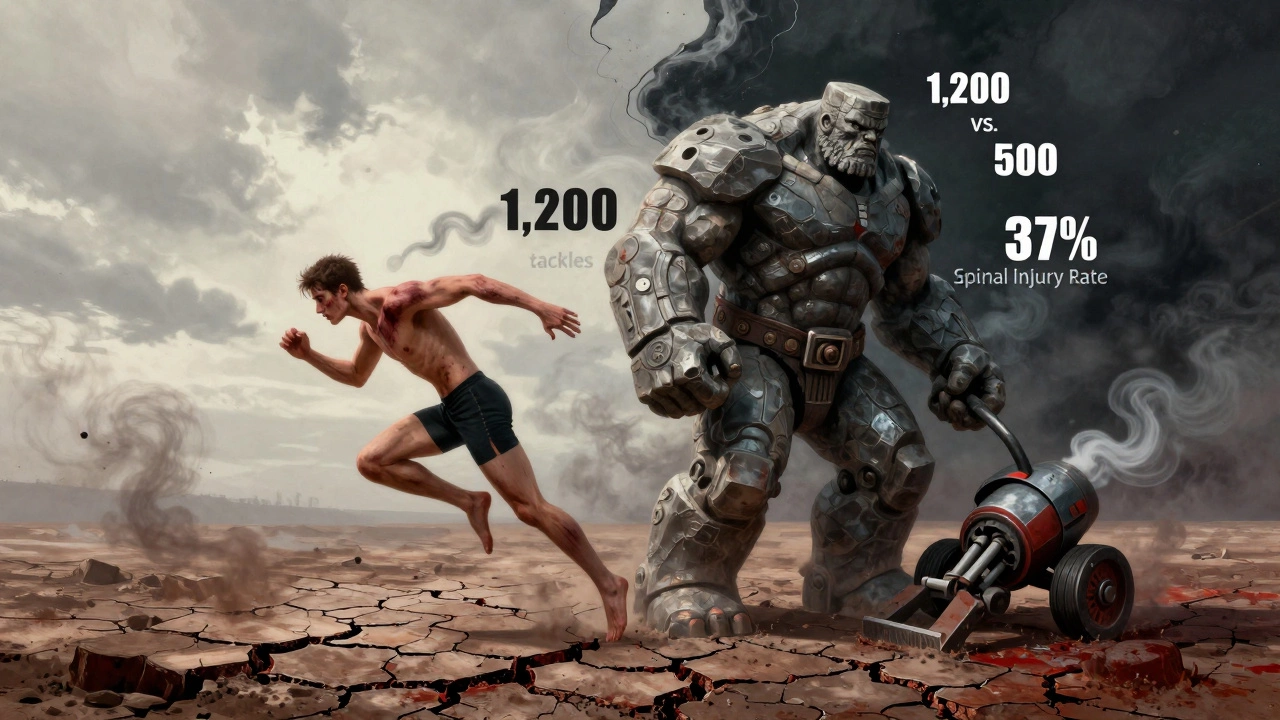
There’s no winner here. Only different kinds of warriors. League players are sprinters with armor. Union players are tanks with hearts.
If you want to be hit over and over, and still run like a deer after each tackle, play league. If you want to hold the line against a moving wall of muscle, and keep pushing even when your spine screams, play union.
Both are brutal. Both are beautiful. And both will leave you changed.
Is rugby league or union more dangerous?
Rugby union has a higher rate of serious injuries like spinal damage and chronic joint degeneration due to repeated scrums and rucks. Rugby league has more frequent high-impact collisions, leading to higher rates of concussions and acute injuries. Both are dangerous, but the types of injuries differ.
Do rugby league players get paid more than union players?
In top leagues, elite rugby union players generally earn more, especially in Europe and New Zealand, due to larger global TV deals and professional structures. However, top NRL players in Australia can earn close to union stars, and many league players make more than lower-tier union professionals. Pay varies wildly by country, league, and performance.
Can a rugby league player switch to union easily?
Yes, but it’s not simple. League players often lack the technical skills for scrums, lineouts, and complex set pieces. Many transition successfully as outside backs or loose forwards because their speed and tackling suit union. But forwards need months of retraining. Some, like Sonny Bill Williams, made the switch and thrived. Others struggled with the pace and structure.
Which code has more global viewership?
Rugby union has far greater global viewership. The Rugby World Cup draws over 100 million viewers worldwide. The Rugby League World Cup gets around 15-20 million. Union is played in over 100 countries; league is dominant mainly in Australia, New Zealand, England, and parts of the Pacific.
Which is harder to learn for a beginner?
Rugby union is harder to learn because of its complexity-scrums, lineouts, rucks, mauls, and 15-player roles. League has simpler rules: 6 tackles, play-the-ball, and fewer positions. Most beginners pick up league faster. But mastering either takes years of repetition and physical conditioning.
Next Steps: Which One Should You Try?
If you’re young, fast, and love non-stop action-try league. You’ll get more touches, more running, and more chances to shine. If you’re strong, patient, and love the grind of physical dominance-try union. You’ll learn how to move mountains with your body.
Either way, you’re signing up for something that will test your limits. You’ll get hurt. You’ll doubt yourself. You’ll wonder why you do it. Then you’ll step back onto the field, and you’ll know: it’s worth it.