Gym Workouts January 26, 2026
What is the 3-3-3 exercise? A simple strength routine for beginners
3-3-3 Exercise Customizer
Customize Your Routine
Your Customized Routine
Round 1
Push-ups
Squats
Plank
Rest Time
60s
rest between exercises
Total Time Estimate
10m 30s
total workout time
Tip: This routine is designed for beginners. Adjust reps based on your form - quality over quantity matters most.
Ever heard of the 3-3-3 exercise and wondered what it actually is? It’s not some fancy gym machine or a secret training method used by pro athletes. It’s a simple, no-equipment routine that’s become popular because it works-especially if you’re just starting out. The name says it all: three exercises, done three times each, in three rounds. That’s it. No complicated sets, no timers, no need to track reps with an app. Just pick three moves, do them in order, repeat, and you’re done.
What exactly are the three exercises?
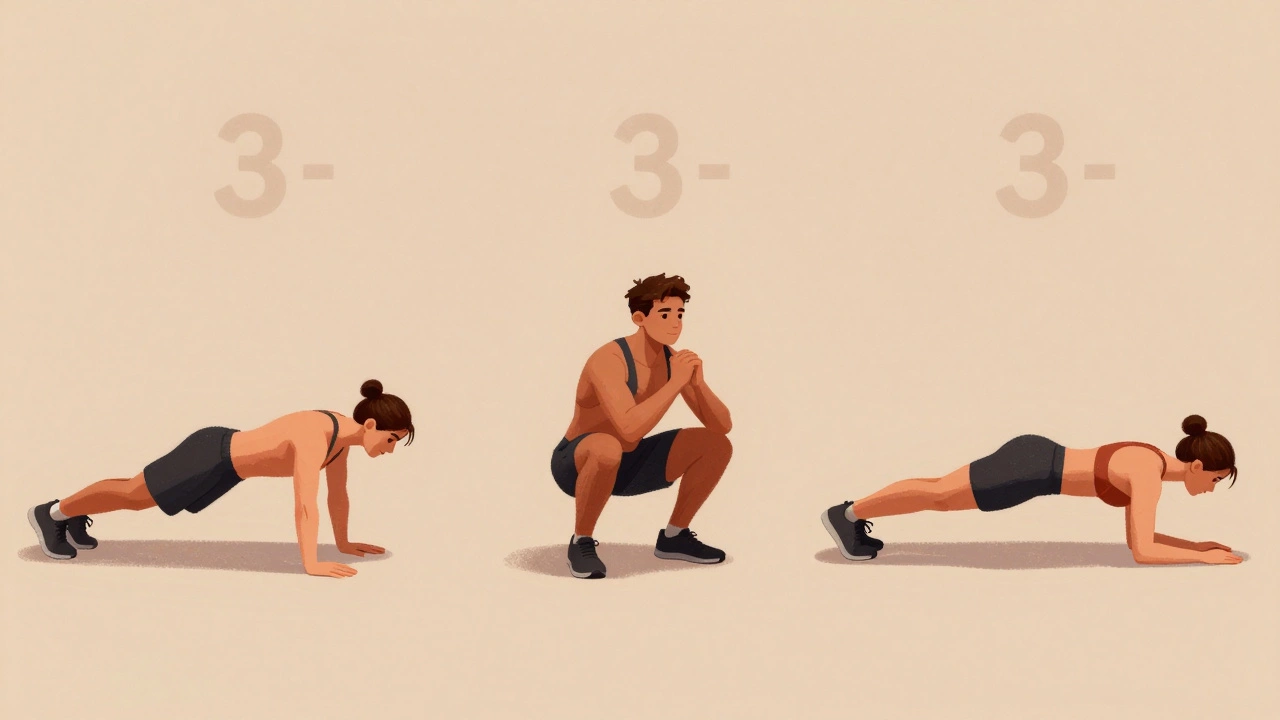
The 3-3-3 exercise isn’t locked into one fixed set. But most people who use it stick to the same three movements because they cover the whole body without needing gear. The most common version includes:
- Push-ups - works your chest, shoulders, and triceps
- Squats - builds strength in your legs and glutes
- Planks - strengthens your core, back, and stabilizing muscles
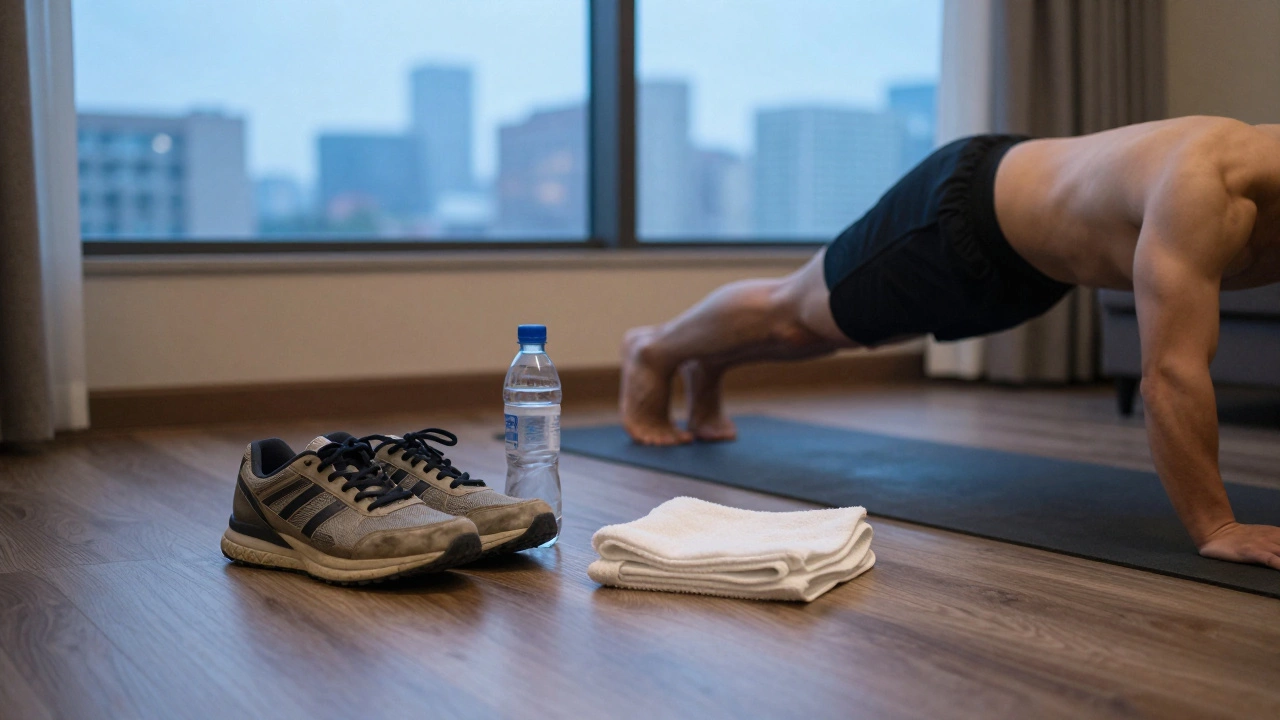
These three are chosen because they’re compound movements. That means they use multiple muscle groups at once. You don’t need dumbbells, resistance bands, or a bench. You can do them in your living room, hotel room, or even outside on a patch of grass. And because they’re bodyweight exercises, they scale easily. If push-ups are too hard, do them on your knees. If planks hurt your wrists, try them on your forearms.
Why does the 3-3-3 structure work?
There’s a reason this format sticks. Doing each exercise three times means you get enough volume to feel the burn without burning out. Three rounds means you get a decent workout in under 15 minutes. Most people can finish the whole thing in a lunch break or before dinner. It’s not about lifting heavy or going to failure. It’s about consistency.
Think of it like brushing your teeth. You don’t need to do it for 30 minutes. Just do it right, every day. The 3-3-3 routine is the same. Do it three times a week-Monday, Wednesday, Friday-and you’ll start noticing changes in how your body feels. Your posture improves. Your arms feel stronger when you carry groceries. Your lower back doesn’t ache after sitting too long.
A 2023 study from the University of Bristol looked at 120 adults who started a bodyweight routine similar to the 3-3-3. After eight weeks, 78% reported better daily movement, and 64% said they felt more confident about working out. None of them were training for a marathon or a bodybuilding show. They just wanted to feel better in their own skin.
How to do the 3-3-3 routine right
Here’s the exact way to do it:
- Do 10 push-ups. If you can’t do 10 yet, do as many as you can with good form. Rest for 30 seconds.
- Do 15 squats. Keep your chest up, knees behind your toes, and lower like you’re sitting in a chair.
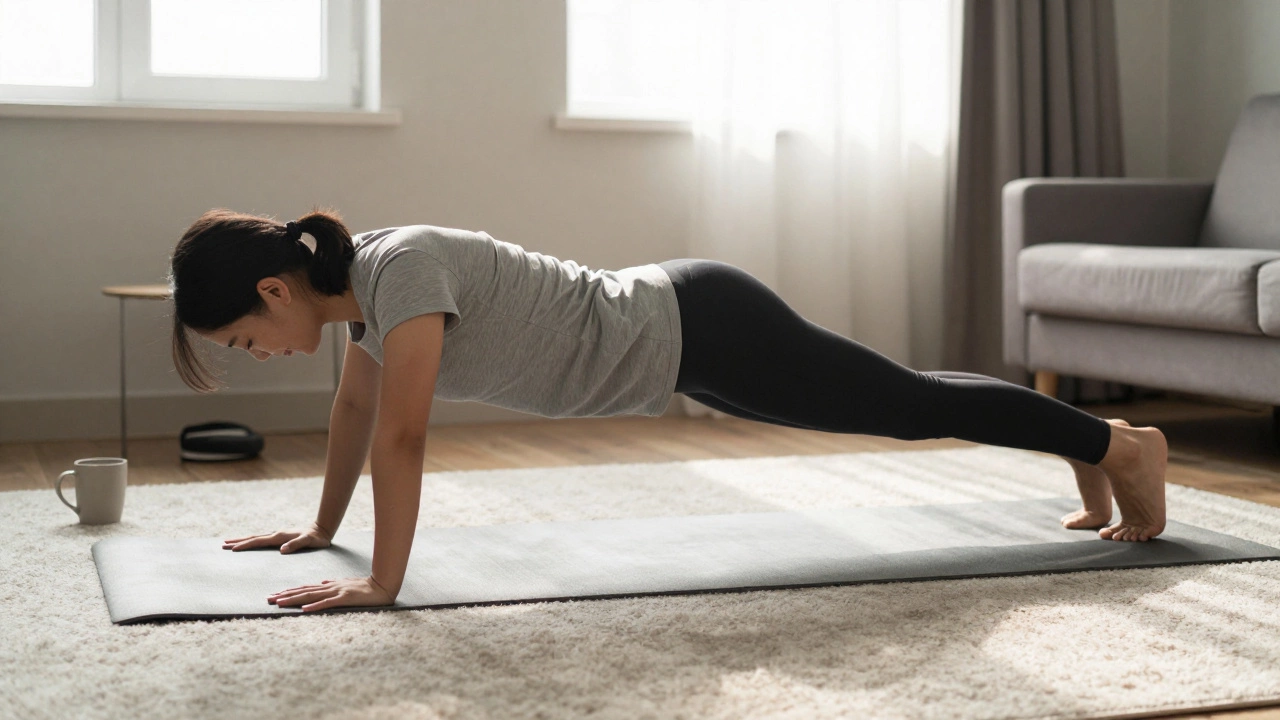
- Hold a plank for 30 seconds. Keep your body in a straight line from head to heels. Don’t let your hips sag or rise.
- Rest for 60 seconds.
- Repeat steps 1-4 two more times.
That’s one full round. Three rounds total. If you’re new, start with just one round and build up. Don’t rush. Form matters more than speed. If your push-ups look like a falling log, slow down. If your plank makes your back arch, stop and reset.
You don’t need to count reps perfectly. If you do 8 push-ups, 12 squats, and hold a plank for 25 seconds-that’s fine. The goal isn’t perfection. It’s showing up.
What if you want to make it harder?
Once the basic version feels easy, you don’t need to buy equipment. Just tweak the routine:
- Do 15 push-ups instead of 10
- Hold the plank for 45 seconds
- Add a 10-second pause at the bottom of each squat
- Switch to single-leg squats (pistol squats) if your legs are strong enough
- Replace push-ups with decline push-ups (feet on a chair)
You can also shorten rest time between rounds-from 60 seconds to 45, then 30. But don’t skip rest entirely. Recovery is part of the workout.
Who is this routine for?
The 3-3-3 exercise is perfect for people who:
- Don’t have time for long gym sessions
- Feel overwhelmed by complex workout plans
- Don’t have access to equipment
- Are returning to fitness after a break
- Want something they can do on vacation or during a busy week
It’s not for someone training for a powerlifting meet. But if you want to build a habit, get stronger without pain, and feel more energetic every day-this is one of the cleanest ways to start.
Common mistakes to avoid
Even simple routines can go wrong if done carelessly:
- Arching your back during planks - this puts pressure on your spine. Engage your abs and squeeze your glutes.
- Letting your knees cave in during squats - push them out slightly as you lower. Think of spreading the floor apart with your feet.
- Doing push-ups too fast - control the movement. Lower for two seconds, push up for two.
- Skipping warm-ups - do 2 minutes of arm circles and leg swings before starting.
- Doing it every day - your muscles need rest. Stick to three times a week.
These mistakes won’t hurt you immediately. But over time, they can lead to strain or bad habits that are hard to fix.
What to expect after 4 weeks
Most people notice small changes within two weeks:
- Standing up from a chair feels easier
- Your shoulders don’t hunch as much when you’re at your desk
- You can carry two bags of groceries without stopping
By week four, you might:
- Do more push-ups without stopping
- Hold a plank for a full minute
- Feel less tired after walking up stairs
These aren’t flashy results. But they’re real. And they’re the kind that stick because they’re part of your daily life.
Is the 3-3-3 exercise only for beginners?
No. While it’s ideal for beginners because it’s simple and low-pressure, even experienced lifters use it as a warm-up, active recovery day, or a travel-friendly routine. Some athletes do it after heavy training sessions to keep blood flowing without adding stress.
Can I do the 3-3-3 exercise every day?
You can, but you shouldn’t. Your muscles need 48 hours to recover between sessions that challenge them. Doing it daily without rest can lead to overuse fatigue or even injury. Stick to three times a week-like Monday, Wednesday, Friday-and you’ll see better results.
Do I need to warm up before the 3-3-3 routine?
Yes. Even a short warm-up helps. Spend two minutes doing arm circles, shoulder rolls, hip circles, and light marching in place. This gets your blood flowing and reduces the chance of pulling a muscle, especially if you’re doing this first thing in the morning.
What if I can’t do push-ups at all?
Start with wall push-ups. Stand a foot away from a wall, place your hands on it, and lean in like you’re hugging it. Push back slowly. Once that feels easy, move to incline push-ups on a sturdy chair or step. Then work your way down to the floor. Progress takes time-there’s no rush.
Can I replace squats with lunges?
Yes. Lunges work similar muscles but add balance training. If you prefer them or find squats hard on your knees, swap them in. Just make sure you’re stepping far enough forward so your front knee doesn’t go past your toes. Do 15 lunges total-7 or 8 per leg.
Final thought: It’s not about the numbers
The 3-3-3 exercise isn’t magic. It doesn’t have a secret formula. What makes it powerful is how easy it is to stick with. Most people quit workouts because they’re too complicated, too time-consuming, or too punishing. This one isn’t. It’s quiet, consistent, and forgiving. You can miss a day. You can do fewer reps. You can do it in socks on a carpet. It still counts.
Strength doesn’t come from one perfect workout. It comes from showing up, again and again, even when you don’t feel like it. The 3-3-3 routine is a quiet way to build that habit. And that’s worth more than any fancy machine or expensive app.