Football February 2, 2026
What Is a FIFA Match? Understanding the Rules, Teams, and Global Impact
FIFA Match Knowledge Quiz
Test your knowledge about FIFA matches with this 5-question quiz. Each question has one correct answer.
Question 1: What makes a match a FIFA match?
According to the article, which of these is essential for a match to be considered a FIFA match?
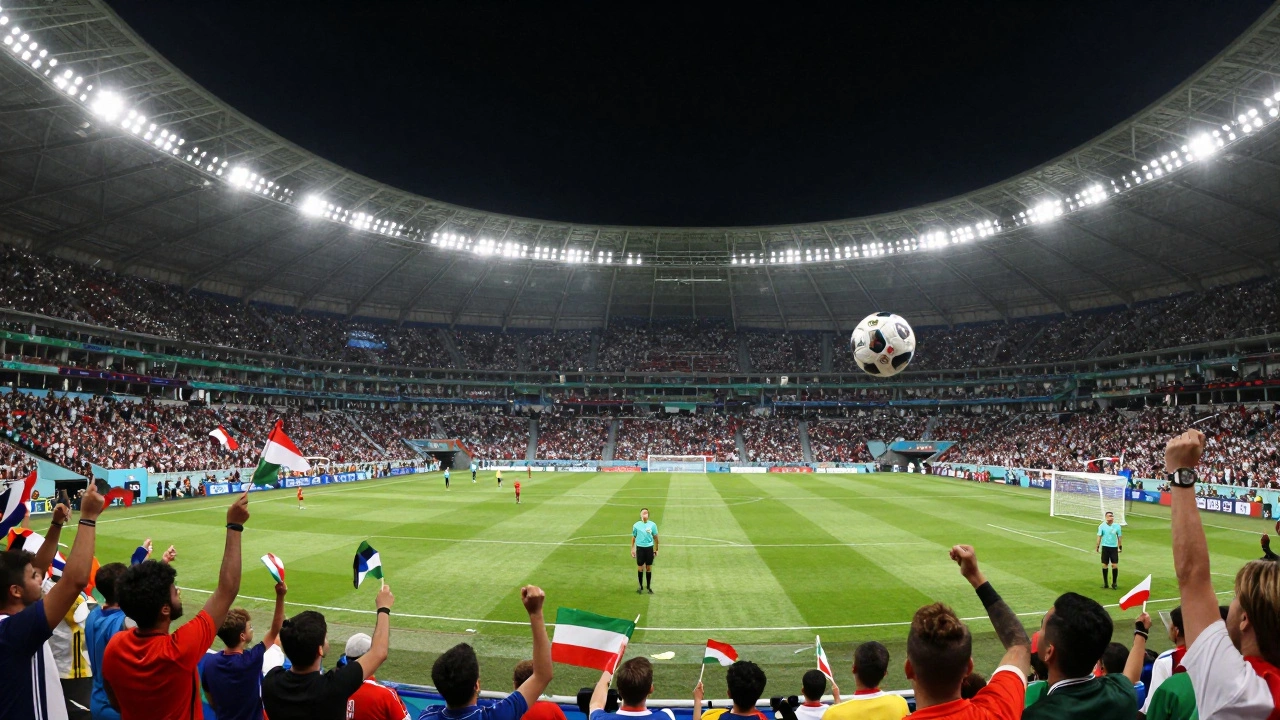
A FIFA match isn’t just any game of football. It’s a match played under the official rules set by the Fédération Internationale de Football Association - the global governing body for the sport. When you see a FIFA match, you’re watching football at its most standardized, most regulated, and most watched form on the planet. Whether it’s a friendly between two national teams or the final of the World Cup, every detail - from the size of the pitch to the number of substitutions - follows strict FIFA guidelines.
What Makes a Match a FIFA Match?
Not every football game counts as a FIFA match. For it to qualify, it must be officially sanctioned by FIFA. That means the organizing body - whether it’s a national association like the FA in England or the US Soccer Federation - has to be a member of FIFA. The match must also follow FIFA’s Laws of the Game, which cover everything from the ball’s weight and circumference to how long extra time lasts.
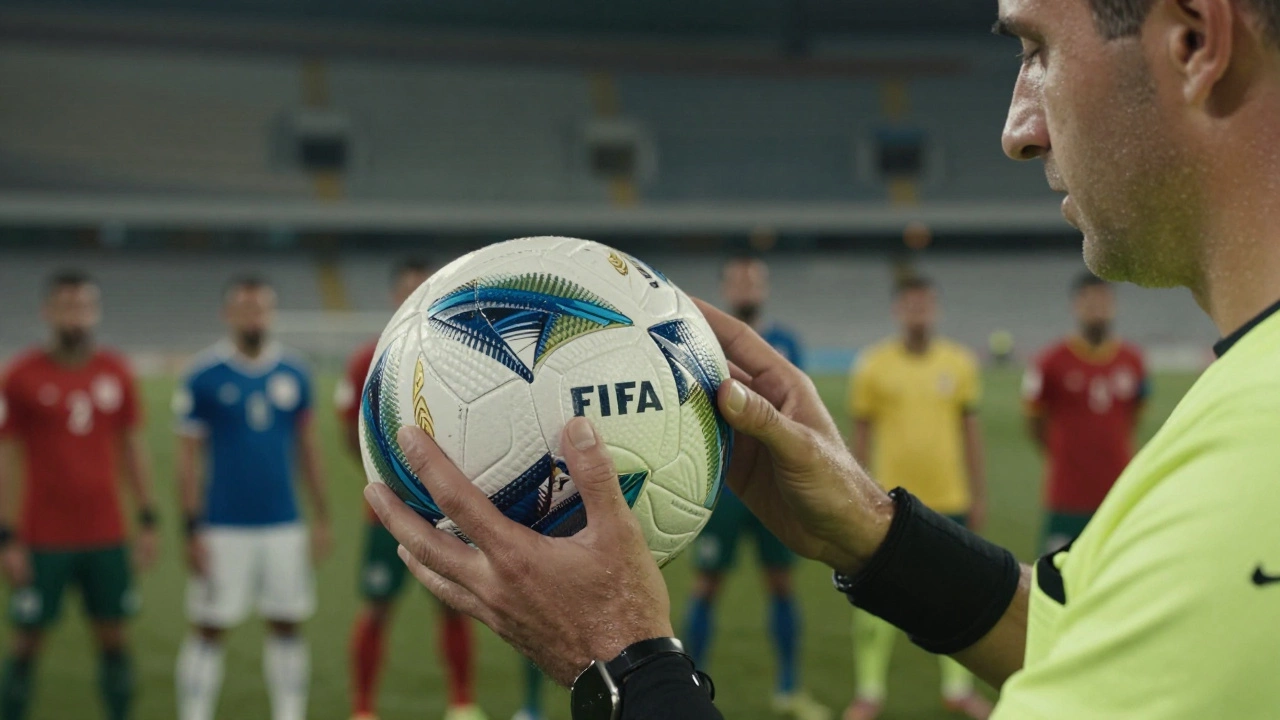
These rules aren’t suggestions. They’re enforced by referees who are trained and certified by FIFA. Even the design of the ball has to meet FIFA standards - for example, the official match ball for the 2022 World Cup, the Al Rihla, was tested in wind tunnels and had to maintain shape and flight accuracy under extreme conditions. If a match doesn’t meet these criteria, it’s just a friendly, a local league game, or a youth tournament - not a FIFA match.
Types of FIFA Matches
FIFA matches come in several forms, each with its own structure and purpose.
- International Friendlies - These are non-competitive games between national teams, usually scheduled outside of tournament windows. They’re used for team building, testing new players, or preparing for upcoming tournaments. While they don’t affect rankings directly, they can influence a team’s FIFA World Ranking.
- World Cup Matches - The pinnacle of international football. Held every four years, the World Cup involves 32 national teams (expanding to 48 in 2026) competing in a knockout format. Every match in this tournament is a FIFA match by definition.
- Continental Championship Matches - Events like the UEFA European Championship, Copa América, or Africa Cup of Nations are organized by FIFA’s six continental confederations. Though run by regional bodies, they operate under FIFA rules and count as official FIFA matches.
- Club Competitions - FIFA doesn’t directly run club tournaments, but it sanctions events like the FIFA Club World Cup. Only clubs that win their continental championships qualify, and every match in this tournament is a FIFA match.
- Youth and Women’s Tournaments - FIFA also governs the U-20 World Cup, U-17 World Cup, and the Women’s World Cup. These follow the same rules as senior matches, just adapted for age or gender categories.
How FIFA Matches Differ from Domestic Leagues
You might wonder why a Premier League match isn’t called a FIFA match. The answer is simple: domestic leagues operate under their own national football associations, not FIFA directly. While they use the same Laws of the Game, FIFA doesn’t organize, control, or certify individual league matches.
Here’s how they differ:
| Feature | FIFA Match | Domestic League Match |
|---|---|---|
| Organizer | FIFA or its confederations | National association (e.g., Premier League, La Liga) |
| Teams Involved | National teams or qualified clubs | Club teams from one country |
| Global Recognition | Yes - broadcast in over 200 countries | Primarily regional or national broadcast |
| Player Eligibility | Must hold nationality of team they represent | Any player under contract, regardless of nationality |
| Match Frequency | Occasional - few per year for most national teams | Weekly - 38 matches per season in top leagues |
So while a Manchester City vs. Liverpool game follows FIFA rules, it’s not a FIFA match because FIFA doesn’t control it. But if England plays Brazil in a World Cup qualifier, that’s a FIFA match - because FIFA oversees the competition and the players are representing their countries under international law.
Who Plays in a FIFA Match?
In international FIFA matches, only players who hold the nationality of the country they’re representing can play. FIFA has strict rules to prevent players from switching allegiances too easily. For example, a player born in Brazil but raised in Germany can play for Germany only if they’ve held German citizenship for at least five years and haven’t played a competitive senior match for Brazil.
There are exceptions - like players with dual citizenship who’ve never played for a senior national team. That’s why you see players like Kylian Mbappé (born to a French mother and Algerian and Cameroonian parents) representing France. FIFA’s eligibility rules are designed to keep the game fair and rooted in national identity.
For club matches under FIFA sanction - like the Club World Cup - players must be registered with their club and meet FIFA’s transfer regulations. No loaned players can be used unless the transfer window is open and paperwork is approved.
Why FIFA Matches Matter Beyond the Scoreline
FIFA matches aren’t just about who wins or loses. They carry political, cultural, and economic weight. A single match can shift national pride, influence tourism, or even ease diplomatic tensions. When North and South Korea played a friendly in 2018, it was seen as a symbolic gesture of peace.
On the economic side, FIFA matches generate billions. The 2022 World Cup brought in over $7.5 billion in revenue, mostly from broadcasting rights and sponsorships. Countries that host tournaments see spikes in hotel bookings, airport traffic, and merchandise sales. In Qatar, the 2022 World Cup led to the construction of 10 new stadiums and a metro system - infrastructure that still serves the country today.
For fans, a FIFA match is often the only time they see their national team play against the best in the world. That’s why millions stay up at 3 a.m. to watch a game in another time zone. It’s not just football - it’s identity, history, and emotion rolled into 90 minutes.
How to Watch a FIFA Match
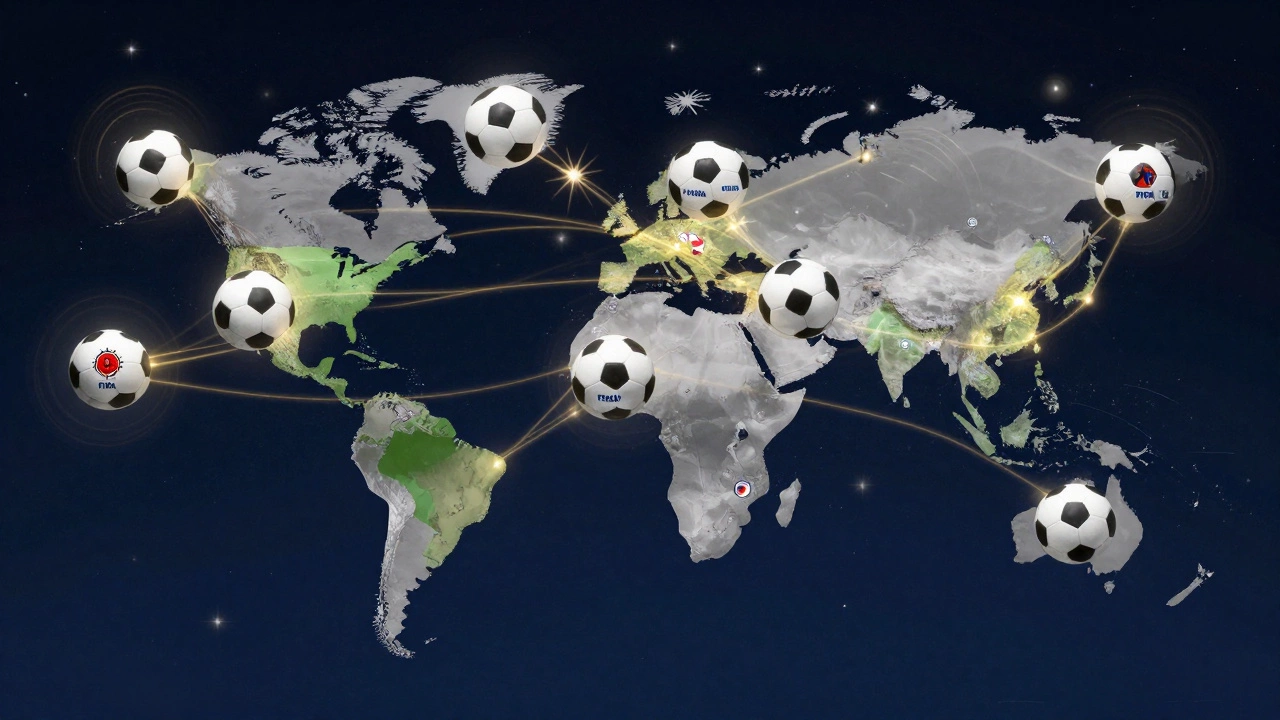
FIFA matches are broadcast through official partners in every country. In the UK, for example, the BBC and ITV hold rights to World Cup matches. In the U.S., Fox and Telemundo cover them. For the latest schedule, you can check FIFA’s official website - it lists all upcoming matches, venues, and broadcast partners.
Many matches are also streamed legally through apps like FIFA+, which offers free live streams of youth and women’s tournaments. If you’re traveling, you might need a VPN to access your home country’s broadcast, but make sure you’re using a legal service. Pirated streams risk malware and violate FIFA’s copyright rules.
Common Misconceptions
People often mix up FIFA matches with other types of football games. Here are three big myths:
- Myth: All international games are FIFA matches. Truth: Only those sanctioned by FIFA count. Some unofficial friendlies, like those between club select teams, aren’t recognized.
- Myth: FIFA controls all football worldwide. Truth: FIFA sets the rules, but local associations run leagues, youth programs, and domestic cups.
- Myth: A match with referees wearing FIFA badges is automatically a FIFA match. Truth: Referees wear federation badges - not FIFA ones. FIFA certifies referees, but they work under national associations during domestic games.
What Happens After a FIFA Match?
After the final whistle, results are sent to FIFA’s central database. Wins, losses, and draws affect a team’s FIFA World Ranking - a system that determines seeding in tournaments. A team that wins a tough qualifier can jump several spots in the rankings, giving them better draw positions in future competitions.
Player performances are also tracked. FIFA collects stats like distance covered, passes completed, and shots on target. These aren’t just for fans - they’re used by scouts, coaches, and even insurance companies to assess player health and value.
If a match ends in a draw during knockout stages, extra time and penalties follow. FIFA has strict rules for penalty shootouts: five kicks per team, alternating kicks, and sudden death if still tied. No team has ever been allowed to use more than 11 players during a shootout - even if injuries occur.
Is every international football match a FIFA match?
No. Only matches officially sanctioned by FIFA count. Friendly games between national teams organized by FIFA member associations are included, but unofficial games - like those between club all-star teams or regional selections - are not.
Can a club team play a FIFA match?
Yes, but only in tournaments FIFA directly sanctions - like the FIFA Club World Cup. Club matches in leagues like the Premier League or Bundesliga are not FIFA matches, even though they follow FIFA rules.
Do FIFA matches use VAR?
Yes, VAR (Video Assistant Referee) is mandatory in all major FIFA tournaments, including the World Cup, Women’s World Cup, and Club World Cup. It’s used to review goals, penalties, red cards, and cases of mistaken identity.
How often do national teams play FIFA matches?
It varies. Top teams might play 6-10 FIFA matches a year - including qualifiers, friendlies, and tournaments. Smaller nations may only play 2-4, often limited by budget and scheduling.
Can a player play for two countries in FIFA matches?
No. Once a player plays a competitive senior match for one country, they’re permanently tied to that nation. They can only switch if they’ve never played a competitive game and meet strict eligibility rules - like holding dual citizenship and waiting five years after switching nationality.