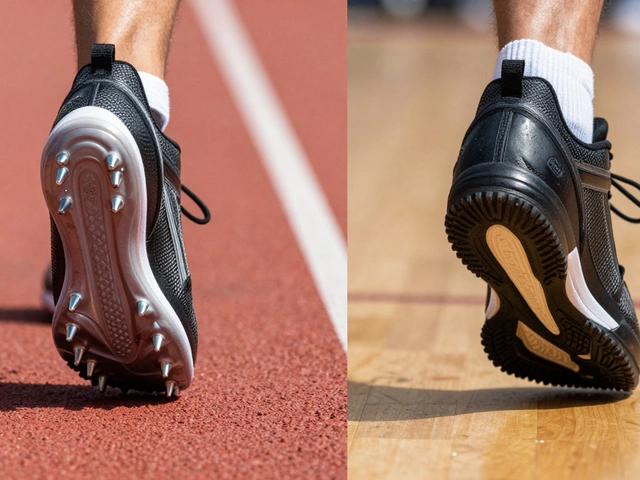
Sports Equipment June 15, 2026
What Is Sports Equipment Made Of? A Guide to Modern Materials
Sports Material Selector
Select a material below to see its detailed specifications and ideal applications.
Carbon Fiber
The high-performance standard for pros.
Aluminum Alloy
Durable workhorse for mid-range gear.
Synthetics (Poly/Nylon)
Essential for moisture-wicking apparel.
EVA Foam
Shock absorption for footwear.
Titanium
Premium strength with low weight.
Click a material card above to view details.
Grab a tennis racket. Feel the weight in your hand. Now imagine holding one from the 1970s. It would be heavy, wooden, and likely break if you swung it too hard. That shift-from wood to something lighter and stronger-is the story of modern sports. We don't just play games anymore; we engineer them. The difference between winning and losing often comes down to grams, millimeters, and molecular structures.
You might wonder why your new running shoes cost twice as much as the old ones or why that carbon-fiber bike frame feels like it’s floating. It’s not just marketing hype. Manufacturers are constantly swapping out traditional materials for advanced composites and alloys to squeeze out every ounce of performance. Understanding what these items are made of helps you buy smarter, maintain better, and appreciate the tech under your feet.
The Rise of Carbon Fiber and Composites
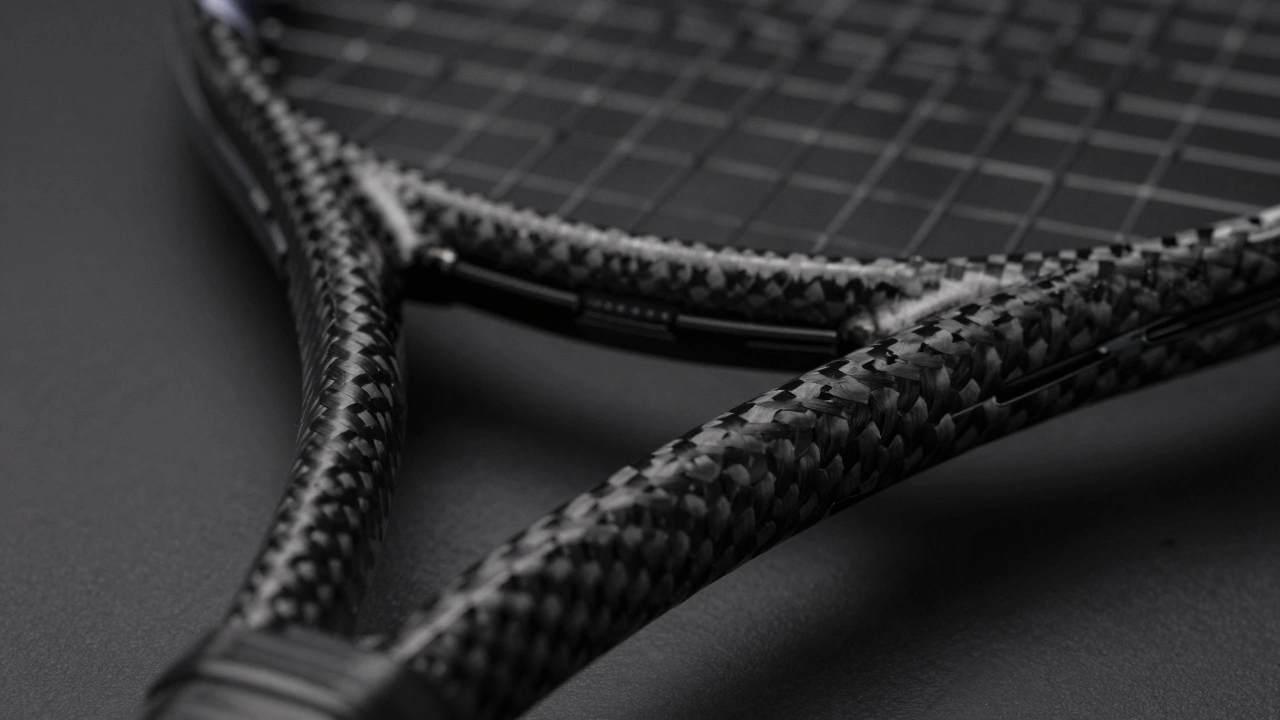
If there is one material dominating high-end sports gear today, it is carbon fiber. You see it in bicycle frames, tennis rackets, golf clubs, and even archery bows. But what actually is it? Carbon fiber isn’t a single solid block like steel. It consists of thousands of tiny filaments, each thinner than a human hair, woven together into a fabric. This fabric is then soaked in resin and cured under heat and pressure to form a rigid, lightweight structure known as a composite.
Carbon Fiber Reinforced Polymer (CFRP) is a composite material made of carbon fibers embedded in a polymer matrix. It offers an exceptional strength-to-weight ratio, making it ideal for competitive sports where speed and agility matter.
Why do pros love it? Because it’s stiff. When you pedal a bike or swing a club, you want all your energy to transfer directly into motion, not lost bending the frame. Carbon fiber delivers that stiffness without the bulk. However, it has a downside: it can be brittle. Unlike metal, which bends before breaking, carbon fiber can crack suddenly if hit with a sharp impact, like a rock on a trail or a curb during a crash.
Manufacturers often mix carbon fiber with other materials to balance this. For example, many climbing poles use carbon fiber shafts but add rubberized grips and aluminum tips. This hybrid approach gives you the lightness of carbon with the durability of metal where it counts most.
Aluminum Alloys: The Workhorse of Sport
While carbon gets the glory, aluminum does the heavy lifting-literally. Most mid-range bicycles, trekking poles, and hockey sticks are made from aluminum alloys. Pure aluminum is soft and weak, so manufacturers mix it with elements like magnesium, silicon, or copper to create alloys such as 6061 or 7075 grade aluminum.
These alloys offer a sweet spot between price, weight, and durability. They are corrosion-resistant, meaning they won’t rust like steel when left out in the rain after a muddy rugby match. They also have a natural "give" or vibration damping that some riders prefer over the harsh feel of pure carbon. If you’re buying your first serious piece of equipment, aluminum is usually the safest bet. It forgives mistakes, survives drops, and costs significantly less than its composite cousins.
In cycling, aluminum frames have been refined for decades. Modern hydroforming techniques allow factories to bend aluminum tubes into complex shapes that mimic the aerodynamics of carbon, keeping the price accessible for amateur athletes.
Synthetic Fabrics and Textiles
Your body is covered in cotton t-shirts and denim jeans at home, but on the field, those materials become liabilities. Cotton absorbs sweat, becomes heavy, and chafes skin. Instead, athletic wear relies on synthetic polymers like polyester, nylon, and elastane (often branded as Spandex or Lycra).
Polyester is the backbone of most jerseys. It is hydrophobic, meaning it repels water. When you sweat, the moisture wicks away from your skin to the outer surface of the fabric where it can evaporate quickly. Nylon adds durability and stretch, making it perfect for compression shorts or leggings that need to hold their shape during intense movement. Elastane provides the necessary elasticity, allowing muscles to move freely without restriction.
Advanced textiles now include phase-change materials (PCMs) that absorb excess body heat when you’re hot and release it when you cool down. These are common in high-end ski suits and marathon shirts. The goal is thermal regulation: keeping your core temperature stable so your muscles perform efficiently.
Rubber and Foam Technologies
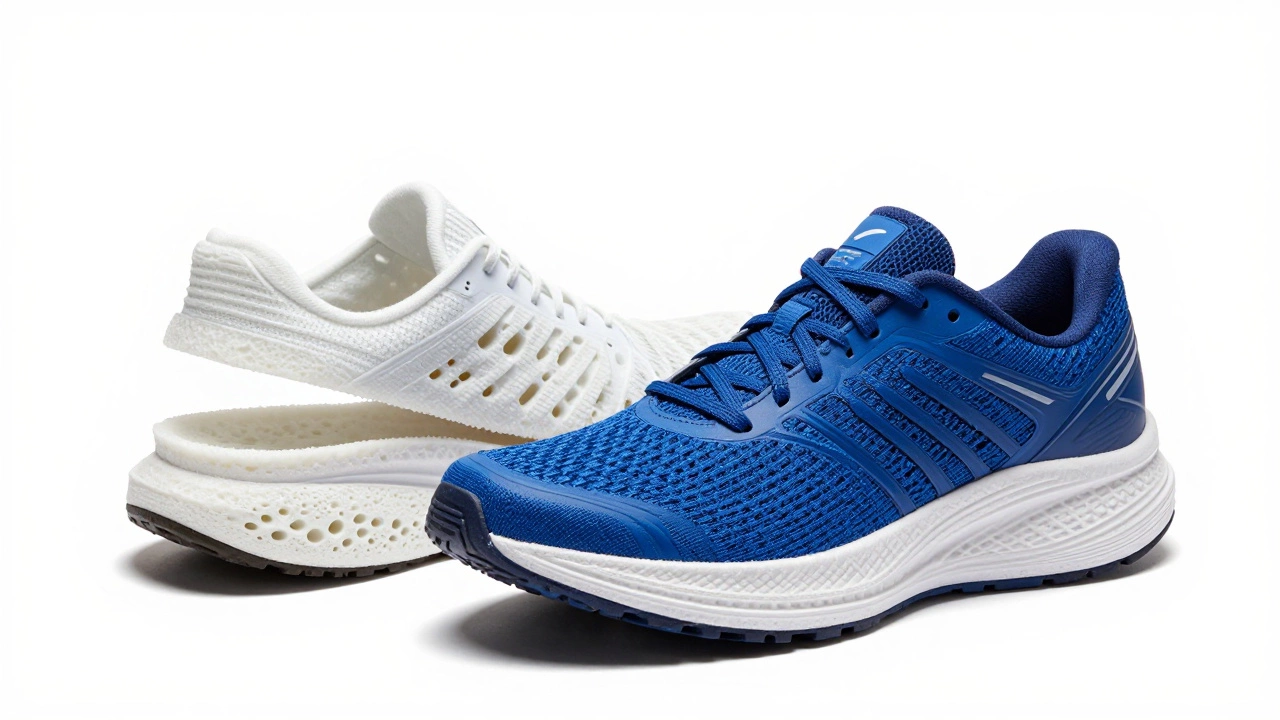
Look at the bottom of your sneakers. That sole is rarely just "rubber." It is a complex blend of natural rubber, synthetic polyurethane (PU), and ethylene-vinyl acetate (EVA). Each layer serves a specific purpose.
- EVA Midsole: This is the squishy part that cushions your foot strike. It’s lightweight and absorbs shock, protecting your joints from the pavement. Over time, however, EVA compresses and loses its bounce, which is why running shoes need replacing every 300-500 miles.
- Polyurethane Outsole: Harder and more durable than EVA, PU is used in areas that take heavy abrasion, like the heel counter or the toe box of hiking boots.
- Natural Rubber Tread: Found on the bottom pattern, this provides grip. High-friction rubber compounds are essential for court shoes in basketball or tennis to prevent slipping during lateral movements.
In helmets, foam technology is critical. Expanded Polystyrene (EPS) foam is standard in bike and ski helmets. It works by crushing itself upon impact, absorbing kinetic energy that would otherwise travel to your skull. Newer materials like Koroyd, which uses hollow tubes instead of bubbles, are gaining traction because they dissipate energy more effectively across multiple angles.
Metallic Cores: Steel and Titanium
Steel hasn’t disappeared; it just moved to specialized roles. You still find steel springs in archery bows and high-tension cables in suspension bridges for obstacle courses. Its immense tensile strength makes it unbeatable for applications requiring raw power storage. However, its weight limits its use in fast-moving sports.
Titanium is the premium alternative. It is nearly as strong as steel but about 45% lighter. It is also biocompatible and highly resistant to corrosion. You’ll find titanium in high-end golf club heads, expensive watch cases for timing, and parts of aerospace-grade racing bikes. The trade-off is cost and difficulty in manufacturing. Shaping titanium requires specialized tools and higher temperatures, which drives up the price tag significantly.

Material Selection Comparison
| Material | Weight | Durability | Cost | Best Use Case |
|---|---|---|---|---|
| Carbon Fiber | Very Light | High (but brittle) | $$$ | Pro-level bikes, rackets, poles |
| Aluminum Alloy | Light | High | $$ | Mid-range bikes, trekking poles |
| Polyester/Nylon | Light | Medium-High | $ | Athletic apparel, bags |
| EVA Foam | Very Light | Low (compresses) | $ | Shoe midsoles, padding |
| Titanium | Light | Very High | $$$$ | Premium golf clubs, niche bike parts |
Environmental Impact and Sustainability
The production of these high-performance materials takes a toll on the environment. Polyester is derived from petroleum, and recycling mixed-material shoes is notoriously difficult. The industry is slowly shifting toward bio-based materials. For instance, some brands now use castor bean oil to create foams for shoe soles, and others are experimenting with mushroom leather (mycelium) for accessories.
As consumers, asking about material sourcing matters. Choosing gear made from recycled plastics or modular designs that allow easy repair extends the life of the product and reduces waste. Durability is the most sustainable feature any piece of equipment can have.
Is carbon fiber better than aluminum for beginners?
Not necessarily. While carbon fiber is lighter and stiffer, it is more expensive and less forgiving of impacts. Aluminum is durable, affordable, and performs well for most recreational activities. Save carbon fiber for when you are optimizing for competition-level performance.
Why do my running shoes feel flat after a year?
The EVA foam in the midsole breaks down over time due to repeated compression. Even if the tread looks fine, the cushioning properties degrade, leading to reduced shock absorption and potential joint strain. Replace shoes every 300-500 miles depending on your weight and terrain.
Can I repair a cracked carbon fiber frame?
Minor cracks can sometimes be repaired by specialists using resin and new carbon layers, but structural integrity is never guaranteed. For safety-critical items like bike frames or helmets, replacement is strongly recommended over repair.
What is the best material for waterproof jackets?
Modern waterproof jackets use membranes like Gore-Tex, which is expanded polytetrafluoroethylene (ePTFE). It allows water vapor (sweat) to escape while blocking liquid water from entering. The outer shell is typically nylon or polyester treated with a durable water repellent (DWR) coating.
Are titanium golf clubs worth the extra cost?
Titanium allows for larger clubheads with lighter weights, enabling faster swing speeds and greater distance. If you are a high-handicap player looking for forgiveness and distance, titanium drivers are excellent. For precision wedges, steel may still be preferred for its feedback.