Sports Equipment September 13, 2026
What Is Sport Equipment Made Of? Materials Explained
Sport Equipment Material Explorer
Select a material below to discover its key properties, common applications, advantages, disadvantages, and care instructions based on current engineering standards.
Carbon Fiber
CompositeKey Properties
Pros
Cons
Maintenance & Care
You swing a tennis racket that feels like a feather but hits with the force of a sledgehammer. You lace up running shoes that return energy with every step. You kick a football that stays perfectly spherical despite getting soaked in rain. Ever stopped to wonder what on earth these things are actually made of? It’s not just "plastic" and "rubber." The world of sport equipment is a complex mix of engineering marvels, from aerospace-grade alloys to microscopic polymer chains.
If you’ve ever snapped a cheap bat or felt your knees ache after wearing the wrong trainers, you know materials matter. They dictate performance, durability, and safety. Let’s break down the actual stuff inside your gear, moving from the obvious basics to the high-tech secrets hiding in plain sight.
The Backbone: Metals and Alloys
When you think of heavy-duty gear, metal comes to mind first. But it’s rarely just one type. Steel is the old guard. It’s heavy, incredibly strong, and cheap. You’ll find it in weightlifting bars, dumbbells, and older goalposts. It doesn’t flex much, which is great for stability but terrible if you need speed.
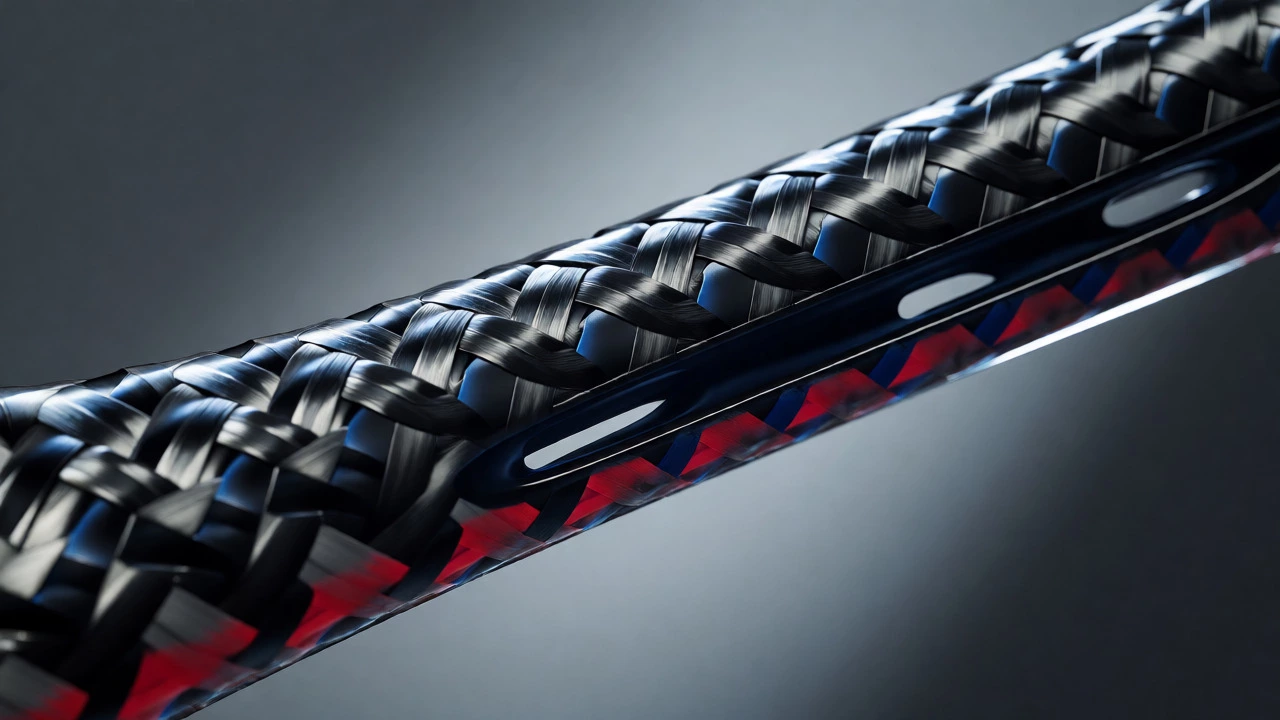
Then there’s aluminum. It’s light, resistant to rust, and easy to mold. Most entry-level bicycles and camping chairs use aluminum because it balances cost and weight. However, if you’re looking at high-end road bikes or baseball bats, you’re likely looking at something different: carbon fiber. Technically, this isn’t a metal-it’s a composite-but it often replaces metals where stiffness-to-weight ratio is king. Carbon fiber is woven into sheets, soaked in resin, and baked. The result? A material that is lighter than aluminum but stiffer than steel. This is why a pro cyclist can climb a mountain without their bike feeling like an anchor.
Titanium deserves a mention too. It’s expensive, rare, and virtually indestructible. You see it in premium golf clubs and high-end bicycle frames. Why pay extra? Because titanium absorbs vibration better than carbon or aluminum, reducing fatigue over long periods. If you’re playing tennis for three hours, a titanium frame might save your elbow.
The Soft Touch: Textiles and Synthetics
Gone are the days when jerseys were pure cotton. Cotton absorbs sweat, gets heavy, and chafes. Modern sportswear relies on synthetics like polyester and nylon. These fabrics wick moisture away from your skin, keeping you dry and light. They’re also durable enough to withstand repeated washing and stretching.
But it’s not just about shirts. Consider soccer balls. Older models used leather panels stitched together. Leather absorbs water, making the ball heavier and unpredictable in wet conditions. Today’s match balls use polyurethane (PU) or thermoplastic polyurethane (TPU). These synthetic leathers are water-resistant, consistent in shape, and provide a predictable touch. The seams aren’t stitched anymore either; they’re thermal-bonded. This eliminates gaps where water could enter, creating a near-perfect sphere.
For contact sports like rugby or American football, we look at vinyl-coated fabrics and dense foams. The outer shell needs to be tough enough to resist tearing during tackles, while the inner layers must cushion impact. This balance requires precise engineering. Too soft, and the ball loses its shape; too hard, and it hurts to catch.
Impact Absorption: Foams and Elastomers
If you run, jump, or land, you rely on foams. Ethylene-vinyl acetate, commonly known as EVA foam, is the workhorse here. It’s closed-cell, meaning it traps air bubbles inside, providing cushioning and buoyancy. You’ll find EVA in yoga mats, pool noodles, and the midsoles of budget running shoes.
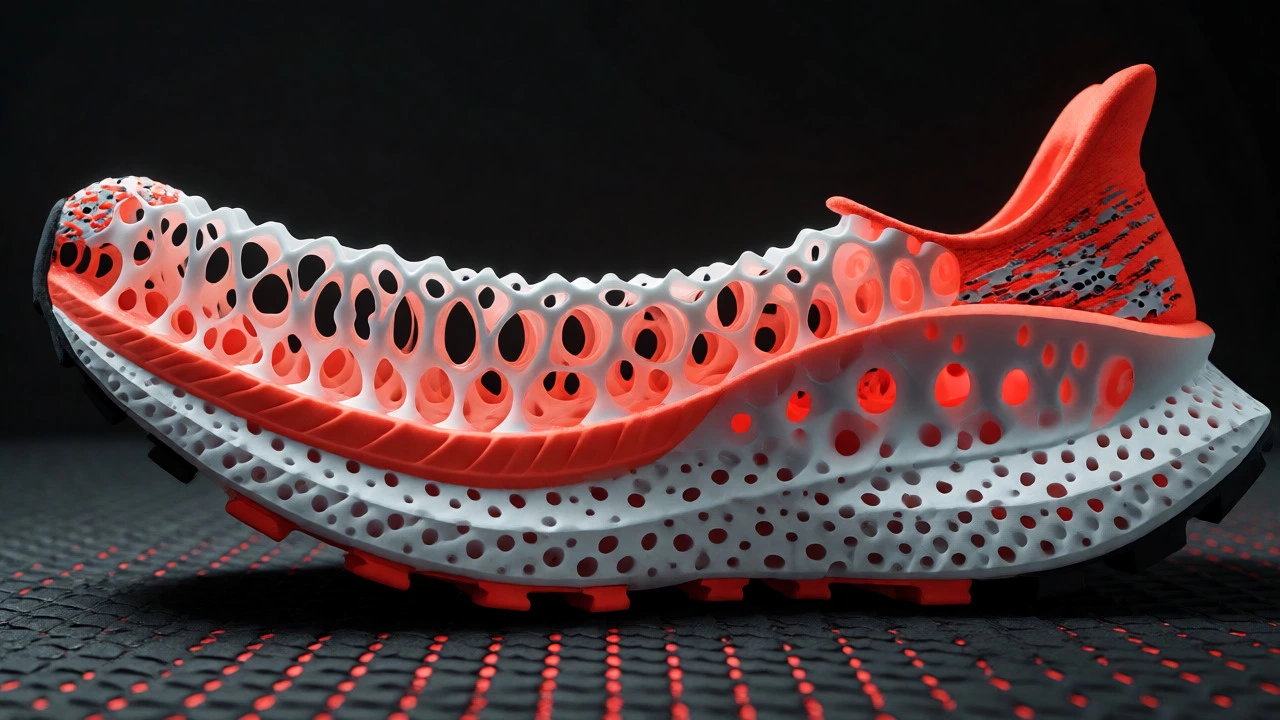
However, top-tier running shoes have moved beyond standard EVA. Many now use supercritical foams like PEBA (polyether block amide). These foams are infused with gas under pressure, creating millions of tiny, uniform cells. The result is a material that returns more energy than it absorbs. When your foot strikes the ground, the foam compresses and springs back instantly, propelling you forward. Nike’s ZoomX and Adidas’ Boost are famous examples, though Boost uses expanded TPU pellets rather than traditional foam blocks.
For protective gear, like helmets or shin guards, we use EPS (expanded polystyrene). Think of it as the white styrofoam in packaging boxes, but denser and engineered for impact. It crushes upon impact to absorb energy, protecting your skull. That’s why many helmet manufacturers recommend replacing them after a significant hit-even if they look fine. Once EPS cracks internally, it won’t protect you again.
The Invisible Glue: Composites and Resins
Most modern equipment isn’t made of one material; it’s a sandwich. Take a hockey stick. It might have a core of balsa wood or foam for feel, wrapped in layers of carbon fiber and fiberglass for strength, all held together by epoxy resin. This is a composite structure.
Composites allow engineers to tailor properties. Want stiffness in one direction but flexibility in another? Layer the fibers accordingly. This is why a tennis racket can twist slightly on off-center hits (forgiveness) but remain stable on powerful serves (control). The resin matrix binds the fibers, transferring load across the entire structure. Without proper curing, the resin remains brittle, leading to delamination-where layers peel apart. This is a common failure mode in cheaper composites.
Ski boots are another composite masterpiece. The outer shell is usually polyurethane or polyolefin, chosen for its ability to stiffen in cold temperatures without becoming brittle. The inner liner uses memory foam that molds to your foot over time. The buckles are aluminum or steel, designed to apply even pressure. Every component works in harmony to transfer power from your leg to the ski edge.
Natural vs. Synthetic: The Ongoing Debate
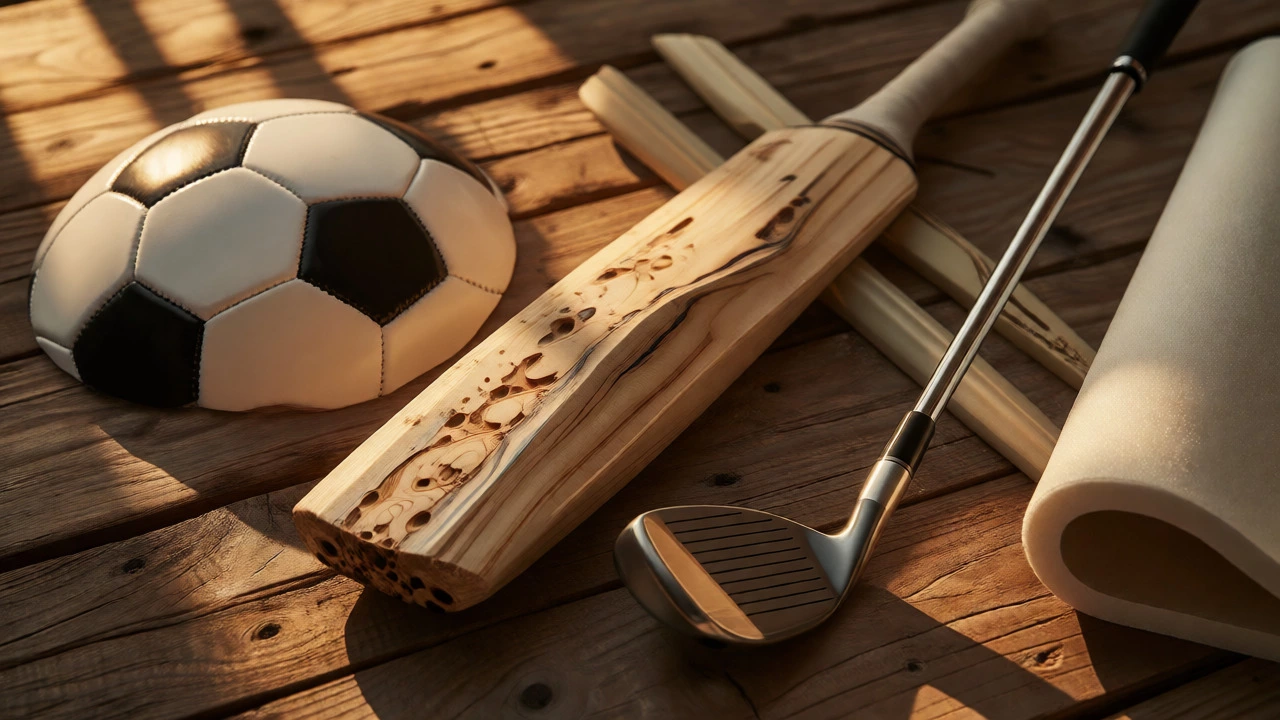
Despite the tech boom, natural materials haven’t disappeared. Wood still dominates cricket bats and table tennis blades. Willow wood, specifically English willow, has a unique cellular structure that provides excellent shock absorption and rebound. No synthetic material has fully replicated the "feel" of a well-struck wooden bat. Similarly, cork is used in some surfboard blanks and yoga blocks because it’s renewable, biodegradable, and naturally buoyant.
Bamboo is gaining traction as a sustainable alternative to plastic in skateboards and snowboards. It’s strong, flexible, and grows rapidly without pesticides. However, natural materials vary. Two pieces of wood are never identical, whereas synthetic polymers can be manufactured to exact specifications. For professional athletes seeking consistency, synthetics win. For hobbyists valuing tradition and tactile feedback, naturals hold their own.
| Material | Key Properties | Common Applications | Pros | Cons |
|---|---|---|---|---|
| Carbon Fiber | High stiffness, low weight | Rackets, bikes, poles | Performance boost | Brittle under sharp impact |
| EVA Foam | Cushioning, lightweight | Shoes, mats, handles | Affordable, comfortable | Compresses over time |
| Polyurethane | Durable, elastic | Ball casings, shoe soles | Long-lasting | Heavier than EVA |
| Aluminum Alloy | Corrosion-resistant, malleable | Frames, bats, weights | Cost-effective | Vibrates more than carbon |
| Willow Wood | Shock-absorbing, natural grain | Cricket bats | Superior feel | Requires maintenance |
How Manufacturing Methods Change Material Performance
It’s not just what the material is, but how it’s processed. Injection molding creates uniform plastic parts quickly, ideal for mass-produced items like badminton shuttlecocks bases or helmet shells. But injection-molded parts can have weak points where the flow fronts meet.
Blow molding creates hollow objects, like water bottles or certain ball cores, by inflating molten plastic inside a mold. Rotational molding produces seamless, stress-free shapes, often used for large containers or specialized sports accessories. For high-performance gear, hand-layup or vacuum infusion processes are used for composites. These methods remove air pockets and ensure even resin distribution, resulting in stronger, lighter parts. Cheaper equipment often skips these steps, leading to inconsistent quality.
Heat treatment also plays a role. Tempering glass in goggles increases resistance to shattering. Annealing metals reduces internal stresses, preventing warping. Understanding these processes helps you spot quality differences. A glossy, uneven surface on a plastic part might indicate poor molding, potentially leading to premature cracking.
Caring for Your Gear Based on Its Composition
Knowing what your gear is made of tells you how to maintain it. Never leave a rubber-based product, like swim fins or yoga mats, in direct sunlight for extended periods. UV radiation breaks down polymer chains, causing brittleness and cracking. Store them in cool, dark places.
For carbon fiber rackets or bats, avoid extreme temperature fluctuations. Rapid expansion and contraction can weaken the resin bond between fibers. Don’t leave your bike frame in a car trunk on a scorching summer day. Similarly, leather goods, like boxing gloves, need conditioning. Dry leather becomes stiff and prone to splitting. Use a leather conditioner periodically to keep fibers supple.
Foam midsoles in running shoes degrade faster than the outsole. Even if the tread looks new, the foam may have lost its resilience. A general rule: replace running shoes every 300-500 miles. The material simply cannot recover its springiness indefinitely. Ignoring this leads to increased joint stress, regardless of how good the upper material looks.
Why is carbon fiber so expensive?
Carbon fiber is costly due to the complex manufacturing process. Producing the fibers involves heating precursor materials like polyacrylonitrile to thousands of degrees in inert atmospheres. Then, weaving and laying up the sheets is labor-intensive, often done by hand for high-end gear. Finally, curing the resin takes time and energy. While raw material costs have dropped, the skilled labor and precision required keep prices high compared to aluminum or steel.
Are synthetic balls better than leather ones?
For most modern applications, yes. Synthetic leather (like PU or TPU) offers consistent flight, water resistance, and durability. Traditional leather absorbs water, changing weight and shape unpredictably. However, some purists prefer the tactile feedback of genuine leather in specific contexts, like vintage-style footballs. But for competitive play where consistency is key, synthetics dominate.
Can I recycle my old sports equipment?
It depends on the material. Pure metals like aluminum and steel are easily recyclable. Plastics like PET (water bottles) and HDPE (some containers) are widely accepted. However, composites like carbon fiber and multi-layered shoe soles are difficult to recycle because separating the bonded materials is technically challenging and expensive. Specialized programs exist for things like old tennis balls or running shoes, but curbside recycling often rejects mixed-material gear.
Does thicker padding always mean more protection?
No. The density and type of foam matter more than thickness. Thin, high-density EPS foam can offer better impact protection than thick, low-density foam. In fact, excessive thickness can restrict movement and reduce proprioception (body awareness), potentially increasing injury risk. Look for gear certified to specific safety standards (like CE or ASTM) rather than judging solely by bulk.
Why do my rubber grips get sticky over time?
This is called "hydrolysis" or "reversion." Rubber compounds contain additives that migrate to the surface over time, especially when exposed to heat, UV light, and sweat. These additives break down, leaving a tacky residue. Cleaning with mild soap and water can help temporarily, but eventually, the chemical breakdown is irreversible, requiring replacement of the grip tape or handle.