Boxing Round Length: How Long Are Rounds Really and Why It Matters
When you watch a boxing match, the bell ringing at the start of each round isn’t just a signal—it’s a rhythm that shapes the whole fight. The boxing round length, the standardized time period during which boxers compete before resting. Also known as fight interval, it’s not the same across all levels of the sport. In professional bouts, rounds last three minutes, while amateur fights often use two-minute rounds. This difference isn’t arbitrary—it’s designed around safety, strategy, and the physical demands placed on fighters.
Behind every round is a strict structure governed by boxing rules, the official regulations that define how matches are conducted, scored, and controlled. These rules include not just round duration, but also the one-minute rest period between rounds, the number of rounds in a fight (usually 10 to 12 for title bouts), and what happens if a fighter can’t continue after the bell. Referees, judges, and corner teams all rely on this timing to make split-second decisions. A fighter who’s gassed by round five might still win if they landed clean shots in the first three minutes—timing matters as much as power.
The round duration, the exact amount of time allocated for active fighting in each round affects everything: pacing, energy use, and even training. Pros train for three-minute bursts with minimal rest, mimicking real fight conditions. Amateurs, especially youth and Olympic-level fighters, train for two-minute rounds because that’s what they’ll face in competition. If you’re training for boxing, knowing the round length helps you build the right stamina. You can’t just run miles—you need to simulate the exact rhythm of the ring.
It’s not just about how long you fight—it’s about how long you recover. The one-minute rest between rounds is when coaches shout advice, towels get wiped, and fighters catch their breath. That minute can turn a losing fight around. Fighters who manage their energy across rounds often outlast those who go all-out from the start. This is why boxing match structure, the organized sequence of rounds, rest periods, and rules that define a bout’s flow is as important as technique. A 12-round title fight isn’t just 36 minutes of punching—it’s 12 carefully planned battles with recovery windows in between.
And then there’s the question of why these times changed over the years. In the past, fights could go on for 15 rounds. But after a tragic bout in 1982, the sport shortened title fights to 12 rounds to reduce brain trauma risk. That shift didn’t just change the number of rounds—it changed how fighters approach each one. Now, every round counts more. You can’t afford to waste the first one hoping to turn it on later.
Whether you’re a fan trying to understand why a fight feels different on TV versus live, or a beginner wondering how to train for your first bout, knowing the boxing round length gives you real insight. It’s not just a timer—it’s the heartbeat of the sport. Below, you’ll find real posts that break down what’s allowed in the ring, how fighters prepare for these timed bursts, and why the rules around round length matter more than you think.
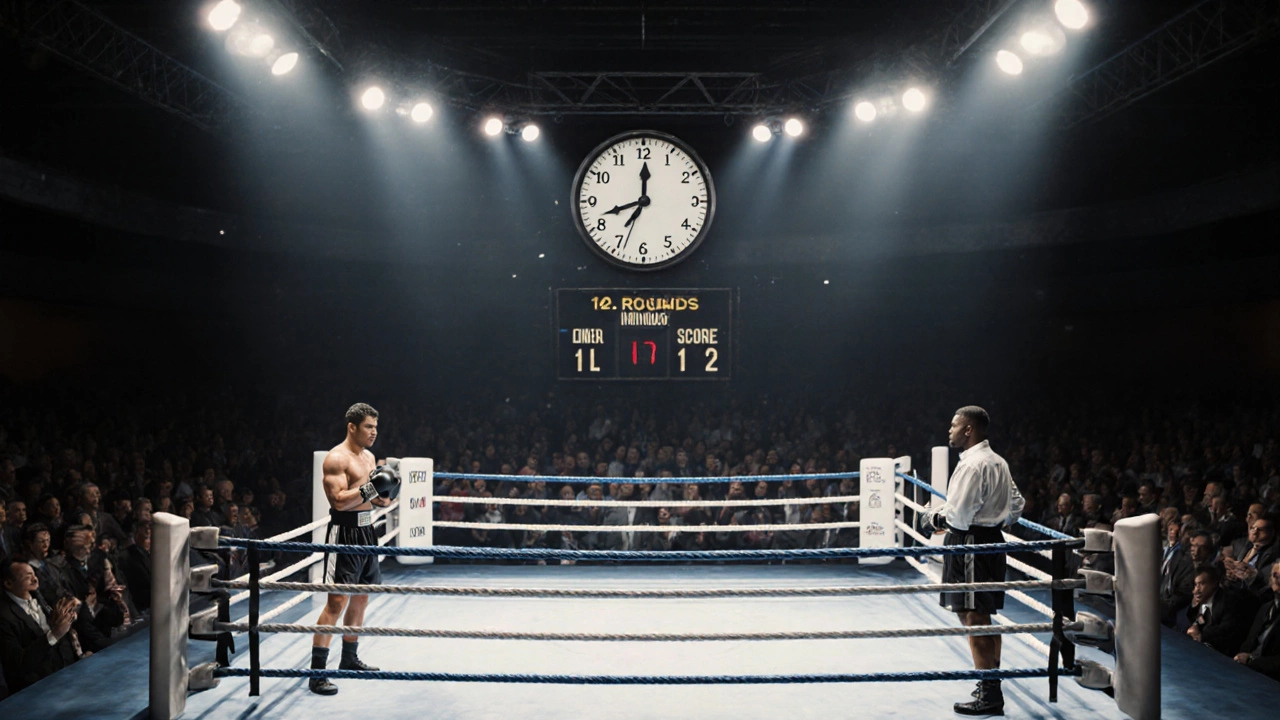
How Long Is a 12‑Round Boxing Match? Full Timing Breakdown
Learn exactly how long a 12‑round boxing match lasts, including fight time, rest periods, and factors that can add minutes. Get a clear 47‑minute baseline and real‑world examples.