Gym Workouts May 10, 2026
Is 3 Sets of 10 Reps Good? The Truth About Hypertrophy and Strength
Training Protocol Analyzer
Analysis Result
Verdict:
Target Zone Alignment:
Strength
Hypertrophy
Endurance
Recommendation
Loading recommendation...
The Short Answer: Yes, It’s Great
If you walk into a gym and ask a trainer if 3 sets of 10 reps is a good protocol, they’ll likely nod and tell you to get started. And for most people, that advice is spot on. This specific combination-often called the "golden standard" of bodybuilding-is one of the most effective ways to build muscle size, improve muscular endurance, and maintain joint health without burning out your central nervous system.
However, calling it "good" doesn’t mean it’s the *only* way or even the *best* way for every single goal. If your primary aim is to lift the heaviest possible weight for a single repetition (like a powerlifting competition), this range might leave you wanting more strength gains. If you’re training for marathon-level endurance, it might be too heavy. But for the vast majority of us looking to look better in a t-shirt and feel stronger in daily life, 3x10 is a powerhouse strategy.
Why 3 Sets of 10 Works So Well
To understand why this routine sticks around for decades, we need to look at what happens inside your muscles. When you perform an exercise like a bench press or a squat, you are recruiting motor units-the nerve signals that tell your muscle fibers to contract. Lighter weights recruit fewer units; heavier weights recruit more.
The 8-12 rep range, which includes our target of 10 reps, sits in a sweet zone known as the hypertrophy range. Hypertrophy simply means muscle growth. In this zone, you create enough mechanical tension (the load on the muscle) and metabolic stress (that "burn" you feel) to trigger repair and growth without causing excessive systemic fatigue.
Here is why the math works in your favor:
- Mechanical Tension: At roughly 65-75% of your one-rep max (1RM), the weight is heavy enough to stimulate type II muscle fibers, which have the greatest potential for growth.
- Metabolic Stress: Doing ten reps builds up lactate and hydrogen ions in the muscle. This cellular swelling signals the body to release growth factors and increase blood flow, aiding in nutrient delivery.
- Manageable Fatigue: Unlike going for 1-3 reps with near-maximal weight, doing 10 reps puts less strain on your joints, tendons, and central nervous system. You can recover faster, meaning you can train more frequently.
This balance makes 3x10 ideal for compound movements like squats, deadlifts, and overhead presses, as well as isolation moves like bicep curls and lateral raises.
When You Should Stick to 3x10
Not every goal requires the same approach. Here are the scenarios where this rep scheme shines brightest.
Aesthetic Muscle Building
If your mirror check is the priority, this is your bread and butter. Studies consistently show that when volume (total reps x weight) is equated, muscle growth is similar across rep ranges from 5 to 30. However, the 8-12 range is often preferred by natural lifters because it allows for higher total volume with less risk of injury than heavy low-rep training.
General Fitness and Health
For someone just starting their fitness journey, jumping straight into heavy 1-rep max attempts is dangerous and intimidating. Starting with 3 sets of 10 allows you to master form. You learn how to hinge at the hips for deadlifts or keep your core tight during squats while moving a moderate amount of weight. It builds a foundation of movement quality.
Rehabilitation and Joint Care
If you have nagging knee pain or shoulder issues, heavy loading can aggravate connective tissue. The moderate load of a 10-rep set strengthens the muscles around the joint without compressing the cartilage excessively. Physical therapists often prescribe this range for controlled strengthening.

When 3 Sets of 10 Might Not Be Enough
While versatile, this protocol has limits. Relying on it exclusively for years can lead to plateaus in specific areas.
Maximal Strength Neural Adaptation is the process where your nervous system becomes more efficient at recruiting muscle fibers. To get truly strong-meaning you want to move absolute maximum weight-you need to train your nervous system to fire all available motor units simultaneously. This usually requires loads above 85% of your 1RM, which typically results in 1-5 reps per set. If you only do 10 reps, your nervous system never learns to handle those extreme loads efficiently.
Muscular Endurance
If you are a rock climber, a martial artist, or an athlete who needs to repeat submaximal efforts for long periods, 10 reps might not be enough stimulus. Athletes in these fields often train with lighter weights for 15-20+ reps to improve their muscles' ability to clear metabolic waste products over time.
The Problem With "Just" 3 Sets
The title asks about "3 sets," but the number of sets is just as important as the number of reps. Three sets is a solid baseline, but is it optimal?
Research suggests that for most exercises, performing 3-5 working sets per exercise per week yields better hypertrophy than just 1-2 sets. However, three sets per session is often sufficient if you are training each muscle group two or three times a week. The key concept here is proximity to failure.
If your third set of 10 feels easy, you aren't stimulating growth. You should aim to finish each set with 1-2 reps left in the tank (RPE 8-9). If you can easily do 12 or 13 reps, the weight is too light. Conversely, if you fail at 7 reps, the weight is too heavy for this specific protocol. The goal is to hit 10 reps with good form, feeling challenged on the last few repetitions.
| Rep Range | Primary Goal | Intensity (% 1RM) | Fatigue Level |
|---|---|---|---|
| 1-5 | Maximal Strength | 85-100% | High (CNS) |
| 6-10 | Hybrid (Strength & Size) | 75-85% | Moderate-High |
| 8-12 | Hypertrophy (Muscle Growth) | 65-75% | Moderate |
| 15-20+ | Muscular Endurance | 50-65% | Low-Moderate |
How to Structure Your Workout Around 3x10
You don't just pick up a dumbbell and start counting. Effective programming requires intentionality. Here is how to apply this principle effectively.
- Select Compound Movements First: Start your workout with big lifts like squats, bench presses, or rows. These recruit multiple muscle groups and allow you to use heavier loads safely within the 10-rep range.
- Choose Appropriate Weight: Pick a weight where the 8th rep feels challenging, the 10th rep is difficult but doable with perfect form, and the 11th rep would cause your form to break down.
- Rest Periods Matter: For hypertrophy, rest 60-90 seconds between sets. This keeps the metabolic stress high while allowing enough recovery to maintain performance on subsequent sets.
- Progressive Overload: This is non-negotiable. Once you can complete 3 sets of 10 reps with perfect form for two consecutive workouts, increase the weight by the smallest increment possible (e.g., 2.5 lbs or 1 kg).
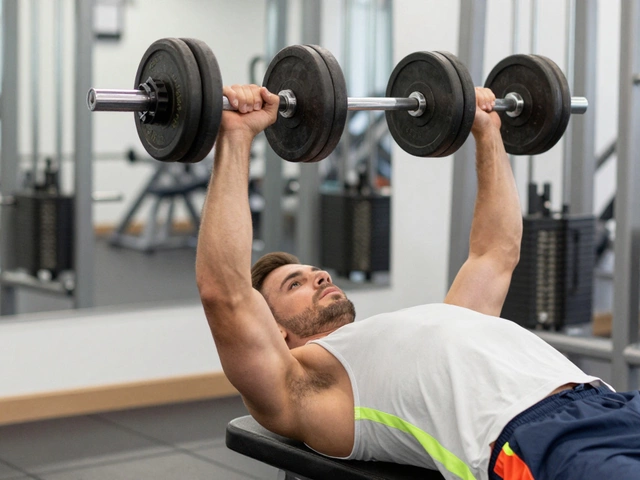
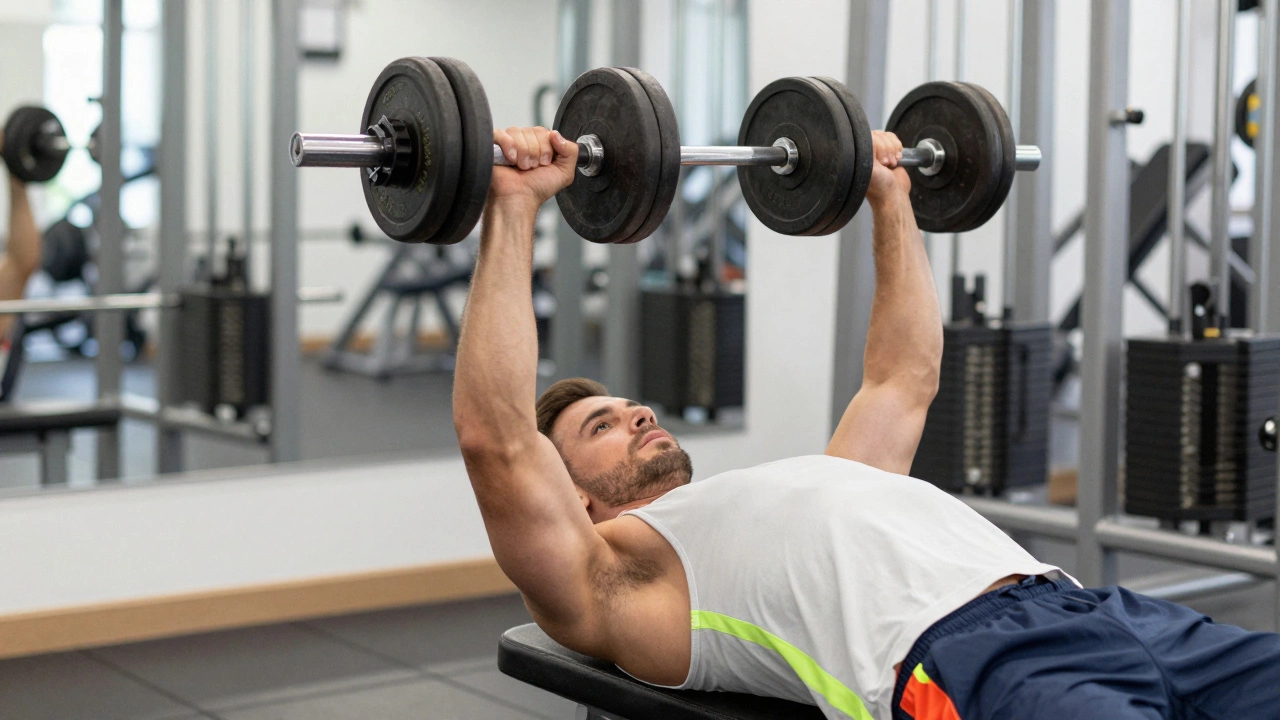
Let's say you are doing dumbbell chest presses. Week 1, you use 40lb dumbbells. You struggle on the last rep of each set. By Week 3, you breeze through 10 reps. Next week, move to 45lb dumbbells. Now you might only hit 8 reps. That’s fine. Over the next few weeks, you will build back up to 10 reps with the heavier weight. This cycle is how you grow.
Variations to Prevent Plateaus
Doing exactly 3 sets of 10 reps for every exercise, every day, forever, will eventually lead to boredom and stagnation. Your body adapts quickly. To keep progressing, consider these variations within the same framework.
Dropping Sets
Perform your first set of 10. Immediately reduce the weight by 20% and go again until failure. Repeat once more. This increases volume density without extending your workout time significantly.
Cluster Sets
If 10 reps straight is too hard due to technique breakdown (common in squats), try 5 reps, rest 15 seconds, then 5 reps. This allows you to handle heavier loads while staying in the hypertrophy zone.
Tempo Training
Slow down the eccentric (lowering) phase. Take 3-4 seconds to lower the weight, then explode up. This increases time under tension, making a lighter weight feel much heavier and more effective for growth.
Common Mistakes to Avoid
Even with a solid plan, execution errors can sabotage your results.
Ego Lifting
Choosing a weight that looks impressive but forces you to use momentum. Swinging your legs during a row or arching your back excessively during a press shifts the load away from the target muscle and onto your joints. If you can't control the weight for 10 clean reps, it's too heavy.
Inconsistent Rest
Scrolling through your phone for five minutes between sets kills the metabolic pump and reduces the effectiveness of the workout. Keep rest intervals consistent and purposeful.
Ignoring Recovery
Muscles grow when you sleep, not when you train. If you are doing 3x10 for chest twice a week, ensure you are eating enough protein (roughly 0.7-1 gram per pound of body weight) and sleeping 7-9 hours. Without fuel and rest, the stimulus is wasted.
Frequently Asked Questions
Can I build significant muscle with only 3 sets of 10 reps?
Yes, absolutely. For natural lifters, 3 sets of 10 reps performed with progressive overload and proper nutrition is highly effective for hypertrophy. While some advanced lifters may benefit from higher volumes (4-5 sets), 3 sets provide sufficient stimulus for the majority of people to see substantial muscle growth over time.
Is 3 sets of 10 reps better than 5 sets of 5 reps?
It depends on your goal. If you want to maximize pure strength and lifting capacity, 5x5 is generally superior because it trains neural adaptation with heavier loads. If you want to maximize muscle size and aesthetic development, 3x10 is often preferred because it creates more metabolic stress and allows for higher total volume with less joint wear.
How much should I rest between sets of 10 reps?
For hypertrophy-focused training, resting 60 to 90 seconds between sets is recommended. This duration allows enough ATP recovery to maintain performance on the next set while keeping the heart rate elevated and metabolic stress high. If you find yourself failing before 10 reps, extend the rest slightly. If you finish easily, shorten it.
Should I change the weight every time I hit 10 reps?
Not immediately. A common mistake is increasing weight too soon. Aim to hit 3 sets of 10 reps with good form for two consecutive workouts before increasing the load. This ensures the movement pattern is mastered and the muscle is adequately stimulated before adding more stress.
Is 3 sets of 10 reps good for beginners?
Yes, it is excellent for beginners. It allows new lifters to focus on learning proper technique with manageable loads. Since beginners experience "newbie gains" rapidly, this moderate intensity provides enough stimulus for growth without the high injury risk associated with maximal lifting attempts.