Fitness April 9, 2026
Get Fit in 30 Days: A Realistic Guide to Fast Results
30-Day Fitness Resource Calculator
Enter your weight in kilograms to get accurate recommendations.
Your Personalized Daily Targets:
Daily Protein Target:
0g
Based on 1.6g - 2g per kg of body weight.
Daily Hydration:
0L
Based on 35ml per kg of body weight.
Pro Tip:
Focus on lean proteins like chicken, tofu, or eggs to reach this goal.
Enter your details and click calculate to see your personalized targets!
Key Takeaways for Your 30-Day Sprint
- Focus on a mix of strength training and cardiovascular work to maximize calorie burn.
- Prioritize protein and water to support muscle repair and keep hunger in check.
- Sleep is where the actual progress happens; aim for 7-9 hours.
- Track your measurements and energy levels, not just the number on the scale.
The Blueprint for Rapid Progress
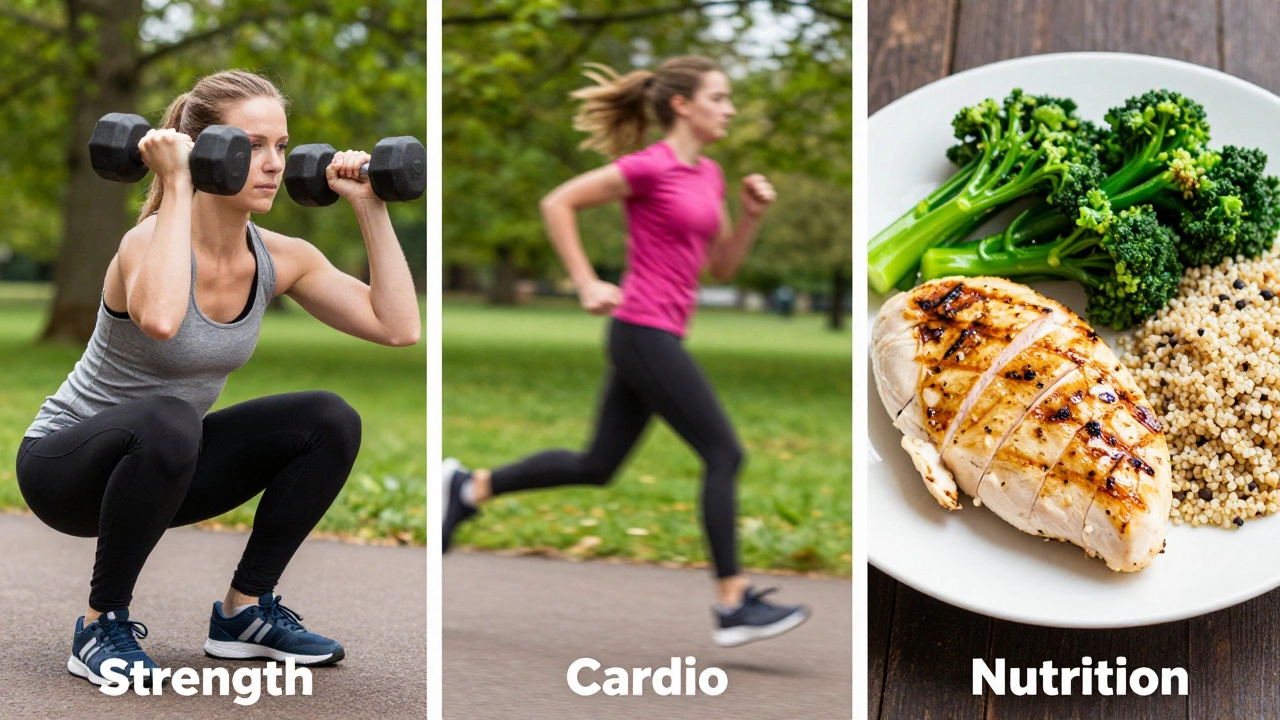
To see a visible difference in four weeks, you need to hit three main pillars: movement, nutrition, and recovery. If you skip one, the others won't work. For example, training like a beast but eating processed sugar every night will just leave you tired and bloated.First, let's define the core of your movement. Strength Training is a type of physical exercise specializing in the use of resistance to induce muscular contraction, building strength and anaerobic endurance. By lifting weights or using your own body weight, you increase your resting metabolic rate, meaning you burn more calories even when you're just sitting on the sofa watching TV.
Then, you have Cardiovascular Exercise, which is any rhythmic activity that stimulates the heart and lungs, improving oxygen delivery to muscles. This is your engine. Whether it's a brisk walk, a swim, or a cycle, getting your heart rate up is the fastest way to improve your stamina and torch fat.
Your Weekly Workout Structure
Don't just wander into the gym and hope for the best. You need a system. A 30-day window is short, so we'll use a "Concurrent Training" approach-mixing strength and cardio in the same week.For the first two weeks, focus on compound movements. These are exercises that hit multiple joints and muscle groups at once, like squats, push-ups, and lunges. They give you the most bang for your buck. In weeks three and four, we'll increase the intensity by shortening your rest periods to keep your heart rate elevated.
| Day | Activity | Focus/Goal | Duration |
|---|---|---|---|
| Monday | Full Body Strength | Compound movements (Squats, Press) | 45 Mins |
| Tuesday | LISS Cardio | Low-Intensity Steady State (Walking) | 60 Mins |
| Wednesday | Active Recovery | Yoga or light stretching | 30 Mins |
| Thursday | Full Body Strength | Bodyweight or weights (Lunges, Rows) | 45 Mins |
| Friday | HIIT Session | High-Intensity Interval Training | 20 Mins |
| Saturday | Outdoor Activity | Hiking, cycling, or sports | 90 Mins |
| Sunday | Full Rest | Complete muscle recovery | N/A |
Eating for Results Without Going Crazy
Diet is where 70% of your battle is won. You don't need a restrictive fad diet, but you do need a strategy. To get fit in 30 days, you should focus on a high-protein, moderate-carb approach. Protein keeps you full and protects your muscle mass while you lose fat.Think of Protein as the building block. It includes things like chicken breast, tofu, eggs, and Greek yogurt. If you're hitting around 1.6 to 2 grams of protein per kilogram of body weight, your muscles will recover much faster from those strength sessions.
Then there's the issue of "hidden calories." Liquid calories are the biggest enemy of a 30-day transformation. Sodas, fancy coffees, and alcohol can easily add 500 calories to your day without making you feel full. Switch these for water or black coffee. If you're struggling with hunger, load up on leafy greens like spinach and kale. They provide volume and micronutrients without adding significant calories.
The Role of Recovery and Hormones
Here is where most people mess up: they think more is always better. If you train 7 days a week without a break, your cortisol levels (the stress hormone) will spike. High cortisol makes your body hold onto belly fat and breaks down muscle. It's a counter-productive cycle.This is why Sleep is non-negotiable. During deep sleep, your body releases growth hormone, which repairs the micro-tears in your muscles created during your workouts. If you only sleep 5 hours, you're essentially wasting half the effort you put in at the gym.
Additionally, consider Hydration. Water isn't just about quenching thirst; it's vital for metabolic processes. Dehydration slows down your strength and makes you feel sluggish, which leads to poor workouts. Aim for at least 3 liters a day, especially if you're increasing your salt intake through healthy seasoning.
Common Pitfalls to Avoid
One big mistake is relying solely on the scale. Your weight can fluctuate by 2-3 kilograms in a single day based on water retention and salt intake. If you see the number stall, don't panic. Instead, take a "before" photo and measure your waist. Often, you'll find you're losing fat and gaining muscle at the same time-this is called body recomposition.Another trap is the "all or nothing" mentality. If you miss a workout on Tuesday, don't throw away the whole week. Just get back on track on Wednesday. The goal is 80% consistency. If you hit 24 out of 30 days, you'll still see incredible results. Perfection is the enemy of progress.

Making it Stick After Day 30
Once you hit the 30-day mark, the danger is returning to your old habits. To prevent this, you need to transition from a "sprint" to a "marathon." Start by picking the parts of this plan you actually enjoyed. If you loved the HIIT sessions but hated the long walks, keep the HIIT and swap the walking for a sport like tennis or football.Start introducing Progressive Overload, which is the gradual increase of stress placed upon the body during exercise. This means adding more weight, doing more reps, or reducing rest time. This ensures you keep improving instead of hitting a plateau.
Can I really see a difference in just 30 days?
Yes. While you won't completely transform your physique, you can expect to see reduced bloating, improved posture, and a noticeable increase in energy. Many people lose 2-5 kilograms of fat and see more muscle definition in their arms and legs if they stick strictly to the protein and workout guidelines.
Do I need a gym membership to get fit?
Absolutely not. You can use bodyweight exercises like push-ups, squats, and planks. The key is the intensity and the effort you put in. If you have a few sets of dumbbells or resistance bands at home, that's a bonus, but not a requirement.
What happens if I have a cheat meal?
One meal won't ruin 30 days of work. The problem is when a cheat meal turns into a cheat weekend. If you overeat, don't try to "starve" yourself the next day. Just return to your normal high-protein diet and get your next workout in.
How much water should I actually drink?
A good rule of thumb is to aim for about 35ml per kilogram of body weight. For most adults, this lands between 2.5 and 3.5 liters. If your urine is pale yellow, you're likely hydrated. If it's dark, drink more immediately.
Is HIIT better than steady cardio?
Neither is "better"; they serve different purposes. HIIT is great for burning calories in a short time and boosting metabolism. LISS (Low-Intensity Steady State) is better for recovery and burning fat without taxing your central nervous system. Using both, as suggested in the table, gives you the best of both worlds.