Boxing Matches September 21, 2026
What is UFC Called? Understanding the Ultimate Fighting Championship
MMA vs. Boxing Identifier
Confused about the difference between the sport and the brand? Or unsure if a specific rule applies to MMA or Boxing? Use this interactive guide to clarify the distinctions.
Quick Reference
🥊
Boxing
Boxing
🤼♂️
MMA/UFC
MMA/UFC
Select a scenario above to see how the rules differ between Professional Boxing and MMA (often referred to as UFC).
You’re scrolling through social media, see someone get knocked out in a cage, and wonder: what is UFC called? It’s not just "cage fighting." That term feels like a relic from the early 1990s when the sport was wild, unregulated, and often banned. Today, the official name is the Ultimate Fighting Championship. But that’s only half the story.
If you ask a hardcore fan, they won’t say "UFC" as the sport itself; they’ll say Mixed Martial Arts (MMA). The UFC is the organization-the league-while MMA is the activity. Think of it like this: You don’t play "NBA," you play basketball. You don’t watch "Premier League," you watch football. Confusing the brand with the game is the most common mistake new fans make. This article breaks down exactly what the UFC is, how it differs from boxing, and why the terminology matters if you want to sound like you know your stuff.
The Official Name vs. The Sport
Let’s clear up the biggest confusion right now. When people ask "what is UFC called," they are usually mixing up two distinct concepts: the promotion and the discipline.
- The Promotion: The Ultimate Fighting Championship (UFC) is a private company based in Las Vegas. It owns the contracts of fighters, organizes events, and sells pay-per-view rights. It is the largest MMA promoter in the world.
- The Sport: Mixed Martial Arts (MMA) is the full-contact combat sport that allows both striking and grappling, from both standing and ground positions. It combines techniques from boxing, wrestling, judo, karate, and Brazilian Jiu-Jitsu.
So, technically, the UFC isn’t "called" anything other than its corporate name. But colloquially, people use "UFC" as shorthand for top-tier MMA. If you tell a purist you’re going to "watch some UFC," they might correct you by saying you’re watching an "MMA event promoted by the UFC." It’s pedantic, sure, but it shows you understand the ecosystem.
Why People Still Say "Cage Fighting"
Older generations or casual viewers often refer to the sport as "cage fighting" or "no-holds-barred." Is that wrong? Not entirely, but it’s outdated.
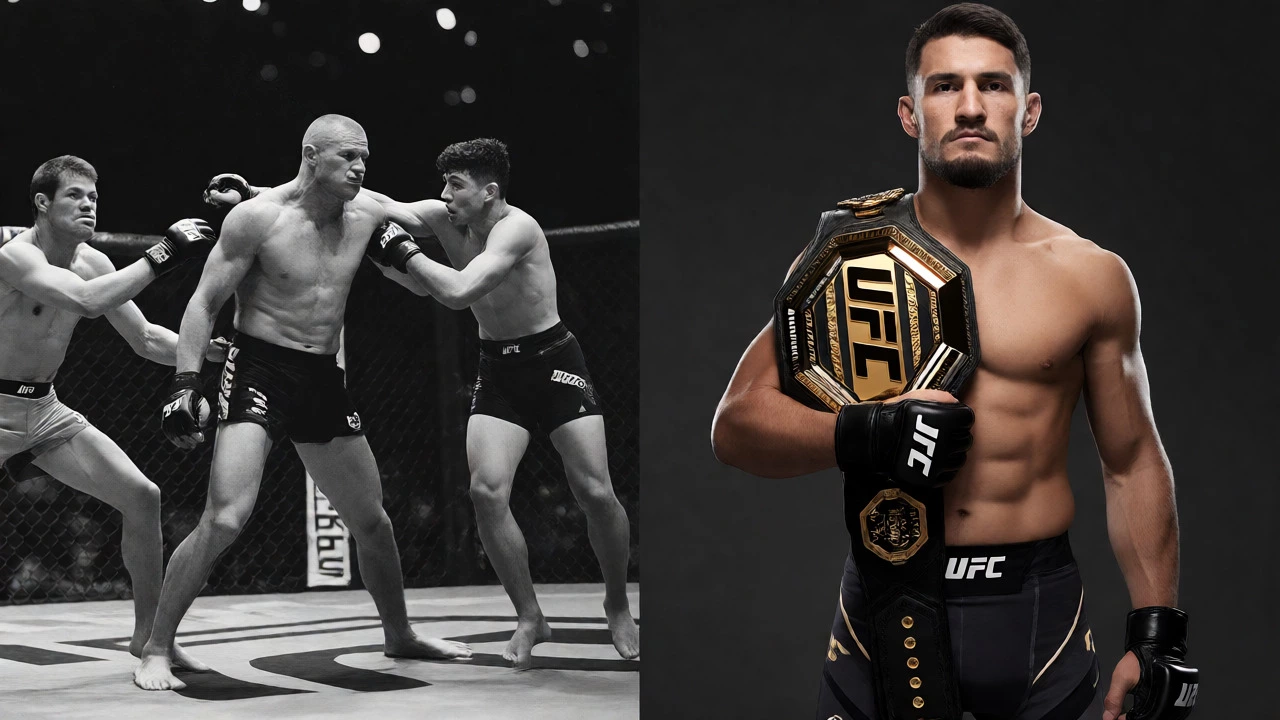
In the very first UFC 1 event in 1993, there were indeed almost no rules. Fighters could strike anywhere, except for eye-gouging and biting. There were no weight classes, no time limits, and no judges. It was raw survival. Because the fights took place in an octagonal enclosure, the media dubbed it "cage fighting."
Today, the Unified Rules of Mixed Martial Arts govern every major fight. These rules ban headbutts, groin strikes, and small joint manipulation. They enforce weight classes and three- or five-round time limits. Calling modern MMA "cage fighting" ignores decades of safety evolution and athletic development. It paints the sport as brutal chaos rather than the strategic chess match it has become.
UFC vs. Boxing: Key Differences
Since this topic sits near boxing discussions, let’s address the elephant in the room. Why do people confuse them? Both involve two people hitting each other in a ring or cage. But the mechanics are vastly different.
| Feature | Professional Boxing | UFC / MMA |
|---|---|---|
| Primary Tools | Fists only | Fists, elbows, knees, shins, feet |
| Stance & Movement | Lateral footwork, upper body movement | Circular footwork, level changes, sprawls |
| Ground Game | Not allowed (referee stands fighters up) | Central component (wrestling, BJJ) |
| Gloves | Large, padded gloves (8-10 oz) | Small, open-finger gloves (4 oz) |
| Victory Methods | KO, TKO, Decision, Draw | KO, TKO, Submission, Decision, DQ |
The inclusion of grappling is the biggest divider. In boxing, if you get taken down, the fight pauses. In MMA, getting taken down means the fight continues on the mat, where a smaller fighter can choke out a larger one using leverage and technique. This makes MMA a more diverse skill set test. A boxer who doesn’t learn wrestling will lose to a wrestler who learns basic striking. This cross-training requirement is why we call it "mixed" martial arts.

The Octagon: More Than Just a Shape
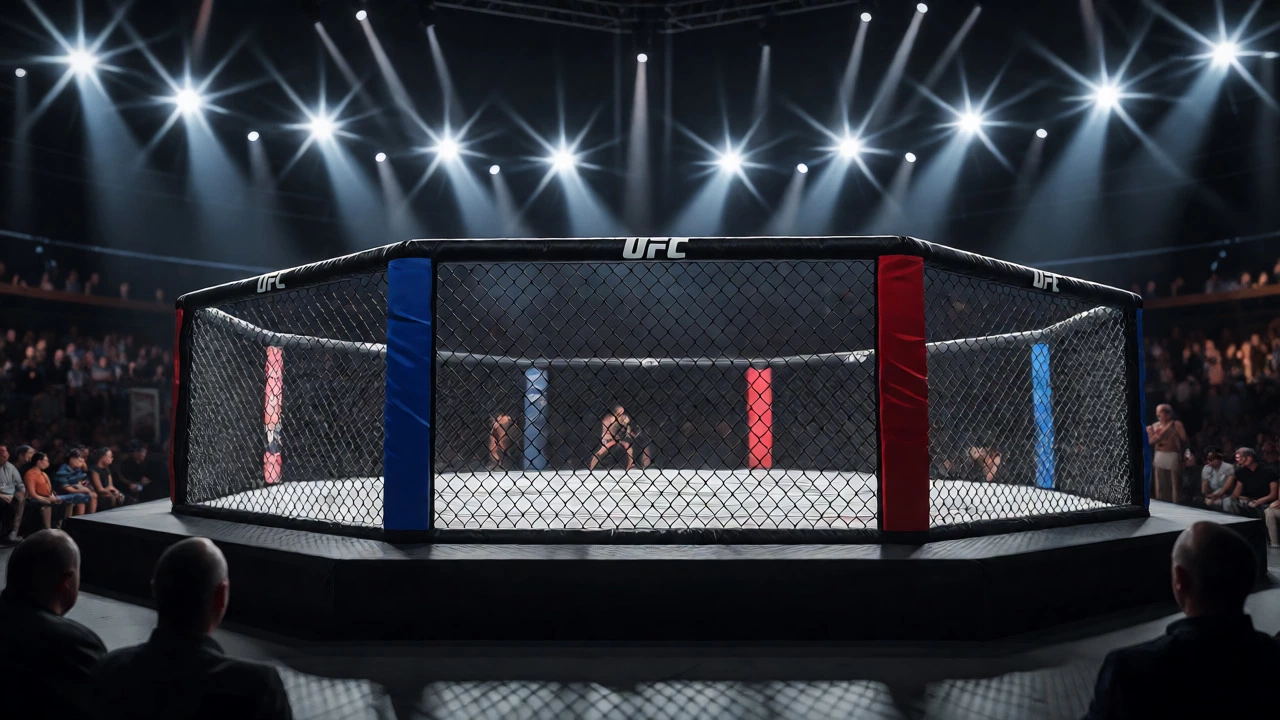
When you look at a UFC broadcast, you notice the fighting area isn’t a square ring. It’s an eight-sided structure called the Octagon. Why does this matter for the name question? Because the visual identity of the UFC is tied to this specific piece of equipment.
Early promotions used rings because they were cheaper and easier to set up. The UFC introduced the Octagon to prevent fighters from being trapped in corners. In a square ring, a fighter can be pinned against the ropes with nowhere to go. In an Octagon, the angled walls allow for better movement and escape angles. It also reduces the risk of injury from hitting the turnbuckles.
Other organizations exist, like Bellator MMA or ONE Championship, which may use circular cages or traditional rings depending on their branding and regional rules. However, when people say "the UFC," they are visually identifying the black canvas, the chain-link fence, and the red corner/blue corner setup unique to this brand.
How to Talk About It Like a Pro
If you want to avoid sounding like a novice, here are simple swaps you can make in conversation:
- Don’t say: "I’m watching UFC tonight."
Say: "I’m watching the UFC card tonight." (Acknowledges it’s an event.) - Don’t say: "He’s a good UFC fighter."
Say: "He’s a highly skilled MMA fighter." (Focuses on the skill, not the employer.) - Don’t say: "No holds barred."
Say: "Full contact with unified rules." (Shows you know the regulations.)
Also, distinguish between the governing bodies. The UFC follows the rules set by the Association of Boxing Commissions (ABC) in the United States. These commissions license fighters and sanction events. The UFC itself doesn’t write the laws of physics for the sport; it operates within a legal framework established by state athletic commissions.
Beyond the Acronym: What Does "Ultimate" Mean?
Why "Ultimate"? In marketing terms, it implies the highest level of competition. Historically, it signaled the end of the debate about which martial art was superior. Before MMA, practitioners argued whether Karate beat Judo or if Boxing beat Wrestling. The "Ultimate" part suggests that by combining all styles under one roof, you find the ultimate truth of combat effectiveness.
It’s a bold claim, but it worked. The name stuck because it promised spectacle and resolution. Today, while other promotions try to challenge the UFC’s dominance, the acronym remains synonymous with the pinnacle of the career path for any mixed martial artist. Winning a UFC belt is considered the "ultimate" achievement in the sport.
Common Misconceptions About Terminology
Another frequent point of confusion involves the word "fight." Fans often say, "Who won the fight?" Technically, every bout is a contest. But in betting circles and official records, results are categorized strictly:
- Win by Knockout (KO): The opponent is unconscious or unable to continue immediately after a strike.
- Win by Technical Knockout (TKO): The referee stops the fight because a fighter is taking too much damage, even if conscious.
- Win by Submission: The fighter taps out due to a choke or joint lock.
- Win by Decision: Judges score the rounds based on effective striking, grappling, control, and aggression.
Using these specific terms instead of generic "he beat him" adds credibility to your discussion. It shows you understand how victories are determined, which is central to understanding the sport’s structure.
Final Thoughts on Naming
So, next time someone asks "what is UFC called," you have the full picture. It’s the Ultimate Fighting Championship, the premier organization for Mixed Martial Arts. It’s not just cage fighting anymore; it’s a regulated, global sport with strict rules, complex strategies, and elite athletes.
Understanding the difference between the brand (UFC) and the discipline (MMA) helps you appreciate the business side of the sport and the technical side of the competition. Whether you’re watching for the violence or the strategy, knowing the correct terminology puts you in the same circle as the analysts and the hardcore fans.
Is UFC the same as MMA?
No. MMA (Mixed Martial Arts) is the sport itself, similar to how basketball is the sport. UFC (Ultimate Fighting Championship) is the specific company or promotion that organizes MMA events, similar to how the NBA is the league that organizes professional basketball games.
Why is it called the Octagon?
The fighting area is an eight-sided cage called the Octagon. It was designed to give fighters more angles for movement and escape compared to a traditional square ring, reducing the chance of being trapped in a corner. It is a trademarked feature of the UFC brand.
Can you kick in the UFC?
Yes, kicking is fully allowed in the UFC. Fighters can use kicks to the legs, body, and head. Unlike boxing, which only permits punches, MMA utilizes the entire body as a weapon, including elbows, knees, and shins.
What are the Unified Rules?
The Unified Rules of Mixed Martial Arts are the standard regulations followed by the UFC and other major promotions. They define fouls (like eye gouges and groin strikes), scoring criteria, round lengths, and weight classes to ensure fighter safety and fair competition.
Is UFC dangerous?
Like any full-contact combat sport, UFC carries risks of injury, including concussions, fractures, and ligament tears. However, medical standards, pre-fight testing, and strict rules have significantly improved safety compared to the early days of "no-holds-barred" fighting.