William Webb Ellis: The Man Behind Rugby's Origin and Legacy
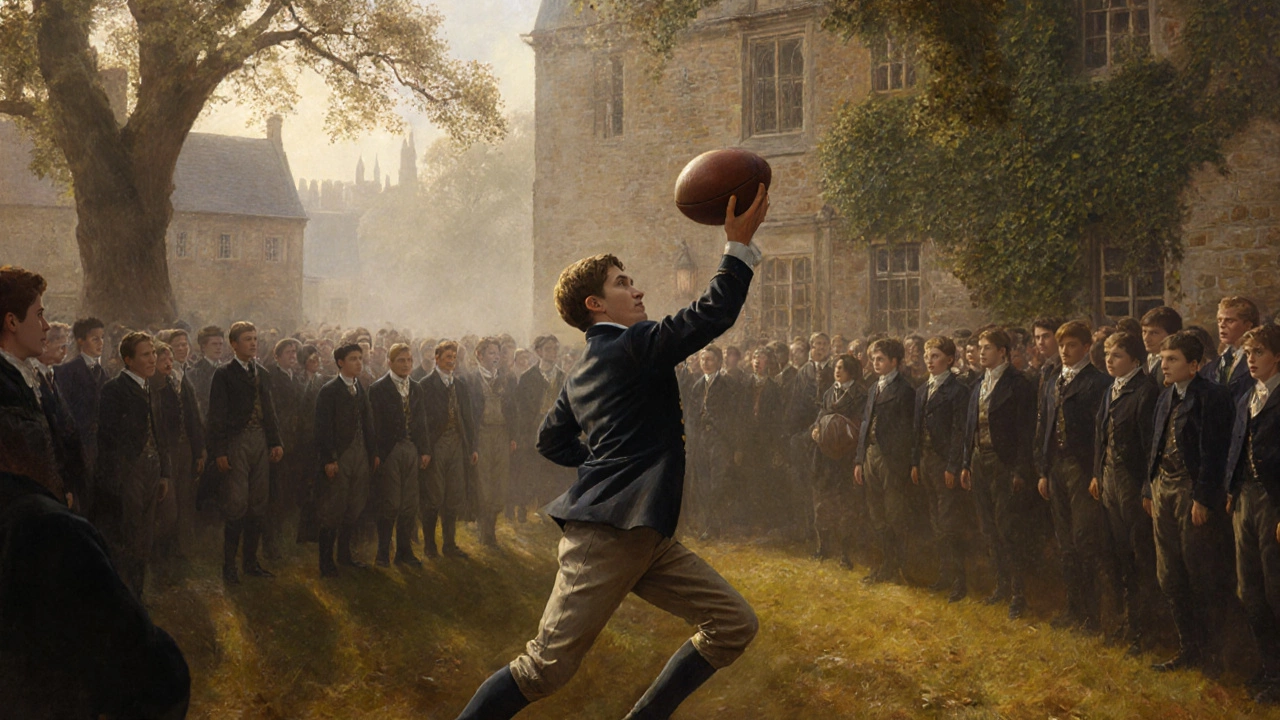
When you think of rugby, you might picture scrums, tackles, and roaring crowds—but the sport’s origin traces back to one disputed moment involving William Webb Ellis, a 19th-century English schoolboy credited with picking up the ball during a football match and running with it. Also known as the inventor of rugby, his name became the foundation for a global sport that now has over 6 million players worldwide. The story goes that in 1823, at Rugby School in England, Ellis ignored the rules of the time and carried the ball instead of kicking it. Whether it actually happened like that is debated. But what’s not debated is how deeply that moment shaped modern rugby.
Rugby didn’t just appear out of nowhere—it evolved from folk football games played across England. But Ellis’s alleged act gave it a clear breaking point: the moment the game started to split from soccer. The Rugby School, the boarding school where the incident supposedly took place, later formalized the rules that became the basis for rugby union and rugby league. Today, those rules are still followed in professional leagues from New Zealand to Japan. The Rugby World Cup, the sport’s biggest international event, even has a trophy named after him—the Webb Ellis Cup. That’s rare in sports. Very few individuals get a global championship named after them.
But here’s the thing: the story of William Webb Ellis might be more legend than fact. No eyewitness accounts exist. The first written record didn’t appear until 1876—over 50 years later. Some historians think it was invented to give the sport a clear origin story, like many traditions do. But whether he did it or not, the idea stuck. And that idea—running with the ball—is what makes rugby different from every other football code. It’s not just about strength or speed. It’s about breaking rules to make something new.
What you’ll find in the posts below isn’t just history. It’s the ripple effect of that one moment. From why rugby players have massive legs to how the game spread across continents, from how it’s called in French to which countries live and breathe the sport—every story connects back to that schoolyard moment. You’ll see how the sport’s structure, its physical demands, even its cultural identity, all trace back to a boy who decided to pick up the ball and run. And if you’ve ever wondered why rugby feels so raw, so intense, so uniquely human—that’s why.
Why Is Rugby Called Rugby? The Real Story Behind the Name
Rugby is named after Rugby School in England, where a student picked up a football and ran with it in 1823. The game evolved from there, splitting from soccer and spreading worldwide under the same name.